
Brunello: Tuscany’s treasure plus top wines worth seeking out
Blessed with an ideal combination of location and geology, there’s no questioning the quality of this Tuscan heartland’s wines or its potential. Some argue that an increased focus on individual terroirs could bring improvements, while others put their faith in tried-and-tested techniques. Either way, discovers Andrew Jefford, there’s no great rush for change...


The November light was draining from the sky when I arrived at Sesti. By the time we sat down to taste, the stars were beginning to glitter in the chill night sky, just as they do (in graphical form) on the winery’s wine labels.
Scroll down for Andrew Jefford’s top wine picks from Brunello di Montalcino
This lonely 13ha estate lies close to Sant’Angelo in Colle, to the south of the Brunello di Montalcino region; it looks out across the Orcia Valley to Monte Amiata, southern Tuscany’s highest peak (1,738m). Proprietor Giuseppe Sesti, author of The Glorious Constellations and other scholarly works on astronomy and art, chose the property as much for its views of the heavens as for its sub-lunary attractions. It lies on a ridge; its tower resembles the prow of a boat.
I chatted to Giuseppe’s daughter Elisa Sesti. She remembered the early years. Her mother, Sarah Reeve, is from Shropshire, hence Elisa’s impeccable English, and the place was a ruin when the family arrived in the early 1970s. ‘It took my mother three hours to hack her way in. The property had been abandoned after World War II , when the sharecropping system collapsed. The locals claimed it was a nest of vipers. Getting rid of the brambles took three years.’ Her childhood was one long renovation. She showed me the chapel, with its ornate chandelier. ‘We cleaned it over one winter, using toothbrushes.’ You’d never know all of this now, from the deftly restored buildings, the beautiful gardens and the pristine cellar with its stored bottles, its polished tasting table and its racked casks.

Elisa’s story is not untypical. It’s hard to believe, but there were only 65ha of vineyards in the whole Brunello zone in 1967. During the following 40 years plantings expanded dramatically, to 2,024ha; there are now 3,500ha. Wine-growing enterprises have increased tenfold, and the value of land has rocketed by more than 2,000%. What was one of the poorest post-war towns in Italy, Montalcino is now one of the most prosperous: an island of sunny good fortune, visited by more than two million tourists a year (including former US president Barack Obama and wife Michelle in 2017).
Lean times
What’s happened, it’s important to note, is a renaissance. This has always been a wineproducing area, back to Etruscan times, though in the late Middle Ages Montalcino was more famous for its white Moscadello than for its red Sangiovese-based wines. It was the work of 19th-century pioneers such as Clemente Santi (1795-1885), Count Tito Costanti (1827-1895) and Santi’s grandson Ferruccio Biondi Santi (1849-1917) that established Brunello’s fine-wine credentials, notably as a wine made from a local clone of the mutable Sangiovese, and one made without the adjunct of white varieties (common in Chianti at the time).
Phylloxera, though, crippled Brunello in the 1920s and 1930s, at the same time as Prohibition snuffed out its nascent US exports. World War II was a national trauma which greatly impoverished Italy; the terrible frosts of February 1956 killed olives and vines alike; and the completion of the Autostrada del Sole in 1964 drained the passing trade which Montalcino had long enjoyed (the Roman Via Cassia passed the foot of the town). Hence the catastrophic situation in the 1960s.
History had shown the zone was capable of greatness, though. When good times returned, with the increasing prosperity and stability which came to Italy as a founder member of the EEC and with the growing global interest in fine European wine, Brunello was destined be a major beneficiary. What, though, is the region’s intrinsic character? Which direction does it take from here?
Ideally placed
Let’s begin by trying to understand more about how this square-shaped region works as a terroir entity. We’re in southern Tuscany: Umbria and Marche lie further east, while to the southwest the Mediterranean sits just beyond Grosseto and the Tuscan Maremma. The hills of Montecucco block that access to the sea, while the brooding presence of Monte Amiata to the southeast is another protective, sheltering force; summer storms gather and break there, rather than in Montalcino itself. The Colli Senesi hills, meanwhile, occlude access to Siena to the north. Chianti Classico, by contrast, lies much further north, between Siena and Florence, where it is more exposed to the cool air of the Apennines: it harvests a week to 10 days later than snug Montalcino.
This, therefore, is a kind of Goldilocks wine zone: it is both warm thanks to its latitude and its protected location (cactus, capers and wild pomegranates litter the scrub around Sesti, for example, and tobacco is another crop that has traditionally been grown by Montalcinese farmers), yet cooled by its altitude.
Most Brunello vineyards, according to Nicola Giannetti of Col d’Orcia, lie at about 300m; some can be found at double that. Montalcino itself is a hilltop town, though the hill is not a single summit, but rather the northern point of a ridgeline that runs south from the town and then northwest again, forming two sides of a triangle. Montalcino itself lies at 567m, and the ridgeline continues to rise to the south up to 667m at Poggio Civitella, before heading northwest to reach a point at 557m close to the edge of the DOCG zone. There are a number of other smaller ridges which descend to the north, south and east off this main ridge line. The further you get from the main ridge line, the lower the land, though the actual vineyard aspects themselves are highly varied.
Most of the land in the DOCG lies to the south of the main ridge, where south-facing expositions dominate – so you might assume that this will be where most of the vineyards are. That is not, in fact, the case; indeed, land-use maps compiled from historical data for 1822 and 1954 both show that most of the Brunello vineyards lay in the northern half of what is now the DOCG. Plantings in the south date from the last half-century. Perhaps soils are the answer: clays of marine origin (including the friable clay-limestone soils generally called galestro in Tuscany) tend to dominate the northern half of the zone, with clayey and sandy flysch sediments through the central part of the DOCG, and limestone and sandstone soils to the south (though there are some more prized marls in the southwest). Brunello is not, by the way, an intensively planted zone: only 12% of the delimited area is actually under vine, with woodland, cereals and olive groves also significant.
Zoning in
What does all this mean for drinkers? More and more Brunello wines are starting to carry what look like single-vineyard names, but in many cases these are what are locally known as toponimi (place names in the land register). The potential of any Brunello vineyard will be derived from a combination of its altitude, its aspect, its position inside the DOCG and its soils. In this rumpled zone, all of that is a very complicated matter. In general, though, the higher north-facing vineyards in the north of the zone are coolest – and that includes the now sought-after Montosoli sector; in this regard, Francesco Ripaccioli of Canalicchio di Sopra describes Montosoli as ‘a small island of Chianti Classico in Montalcino’. The lower south-facing vineyards in the south are warmest (including the vineyards of Sesti itself, Col d’Orcia or Il Poggione).

Global warming is forcing the pace: the heatwave of 2017 saw Brunello peak at 42°C on 12 days, and it’s fair to say that those with lower-lying vineyards in the south are worried about what the future might bring. Many producers, too, continue to blend the fruit of differently sited vineyards: Stefano Cinelli Colombini of Fattoria dei Barbi points out that at least half the producers in Montalcino have land in different zones of the DOCG due to marriage alliances (and only 30% of the entire zone, he says, could ever be planted with vines in any case). The search for and identification of prized internal terroirs, though, is certainly one direction Brunello will head in. Teasing out the nuances of different sectors and key vineyard zones of the region is something that both producers and consumers are going to find of compelling interest, just as they do in Barolo. Crus are coming to Brunello.
Most consumers’ understanding of this aspect of Brunello’s personality is necessarily hazy; maps of the region are disappointingly rudimentary; and the consorzio has thus far decided against any official zoning project. I’d expect that to change in the future. Of particular significance is the fact that Biondi Santi, now under the French luxury goods ownership of EPI and the Descours family (and thus a sibling of the Champagne houses Charles Heidsieck and Piper-Heidsieck, and the French craft-shoe manufacturer JM Weston) is intending to reorganise its range along lines indicated by vineyard of origin rather than, as at present, vine age. ‘If we’re going to compete with the best wines in the world,’ says Sebastian Nasello of Podere Le Ripi, owned by Francesco Illy of the coffee family, ‘we have to work technically, and that means being very refined about terroir.’ That is why he would like to see a zoning project for the region.
Innovation & tradition
‘I’d be in favour of such an initiative,’ agrees Ripaccioli. ‘It’s very important to talk about the significance of different zones. If the consorzio is not ready, we will do it ourselves.’ But single-vineyard pioneer Giovanni Neri of Casanova di Neri stresses: ‘It can’t just be marketing. It must be top-quality wine: a reality in the glass,’ adding that, ‘70% comes from the vineyard, but 30% is the experience, the attention in the cellar, the knowledge and the care.’ Even some of those who like to blend the wines of sub-regions are not against the idea of zoning – like Giancarlo Pacenti of Siro Pacenti, who has vines both around his winery in the north of the region but also in the south. ‘We get great results up here in the north in good vintages,’ he says, ‘but in cool years it is better to have some wine from the south, too. I would absolutely not be against zoning. Perhaps we can make more complex wines by blending, but there are sub-regional characteristics that are certainly worth keeping.’

Other areas of change and refinement include viticutural experiment: progress with organic and biodynamic approaches, though these (typically enough for Italy) are as often uncertified as not. ‘Organics is our life, from washing the plates after a meal to everything we do in the vineyard,’ says Maria Laura Vacca Brunelli of Gianni Brunelli/Le Chiuse di Sotto. But certification, she says, is ‘just bureaucracy. We have nature in our hearts. We follow her. We help her; she helps us’.
At Le Ripi (biodynamic since 2011), Nasello has led the way in higher-density plantings for the region, up to an astonishing 60,000 plants per hectare for the Le Ripi Bonsai vineyard, in order to maximise root competition and intensify terroir character. The high prices which Brunello can now command means that viticulture in this region is scrupulous – as the fundamental source of all quality.
In terms of winemaking, though, I was impressed with how unmodish most producers in Brunello di Montalcino actually are. Sure, those who can afford the latest optical laser-sorting machinery (like Biondi Santi or Casanova di Neri) will use it. Some continue to use small French oak vessels, often (like Giancarlo Pacenti of Siro Pacenti) with great skill. Le Ripi has a little orange skin-contact white. Fundamentally, though, the regional ideal as sketched out in the regulations still holds sway – and it’s worth pointing out just how different this is from the underlying ideal of many fine French red wines, so that newer drinkers who may not yet be familiar with Brunello can understand exactly what it offers.
Polished performance
Most French fine wines are aged for stability alone, and are sold as soon as possible once stable; the maturity which comes with bottle ageing is a matter for the purchaser. The Brunello rules, by contrast, aim to deliver the wine to the consumer in a semi-mature state. It was only on 1 January 2019 that the first bottles of 2014 Brunello di Montalcino (and 2013 Riserva) could leave their cellars of origin. Those wines, moreover, must have spent 24 months in oak casks of some sort or another, and at least four months in bottle (six months for Riserva); many exceed these minima. Most Brunello is still aged in large old Slavonian-oak vessels (botti) too, and these have a very different effect on the wines they contain than do smaller, newer French-oak vessels (225-litre barriques and the larger 500-litre tonneaux). The result is that most Brunello comes out of the bottle in a much more settled and refined state than do a Bordeaux or northern Rhône wine of equivalent age and ambition.
I was sometimes taken aback to hear that producers in Montalcino talk of their 2013 Riserva wines, for example, as being ‘undrinkable’ at the moment, though to me they seemed to be graceful, articulate, fine-tempered and accessible. They were ‘undrinkable’, I realised, only to those who had spent a lifetime drinking Brunello at 20 or 30 years old (it is a wine which ages remarkably well). Yes, they are tannic wines, but the effect of the large oak casks on those tannins is to polish and buff them to a high gleam; there is none of the thick-textured, tongue-coating, tooth-staining grippiness you find in a serious young Pauillac or St-Emilion.
The aromatic profiles, too, are also more delicate and fugitive after a long spell in large oak than they will ever be from small oak; their notes are subtler, more graceful, a matter of aromatic chiaroscuro rather than the bright primary dance delivered by a shorter spell in small wood, steel, concrete or jars.
You could see classic Tuscan wine ageing as a process of cleansing or refinement after vinification, whereas the ageing of French fine reds is designed in some ways to complete the building process of the wine which was started during vinification. If you want something more primary and ‘fruitier’ than Brunello, of course, look out for the younger Rosso di Montalcino – with no ageing specification, and legally on sale from September of the year after the vintage.
What the Montalcinese avant-garde are doing now in winemaking terms is refining those refinements still further – by picking on the perfect cusp of ripeness, by fermenting all of their wine in single-parcel lots, by using wild yeasts, by infusing rather than extracting, or by renovating their stocks of large wooden vessels. The aim of all this, crucially, is not to translate Brunello into ‘a modern idiom’ – an ideal held by almost no one today – but to render it more memorably classical.
See Andrew Jefford’s top wine picks from Brunello di Montalcino
You may also like
Best Piedmont wines: Latest release Barolo & Barbaresco
Expert’s Choice: Puglia wines
Pinot Biano: Italy’s northern star plus 12 wines to try
Off the beaten track: 10 hidden gems in Southern Italy
Travel: A wine lover’s guide to Sardinia
Canalicchio di Sopra, Riserva, Brunello di Montalcino, Tuscany, Italy, 2013
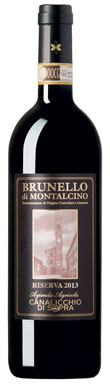

Francesco Ripaccioli only has 11 harvests under his belt but calls 2013 the most beautiful one so far. This is also the first year in...
2013
Canalicchio di SopraBrunello di Montalcino

Il Marroneto, Madonna delle Grazie, Brunello di Montalcino, Tuscany, Italy, 2013
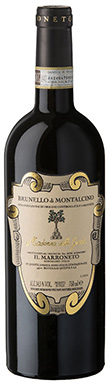
Is this going through a dumb phase? 2013 was a fairly classic vintage in Montalcino and this Madonna delle Grazie reflects that in its firm,...
2013
Il MarronetoBrunello di Montalcino
Siro Pacenti, Vecchie Vigne, Brunello di Montalcino, Tuscany, Italy, 2013
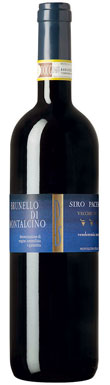
From two different sites, one in the north of the region and one in the south, this sensually enticing wine has a fleshiness and a...
2013
Siro PacentiBrunello di Montalcino
Gianni Brunelli, Riserva, Brunello di Montalcino, Tuscany, Italy, 2013
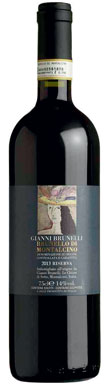
Gianni Brunelli's Riserva always contains a high percentage of the estate's Vigna Olmo plot. A warm, south-facing site, it gives the wine its richness, however...
2013
Gianni BrunelliBrunello di Montalcino
Podere le Ripi, Lupi e Sirene Riserva, Brunello di Montalcino, Tuscany, Italy, 2013
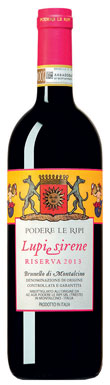
The Lupi e Sirene vineyard is planted with small alberello bush-vines at an extremely high density of 11,500 plants per hectare - more than double...
2013
Podere le RipiBrunello di Montalcino
Biondi-Santi, Riserva, Brunello di Montalcino, Tuscany, Italy, 2011
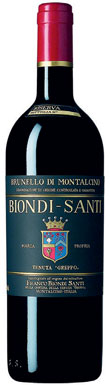
Made under the traditional Biondi Santi dispensation: from a fine vintage only and from vines of more than 25 years old, with an emphasis on...
2011
Biondi-SantiBrunello di Montalcino
Casanova di Neri, Cerretalto, Brunello di Montalcino, Tuscany, Italy, 2012
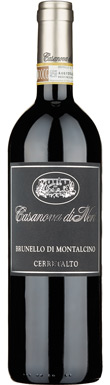
The Casanova di Neri domain of Giacomo Neri and his family has been one of the pioneers of sub-zonal, single-vineyard Brunello: its celebrated Cerretalto and...
2012
Casanova di NeriBrunello di Montalcino
Col d'Orcia, Poggio al Vento, Brunello di Montalcino, Tuscany, Italy, 2001
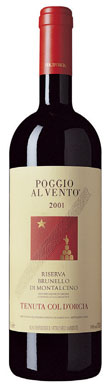
Col d’Orcia is one of the estates which keeps commercial stocks of older vintages like this single-vineyard wine, and I include it as an example...
2001
Col d'OrciaBrunello di Montalcino
Fattoria dei Barbi, Brunello di Montalcino, Tuscany, Italy, 2013
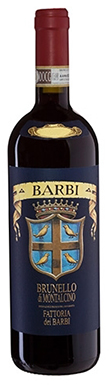
There are 200,000 bottles of this ‘blue label’ and it’s as classic as can be: from vineyards at 300m to 450m, and three full years...
2013
Fattoria dei BarbiBrunello di Montalcino
Fuligni, Brunello di Montalcino, Tuscany, Italy, 2013
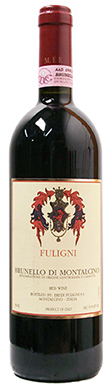
Pristine and fresh, with driving acidity: the Fuligni style expresses elegance above all, reflecting its cool-sited vineyards in the north of the region. This Riserva...
2013
FuligniBrunello di Montalcino
Sesti, Brunello di Montalcino, Tuscany, Italy, 2014
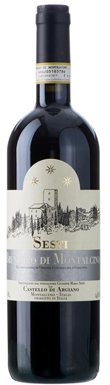
The Sesti estate extends over 102ha, of which 13ha are dedicated to vines. It's run by father and daughter team Giuseppe and Elisa Sesti, who...
2014
SestiBrunello di Montalcino
