
Bryant Family Vineyard: tasting these elusive Napa Cabernets
Bar one, the cult California Cabernets of Bryant Family Vineyard have long eluded Decanter’s Stephen Brook. But at a tasting of the new 2019 wines and some mature vintages, he had the chance to see if its reputation is justified.

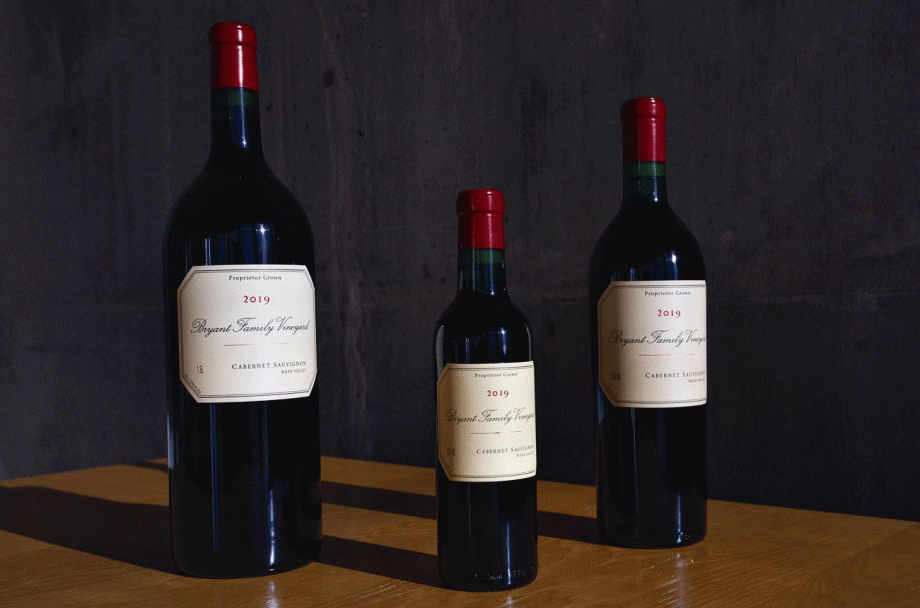
Pritchard Hill is a little known enclave just west of the Silverado Trail and to the south of Howell Mountain. Donn Chappellet was the pioneer here, in 1969, then in the late 1980s Don Bryant, a businessman from St Louis, Missouri, bought neighbouring vineyards.
The vines were planted to a range of varieties, including Gamay, that were of no interest to Bryant. Moreover they were not well looked after. So he replanted the entire 6ha to Cabernet Sauvignon, although other Bordelais varieties were added later.
Scroll down for tasting notes and scores of six Bryant Family Vineyard wines
Bryant pulled out all the stops, hiring megastar consultant Helen Turley to oversee wine production, although 10 years later they had a spectacular falling out. She was replaced by Philippe Melka (almost as fashionable and sought-after in those days) and also by Michel Rolland. Napa’s most esteemed viticultural consultant, David Abreu, was also on board.
Unsurprisingly, the wines – initially pure Cabernet Sauvignon – attracted admiring attention from the critics, scores often ranging from 96 to 100. Production was also very limited and Bryant was able to charge, and obtain, very high prices.
New winemaker, fresh changes
The vineyards lie at an elevation of about 275m, planted on undulating slopes that face north and west. They benefit from breezes emanating from Lake Hennessey, which lies in the heart of Pritchard Hill. The soils are essentially clay, although they are of volcanic origin.
Over the past decade Bryant has been enjoying a new lease of life. Cabernet Franc and Petit Verdot were added to the vineyards in 2014, and in 2016 there was a pure Cabernet Franc bottling.

Kathryn ‘KK’ Carothers joined as winemaker in 2018. She had previously worked for the biodynamic Adamvs Estate in Howell Mountain and, under her watch, Bryant began its own conversion. Early vintages aged in new oak, but Carothers modified the regime: now the red wines mature in about 70% new oak, the remainder in large casks or clay amphorae.
She has modified the range of wines too. Created in 2009, the Bettina cuvée, named after Bryant’s second wife, a former ballerina, blends parcels from vineyards owned and farmed by David Abreu. Unlike the estate wine, Bettina is a blend of Bordeaux varieties, although 85% tends to be from Cabernet Sauvignon. DB4 is the estate’s second wine, composed of lots not selected for the other two reds.
Reputation justified
I’ve been fortunate enough, over the past 30 years, to taste most of the Napa Valley‘s prestigious wines, including Screaming Eagle and Harlan. But Bryant – with the exception of its 1994 – has eluded me. That’s because distribution of already scarce wines has always been limited and, until January 2022, there was no British importer. Nor did Bryant enter its wines to wine competitions or other tastings.
I did rate that 1994 very highly though, so was curious to see whether Bryant’s stellar reputation was still justified during a tasting held by new UK importer Pol Roger in London recently.
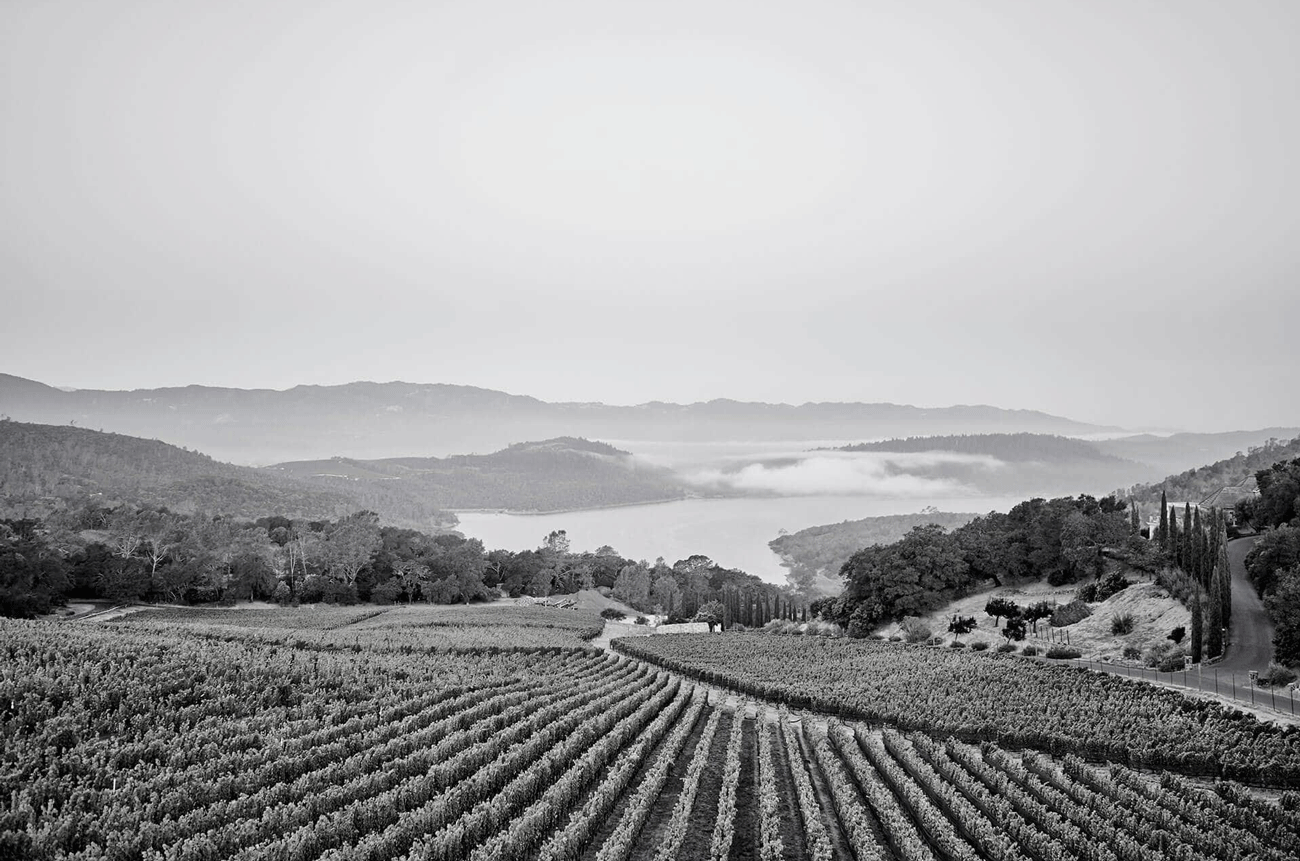
It is. The secret to Bryant’s excellence must lie in its perfectly located vineyards, but there is more to it. ‘The key’, says Carothers, ‘is maniacal selection – in the vineyards and then in the winery, and there’s optical sorting too.’ No blocks are predestined for any of the wines. Once the wine is in barrel, she makes a further selection so that only the finest lots go into the two main cuvées.
The Bryants are keen that their wines should be able to age, and they do. Even the 1997, from a California vintage that in many cases is now in decline, is in vibrant form.
Bryant Family Vineyard: Stephen Brook rates six wines
Related content
A drink with… Ray Signorello
California Cabernet 2017 and 2018: panel tasting results
Cain: a vertical from this Napa mountain Cabernet estate
Bryant Estate, Cabernet Sauvignon, Napa Valley, California, USA, 2019

2019 enjoyed an even growing season with no extremes and a leisurely harvest. This pure Cabernet Sauvignon has an imposing blackcurrant nose. The palate is...
2019
Bryant EstateNapa Valley

Bryant Estate, Cabernet Sauvignon, Napa Valley, California, USA, 2012
This vintage was known for producing rather soft, even facile wines, but that is not the case here. The nose is simply gorgeous, with lush...
2012
Bryant EstateNapa Valley
Bryant Estate, Cabernet Sauvignon, Napa Valley, California, USA, 1997
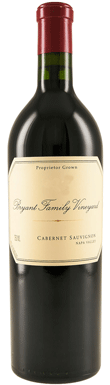
Acclaimed initially for their huge ripeness and power, the 1997s from Napa have not always fulfilled that early promise. This wine is joyous and fully...
1997
Bryant EstateNapa Valley
Bryant Estate, Bettina, Napa Valley, California, USA, 2019
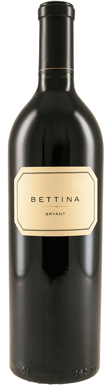
Given its youth, it's not surprising that the nose remains closed, with black fruits lurking in the background. It's suave and velvety, but has a...
2019
Bryant EstateNapa Valley
Bryant Estate, Bettina, Napa Valley, California, USA, 2009
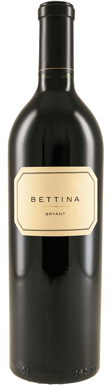
The nose is intense and flamboyant, with vibrant aromas of blackcurrant and menthol. The attack shows great ripeness and is assertive and pungent. There's a...
2009
Bryant EstateNapa Valley
Bryant Estate, DB4, Napa Valley, California, USA, 2019
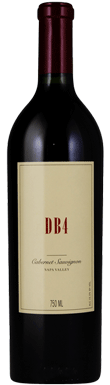
For a 'second' wine, this is no slouch. There's dense plummy fruit on the nose, which shows fine weight of fruit. The attack is soft...
2019
Bryant EstateNapa Valley
