
Carmenère marks 30 years in Chile
The unanticipated discovery in the Maipo Valley of this now-signature grape was Chilean wine’s defining moment. Three decades on, some of the country’s leading winemakers reflect on how they made a lost French variety their own.


It was a complete shock,’ says Alvaro Espinoza, remembering the fateful moment 30 years ago. Jean-Michel Boursiquot, the French ampelographer, had just informed him that his prized Merlot vineyard was not what he thought it was. ‘He told me it wasn’t Merlot at all… that it was a grape variety I’d never heard of – Carmenère!’
It was 24 November 1994, and Espinoza was a 32-year-old winemaker at Carmen, in Chile’s Maipo Valley region. Espinoza spoke some French, so he’d been invited to host Boursiquot and show him around Carmen’s vineyard. He certainly hadn’t been expecting a lightning-bolt moment – one that would change not only his career, but the history of Chilean wine.
Scroll down for 15 of Chile’s best Carmenère
At the time, Carmenère was believed to be practically extinct. This ancient variety had travelled around Europe’s wine regions, becoming one of the key varieties in Bordeaux by the early 1800s.
But when the devastating phylloxera plague wiped out great swathes of Europe’s vineyards, Carmenère was among the victims. The variety was all but lost from the vineyards of Bordeaux and was never replanted to any significant degree.
Survival in exile
But that belief, it turns out, was wide of the mark. While accurate records from the time are scant, the thinking is that Carmenère had already been brought over from France into Chile, along with other varieties, by the mid-1800s, before phylloxera hit Europe.
Leading Chilean historian Pablo Lacoste has stated, in an interview for Wines of Argentina, that ‘Carmenère and Malbec entered Chile and Argentina in the mid-19th century, as part of the Frenchification of viticulture…’
The Carmenère was mistakenly labelled as Merlot and planted around the country under a false guise. Thus it secretly survived in exile for more than 100 years, until that fateful spring day in 1994.
Now tasting the wine in tanks with Boursiquot, Espinoza could see how that plot of his best ‘Merlot’ had notably different flavours to the other plots – it was spicier, yet softer. The penny dropped. ‘I was suddenly really quite excited to be discovering this lost variety!’ he remembers.
But the dream discovery soon became a nightmare. ‘I was receiving threats every week over the phone,’ Espinoza goes on. ‘I lost several kilos due to stress.’ It transpired that many more of Chile’s so-called Merlot vines were in fact Carmenère – and some members of the Chilean wine industry were, to put it mildly, reluctant to embrace it.
At the time, Merlot was Chile’s boom variety – especially popular in the growing US market – and no one wanted Chile’s big secret to adversely affect sales. Just a few years earlier, Chile had suffered a similar fate with its Sauvignon Blanc, plantings of which had been revealed to be the far lower-quality Sauvignonasse variety.
The reputation of Chilean Sauvignon Blanc sank like a brick. Replanting with the correct variety took years; the reputational rebuilding would take decades.
‘We’d had a similar experience with our Sauvignon Blanc, so we had our concerns,’ remembers Aurelio Montes, then a consultant to Fundación Chile (the think tank that had brought ampelographer Boursiquot to Chile) and now one of Chile’s most prominent Carmenère champions.
‘But we were still completely shocked. Imagine discovering that we had an ancient variety in Chile which barely existed anywhere else in the world!’
A conundrum
They faced a conundrum. ‘Do we tell the world, or keep it quiet?’ recalls Montes. ‘It was a great embarrassment to have discovered a century later that our award-winning Merlots weren’t actually Merlot… Not only was it going to be embarrassing for Chile, but also for the critics who were giving it recognition.’
In the end, they ’fessed up. But those pioneers who first took Carmenère to market felt like they were swimming against the tide. ‘I honestly thought I was going to lose my job; almost every week I was told I was putting the future of Chilean Merlot at risk,’ remembers Espinoza.
He launched the 1994 vintage that Boursiquot had tasted as the world’s first commercial release of Carmenère (bottled under its synonym, Grande Vidure) in more than 130 years.
Espinoza travelled to key markets to showcase the new wine and discovery, to the serious concern of many at home. However, after one publication published a full-page splash on the revelation – and gave Chile its first 94-point score – the tide turned. Carmenère and Espinoza had left Chile as demons, but returned as heroes.
And so the real work began.

Teething trouble
‘It was a beautiful story – rescuing a prehistoric variety from extinction,’ Montes now concedes. ‘But it got off to a bad start… a lot of those first wines were terrible!’
With few significant points of reference in the contemporary wine world, Chile’s wine industry was now grappling with learning how to grow, vinify and market an unknown variety. And it wasn’t easy to master.
It was Carmenère’s challenging nature that contributed to it not being replanted in Bordeaux post-phylloxera – it is vulnerable to coulure (poor fruit set) and has a propensity for high vigour, which can have deleterious effects on yield, grape quality and, in turn, wine quality.
So if you get the climate, soil or viticulture wrong, you can end up with a very green, harsh and thin wine.
These are lessons Chile had to learn the hard way, through experience. Carmenère may have been an ancient variety, but it was now experiencing a second adolescence – and all the growing pains that come with it.
‘Chilean Carmenère quickly earned a bad reputation,’ recalls Montes. ‘There was a lot of poor-quality Carmenère that had been planted in the wrong places, harvested at the wrong time and vinified in the wrong way.’
Hard-learned lessons
The lessons have been hard-earned but there is a consensus among winemakers today: plant Carmenère somewhere warm with soils that are poor enough in nutrients to reduce vigour but that can retain adequate water in winter.
Also, the older the vines, the better. ‘The old vines naturally produce very small bunches, which mature really well,’ explains Undurraga winemaker Rafael Urrejola, whose Extinto vineyard in Cachapoal, south of Santiago, is more than 75 years old.
‘The dry-farmed old vines also naturally give you a lower pH and higher acidity, which is always the challenge with Carmenère.’
Because it can struggle to retain acidity in hot climates, Carmenère is often blended with higher-acid varieties such as Cabernet Sauvignon. But if you find a sweet spot, the variety can also stand on its own – as many of the best examples from Peumo and Apalta in particular go to show.

Old variety, new story
This year marks 30 years since the discovery of Carmenère in Chile. In the past decade, we’ve seen an enormous leap in quality, with a number of different paths to success being uncovered.
Two major Carmenère schools have emerged: the first, exploiting the variety’s late-ripening nature to the full, champions more opulent wines, lavish in their ripe fruit character and silky mouthfeel; the second favours a fresher, more peppery style, embracing the variety’s spicier side.
Montes is of the former school: ‘I believe in full ripeness for Carmenère,’ he affirms. ‘It is the last variety I harvest – only when we have the notes of dried figs, ripe cherries and blackberries, with smooth, mature tannins and a full body.’
Montes’ iconic Purple Angel is the embodiment of this style, a wine that is wildly successful in certain markets. Other major names, including Santa Carolina, Concha y Toro and Casa Silva, are also advocates of this school.
‘If there is any single grape variety that allows you to abuse a post-fermentation maceration, it is Carmenère!’ chuckles Mario Geisse, technical director at Casa Silva. ‘Although it has plenty of tannins, they are smooth and round, and you can have these extensive macerations without the wines being aggressive at all. Carmenère made in this way can age for well over a decade.’
On the flip-side, producers such as De Martino, JP Martin, Koyle, Maquis, Santa Rita and Undurraga are harvesting earlier and performing light macerations to obtain floral, spice-driven expressions.
‘We have learned that you can push the limits with Carmenère,’ says Santa Rita winemaker Sebastián Labbé, who started experimenting with a radically fresher style of Carmenère in 2017. ‘You can pick earlier, use whole bunches and cooler ferments to get much more texture and tension.’
Urrejola is of the same mentality: ‘We have actually started making our Carmenère more like Pinot Noir, with a really gentle extraction,’ he says. His new Extinto (soon to be available through UK agent Hallgarten Wines) is one of the most floral and elegant Carmenère wines I have tried to date, offering yet another dimension to this chameleonic variety.

Into the limelight
Whichever Carmenère school Chile’s winemakers belong to, one thing is for certain: Chilean Carmenère is no longer struggling with an adolescent identity crisis. These different styles of Carmenère reflect Chile’s growing confidence in its innate diversity of terroirs and personalities. Both schools of thought have their place, and undoubtedly both will attract a different set of followers.
And now, more than ever, Chile’s winemakers have been emboldened to share the incredible story – and wines – of this once-lost variety that found its way in Chile.
Chile’s best Carmenères
Related articles
Undurraga, Extinto, Alto Cachapoal, Cachapoal Valley, Chile, 2022
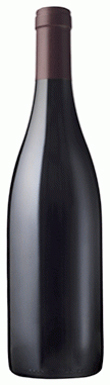

Extinto is winemaker Rafael Urrejola’s first foray into super-premium Carmenère, and is the result of finding inspiration in dry-farmed, ungrafted old vines in Cachapoal. This...
2022
UndurragaAlto Cachapoal

Santa Rita, Pewën de Apalta, Apalta, Colchagua Valley, Chile, 2021
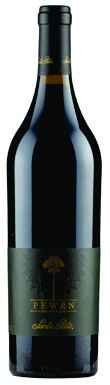
Coming from 100-year-old ungrafted vines in Apalta, this is a wine with excellent concentration but winemaker Sebastián Labbé has transformed this icon into a juicier,...
2021
Santa RitaApalta
Santa Carolina, Herencia, Peumo, Cachapoal Valley, Chile, 2020
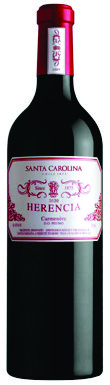
One of the most luscious and silky of Chile’s Carmenère wines, Herencia comes from the Carmenère mecca of Peumo in Cachapoal. Unabashedly opulent, there are...
2020
Santa CarolinaPeumo
Antiyal, Viñedo Escorial, Alto Maipo, Maipo Valley, Chile, 2020
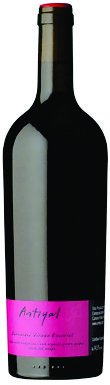
Maipo is where Álvaro Espinoza first discovered Carmenère in 1994. Viñedo Escorial shows that high-altitude character of Maipo, with lively freshness on the finish and...
2020
AntiyalAlto Maipo
Montes, Purple Angel, Colchagua Valley, Colchagua Valley, Chile, 2021
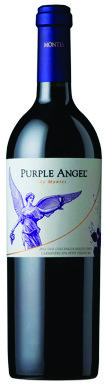
Aurelio Montes made Carmenère a Chilean icon with this wine. It still stands proud as one of the most luxurious Carmenère wines in the world....
2021
MontesColchagua Valley
Errazuriz, Kai, Aconcagua Valley, Aconcagua Valley, Chile, 2021
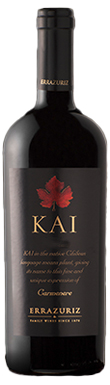
In recent vintages, this top Carmenère from Errazuriz has taken on an ever brighter style. The 2021 vintage shows appealing vibrancy of red fruit on...
2021
ErrazurizAconcagua Valley
Koyle, Cerro Basalto Cuartel G2, Los Lingues, Colchagua Valley, Chile, 2022
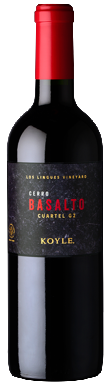
G2 comes from one of the highest plots in Koyle’s biodynamic Los Lingues vineyard, where vines that are planted into the basalt bedrock with very...
2022
KoyleLos Lingues
Santa Rita, Floresta Carmenère, Apalta, Colchagua Valley, Chile, 2022
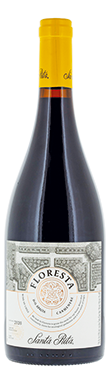
Vividly fresh, this is one of the most contemporary styles of Carmenère in Chile, really embracing the variety’s naturally floral and herbaceous edge. Floresta is...
2022
Santa RitaApalta
Concha y Toro, Carmin de Peumo, Peumo, Cachapoal Valley, Chile, 2021
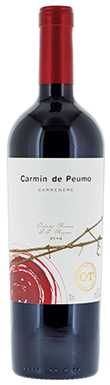
Concha y Toro’s Terruñyo Carmenère is their reliable flagship, but this super-premium Carmin de Peumo offers a far more seductive vision of the variety. Coming...
2021
Concha y ToroPeumo
Casa Silva, S7, Los Lingues, Colchagua Valley, Chile, 2022
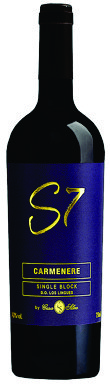
93
Winemaker Mario Geisse is on a quest to show the potential of Carmenère in Los Lingues. Although not as plush as Casa Silva’s top Carmenère, Microterroir, there is a really appealing brightness and perfume to this new label. Engaging notes of cedar, cassis and wild flowers are married with a vivid herbaceous streak that rings true to the variety.
2022
Casa SilvaLos Lingues
Maquis, Viola, Colchagua Valley, Chile, 2021
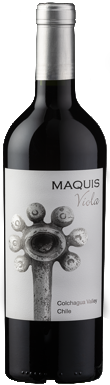
Maquis has always offered quite a different expression of Colchagua. The estate is surrounded by the region’s two biggest rivers, with deep clay and gravel...
2021
Maquis
Caliterra, Petreo, Colchagua Valley, Chile, 2021
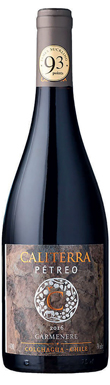
This is the vibrant new contender from Caliterra in Colchagua which reveals a savoury style of Carmenère, laden with graphite, dark spices and smoked meat....
2021
Caliterra
Undurraga, T. H. Peumo Carmenère, Peumo, Cachapoal Valley, Chile, 2022
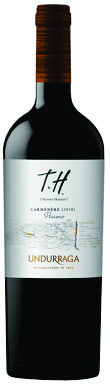
Terroir Hunter is always one of Chile’s best value wines and this Carmenère from Peumo is no exception. Deliciously fragrant with the classic roasted-pepper nose...
2022
UndurragaPeumo
JP Martin, Rumay, Limarí Valley, Chile, 2022
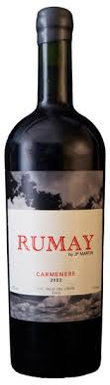
Coastal Carmenère is not too common, but this bright and contemporary style from Limarí is a really appealing wine to explore the variety’s spicier side....
2022
JP Martin
De Martino, Alto de las Piedras, Maipo Valley, Chile, 2022
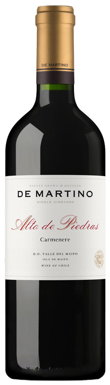
This stripped-back Carmenère shows the increasingly subtle red wine styles of De Martino, focused on fresher, nuanced expressions. Coming from their vineyard in Isla de...
2022
De Martino
