
Castello Nipozzano: Tasting Mormoreto
Aldo Fiordelli tastes four wines from four decades of Castello Nipozzano's flagship wine...


During the annual ceremony of the new vintage of Castello Nipozzano, Marquis Lamberto Frescobaldi proposed a blind tasting of nearly all of the Sangiovese, Cabernet Sauvignon and Merlot from the family estates in Tuscany.
There were six wines for each grape variety – from Nipozzano (Rufina), Remole (Toscana IGT), Castiglioni (Chianti), Castelgiocondo (Montalcino), Ammiraglia (Scansano) and Perano (Chianti Classico) – to be tasted blind by an audience of journalists and winemakers. The wines were not all easy to identify, with similarities in style between many of them despite coming from different regions or being made from different varieties.Guests were asked to nominate their favourite sample from each flight, as well as the best wine overall, and Castelgiocondo from Montalcino came out as the winning estate.
Castello Nipozzano
The medieval castle of Castello Nipozzano lies in the Chianti Rufina zone, some 15.5 miles east of Florence. Its 300 hectares of vineyards at 350 metres above sea level cover the mountainous slopes facing the Arno river. It is one of the most immediately recognisable of all the Frescobaldi estates, and is home to the family’s historic wine collection.
In 1855, Vittorio and Leonia Albizi returned to Nipozzano from Burgundy, where the family had reloacted after fleeing the Medicis in the 16th century. Vittorio was given permission to plant previously unknown varieties in Tuscany, such as Cabernet Sauvignon, Cabernet Franc, Merlot and Petit Verdot by the Accademia dei Georgofili (the Florentine educational institution), under the guise of agricultural education.
Mormoreto
Since 1983, Nippozano has produced Bordeaux-style blend, Mormoreto in the Rufina subzone using these same varieties. It’s a symbol of the estate’s history and – a blend of predominantly Cabernet Sauvignon and Cabernet Franc – it’s an international icon on the home turf of Sangiovese.
The addition of some Merlot to the blend has today given way to Petit Verdot and Sangiovese instead. ‘From 2013, the addition of a small quantity of Sangiovese increased its elegance even more,’ notes Lamberto Frescobaldi, CEO of the group.
Mormoreto benefits from its Appennine vineyards, which are warm during the day and extremely cool at night, producing ripe tannins, preserving tartaric acid and promoting good acidity.
Marquis Frescobaldi said, ‘When walking along the rows of Cabernets and Petit Verdot, I always think back to 150 years ago when my ancestors first planted these varieties and dreamed of producing great wine.’
The distinctive Bordeaux blend of Mormoreto is steelier in good vintages compared to commonly referenced Bolgheri wines. From this tasting of four vintages from four decade, it was clear that the 2015 was the most precise and balanced, while the 2005 was more powerful and ripe than elegant. The 1995 was fresh, chewy and complex, while the 1985 was a bit too evolved despite a wide palette of aromas.
The tasting undoubtedly opens up a debate about the quality and drinkability of 1985 in Tuscany: a vintage in which Niccolò d’Afflitto, chief winemaker of the Frescobaldi estates, reminds us that it was possible to cross the Arno’s riverbed twice – when it was iced over in the winter and dried out in the summer. With such extremes, one might ask: was it erroneously celebrated?
2019 vintage preview in Tuscany
Coming back to the latest vintage – 2019 – Niccolò d’Afflitto noted how similar the weather of Tuscany is becoming to Bordeaux, due to more rainfall during the growing season.
The spring was cool and rainy, while the summer was not too warm despite a dry July. There were big swings in night and day average temperatures in August. Due to an early bud-burst and a delayed harvest, 2019 experienced a long growing season, making it a very good one in Tuscany.
Four decades of Mormoreto:
You may also like:
Is Le Serre Nuove Italy’s best second wine?
The best Brunello di Montalcino wines: Expert reviews
Antinori masterclass: Super Tuscans from 1999 to 2013
Castello Nipozzano, Mormoreto, Toscana, Tuscany, Italy, 2015
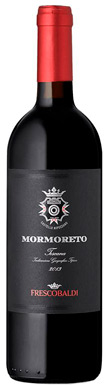

<p>With Sangiovese instead of Merlot in the blend, this Mormoreto is the best tasted from the four decades. Nipozzano favours warm vintages such as in...
2015
Castello NipozzanoToscana

Castello Nipozzano, Mormoreto, Toscana, Tuscany, Italy, 2005
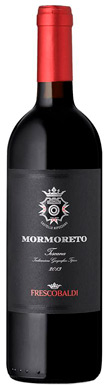
<p>The harvest in 2005 started in the middle of September at the Merlot vineyard in Pelago, near Florence, concluding on 15 October after a mild...
2005
Castello NipozzanoToscana
Castello Nipozzano, Mormoreto, Toscana, Tuscany, Italy, 1995
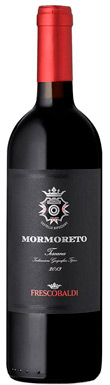
<p>In 1995, Mormoreto appeared for the first time labelled as Toscana IGT. This cool vintage was considered inferior to the celebrated 1997 at the time,...
1995
Castello NipozzanoToscana
Castello Nipozzano, Mormoreto, Vino da Tavola, Tuscany, Italy, 1985
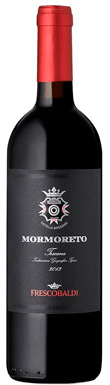
<p>Exceptional, perhaps the best in the last 50 years. A very favourable growing season with a rainy and dry spring, then a dry harvest,' said...
1985
Castello NipozzanoVino da Tavola
