
A restless innovator: Champagne Jacques Lassaigne producer profile
‘More often than not, his experiments succeed, and the cognoscenti fight to find his wines’. Charles Curtis MW profiles this star producer and his unique, compelling wines.

Emmanuel Lassaigne – vigneron inspiré
Despite his lack of formal training and his base in Montgueux, a relatively obscure corner of Champagne, Emmanuel Lassaigne is producing some of the most compelling wines in the region.
A restless innovator, he is always ready to try a new technique. According to Lassaigne, ‘most people do a blend in Champagne, to have every year the same, but it is not my goal. It would be very boring to have every year the same.’
More often than not, his experiments succeed, and the cognoscenti fight to find his wines. It was once almost necessary to be in Champagne to drink them. Now he is exporting to 40 countries, and the wines are more readily available.
Scroll down to see tasting notes and scores for 10 Jacques Lassaigne wines
‘Among the most outstanding value wines anywhere in Champagne’
Lassaigne strode out of his winery to greet us for our visit in April, and thus began one of my most memorable visits to the region as we stood overlooking the vineyards of Montgueux.
Keen to emphasise the unique character of Montgueux, he insists that it is a region apart. I suggested that while it was politically a part of the Aube département, it bore more resemblance to the Côte des Blancs. He insisted it was not a part of the Côte des Blancs. ‘It has similarly chalky soils, but the chalk is completely different’, he explains. The chalk in the Marne is from the Campanian period, while that in Montgueux is from the Turonian period, tens of millions of years earlier.
What makes Montgueux special?

Lassaigne has a point – Montgueux is distinctly different. It has a unique vantage point over the plains of ancient Troyes, where almost 1,600 years ago the Romans and the Visigoths teamed up to defeat Atilla the Hun. However, Montgueux stands apart from the rest of the Aube where it is located.
The Aube is dominated by Pinot Noir planted on Kimmeridgian marl, while Montgueux is an outcropping of Turonian chalk covered with a thin layer of clay and flint, planted to Chardonnay.
Champagne Jacques Lassaigne at a glance
Date founded: 1964
Owned by: Emmanuel Lassaigne
Annual production: 50,000 bottles
Key vineyards: Bouillerate, Clos Sainte-Sophie, La Grand Côte, Le Cotet, Les Paluets
Key wines: Autour de Minuit, Clos Sainte-Sophie, Haut Revers du Chutat, Les Vignes de Montgueux, La Colline Inspirée, Le Cotet
Vines have been grown in the region for centuries, but many vineyards were not replanted after phylloxera. The village’s vineyards were not developed to their current extent until the 1960s.
Emmanuel’s father Jacques was among the pioneers at this time, planting the lieu-dit of Le Cotet in 1964. Jacques, along with most of his neighbours, sold his grapes to the négociant houses based in Reims and Epernay.
Grapes from Montgueux quickly found buyers among the chefs de cave from the large houses, particularly Jacques Péters of Veuve Clicquot and Daniel Thibault of Charles Heidsieck. Thibault was known for comparing Montgueux to Montrachet, and loved to purchase fruit from the village.
Lassaigne points out that even today, most of the fruit from Montgueux is still sold on to the négociant houses: ‘There are 80 growers in the village; 22 make wines, but only 12 of us make wines in Montgueux.’ His own production varies from 45,000–55,000 bottles according to the vintage, with half of that total sold in France.

What style of wine does Montgueux produce?
According to Lassaigne, the tendency is for the vines of Montgueux to produce very ripe grapes – ‘showing almost exotic fruits, like melon, pineapple, and mandarin’. The wines show these tropical aromas because Montgueux is in the southern part of Champagne and because most of the vines face due south. The lieu-dit La Grande Côte typifies this kind of terroir.
To arrive at a perfect balance, Lassaigne blends the wines from different sites, using the freshness of the grapes from his east-facing vines higher on the slope in Le Cotet as an antidote, and to bring more citrus aromas of lemon and grapefruit.
According to Lassaigne, the saving grace of Montgueux is the Turonian chalk, which gives a saline minerality to the wine, ‘like the crystals of salt in a piece of aged Comté’.
Unlike some producers in Champagne, he has come to terms with the vinous side of his wines. ‘Some put the bubbles before the wine. I put the wine before the bubbles’. It is an almost Burgundian approach – he uses less yeast than most producers for the second fermentation (for the tirage) to have softer mousse and accentuate the wine-like character of his Champagne.

‘Nothing is added at all’ – Lassaigne’s winemaking philosophy
From 1970, Jacques began to hold back some bottles to sell locally, but these were still wine, not sparkling. Sparkling Champagne was not produced here until 1980.
Emmanuel joined his father in 1999, and his first solo vintage was in 2002. Although the domaine is not certified, he has continued to employ the organic methods used by his father in the vineyard. He points out that he uses no soil inputs (fertiliser, manure, or compost), herbicides, or insecticide (even organic), and all the rows are grassed over.
Lassaigne presses everything at his winery, including the grapes that he purchases. He uses an old Coquard press from the 1950s because he likes the control it gives him.
Approximately two-thirds of the juice is fermented in tank and one-third in barrels, both in large foudres and smaller casks made from local oak harvested near Troyes in the Forêt de Vauchassis.
As in the vineyards, ‘natural’ methods are used in the winery. Although he uses a small amount of sulphur under the press, no more is added during the winemaking process nor when the wine is disgorged.
In fact, nothing is added at all – the bottles are disgorged by hand to limit the loss of wine, and they are not topped up. No dosage has been added to any of the cuvées since 2012, and the wines are not filtered.

An eclectic range of cuvées
Lassaigne describes the range as having five types of cuvée. The entry point is called Les Vignes de Montgueux. This is the flagship of the house and among the most outstanding value wines anywhere in Champagne. There is also a single-vineyard, multi-vintage blend called Le Cotet; a cuvée fermented in barrel called La Colline Inspirée; a vintage cuvée fermented entirely in tank that is made every year; and a single-vineyard, barrel-fermented wine, the Clos Sainte-Sophie.
He purchases the fruit for this last wine from the Valton family, who have owned the Clos for a century. It was one of the favoured sites of Daniel Thibault, who bought all of the grapes from the 1.2-hectare vineyard. Lassaigne considers himself fortunate to purchase grapes from a third of this, which he began to vinify in 2010, making one of the best examples of a prestige cuvée from a grower.
Lassaigne loves to experiment. His description of his range is somewhat disingenuous since it ignores these experiments, which he calls ‘Cuvées Ephémères’, which can be one-offs or make periodic appearances. These are identified as ‘scenes’ belonging to different ‘acts’. Acte I refers to still wines (Coteaux Champenois), and Acte II was a series of non-vintage rosés that are now discontinued, while Acte III is a series of vintage-dated wines fermented in various types of barrel, including some purchased from natural wine producer Jean-François Ganevat in the Jura and others purchased from Cognac. Acte IV is consecrated to single-vineyard wines from the site La Grande Côte, while Acte V refers to skin contact wines.
Each of these is unique, a compelling example of the terroir of Montgueux, and a great reason to discover Champagne Jacques Lassaigne.
Champagne Jacques Lassaigne timeline
1964: Le Cotet planted
1970: Jacques Lassaigne begins to sell ‘Vin Nature de Champagne’ (precursor of Coteaux Champenois)
1980: First (sparkling) Champagnes were bottled from Le Cotet
1999: Emmanuel returns to assist his father
2002: Emmanuel’s first solo vintage
2004: First production of barrel-fermented La Colline Inspirée
2010: First vintage of the Clos Sainte-Sophie
2012: From this vintage, all the Champagnes are sold without dosage
The 10 Jacques Lassaigne Champagnes to try:
Related content:
Producer profile: Franck Bonville
Champagne crusader Pierre Péters: producer profile
From non-vintage to multi-vintage: Champagne rips up the rule book
Jacques Lassaigne, Dégorgement Tardif, Champagne, France, 2008
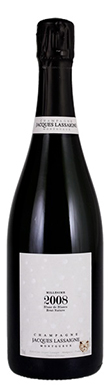

This wine shows a lovely evolution, with a softening and deepening of the fruit to show aromas of candied lemon peel and quince paste with...
2008
Jacques Lassaigne

Jacques Lassaigne, Champagne, France, 2013
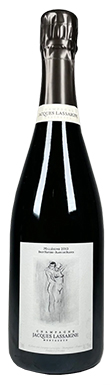
This compellingly beautiful wine opens with aromas that include a piercing, lemony fruit, salty minerality, chalk, smoke and spice. On the palate, there is a...
2013
Jacques Lassaigne
Jacques Lassaigne, Autour de Minuit, Champagne, France, 2016
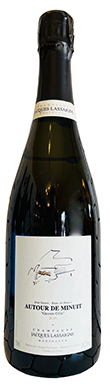
Autour de Minuit 2016 is a wine that will stop you in your tracks. It is vinified on the lees of vin jaune in a...
2016
Jacques Lassaigne
Jacques Lassaigne, Clos Sainte-Sophie, Champagne, France, 2015
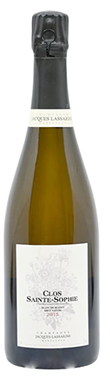
This is a superbly elegant wine, ripe with apple and quince fruit, hints of flowers, brioche and spice, but there is an unexpected finesse and...
2015
Jacques Lassaigne
Jacques Lassaigne, La Colline Inspirée, Champagne, France
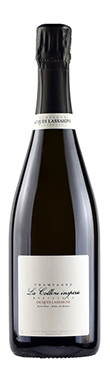
There are lovely, up front, crazy coconut and tropical fruit aromas, along with a bit of spice and tangy barrel-aged oxidative notes. The texture is...
Jacques Lassaigne
Jacques Lassaigne, Haut Revers du Chutat, Coteaux Champenois, France, 2010
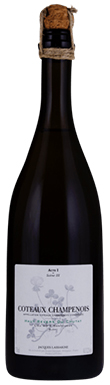
This superb wine for me is every bit the equivalent of grand cru Chablis from the same year, with a lovely intensity of bright lemony...
2010
Jacques Lassaigne
Jacques Lassaigne, Le Cotet, Champagne, France
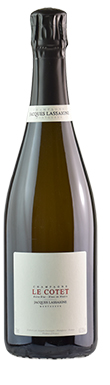
This magnum of Le Cotet is starting to open now, with notes of smoke, truffle and brioche over ripe green apple fruit. The bright acidity...
Jacques Lassaigne
Jacques Lassaigne, Le Grain de Beauté, Champagne, France, 2015
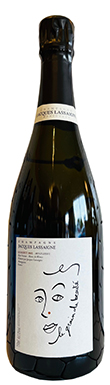
This bottling shows a richer side of Montgueux, with ripe pear and peach notes adorned with floral notes, a bit of cream, and some gentle...
2015
Jacques Lassaigne
Jacques Lassaigne, Les Vignes de Montgueux, Champagne, France
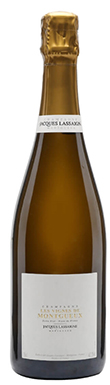
The nose of this blanc de blancs is appealingly ripe but not overly so, with a pleasant balance of apple, lemon peel and apricot touched...
Jacques Lassaigne
Jacques Lassaigne, Rosé de Montgueux, Champagne, France
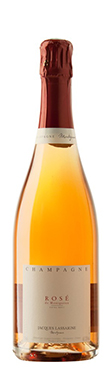
According to Emmanuel Lassaigne, this is ‘like a wrong blanc de blancs’ - it has a chalky, saline, lemony feel, but there is an agreeable...
Jacques Lassaigne
Jacques Lassaigne, Dégorgement Tardif, Champagne, France, 2008
This wine shows a lovely evolution, with a softening and deepening of the fruit to show aromas of candied lemon peel and quince paste with...
2008
Jacques Lassaigne
Jacques Lassaigne, Champagne, France, 2013
This compellingly beautiful wine opens with aromas that include a piercing, lemony fruit, salty minerality, chalk, smoke and spice. On the palate, there is a...
2013
Jacques Lassaigne
Jacques Lassaigne, Autour de Minuit, Champagne, France, 2016
Autour de Minuit 2016 is a wine that will stop you in your tracks. It is vinified on the lees of vin jaune in a...
2016
Jacques Lassaigne
Jacques Lassaigne, Clos Sainte-Sophie, Champagne, France, 2015
This is a superbly elegant wine, ripe with apple and quince fruit, hints of flowers, brioche and spice, but there is an unexpected finesse and...
2015
Jacques Lassaigne
Jacques Lassaigne, La Colline Inspirée, Champagne, France
There are lovely, up front, crazy coconut and tropical fruit aromas, along with a bit of spice and tangy barrel-aged oxidative notes. The texture is...
Jacques Lassaigne
Jacques Lassaigne, Haut Revers du Chutat, Coteaux Champenois, France, 2010
This superb wine for me is every bit the equivalent of grand cru Chablis from the same year, with a lovely intensity of bright lemony...
2010
Jacques Lassaigne
Jacques Lassaigne, Le Cotet, Champagne, France
This magnum of Le Cotet is starting to open now, with notes of smoke, truffle and brioche over ripe green apple fruit. The bright acidity...
Jacques Lassaigne
Jacques Lassaigne, Le Grain de Beauté, Champagne, France, 2015
This bottling shows a richer side of Montgueux, with ripe pear and peach notes adorned with floral notes, a bit of cream, and some gentle...
2015
Jacques Lassaigne
Jacques Lassaigne, Les Vignes de Montgueux, Champagne, France
The nose of this blanc de blancs is appealingly ripe but not overly so, with a pleasant balance of apple, lemon peel and apricot touched...
Jacques Lassaigne
Jacques Lassaigne, Rosé de Montgueux, Champagne, France
According to Emmanuel Lassaigne, this is ‘like a wrong blanc de blancs’ - it has a chalky, saline, lemony feel, but there is an agreeable...
Jacques Lassaigne