The changing styles of Valpolicella: Fresh vs dried grapes


Expressing Valpolicella’s true spirit is a matter of taste, reveals Michael Garner…
Ernest Hemingway knew exactly what to expect from his glass of Valpolicella. In his 1950 novel Across the River and into the Trees, his mouthpiece, the cantankerous Colonel Cantwell, refers to his favourite drop as ‘the light, dry red wine which was as friendly as the house of your brother’. His readers might struggle to find an example to fit that description today: Valpolicella is a wine style in real crisis. Production has plummeted, and the style Hemingway loved is being squeezed flat between two monoliths: Ripasso and Amarone. The boom in the popularity of Amarone has caused an even more stratospheric rise for Ripasso: the more Amarone is made, the more lees become available and the greater the quantity of Valpolicella being refermented on those lees.
Scroll down for Michael Garner’s top 8 Valpolicellas made with fresh and dried grapes
A second, more invidious threat puts Valpolicella’s future in further doubt. Since Ripasso was officially recognised – it was first incorporated into the Valpolicella denomination in 2007, receiving its own DOC in 2010 – a taste has developed for a rich, ripe style of Veronese red wine. At the same time, a new prototype of Valpolicella Superiore has been emerging, using either riper grapes that are harvested later (a process known as sovramaturazione) or grapes that are semi- dried using the appassimento process. In both instances the aim is to make a wine with greater colour, body and alcohol.
Valpolicella in a nutshell
Traditionally, Valpolicella DOC and Valpolicella Superiore DOC have been produced from freshly harvested grapes. There are small differences between the two categories in terms of production regulations, but there can be a million miles between them in terms of style. Unfortunately, labelling regulations don’t help the consumer to identify what kind of Superiore is in the bottle.
Occasionally a back label will state that the wine has been produced from uve leggermente appassite (lightly dried grapes) or refer to double fermentation where dried fruit must has been Dried grapes destined for appassimento at Monte dall’Ora introduced at a later stage to kick-start a secondary fermentation; otherwise it’s a question of knowing the house style and the individual producer.
In addition to Valpolicella and Valpolicella Superiore, a vineyard can produce three other styles of wine, which are based on the appassimento process. This involves drying grapes on wooden racks or plastic trays in what is known as a fruttaio or drying room.
Recioto is a sweet dried-grape wine, while Amarone is the dry version of Recioto. Ripasso is a young Valpolicella refermented on the lees of either of Recioto or Amarone. In addition, the Valpolicella area contains two separate sub-zones: Classico and Valpantena, which produce all styles.
This new style is often referred to as mini-Amarone and may contain some residual sugar (usually about 5g/l). The worrying recent trend is that sovramaturazione or appassimento methods are now being used for everyday Valpolicella DOC wines, and a small number of growers are using a proportion of concentrated grapes to enrich their wines.
There has been a significant backlash against the new Valpolicella style. Alessandro Castellani at Ca’ La Bionda says: ‘Valpolicella has its own identity: it’s either the fresher, everyday style that most people are familiar with or, as Superiore, a more complex wine which can, with age, resemble fine Burgundy.’ In 1998, Castellani decided to dedicate the family’s CasalVegri vineyard to the production of Valpolicella Classico Superiore, using fresh fruit only. This went against the grain: Valpolicella has invariably been produced from what remains in the vineyard after the initial selection of fruit has been harvested for Amarone or Recioto.
There are a growing number of producers who firmly oppose the idea of enhanced Valpolicella and the use of appassimento for wines other than Amarone, Recioto and Ripasso, including Alessandra Zantedeschi of Monte Dall’Ora. ‘Our idea is to make a Valpolicella that is all about the vineyard and our traditional varieties, one with a true sense of place,’ she says. ‘Appassimento is a technique that may bring concentration, but compromises that freshness and elegance.’
Similarly at Antolini, Pier Paolo Antolini and his brother Stefano have released a Valpolicella Classico Superiore made exclusively with freshly harvested grapes. ‘Quite simply, we’d had enough of heavy, over-sweetened Valpolicella: we prefer the elegance and freshness that represents the wine’s true tipicita,’ he explains.
Turning up the volume
Growers who choose to make a richer style of Valpolicella Superiore, however, also have the courage of their convictions. Luca Erbice of Villa Erbice in the Mezzane valley maintains that grapes withered slightly on the vine give its Monte Tombole Valpolicella Superiore desirable characteristics: ‘We started using sovramaturazione to get a wine with a more intense colour, higher alcohol, greater structure and body, and fewer green notes on the nose. It also means that we have to carry out a pretty severe harvest and select the right fruit, but we believe it’s worth it,’ he says.
A common approach is to embrace a middle way, combining both fresh and dried fruit. For the past 15 years, Ca’ Rugate’s Michele Tessari has done so in the production of Campo Lavei Valpolicella Superiore. ‘We find it gives the wine a greater intensity of fruit and improves drinkability. The structure is enhanced, so the wine is more suitable for wood ageing.’
There are wineries that make Valpolicella using 100% dried fruit. Since the mid-1980s, modern-day legend, Illasi-based Romano Dal Forno has produced Valpolicella Superiore with fruit dried for about six weeks. It has a reputation as one of the area’s longest-lived wines, providing inspiration for other growers in the valley. Just a few hundred yards from the landmark Castello di Illasi, the Trabucchi family makes a charming, youthful Valpolicella from fresh grapes, as well as two Valpolicella Superiore wines using fruit dried for different lengths of time. ‘We like to vary the drying period between around 15 days [for Terra di San Colombano] and 25 days [for Terra del Cereolo],’ explains Giuseppe Trabucchi. ‘This fine-tunes various aspects of aroma and flavour, but the main difference is one of weight and richness in the mouth.’
In the Classico zone, Raffaele Boscaini of the Masi winery, which makes fine examples of both fresh- and dried-fruit Valpolicella Superiore, highlights the area’s millennia-long tradition of producing wine from dried grapes. ‘We have over 2,000 years’ experience of working in this way. While appassimento is not the only way to produce great wine, it is a singular process which produces a singular style.’ Indeed, the godfather of modern Valpolicella, the great Giuseppe Quintarelli, was a fervent advocate of appassimento across all styles, insisting the process formed the basis for the area’s rise to prominence.
For now, most everyday Valpolicella is still made in the classic fashion: cool-fermented in stainless steel, bottled early to help conserve the wine’s vibrant, soft fruit aromas. When the wines are well made and based on good quality fruit, this style does not need a helping hand: purity of fruit, elegance, lively acidity and an inimitable freshness are its hallmarks.
Using appassimento or sovramaturazione showcases macerated and preserved fruit flavours of black cherry and fig, and helps to tease out Corvina’s spicy character. The main effect is greater texture: luscious sensations take over from the leaner, more ethereal, more elegant nature of the fresh-fruit versions.
Yet the temptation that comes with using semi-dried grapes is to produce a sweeter style, which does the wine few favours when it comes to pairing with food.
The two divergent styles of Superiore give cause for real celebration and there are many excellent examples of both, but it is difficult not to sympathise with the fresh-fruit Valpolicella lobby – particularly if that friendly house, which was such a haven for the great novelist, is not to become a mausoleum.
Michael Garner is a DWWA Regional co-Chair for Italy and author of Amarone and the Fine Wines of Verona
See Michael Garner’s top 8 Valpolicellas made with fresh and dried grapes
You may also like
Best Veneto wines: Expert picksOff the beaten track: 10 hidden gems in Southern ItalyTen of the best Italian vineyards & terroirsReimagining BarberaLe Pergole Torte: One of Italy’s most consistent wines
Ca' La Bionda, CasalVegri, Valpolicella, Classico Superiore, Veneto, Italy, 2015
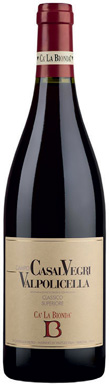

Made using fresh grapes only. Spicy red cherry nose with notes of mint and fennel. An exquisite palate that’s lean, lithe and graceful with deep, peppery and smoky-toned red fruit characters sustained by precise acidity. Stunning.
2015
Ca' La BiondaValpolicella

Tedeschi, Maternigo, Valpolicella, Superiore, Veneto, Italy, 2015
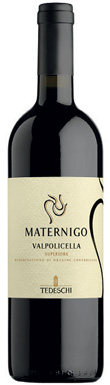
Using extra-ripe grapes from the Impervio vineyard high above Mezzane, this is a wine with real swagger. Glorious and beautifully balanced mix of fresh-and dried-fruit aromas and flavours. Exceptional.
2015
TedeschiValpolicella
Monte dall'Ora, San Giorgio, Valpolicella, Classico Superiore, Veneto, Italy, 2015
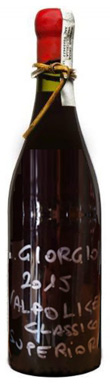
Fresh grapes only. It’s hard to believe this is their first vintage from rented vines high up at San Giorgio. Magnificent aromas of woodsmoke, aniseed, clove and black pepper and intense, juicy red fruit flavours.
2015
Monte dall'OraValpolicella
Antolini, Persegà, Valpolicella, Classico Superiore, Veneto, Italy, 2016
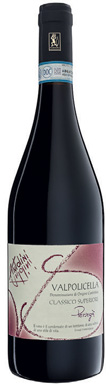
Fresh grapes only. Great authenticity here: pure and focused fruit characters underscored by bracing acidity. Vibrant and uncompromising: love it or hate it, but try it!
2016
AntoliniValpolicella
Novaia, I Cantoni, Valpolicella, Classico Superiore, Veneto, Italy, 2015
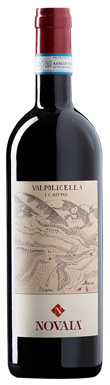
Made with semi-dried or extra ripe grapes. Scented raspberry and black cherry nose with more than a hint of violets. Broad, fleshy and voluptuous palate shaped by good acidity. Great poise and already very approachable.
2015
NovaiaValpolicella
Speri, Sant’Urbano, Valpolicella, Classico Superiore, Veneto, Italy, 2015
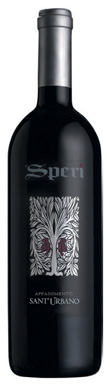
Made with semi-dried or extra ripe grapes. Intense and spicy nose with clove, black pepper and tobacco notes to the fore. Caramelised fruit flavours with notes of crème brûlée, mint and pepper. Beautifully balanced but needs time.
2015
SperiValpolicella
Rubinelli Vajol, Valpolicella, Classico, Veneto, Italy, 2017
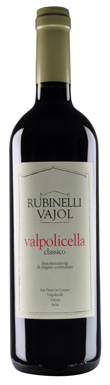
Fresh grapes only. Super-fresh in character, showing fragrant red cherry and herb aromas. Poised and charming on the palate, with sensations of cherry, raspberry, tarragon and woodsmoke. Lovely acidity. A delightful textbook example.
2017
Rubinelli VajolValpolicella
Gamba, Le Quare, Valpolicella, Classico, Veneto, Italy, 2017
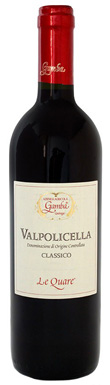
Fresh grapes only. A profusion of hedgerow fruit aromas: herb-brushed blackberry, damson and sloe. Ripe but zingy with lots of energy. Assertive and classic.
2017
GambaValpolicella
