
Château Ducru-Beaucaillou masterclass: DFWE London 2024
Guests at the recent Decanter Fine Wine Encounter in London were treated to a masterclass that spanned three decades of Bordeaux 'Super Second' – Château Ducru-Beaucaillou.


Château Ducru-Beaucaillou is one of the most revered properties on Bordeaux’s Left-Bank.
Dating back to 1720, this St-Julien estate has been in the top-echelon of wines of the Médoc for several centuries, confirmed with Ducru’s second-growth classification in 1855.
Those lucky to attend this fascinating masterclass were able to taste Ducru’s second and third label wines (La Croix Ducru-Beaucaillou and Le Petit Ducru de Ducru-Beaucaillou) before tasting six examples of the grand vin from some of the finest Bordeaux vintages over the past 30 years.
Scroll down for notes and scores from the masterclass
Sadly, Bruno-Eugène Borie (Chairman of Ducru-Beaucaillou) was unable to attend as planned, but his shoes were very adequately filled by Technical Director Emmanuel Bonneau and Tracey Dobbin MW – Special Adviser for wines & markets.
Dobbin started with a short history of Ducru, before moving on to talk about the property’s distinctive terroir and how this both shapes and influences the range of wines.

The Borie family
Since 1720, Ducru-Beaucaillou has always been family owned, with the Bergeron’s the first owners, selling the property to the family Ducru in 1795.
The Johnston family (wealthy Parisian négociants) took charge from 1866, before passing on the reins to M. Desbarat in 1929.
Desbarat, wishing to avoid inheritance issues, sold Ducru-Beaucaillou to François Borie in 1941.
Jean-Eugène Borie took over from his father in 1959, with Bruno-Eugène representing the third generation of the Borie family. He grew up at Ducru, taking charge in 2023.
For 300 years, Ducru-Beaucaillou has been a primary or secondary home for the owner, placing them right in the heart of decision making – a role clearly relished by the current incumbent.
Borie (now 68) is energetically overseeing investments in vineyard replanting, a new state-of-the-art winemaking facility, and significant technical initiatives.
Prized links
Dobbin explained how the range of wines links in with Ducru’s prized St-Julien terroir. Beaucaillou – ‘beautiful stone’ or ‘pebbles’ – refers to the deep gravel soils close to the Gironde estuary where the château is located.
On taking charge, Borie restricted the vines used for the Grand Vin to those planted to the east of the D2 route, in effect halving production. Based on wines tasted from the past 20 years, this decision appears to have been an inspired one.
La Croix Ducru-Beaucaillou (the estate’s second-wine) comes from plots west of the D2.
The Günzien gravel and cailloux soils here are still high-quality, but not as deep and profound as those found closer to the estuary.
Further to the west as one climbs the plateau, the soils become sandier and lighter, reflected in the style of Le Petit – Ducru’s third wine.
There is a fourth tier which is sold off in bulk (usually accounting for between 10-20% of total volume). Ducru-Beaucaillou also owns 55ha in the Haut-Médoc, producing a branded wine under the ‘Madame’ label.
Estate breakdown
Château Ducru-Beaucaillou covers 105 hectares with 87ha currently in production, making the estate the second-largest within the St-Julien AOP.
Cabernet Sauvignon dominates with recent replanting focusing on an even-greater proportion of Cabernet.
This reverses the trend from several decades ago when more Merlot was planted, driven by a desire to reduce the need for chaptalisation.
Climate change (and particularly the threat of mildew) now favours a greater proportion of Cabernet Sauvignon.
Dobbin noted that even in the drought-affected 2022 vintage, the deep gravel soils meant Ducru’s vines were well protected from the lack of water.
Wines featured in the tasting
Le Petit Ducru de Ducru-Beaucaillou, St-Julien, 2019
La Croix Ducru-Beaucaillou, St-Julien, 2018
La Croix Ducru-Beaucaillou, St-Julien, 2016
Château Ducru-Beaucaillou, St-Julien (2ème Cru Classé), 2018
Château Ducru-Beaucaillou, St-Julien (2ème Cru Classé), 2016
Château Ducru-Beaucaillou, St-Julien (2ème Cru Classé), 2005
Château Ducru-Beaucaillou, St-Julien (2ème Cru Classé), 2000
Château Ducru-Beaucaillou, St-Julien (2ème Cru Classé), 1995
The tasting

The wines tasted were; 2019 Le Petit Ducru, followed by La Croix 2018 and 2016.
The former showed the plump, approachable lighter-style from sandier soils, combined with ripeness and generosity from the fine 2019 vintage.
La Croix was a step-up in concentration, although the 2018 spoke of that hot vintage with 15% alcohol resulting in an (almost) New World style – particularly compared to the elegance of the classic 2016 vintage (13.5%).
Dobbin framed the tasting of the Grand Vin as a chance to look at ‘three different eras – both in how the wines have evolved in the glass as well as wine making techniques.’
Tasting from young to old, the first pair comprised the same vintages as La Croix – 2018 and 2016.
As with La Croix, Ducru-Beaucaillou 2018 is a powerful wine demonstrating the warmth of the vintage, albeit in a more restrained way.
Dobbin felt that 2018, ‘doesn’t necessarily shout St-Julien’, before describing the 2016 as ‘succulent, saline and mineral’.
Tasted next were 2010 and 2005 – both classic and high-quality vintages yet with quite significant differences.
Dobbin noted that the powerful 2010 showed, ‘concentration and richness, with the tannins a bit less fine at the moment’.
Meanwhile, the 2005, one of the wines of the tasting, showed intriguing nuances of ‘sweet tobacco and hints of leather’.
The final pair (2000 and 1995) harked back to an earlier era with the Millennium vintage demonstrating more evolved tertiary characters with a hint of truffle and smoke.
The 1995 (the only blend here to contain any Petit Verdot) was described by Dobbin as a wine, ‘like a photo in sepia’.
This masterclass clearly demonstrated Ducru-Beaucaillou is now ‘firing on all cylinders’ and lives up to its ‘Super Second’ reputation.
It is undoubtedly a very fine, classic, St-Julien with Cabernet Sauvignon giving intensity and ripeness of fruit, matched with glossiness and persistence on the palate.
A top second growth which has the potential to drink beautifully over 30 or more years.
30 years of Ducru-Beaucaillou: The wines
Related articles
- Rare Champagne masterclass: DFWE London 2024
- Château Lafite and Long Dai masterclass: DFWE Singapore 2024
- Nikka Whisky masterclass: DFWE Singapore 2024
Château Ducru-Beaucaillou, Le Petit Ducru de Ducru-Beaucaillou, St-Julien, Bordeaux, France, 2019
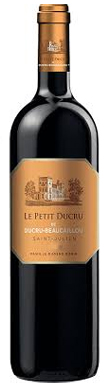

Plenty of ripe red-cherry/blackberry fruit adorns the palate with spice notes adding freshness along with some brisk acidity. The third wine of Ducru-Beaucaillou is a...
2019
Château Ducru-BeaucaillouSt-Julien

Château Ducru-Beaucaillou, La Croix Ducru-Beaucaillou, St-Julien, Bordeaux, France, 2018
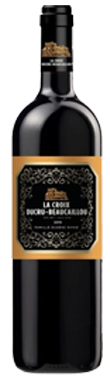
In 2018, La Croix is a rumbustious, powerful St-Julien weighing in with 15% alcohol. This feels very New World in character, in a blind-tasting it...
2018
Château Ducru-BeaucaillouSt-Julien
Château Ducru-Beaucaillou, La Croix Ducru-Beaucaillou, St-Julien, Bordeaux, France, 2016
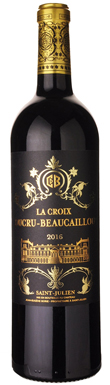
Matured with two-thirds new oak, the 2016 La Croix absolutely reflects the classical style of the vintage. Although oak is a little more on view...
2016
Château Ducru-BeaucaillouSt-Julien
Château Ducru-Beaucaillou, St-Julien, 2ème Cru Classé, Bordeaux, France, 2018
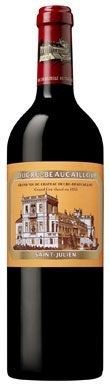
Closed on the nose with a deep, inky core, this 2018 remains very primary and youthful. Quite shy and needing coaxing in the glass, the...
2018
Château Ducru-BeaucaillouSt-Julien
Château Ducru-Beaucaillou, St-Julien, 2ème Cru Classé, Bordeaux, France, 2016
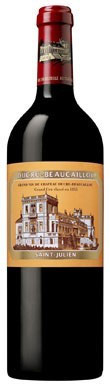
The youngest of a very strong trio (alongside 2010 and 2005) the 2016 is a wonderful example of 'new-wave' Bordeaux with all the intensity, purity...
2016
Château Ducru-BeaucaillouSt-Julien
Château Ducru-Beaucaillou, St-Julien, 2ème Cru Classé, Bordeaux, France, 2010
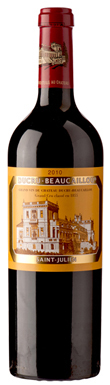
Violet/rose petal notes on the nose, together with the first appearance of some tertiary notes (cedar wood and a hint of mushroom). But still very...
2010
Château Ducru-BeaucaillouSt-Julien
Château Ducru-Beaucaillou, St-Julien, 2ème Cru Classé, Bordeaux, France, 2005
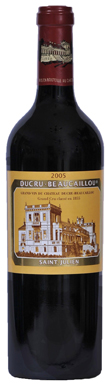
One of the wines of the tasting, 2005 feels like an older style with hints of cigar-box, a touch of lead-pencil and leather suggesting this...
2005
Château Ducru-BeaucaillouSt-Julien
Château Ducru-Beaucaillou, St-Julien, 2ème Cru Classé, Bordeaux, France, 2000
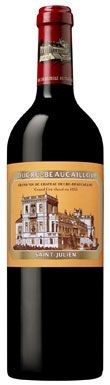
Moccha, pine and mushroom notes emphasise the development almost 25 years since the vintage. There is still masses of sweet, dark currant fruit on the...
2000
Château Ducru-BeaucaillouSt-Julien
Château Ducru-Beaucaillou, St-Julien, 2ème Cru Classé, Bordeaux, France, 1995
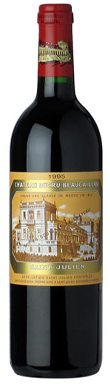
Significantly more development apparent, with notes of leather and cigar combining with drying, leafy tannins and less succulent fruit. Good sweetness on the palate, with...
1995
Château Ducru-BeaucaillouSt-Julien
