
Château Figeac: Producer profile & seven wines tasted
Château Figeac has long been one of the most cherished properties in all of Bordeaux. Stephen Brook assesses its standing today and takes a look at its rich heritage.


In 2022, Château Figeac was, after years of aspiration, promoted to category ‘A’ among the St-Emilion first growths. Regular wine drinkers may be left scratching their heads on learning this, but for the owners of Figeac, the Manoncourt family, this was of immense importance.
For decades, the band of first growths, known as Premiers Grands Crus Classés, included just two ‘super-firsts’ in category A: Châteaux Ausone and Cheval Blanc. The classification in St-Emilion (unlike the Left Bank’s 1855 Médoc classification) allows for promotions and demotions, and thus it has become intensely political.
Scroll down for tasting notes and scores of seven wines from Château Figeac
In 2012, two hugely ambitious proprietors, Hubert de Boüard at Angélus and Gérard Perse at Pavie, secured promotion to the top A tier. It proved a bittersweet triumph, as in 2021 both Ausone and Cheval Blanc left the classification altogether, [as well as Angélus], clearly believing the two promotions had devalued the category.
The Manoncourts were also upset by the promotions, believing that Figeac was just as qualified as Angélus and Pavie to be regarded as among the leading first growths. Many agreed with them.
They believed that the classification jury placed too much emphasis on facilities – such as architecturally impressive wineries, lavish tasting rooms and glitzy toilets – rather than focusing more intently on the quality of the wine. In addition, Figeac was considerably less expensive than the other ‘A’ wines and the Manoncourts were convinced they were penalised for not being costly enough!
Château Figeac at a glance
Owner The Manoncourt family
Surface 41ha
Grape varieties 35% Cabernet Sauvignon, 35% Cabernet Franc, 30% Merlot
Average age of vines 35 years
Average yield 40 hl/ha
Managing director and winemaker Frédéric Faye
Average production 120,000 bottles Figeac, 40,000 bottles second wine; Petit-Figeac
Understated excellence
Figeac has never been a flash property. The elegant château was a family home and facilities for visitors were modest but perfectly acceptable.
The owners felt that peripheral issues had been allowed to trump the undoubted quality of the wine. However, eventually in 2022, Figeac too was promoted to ‘A’, but by then, one could argue, it was a prize devalued by the resignations.
One anecdote can support Figeac’s case. It was the custom (until infighting brought it to an end) for the premeirs grands crus classés estates to host a dinner for the press during the wine trade fair Vinexpo. I always attended.
In 2007, one of the wines poured at the dinner was Figeac 1950. As the guests tasted it, they rose spontaneously to their feet and gave owner Thierry Manoncourt, who was present, a standing ovation. It was an astonishing wine of the greatest grandeur and vitality.
So there was no doubt that Figeac had a track record of making truly great and long-lived wines. It was an ancient property too, and before the French Revolution had belonged to the Vital Carles family.
It had been one of the largest estates in St-Emilion, with 200ha under vine, but sections had been sold off over the years, which explains why so many other estates (for example La Tour Figeac) include the Figeac name.

Reboot & refresh
The De Chevremont family acquired Figeac in 1892 and Thierry Manoncourt, a descendant, took over in 1947 and presided over many legendary vintages.
From 1988 he delegated the management to his son-in-law Comte Eric d’Aramon. Thierry died in 2010 at the age of 92, and it was an indication of the esteem in which he was held that a thousand mourners attended his funeral.
Although the family was bitterly disappointed that in 2012 Figeac failed to receive the promotion they believed was its due, not everyone was convinced that the promotion was unjustly withheld. A leading proprietor once told me the wine was excellent but could be even better had the family taken more expert advice. In 1990 there was a problem, soon rectified, with TCA, and Steven Spurrier believed there was too much Cabernet Sauvignon in the vineyard.
There were recriminations. Thierry’s widow Marie-France dismissed the genial Eric d’Aramon, implying that he had not been fully up to the job. He and Marie-France’s daughter Laure left the property for an estate in the Entre-deux-Mers.
Eric was replaced in 2013 by Frédéric Faye, the former vineyard manger, and two of Marie-France’s other daughters – Hortense Idoine Manoncourt and Blandine de Brier Manoncourt – were brought in to join the management team.
One of Faye’s first decisions was to take on Michel Rolland as a consultant oenologist. This proved highly controversial. Rolland was undoubtedly a leading Right Bank specialist, but the unique feature of Figeac was the high proportion of Cabernet Franc and Cabernet Sauvignon in its vineyards.

Was Rolland the right man to make the most of this? Rolland himself insisted that his main focus was on ensuring the Cabernet Sauvignon was always picked at perfect ripeness.
The Manoncourts and Faye improved the ventilation of the cellars and moved towards gravity-fed winemaking; they made few changes to the vinification, though they reduced some pumpovers during fermentation and eliminated pigéage.
Fears that Rolland would transform Figeac into a Merlot-driven blockbuster were to prove unfounded, and there was widespread agreement that, if anything, quality had improved under the new regime. More recently, Thomas Duclos has also acted as a consultant and Rolland has taken a step back.
In 2012, the second wine, La Grange Neuve, was replaced by Petit-Figeac which is aged for a shorter period in one-third new oak. Faye also retains the option of selling wines in bulk if they are not suited to either label.
In 2021, the new team oversaw the construction of a new gravity-fed winery, located partially underground so as to reduce energy costs. The new facility triples the space available for vinification. The number of steel vats, all custom-made, was doubled to 40 to allow for more parcel selections.
Faye notes: ‘The picking window during harvest can be very short here, as little as 48 hours. That’s why it helps to have many more tanks.’ The new cellar is also ideal for ageing the young wines, as the humidity is a steady 75% and the average temperature is 16°C.’

Figeac is an atypical property. All but two of its 41ha of vineyards lie in a single parcel near the road to Libourne. Just 30% is planted to Merlot, the remainder divided between the two Cabernets. Half the vineyard had to be replanted after the 1956 frost and the average age of the vines is around 35 years.
The soils are complex, with gravel as well as clay and sand, which accounts for the high proportion of Cabernet vines planted. One would expect Cabernet Sauvignon to be the most difficult variety here, but Faye says you can achieve ripeness by controlling the yields. ‘The most tricky grape is Cabernet Franc, which doesn’t reveal its quality and potential until about a week before harvest.’
The soil is worked with horse-drawn ploughs and 90% of the estate is farmed organically, the remainder with strict environmental controls, although the Manoncourts are not looking for organic certification.
From 2008 until 2015, a ‘legacy plot’ of 0.65ha near the château was planted with massal selections from Figeac’s oldest vines, so as to preserve the viticultural history of the estate.
An optical sorting system was installed in 2011 and fermentation takes place in wooden vats at around 28°C using indigenous yeasts.
Since the 1960s, the wine has been aged in medium-toast new oak barrels for up to 18 months. There is no intention to introduce fashionable amphorae, but from 2023 Faye will experiment with larger-sized barrels of 400 and 600 litres.
Timeline
1892 Figeac bought by Henri de Chevremont.
1945 The second wine, La Grange Neuve de Figeac, was introduced, one of the first on the Right Bank.
1947 Thierry Manoncourt, a descendant of De Chevremont, took over the management of Figeac.
1955 Figeac designated Premier Grand Cru Classé in the first St-Emilion classification.
1964 Thierry Manoncourt appointed president of the Jurade of St-Emilion, a post he held until 1987.
1971 Manoncourt constructs a winery with vaulted underground cellars. This was the first Right Bank cellar to contain stainless steel as well as oak vats.
1988 Comte Eric d’Aramon appointed general manager.
2013 Frédéric Faye appointed general manager of Figeac and Michel Rolland hired as consultant.
2018 Work begins on a new, partly underground winery.
2021 The first vintage vinified in the new winery.
2022 Promoted to Premier Grand Cru Classé A.
Looking ahead
With the owning family firmly in the saddle, the future of Figeac seems assured. There had been some question marks from critics over a few vintages in the 1990s and 2000s, but the wines since Faye took charge have been received with enthusiasm, to put it mildly.
Since Figeac was sometimes scorned for its relatively modest pricing, it is fair to guess that the 2022 vintage, the first since the property’s promotion to ‘A’, will see an increase in the en primeur release price. At the time of writing, family members refused to be drawn on the likely release price, saying that they tend to announce this in June.
The style of Figeac has not changed significantly since 2012, though one could argue that the wines have gained in intensity and polish.
The complex soils and the unique blend of grape varieties make such a strong imprint on Figeac that its character is hard to alter. The unique contribution of the Cabernet Sauvignon in particular is to give the wine its finesse and freshness, and the Figeac team want to retain that at all costs.
They are also in the happy position of knowing that, unlike St-Emilion’s mostly Merlot-dominated estates, Figeac is protected to some degree from the high sugar and alcohol levels that sometimes tip St-Emilion’s wines into jamminess and poor balance. The years ahead should be a golden age for Figeac.
See Stephen Brook’s scores and notes for seven wines from Château Figeac
Related articles
St-Emilion GCC 2016: Panel tasting results
Best St-Emilion 2022 wines tasted en primeur
Why do we keep coming back to Bordeaux
Château Figeac, St-Émilion, 1er Grand Cru Classé, Bordeaux, France, 2016
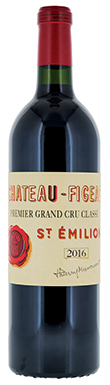

This is strikingly intense on the nose, with exquisite and perfumed blackcurrant fruit that is clear and pure. The attack is fresh and highly...
2016
Château FigeacSt-Émilion

Château Figeac, St-Émilion, 1er Grand Cru Classé, Bordeaux, France, 2010
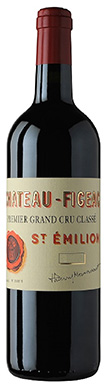
Many 2010 St-Emilion are over the top, with high alcohols, but not Figeac. The nose is starting to evolve, with lush blackcurrant and mint aromas,...
2010
Château FigeacSt-Émilion
Château Figeac, St-Émilion, 1er Grand Cru Classé, Bordeaux, France, 2015
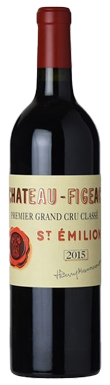
Bright plum, smoked walnut, olive stone and sweet spice. The palate offers ripe black cherry, chewy tannins and luscious acidity. Elegant and balanced, with integrated...
2015
Château FigeacSt-Émilion
Château Figeac, St-Émilion, 1er Grand Cru Classé, Bordeaux, France, 2009
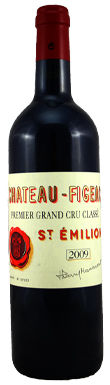
The colour remains deep and shows no sign of evolution. The nose, too, remains youthful, but it's broad and fleshy, with generous blackberry fruit. Plump...
2009
Château FigeacSt-Émilion
Château Figeac, St-Émilion, 1er Grand Cru Classé, Bordeaux, France, 1966
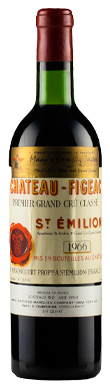
Surprisingly, this is less evolved in colour than the 1983. It's delicate but fragrant on the nose, but far more robust and youthful on the...
1966
Château FigeacSt-Émilion
Château Figeac, Petit Figeac, St-Émilion, Grand Cru, Bordeaux, France, 2018
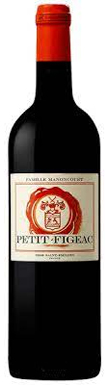
The nose is lean, precise and nicely perfumed, with blackberry and mint aromas. The attack is sleek and silky, with bright acidity and a light...
2018
Château FigeacSt-Émilion
Château Figeac, St-Émilion, 1er Grand Cru Classé, Bordeaux, France, 1983
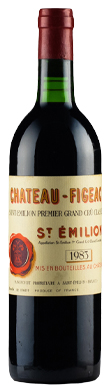
The colour now shows considerable maturity, as does the nose. There are smoky, leathery aromas and some herbal notes, though there is no greenness. But...
1983
Château FigeacSt-Émilion
