
Biodynamic St-Emilion: Tasting a decade of Château Fonplégade wines
Jane Anson reports on owners who have swum against the tide, and says recent vintages of Château Fonplégade wines in St-Emilion are up there with the appellation's best.


You might have noticed that Bordeaux châteaux owners are experiencing something of a love affair with Napa and Sonoma, but Château Fonplégade wines represent a success story that has gone the opposite way.
Christian Moueix, of Dominus, pioneered the trend for Bordeaux winemakers to head to Napa and Sonoma in the 1980s, although Baron Philippe de Rothschild, of Mouton Rothschild, began working with Robert Mondavi on the Opus One joint-venture in the late 1970s, too.
Scroll down to see Jane’s Château Fonplégade tasting notes and scores
Recent years have seen a series of purchases by Bordeaux châteaux owners.
For example, François Pinault, owner of Château Latour, bought the renowned Eisele Vineyard Estate – then named Araujo Estate – in 2013.
Alain and Gerard Wertheimer, of Châteaux Rauzan-Ségla and Canon, have arrived at St Supery, Pontet-Canet’s Alfred Tesseron is at Pym-Rae, and Gonzague & Claire Lurton are at Trinité in Sonoma.
Just last month, the Cathiards of Smith-Haut-Lafitte bought a significant part of Komes Ranch, renaming it Cathiard Family Estate.
Château Fonplégade shows you that, just sometimes, things go the other way as well.
Stephen Adams, who made his money with a range of banking, television and radio companies, bought his first vineyard in California’s Dry Creek Valley in 1995, almost a decade before buying Château Fonplégade in St-Emilion with his wife Denise in 2004.
He has since added to the portfolio with the Howell Mountain ADAMVS estate in 2008, but it was the move from California to Bordeaux that first brought the Adams to prominence in the wine community.
‘One of the best examples of what biodynamics bring to wine’
Fonplégade has also been ahead of the curve in Bordeaux itself, specifically in terms of committing to organic and now biodynamic farming.
The Adams’ stopped all chemical treatments immediately upon arrival in 2004, went fully organic in 2007, and began the certification process in 2010.
The first certified organic label arrived in 2013, with biodynamic certification in 2019.
Hand-in-hand with this has been a fascinating evolution in the wine. Along with Pontet Canet on the Left Bank, I often hold up Fonplégade as being one of the clearest examples of what biodynamics can bring to the way a property is run, as well as to the flavour profile and sense of energy in a wine.
Cutting back on the new oak
This vertical tasting, spanning 2009 until 2019* inclusive was extremely clear in showing the difference that small changes have made to the wine.
These include moving from 100% new oak in 2009 and 2010 to 60% today, with the introduction of both cement eggs and amphorae for ageing, keeping the emphasis on fruit.
Recent vintages of Fonplégade easily compete with the best in the appellation for sheer quality of wine. For me, the change is particularly clear from the 2014 vintage onwards.
Biodynamic ethos
Away from the glass, the benefits of biodynamic farming to the everyday running of the property have also been instructive to watch.
For a start, it has meant that different parts of the estate have begun working together more closely. Office staff help to feed the chickens, or look after the biodynamic garden that has been planted with valerian, stinging nettles, poppies, chamomile and other vine treatments.
It’s something that I firmly believe has helped to improve quality at all levels. Incidentally, this cross-pollination of different teams has been followed also at Clerc Milon in Pauillac, with similar results in the quality of the wine, even though it does not fully employ biodynamic farming.
In some ways, this ethos has also made Fonplégade better prepared for the surreal events that we are all living through right now.
‘We are a small team and are accustomed to working closely together and sharing all pertinent activities on property with one another,’ Denise Adams told me this week.
‘For example, our tractor drivers know about the work and happenings of en primeur, our book keeper knows why we bury cow horns, and our technical director knows about our hospitality programs.
‘We are all missing our routines and relationships right now, and are forced to find other avenues to connect and support one another. We have zoom meetings in order to see one another, the vineyard team waves a bonjour across the blocks.’
A winery perspective on dealing with the current Covid-19 crisis
Adams took me through how the different parts of the estate are responding to the new conditions – and also to the threat of frost that St-Emilion suffered earlier this week.
Her description is so powerful that I thought I would share parts of it with you.
‘Since the government mandate, our normal vineyard activities remain virtually unchanged. In fact, the vineyard team told me that the challenge and work in the vineyard allows them to take their minds off the [Covid-19] virus crisis.
‘Our team has organised themselves so as to each be in a different block for maximum social distancing and safety. Team members work independently according to their gifts and specialties, as we normally do. They have learned how to do their tasks alone.
‘Biodynamic farming practices require daily focused attention in the vineyard, regardless, but the team has discovered that working completely alone allows for an even greater focus. Our sheep, honeybees and chickens seem to be oblivious to all that is going on. We are a bit jealous of their continued socialising during this period.’
She added, ‘On the equinox we normally remove our cow horns filled with either silica or female lactating cow manure as a team, but this year it was a solo event. But each person had a separate part in the process and we made it work.
‘For the most part, we make our own compost, bury cow horns filled with manure to make compost teas, grow special herbs for making specialty teas for spraying and feeding our vineyard. So much of how we farm is with an independent approach (unknowingly until now) in growing what we need on the property. We originally thought it to be for quality and now we see it also for survival.
‘With the threat of frost this week, the vineyard team communicated via conference call and devised a game plan, one by one, for ensuring our Agrofrost machines were operating and ready to combat the frost. Normally, we are all there together around 4am on mornings when frost is threatening, but this approach is still working.’
She also said, ‘We are used to “viruses” in the vineyard that spread and we know what to do to combat these diseases with organic and biodynamic methods. But we were not used to such a virus that attacks humans, which also spreads rapidly.
‘This is a big learning curve and an opportunity to see what our vineyard can teach us about how we care for ourselves. I’ve always said that every human being should get the care and attention that our vines receive at Fonplegade.’
*The 2019 en primeur tasting note is being held back until later.
Jane Anson’s tasting notes for Château Fonplégade wines, 2009 to 2018
See also:
Tasting St-Emilion’s Château Chauvin back to 1998
Why Château Beauregard in Pomerol is one to watch: 20 vintages tasted
Château Fonplégade, St-Émilion, Grand Cru Classé, Bordeaux, France, 2009
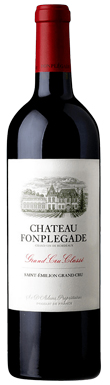

Delicious, still tight liquorice at 11 years old, with the emphasis on black fruits and black chocolate. This is nowhere near ready yet, and tasted...
2009
Château FonplégadeSt-Émilion

Château Fonplégade, St-Émilion, Grand Cru Classé, Bordeaux, France, 2010
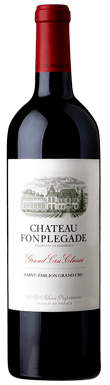
A touch tight and even reduced at first, it takes a moment to clear to reveal dense layers of black fruits, graphite and bristling tannins....
2010
Château FonplégadeSt-Émilion
Château Fonplégade, St-Émilion, Grand Cru Classé, Bordeaux, France, 2011
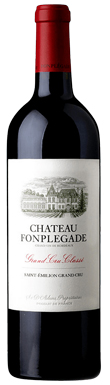
This is excellent and drinking very well already. It's soft but with a sense of uplift from beginning to end and comprises really distinctive layers...
2011
Château FonplégadeSt-Émilion
Château Fonplégade, St-Émilion, Grand Cru Classé, Bordeaux, France, 2012
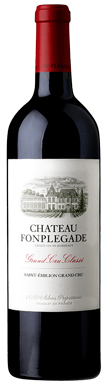
93
This for me is really when you start to see the sculpting of the flavour profile of Fonplégade, and the work that the Adams have put in place beginning to pay off (the vineyard was organic by this point, receiving certification in 2013). I prefer the 2011 vintage as a general rule but here at this particular estate the 2012 is better - just has more texture and yet a lovely cooling core that makes your mouth water. Clean and precise aromatics also, really an excellent wine. 85% new oak, rest in cement eggs.
2012
Château FonplégadeSt-Émilion
Château Fonplégade, St-Émilion, Grand Cru Classé, Bordeaux, France, 2013
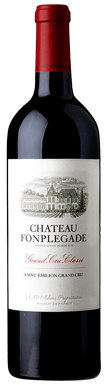
Soft but bright brambly fruits, this is reasonable for the vintage. It has charm, a little short but makes for pleasurable drinking today, and has...
2013
Château FonplégadeSt-Émilion
Château Fonplégade, St-Émilion, Grand Cru Classé, Bordeaux, France, 2014
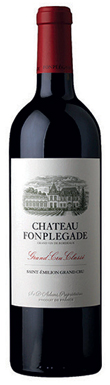
Smooth and inviting with juiciness and elegance delivered in both cool blueberry and ripe blackberry fruit. If not among the most succulently scintillating, a far...
2014
Château FonplégadeSt-Émilion
Château Fonplégade, St-Émilion, Grand Cru Classé, Bordeaux, France, 2015
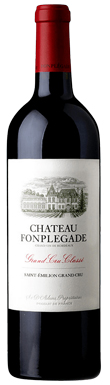
Bigger structure than the 2014, but honestly there isn't much between them in terms of enjoyment. This has a more enticing aromatic structure, and has...
2015
Château FonplégadeSt-Émilion
Château Fonplégade, St-Émilion, Grand Cru Classé, Bordeaux, France, 2016
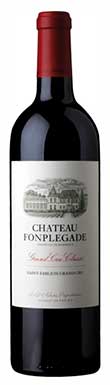
Inviting nose of red bramble berries, herbal touches, dried flowers and woody spice. Dark plum and liquorice spice with a salty minerality on the palate....
2016
Château FonplégadeSt-Émilion
Château Fonplégade, St-Émilion, Grand Cru Classé, Bordeaux, France, 2017
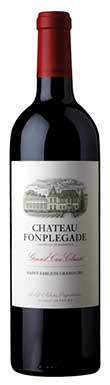
2017 is not the biggest vintage at this estate, but it is polished and enjoyable and has a lot to celebrate. It has juice and...
2017
Château FonplégadeSt-Émilion
Château Fonplégade, St-Émilion, Grand Cru Classé, Bordeaux, France, 2018
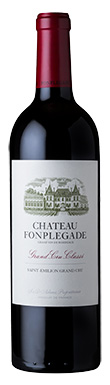
Silky tannins, lovely fresh lift and some menthol powering along through the finish. Brambled fruits, freshly cut and dried herbs, with tons of nuance and...
2018
Château FonplégadeSt-Émilion
