
Château Quintus: A St-Emilion estate to watch
Château Quintus is finding its feet since being forged by the owner of Haut-Brion from two pre-existing St-Emilion estates. Here is a profile with in-depth tasting notes on the wines...

The Gallo-Romans customarily named their fifth child Quintus, the term being Latin for fifth, hence the baptism of Domaine Clarence Dillon’s wine venture in St-Emilion on the Right Bank of Bordeaux.
Scroll down for James Lawther’s Château Quintus tasting notes and scores
Now part of a celebrated family that includes the red and white wines of Châteaux Haut-Brion and La Mission Haut-Brion, Château Quintus has been building a style and status since 2011 and this short vertical tasting of the eight current vintages helped mark the progress.Finding a place amongst such august company has not been without difficulty and, although the price of the wine has soared, adjustments have been made.The en primeur tastings of Quintus are no longer held at Haut-Brion, as they were until 2018, but directly at the estate to help strengthen identity.And although there is a wealth of winemaking experience and talent on hand in the Left Bank, Quintus is a Right Bank wine and the local conditions and factors have gradually been given greater consideration.
The idea of a top flight St-Emilion in the family portfolio was launched by Prince Robert of Luxembourg, CEO and president of Domaine Clarence Dillon.
It came to fruition with the purchase of Château Tertre Daugay in 2011, which was subsequently renamed Château Quintus. Clarence Dillon also bought neighbouring Château L’Arrosée two years later, and absorbed it into Quintus.
Both estates have a considerable history in the region.
They maintained Grand Cru Classé status throughout the various editions of the St-Emilion Classification and the estates include prized terroirs on the limestone plateau and southern côtes.
The previous owners had kept a reasonable level of investment, so the principle objectives of the new management have been to shape a single entity from the two parts and take the quality of wine to a higher level.
In this respect the wines have already gone through three phases.
‘The first two vintages of Quintus were produced solely from the Tertre Daugay vineyard,’ says estate manager François Capdemourlin.
‘The next two were an early understanding of the two estates, but from 2015 we’ve applied more precision thereby giving a clearer identity to the wines.’
Understanding the terroir has been paramount to progress, both in terms of contrast with the Left Bank and recognition of the individual parcels of vines at the new property.
‘The topography, soils and local climate are completely different from Haut-Brion so, for instance, we need a lower density of planting and higher trellising here,’ says viticultural manager Mariette Veyssière.
Individual parcels now have a varying regime of grass cover, de-leafing and crop thinning to control vigour and ripeness.
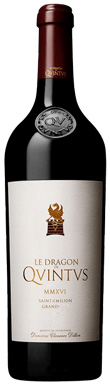
Quintus grand vin is generally produced from parcels on the plateau and upper sector of the côtes, while the second wine, Le Dragon de Quintus, comes from the mid-sector and bottom of the slopes.
A third wine, ‘Saint-Emilion de Quintus’, is produced from vineyards on the Dordogne plain.
Merlot plantings have increased, while Cabernet Sauvignon vines have been grubbed-up and the last parcels are soon to go – it struggles to achieve full ripeness here, according to the vineyard team.
The long-term plan is to have a ratio of 70% Merlot and 30% Cabernet Franc in the vineyard.
Winemaking takes place in the former Tertre Daugay cellars and is fairly classic in execution. A specific gravity Tribaie machine is to sort grapes before Merlot is fermented in stainless steel tanks and Cabernet Franc in wooden ones.
Blending is done in the early part of the new year, as at Haut-Brion, and the wine is then aged in French oak barrels for 12 to 14 months before bottling.
Less new oak has been used since 2015, down to 35% instead of the 40+% used in the initial years, and barrels are subjected to a lighter toasting.
‘The Haut-Brion toast proved too marked for Quintus,’ says Capdemourlin.
The elegance of the wine has started to show, but equal standing with Haut-Brion and La Mission Haut-Brion is a giant step and only time will tell. It’s not an easy call with siblings that have a 400-year head start.
Quintus at a glance
Owner: Domaine Clarence Dillon
Management team:
Managing director HRH Prince Robert of Luxembourg
Deputy general manager: Jean-Philippe Delmas
Régisseur [estate manager]: François Capdemourlin
Area under vine: 28ha
Soils: Limestone and clay-limestone on the plateau and côtes; clay and sandy clay over molasse at the bottom of the slopes.
Average age of vines: 29 years
Grapes grown: 72% Merlot, 23% Cabernet Franc, 5% Cabernet Sauvignon
Vine density 5,500-7,700 vines/ha
Average annual production: 2,450 cases (of 12 bottles) of grand vin; 3,000 cases of Le Dragon de Quintus; 1,835 cases of ‘Saint-Emilion de Quintus’
Key dates to know:
2011 (June): Acquisition of Château Tertre Daugay by Domaine Clarence Dillon, renamed Château Quintus.
2013 (October): Purchase of neighbouring Château l’Arrosée and absorption in Château Quintus.
See James Lawther MW’s Château Quintus tasting notes and scores
You may also like
Anson: Tasting Château Figeac wines from 1985 to 2016Finding value in St-EmilionTop 10 Bordeaux 2015 winesSt-Emilion: 10 grands crus classés to watch
Château Quintus, St-Émilion, Grand Cru, Bordeaux, France, 2018
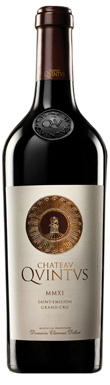

Expressive in its youthful, fleshy fruit, full of blackberry, cassis and blackcurrant stem. It charms immediately, combining smoky oak with rich fruitcake spice and a...
2018
Château QuintusSt-Émilion

Château Quintus, Le Dragon de Quintus, St-Émilion, Grand Cru, Bordeaux, France, 2018
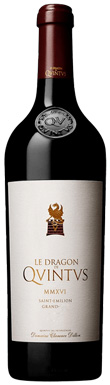
Rich and potent on the nose, fully expressive with ripe red fruits, floral flecks, tobacco, dark chocolate and espresso nuances. Bold yet juicy and refined...
2018
Château QuintusSt-Émilion
Château Quintus, St-Émilion, Grand Cru, Bordeaux, France, 2017
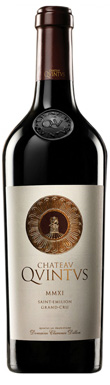
Lighter bodied and less concentrated than the vintages either side [2018 and 2016], but this is fine and racy and equally precise. There is more...
2017
Château QuintusSt-Émilion
Château Quintus, Le Dragon de Quintus, St-Émilion, Grand Cru, Bordeaux, France, 2017
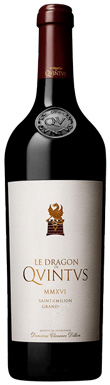
Like the 2017 grand vin, this is lighter bodied and more forward. It is attractively fruity on the nose and is gentle, round and juicy...
2017
Château QuintusSt-Émilion
Château Quintus, St-Émilion, Grand Cru, Bordeaux, France, 2016
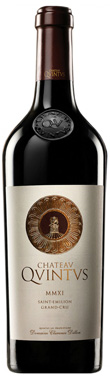
Aromatic and seductive, showing layers of plump black fruit, cassis, cinnamon spice, toast and char. It's plump in the mouth, filling out and giving a...
2016
Château QuintusSt-Émilion
Château Quintus, Le Dragon de Quintus, St-Émilion, Grand Cru, Bordeaux, France, 2016
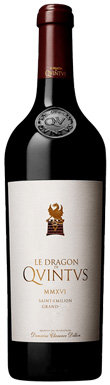
<p>This follows the pattern of the grand vin; there is freshness and finesse but it's a little rounder and more forthcoming. Suave and firm, there's...
2016
Château QuintusSt-Émilion
Château Quintus, St-Émilion, Grand Cru, Bordeaux, France, 2015
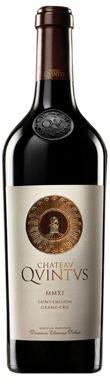
93
An intoxicating nose of red fruit. Raspberries and rose perfume intertwined with bay and leafy green notes. The palate has a beautiful red-fruited elegance that's incredibly well balanced with fine tannin. Lovely length.
2015
Château QuintusSt-Émilion
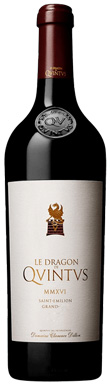
Château Quintus, Le Dragon de Quintus, St-Émilion, Grand Cru, Bordeaux, France, 2015
89
This is pure and creamy with cherry and red fruit notes. It's round and juicy on the palate. There is better integration of oak and the wine is more defined with better length and depth [than in earlier years].
2015
Château QuintusSt-Émilion
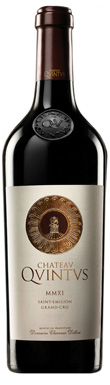
Château Quintus, St-Émilion, Grand Cru, Bordeaux, France, 2014
<p>A good depth of fruit but the oak does sit in on the nose and palate, leaving a charry edge. It's round and sweet with...
2014
Château QuintusSt-Émilion
Château Quintus, Le Dragon de Quintus, St-Émilion, Grand Cru, Bordeaux, France, 2014
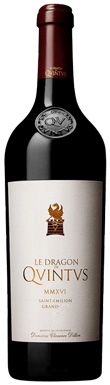
There's brambly fruit with a touch of char on this wine, which is just beginning to open. It has a little more depth and...
2014
Château QuintusSt-Émilion
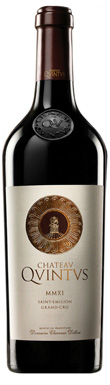
Château Quintus, St-Émilion, Grand Cru, Bordeaux, France, 2013
88
The first vintage following the fusion of L’Arrosée with Tertre Daugay, but 2013 was a difficult year in the vineyard. The yield fell to 23.8hl/ha. This wine has a lighter body and weight with some sweetness on the mid-palate but a drying finish. There is a wisp of elegant red fruit yet the oak still dominates. For early drinking.
2013
Château QuintusSt-Émilion
Château Quintus, Le Dragon de Quintus, St-Émilion, Grand Cru, Bordeaux, France, 2013
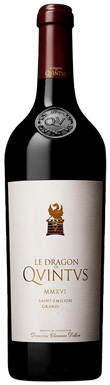
86
Light, fresh and ready for drinking now. The acidity is marked, so it would be best to drink with food. A hint of oak comes through alongside the brambly fruit. There is a slightly pinched finish.
2013
Château QuintusSt-Émilion
Château Quintus, St-Émilion, Grand Cru, Bordeaux, France, 2012
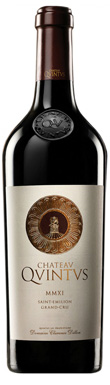
88
<p>There's more depth than in the 2013 grand vin, but it lacks true definition. Merlot provides sweetness and volume, and the oak adds a touch of char. The tannins have been handled well. The yield was generous, at 42.5hl/ha. Only ex-Tertre Daugay fruit has been used here.</p>
2012
Château QuintusSt-Émilion
Château Quintus, Le Dragon de Quintus, St-Émilion, Grand Cru, Bordeaux, France, 2012
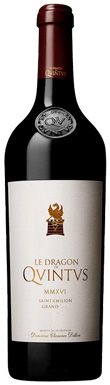
Skinnier than the grand vin, there is a lighter core of fruit in this wine. It is leafy and herbaceous with red fruit aromatics. Acidity...
2012
Château QuintusSt-Émilion
Château Quintus, St-Émilion, Grand Cru, Bordeaux, France, 2011
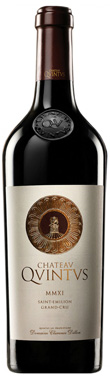
Fleshy fruit on the attack surrounded by clear spice notes, black pepper, saffron and cinnamon, slightly drying on the finish. You can begin to drink...
2011
Château QuintusSt-Émilion
Château Quintus, Le Dragon de Quintus, St-Émilion, Grand Cru, Bordeaux, France, 2011
There's a dark core with a garnet rim on this wine, which shows red fruit and leather notes. It's round and supple but still with...
2011
Château QuintusSt-Émilion
