Chianti Classico Riserva new releases: Top picks in 2025
Once the top of the tree, Riserva today finds itself as a mid-tier category, yet is still capable of some of Chianti Classico's finest wines. Michaela Morris reports on the latest releases.
Get our daily fine wine reviews, latest wine ratings, news and travel guides delivered straight to your inbox.
You are now subscribed
Your newsletter sign-up was successful
With an ever-increasing number of Gran Selezione labels – either new wines or more significantly Riservas that have been ‘promoted’ – a logical assumption is that Chianti Classico’s middle category might be shrinking.
Yet in terms of total production percentages, the opposite is actually true. In 2018, the Chianti Classico consorzio reported a 64/32 split between annata and Riserva, based on a 10-year average.
In the last five years, the ratio shows a decrease in annata to 57%, while Riserva now represents 38%. Gran Selezione is holding steady at approximately 5%.
Nevertheless, given the high quality of annata wines and the focus on promoting Gran Selezione, Riserva might seem like a tougher sell – but this is not necessarily so.
According to consortium president Giovanni Manetti, the premiumisation of the denomination led by Gran Selezione has benefitted the entire gamut, especially Riserva.
‘With the increase of renown (and consequently, price), new room was created at the mid-point price range that fits Riserva perfectly,’ he asserts.
Scroll down for Michaela’s top-rated Chianti Classico Riserva from the new releases
Holding the middle ground
Laura Bianchi at Castello di Monsanto, confirms that they have not experienced a decreased demand for Riserva since the Gran Selezione category was introduced.
Get our daily fine wine reviews, latest wine ratings, news and travel guides delivered straight to your inbox.
‘The two categories reinforce each other,’ she says, adding, ‘Riserva wines still have a central role because they offer a balance between accessibility and complexity.’
Roberto Stucchi Prinetti at Badia a Coltibuono concurs, saying: ‘The perception of many is that the quality/price rapport of the Riserva triumphs, and its more classic and elegant style is much appreciated.’
The estate’s new 2020 Riserva release embodies both the finesse and value to which he refers.
On the other hand, with respect solely to style, some estates’ Riserva bottlings represent the most muscular, concentrated wines within their range, and may also be a repository for the international grapes that will soon be prohibited from Gran Selezione.
Viticcio’s well-executed 2020 Riserva is a case in point.
Beyond the aforementioned, most of the Riserva I previewed hailed from 2022 and 2021; vintages that are respectively very good and excellent. That said, it is the category in which I found the most variability.
See all of Michaela’s tasting notes & scores from her Chianti Classico report
Some exhibited more explicit wood without more obvious ageing potential than their annata counterparts; or they simply lacked a compelling identity. Yet the Riserva category also includes some of the region’s most distinctive wines.
Many are from producers that don’t (yet) produce Gran Selezione, namely Cigliano di Sopra, Maurizio Alongi and Val delle Corti.
As for those that do make wine at all three levels, both Istine and Monteraponi’s 2022 Riservas stand shoulder to shoulder quality-wise with their Gran Selezione. And from 2019, Castell’in Villa’s Riserva was among my highest scoring wines across all categories.
Working hard in the vineyard
‘If you told me 20 years ago that I would use nets to mitigate heat, I would have laughed’.
In particular, the 2021 and 2022 growing seasons were both marked by the warming, drying trend associated with climate change, the latter most intensely. Riserva highlights from these vintages underscore producers’ concerted efforts in the vineyard to mitigate those effects.
For example, the Ormanni estate has moved away from deep tilling and applies kaolin – a natural clay mineral to the vines, which acts as a natural sunscreen. The 2021 Borro del Diavolo is one of the more robust examples, yet it retains intrigue and balance.
Likewise, Castagnoli was spraying kaolin as early as June in 2022. Owner Tim Schefenacker tells me he also avoids trimming the growing tip shoots, tilting the apex leaves over the bunches as further protection from sunburn.
‘Not trimming the apex also helps to retain the malic acids in August’, he explains. While the estate’s 2022 Riserva will be released next year, a cask sample was highly promising.
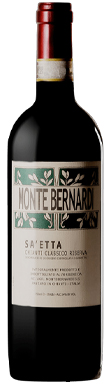
Monte Bernardi’s Michael Schmelzer follows a similar practice. Although it’s labour intensive, he braids the apex shoots together, tucking them into the canopy. Besides retaining acidity, he suggests that this also preserves aromas. His 2021 Sa’etta is a testament to both.
Finally, from one of the region’s warmer pockets, San Giusto a Rentennano’s 2022 Le Baròncole is impressive. Luca Martini di Cigala’s vineyard strategy is multi-pronged.
Besides redoing terraces to better manage water, and orienting rows for new plantings northwest to southeast to moderate sun exposure, he has successfully trialled the use of hail nets to reduce UV radiation.
‘If you told me 20 years ago that I would use nets to mitigate heat, I would have laughed,’ he says. ‘In 10 years, I think we’ll see more in the region.’
In a changing climate and an evolving region, growing pains are to be expected.
Endeavours to address both appear geared to preserving the territory’s character – and keeping Riserva from being caught in the middle.
Michaela’s top Chianti Classico Riserva released in 2025
See all of Michaela’s tasting notes & scores from her Chianti Classico report
Related articles
- Chianti Classico Gran Selezione: New releases rated
- Chianti Classico annata new releases: The wines to buy in 2025
- Langhe Nebbiolo and Nebbiolo d’Alba: These 25 bottles prove it’s not all about Barolo
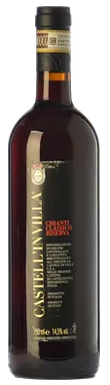
Castell'in Villa, Chianti Classico, Riserva, Tuscany, Italy, 2019

Castell’in Villa’s Riserva is crafted from the estate’s higher altitude plots at over 300m. After forgoing this bottling in 2018, proprietress Coralia Pignatelli follows up the striking 2017 release with this austerely captivating 2019. It is classically savoury with discreet scents of sundried tomato, chestnut, roasted coffee and rust. After much aeration, sweeter nuances of macerated cherry, thyme and almond emerge. The palate is unquestionably strict and linear: stony tannins and brisk acidity make for a steely backbone. While far from rich or plush, it does have meat on its bones, and very toned muscles. It hints at blood and liquorice throughout, with a salty mineral finish.
2019
TuscanyItaly
Castell'in VillaChianti Classico
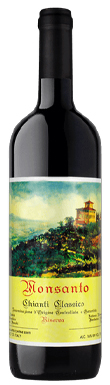
Castello di Monsanto, Chianti Classico, Riserva, Tuscany, Italy, 2021

The intention with Castello di Monsanto’s Riserva is to make a wine with immediate accessibility as well as serious cellaring potential. Gorgeous and precise from the get-go, the 2021 is profuse in aromas of black pepper, flint and earthy brambles. Equally perfumed, the palate ups the ante with rose, bergamot and graphite. A firm tannic spine and linear acidity are matched by fruit depth galore, all intricately and tightly stitched. My instinct is that this is only going to get better, so I prefer to wait. The solution is to buy a few bottles to enjoy its evolution.
2021
TuscanyItaly
Castello di MonsantoChianti Classico
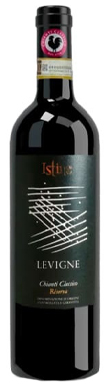
Istine, Le Vigne, Chianti Classico, Riserva, Tuscany, Italy, 2022

Small lots from Istine’s high altitude vineyards in Radda and Gaiole are vinified and aged separately for a year before blending. The composite is given a further 12 months in 30-hectolitre casks to marry. A light yet confident touch coupled with a sense of adventure makes for a classy and characterful package. The just-bottled sample is subtle in expression. A whiff of mocha gives way to plum blossom, thyme flower, lavender and juniper. The palate is classically midweight and decidedly red fruit in tone – tart cranberry, tangy currants and sour cherry. There is just enough flesh to pad out the silky and composed tannins. Stony minerals linger.
2022
TuscanyItaly
IstineChianti Classico
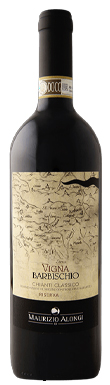
Maurizio Alongi, Vigna Barbischio, Chianti Classico, Riserva, Tuscany, Italy, 2022

Besides his day job consulting at a handful of estates in the region, oenologist Maurizio Alongi tends a grand total of 1.3 hectares in Gaiole’s remote forested hills. Harvest was performed on a single day: 28 September. Alongi says it was his most productive vintage ever and made 6,500 bottles. Initial reductiveness gives way to fresh strawberry and raspberry laced with cinnamon, pepper and clove. Taut and midweight, the palate is dark, woodsy and still slightly aloof. Puckering juiciness with smooth yet compact tannins lead to the liquorice root finish. Absolutely beguiling but begs to be cellared.
2022
TuscanyItaly
Maurizio AlongiChianti Classico
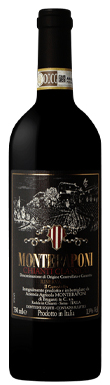
Monteraponi, Il Campitello, Chianti Classico, Riserva, Tuscany, Italy, 2022

Despite a southern exposition and heat retaining stony soil, the high altitude and cooling influence of surrounding forest preserved incredible freshness in 2022. Alessandra Deiana also reports that yields were 20% higher than 2021, saying, ‘we didn't know where to put the grapes’. When I tried Il Campitello just before bottling, it was an explosion of perfumes. Now in bottle, the nose has shut down and quietly suggests currants, liquorice and forest undergrowth. But my, does the palate shine! Such succulence of lush yet tart red cherry with pomegranate and blood orange. This is vivacious and alive. Beautifully ripe but taut tannins meld with the stony, gravelly finish. And it is just going to get better.
2022
TuscanyItaly
MonteraponiChianti Classico
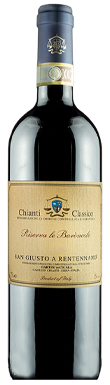
San Giusto a Rentennano, Le Baròncole, Chianti Classico, Riserva, Tuscany, Italy, 2022

The earliest harvest since 2017, 2022 saw grapes for Le Baròncole picked between 29 September and 4 October. A complex and fascinating mouthful, it exudes Chianti Classico’s warm, untamed southern stretch with all the intensity and density of the hot, arid summer. Mint chocolate, cinnamon, nutmeg, terracotta and plum burst from the glass. A savoury, umami palate proposes salty minerals, iron and sundried tomato. Grainy textured tannins coat the mouth and cling persistently, lending quite a chew. Remarkably balanced and composed, though it will need to time to integrate its significant tannins and wood imprint.
2022
TuscanyItaly
San Giusto a RentennanoChianti Classico
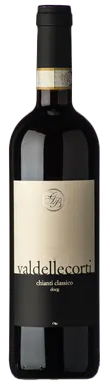
Val delle Corti, Chianti Classico, Riserva, Tuscany, Italy, 2021

Among Radda’s coolest sites, Val delle Corti’s five hectares face northeast and are shaded by the mountain in the afternoon. The wines are correspondingly perfumed, fine-boned, racy and taut. Crafted from a plot of 50-year-old vines, the Riserva demonstrates greater depth, substance and textural complexity with respect to the lovely annata bottling. Scents of brushwood, rose, cardamom and mace emerge with coaxing. On the palate, raspberry and pomegranate are assertively cradled by fine yet ample chalky tannins. Bright and beaming on the finish, the best is yet to come. Serious stuff.
2021
TuscanyItaly
Val delle CortiChianti Classico
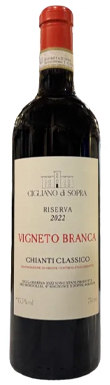
Fattoria Cigliano di Sopra, Vigneto Branca, Chianti Classico, Riserva, Tuscany, Italy, 2022

Trained winemakers Maddalena Fucile and Matteo Vaccari aren’t afraid of taking risks, but it isn’t without science and knowledge behind them. Their wines could be described as ‘natural’ – and they are among Chianti Classico’s most exciting examples. I tried this on two occasions. While the first bottle was closed and had a slight bretty niggle, the second was an explosion of all things nice: rose and violet with herb blossoms and grilled rosemary; a balsamic-infused, plump and pure-fruited palate flowing seamlessly without any hard edges. There's texture aplenty, and the long, chalky tannins cling persistently. It is definitely worth the gamble.
2022
TuscanyItaly
Fattoria Cigliano di SopraChianti Classico
Monte Bernardi, Sa'etta, Chianti Classico, Riserva, Tuscany, Italy, 2022

Meaning ‘lovestruck’ or more viscerally, ‘thunderbolt to the heart’, Sa’etta is in fact the more forceful of Monte Bernardi’s two Riserva. It hails from 50-plus year-old vines on calcareous sandstone, known as pietraforte. As such, it sees months longer in bottle before release. Exuding ripeness, it almost smells sumptuous. Dark bramble berries are complicated by terracotta and sunbaked stone. Expansive though not weighty, this is definitely well-endowed with structure. Yet those tannins are finessed and long. Acidity is deeply embedded rather than linear, giving a soft, flattering, romantic glow. Finishes with territorial dustiness.
2022
TuscanyItaly
Monte BernardiChianti Classico