
Chianti Rùfina: regional profile plus top wines worth seeking out
Sangiovese vines love the fresh air and bright conditions in this hilly country to the north of the headline-grabbing Classico zone. While they may be lesser-known, Chianti Rùfina wines offer quality, character and superb value, as well as great consistency.


When asked to name my best-value premium, estate-grown Tuscan reds, my choices are Rosso di Montalcino DOC and Chianti Rùfina DOCG. Both are based on Tuscany’s signature Sangiovese grape. However, whereas Rosso di Montalcino is often made from Sangiovese offcuts deemed not up to the standard required for Brunello di Montalcino, Chianti Rùfina is made only from the prime cuts, making it stylistically more consistent.
Chianti Rùfina is the smallest of the seven denominations within the wider, sprawling Chianti DOCG. Only 750ha of vineyards are registered to produce Chianti Rùfina, although there is officially room for 300ha more. Of its 20-plus producers, the largest by far is Marchesi Frescobaldi’s Castello Nipozzano.
Scroll down to see tasting notes and scores for eight top Chianti Rùfina wines
This article contains:
- Chianti Rùfina at a glance
- The region’s climate and geography
- Single-site Sangiovese
- Vintages to seek out
- Eight producers to know
Chianti Rùfina’s average annual production of 3.5 million bottles accounts for about 4% of the total output of the wider Chianti DOCG, which makes Rùfina the third most productive region with the word Chianti in its name, following Chianti Classico DOCG and Chianti Colli Senesi DOCG respectively.

Chianti Rùfina: the facts
Planted area 750ha (of 12,483ha surface area), with another 300ha delineated for planting
Soils Limestone, marl and alberese
Annual rainfall 900mm-1,150mm
Average temperature 10°-14.4°C (average in summer of 22°-23°C; average in winter 4°-6°C)
Annual production 3.5m bottles average (about 4% of total output within the Chianti DOCG)
Producers 22 (20 being members of the consortium)
Sweet wines Vin Santo del Chianti Rùfina DOC and Vin Santo del Chianti Rùfina DOC Occhio di Pernice (from dried grapes)
Source: Consorzio Chianti Rùfina
Breath of fresh air
The current boundaries of the Rùfina DOCG were first delineated in September 1716 by the Grand Duke Cosimo III de’ Medici, alongside the creation of what are now the Chianti Classico DOCG, the Valdarno di Sopra DOC and the Carmignano DOCG.
In 1967, Chianti Rùfina became a DOC and in 1984 ascended to DOCG. Today it is considered ‘first among equals’ out of the six peripheral geographical areas within the wider Chianti DOCG umbrella.
The Chianti Rùfina region is located 20km northeast of Florence and thus just north of the completely separate Chianti Classico DOCG region. Chianti Rùfina’s official production zone encompasses the communes of Dicomano, Londa, Rùfina, Pelago and Pontassieve, which is effectively Chianti Rùfina’s gravitational centre.
The Rùfina vineyards lie in the foothills of the Apennine mountains which divide Tuscany from the Emilia Romagna region to the east, peaking at about 700m in the area of Dicomano and the nearby Frascole estate. Most Rùfina vineyards lie at an also not-insignificant 300m-400m or more.
The mountains exert a strong influence in cooling the summer heat, creating significant day-night temperature differences. This helps grapes ripen slowly through summer and autumn, preserving and enhancing aromas and flavours, and ultimately leading to ripe reds with smooth tannins, crunchy fruit, no excess fat – ‘lighter and less structured compared to those of the Chianti Classico DOCG’ in the words of consultant Mauricio Castelli, a Sangiovese world authority.
Rùfina’s hills and river valleys form a veritable obstacle for humans to navigate when out wine hunting. But they also confer a very kinetic and healthy playground for vines, with air, sunlight and clouds in almost constant motion and invariably without excess.
Such conditions have encouraged a steadily growing number of estates to go organic and, in the case of Fattoria Lavacchio, the opportunity to go further in creating technically sound wines without added sulphites but with wonderfully clear flavours. Wines such as these are much easier to make and consume, with healthy grapes carrying crisp acidity.
The DOCG is made from 70%-100% Sangiovese. Up to 30% of other traditional Tuscan grapes, such as Malvasia Nera, Colorino del Valdarno and Canaiolo may be included. In addition, up to 15% Cabernet Franc and/or Cabernet Sauvignon are allowed, as are up to 10% of white grapes.

Single-site Sangiovese move
In 2015, the wine-growers of Rùfina agreed a mechanism whereby Chianti Rùfina reds made from 100% Sangiovese grapes grown on single sites or terroirs could be properly defined and registered. This would mean the origin of any 100% single-site Rùfina DOCG Sangiovese could be traced, allowing Sangiovese lovers to explore and benchmark the variations in style between wines hailing from different soils, altitudes, vintages and so on.
If you think this is an obvious effort for a wine region to undertake, it is worth remembering a not-dissimilar initiative proposed in Montalcino for its two flagship 100% Sangiovese wines, Rosso di Montalcino and Brunello di Montalcino. The project aimed to make it easier for Brunello lovers to match wine styles to specifically defined Montalcino terroirs. This remains, however, on the drawing board.
Chianti Rùfina: vintages to seek out
2019 Like 1985, a textbook vintage with each stage of the growing season near perfect. Drink from now to 2035.
2016 Started cool and damp but the gloom soon gave way to a drier, brighter season. This produced smooth, moreish Rùfina reds with sparkling fruit and silky, symmetrical tannins adding a delicious, umami-like salinity. They are incredibly hard to resist, but if you can delay gratification these Rùfinas will pay bountiful dividends. Drink to 2035.
2015 Some cold winter weather gave way to a sizzling summer. Boldly ripe reds opening up nicely now – the best show no sign of raisiny notes, giving fruit with a lovely matt finish to make 2015 the perfect foil for 2016’s glossier show-stealers. Drink to 2035.
2013 This was a cooler year from which the best estates produced crisp, smooth, mouthwatering Rùfinas with wonderfully lacy internal intricacy, but in a different, more understated way than the 2016s. Drink to 2030.
2010 Another classic year to rank alongside 2013 and 2016, which had a propitious mix of sun and rain, heat and cool. The best 2010 wines are now starting to open, their tannins silky and clear and the tangy red fruit flavours showing delicious light menthol notes, especially from vineyards on the higher sites. Drink to 2035.
The Gran Selezione question
Chianti Classico DOCG’s Gran Selezione initiative, introduced in 2014 as the new top level of three tiers for Chianti Classico, drew flak for its few innovations other than stipulating Gran Selezione wines be 100% estate-grown. Many, like myself, felt that a Gran Selezione from Chianti Classico should be 100% estate-bottled and 100% Sangiovese, as well as 100% estate-grown.
What I like about Rùfina’s idea is that growers are free to identify their best Sangiovese vineyard site, one per producer, rather than having a top-down system whereby special interests dictate which vineyards can or cannot join the club. The growers know where their best Sangiovese grapes come from. They are prepared to leave it up to you to see if you agree with their terroir-driven choices.

Chianti Rùfina: Eight producers to know
Castello Nipozzano
Overlooking the Arno river, this is one of the well-regarded estates belonging to the Frescobaldi family, which has 700-plus years of wine-growing behind it. Live-wire Lamberto Frescobaldi has made Nipozzano more biodiverse, its vineyard now more of a mixed farm. The wines reflect this in more evident balance and style. There is a real juiciness and rigour here now, especially in the Rùfina wines, Montesodi being the flagship.
Colognole
The Colognole estate in Pontassieve commune was once a military tower built during the Florentine Republic (1115-1532). Such lookout points often make great vineyard sites and Colognole’s vineyards are no exception. Rocky schistous clay soils give Colognole’s Rùfina reds their smoothness and staying power. The estate has belonged to the Spalletti family since 1892. Gabriella Spalletti Trivelli has been at the helm since the early 1990s, with her sons Cesare and Mario.
Fattoria I Veroni
One of Pontassieve’s organic estates. Lorenzo Mariani is the fourth generation here. When it was his turn to take over the family’s farm, he told me, ‘you either abandon it or you relaunch it’. He chose the latter route, encouraged by legends Vittorio Frescobaldi of Castello Nipozzano and Francesco Giuntini of Fattoria Selvapiana. Mariani’s flagship Chianti Rùfina is the Vigneto Quona Riserva aged in Garbellotto oak vats.
Fattoria Lavacchio
A certified organic and practising biodynamic estate located in Pontassieve commune. Owner Faye Lottero’s family acquired it in 1978. Rocky schistous clay soils make for ripe wines with evident juiciness. The wines that stand out, including Cedro and Puro, are made with no added sulphites. I found Lottero’s early attempts in 2011 a bit hit-and-miss, but current examples have evident clarity and juiciness.

Fattoria Selvapiana
Yet another acknowledged benchmark for Chianti Rùfina DOCG reds, as well as Rùfina Vin Santo DOC and unmissable olive oil. Under Federico Giuntini, superlative reds such as Vigneto Bucerchiale and Vigneto Erchi Riserva have shown the Rùfina region’s aptitude for single-site wines via their drive, depth and finesse. Giuntini sees Bucerchiale as a powerful Rùfina, with notable vibrancy of fruit that characterises the Selvapiana wines in general. Certified organic.
Frascole
This is one of those rare estates where everything seems to slot into place with minimal fanfare. But over the last two decades or more, founders and owners Enrico Lippi and Elisa Santoni have poured heart and soul into what is now, in my view, one of the best and most enjoyable sources of Sangiovese you are likely to find not just in Tuscany, but anywhere else. Genetically unique old vines, great terroir, beautifully made. Certified organic.
Podere Il Pozzo
An offshoot of the well-regarded Cantine Fratelli Bellini merchant house, and another organic Pontassieve estate. The Bellini family bought the vines in 1998. They lie on the right bank of the Sieve, overlooking Rùfina itself. The oldest vineyards dated from the 1960s and included a wealth of heritage strains (biotypes) of typical local varieties. The wines are made with both drinkability and accessibility in mind and really shine with a couple of years in bottle.
Villa di Vetrice
Another organic Pontassieve estate. The Grati family has owned the estate and been producing Chianti Rùfina wines over five generations. The majority of its 100ha-plus vineyard comprises Sangiovese, as well as other traditional Tuscan red varieties such as Colorino di Valdarno and Canaiolo Nero. The latter was once widely grown and well regarded here – it was trained up trees, and added structure to the blend. Villa di Vetrice’s modern-classic oaked Rùfina Riservas open up superbly with decanting.
See Monty Waldin’s top Chianti Rùfina wines:
Related content:
Tuscany report: Top scoring new releases from Brunello di Montalcino to Chianti Classico
Top Super Tuscan wines
Tuscany’s best recent vintages plus the top wines to try
Fattoria Selvapiana, Vigneto Bucerchiale Riserva, Chianti, Rufina, Tuscany, Italy, 2017
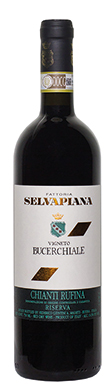

Fattoria Selvapiana is one of Rùfina's modest superstars, defined by its very low-key profile and red wines that combine generously free-flowing fruit and faultless terroir...
2017
Fattoria SelvapianaChianti

Frascole, Riserva, Chianti, Rufina, Tuscany, Italy, 2017
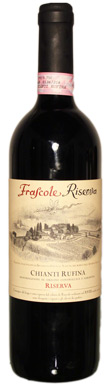
Only 7,000 bottles of this Riserva were made and it's a beauty in terms of the freshness and directness of the fruit. It comes from...
2017
FrascoleChianti
Castello Nipozzano, Riserva, Chianti, Rufina, Tuscany, Italy, 2018
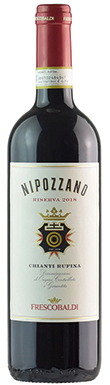
A crunchy Rùfina mainly from 1970s Sangiovese vines with dashes of both local heritage and international varieties, too. Fermentation in stainless steel precedes 24 months...
2018
Castello NipozzanoChianti
Prunatelli, Borgo Prunatelli Riserva, Chianti, Rufina, Tuscany, Italy, 2016
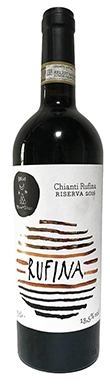
The Grati family has centuries-old roots in the Rùfina region, and has amassed sizeable vineyards. Its Borgo Prunatelli vineyards comprise old vines on hilly terrain....
2016
PrunatelliChianti
Agriturismo Colognole, Chianti, Rufina, Tuscany, Italy, 2017
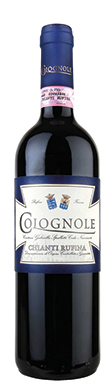
A classic Chianti Rùfina from an historic estate whose very well-expressed, free-flowing red (Sangiovese mainly) and darker bramble fruit flavours (Colorino) are supported by beds...
2017
Agriturismo ColognoleChianti
Fattoria Lavacchio, Ludiè, Chianti, Rufina, Tuscany, Italy, 2019
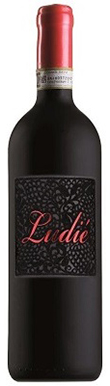
Ludiè is made from 1.8ha of Sangiovese planted in the early 1960s, a time of huge agricultural and social upheaval in Tuscany. Faye Lottero's family's...
2019
Fattoria LavacchioChianti
