
Chilean Carmenère: Panel tasting results
It’s a tricky grape to get right, but Chile’s winemakers are the best-placed in the world to do so, says Peter Richards MW. And as research develops, the quality bar gets ever higher.


89 wines tasted, 2 wines Outstanding, 11 wines Highly Recommended
The tasters: Alistair Cooper MW, Peter Richards MW, Dirceu Vianna Junior MW
Scroll down to see the scores and tasting notes
The verdict
First, the context. This tasting comes hot on the heels of one of the most disappointing Chilean panel tastings of recent times (Sauvignon Blanc, October 2018 issue). With that precedent, these results are stellar. But perhaps it’s more instructive to look at the last Carmenère tasting (October 2017) where the results were marginally better than here. In that light, this outcome was less encouraging.
So what’s going on with Chilean Carmenère? In short, it’s a mixed bag. One feeling that emerged from the 2017 tasting was cautious optimism: Carmenère was clearly evolving, but not quite reaching the top notes. Not much has changed. ‘Carmenère’s a work in progress,’ commented Alistair Cooper MW. And Dirceu Vianna Junior MW remarked: ‘There were some nice wines, and decent consistency, but there are better things in Chile: Pinot Noir for one.’
The headline numbers are solid but not stellar. Incidentally, the balance in 2017 was fairly similar, though four wines were Outstanding and 23 Highly Recommended out of 129.
One striking outcome this year was the re-emergence of Colchagua and Cachapoal (in particular, its Peumo sub-region) as quality hotspots for Carmenère – the 2017 tasting had been headlined by the likes of Maipo and Maule. Rapel, which includes Colchagua and Cachapoal, is Carmenère’s heatland in Chile but has suffered in recent times from excesses of ripeness, alcohol, extraction and oak.
While it’s fair to note that Rapel accounted for 64% of all wines submitted to this tasting, it’s still heartening to see these areas producing wines of more poise, sophistication and character at the top end. Cooper noted how the best Peumo wines were ‘beautiful, with a delightful tannin structure’.
In terms of vintages, 2016 performed better than expected at the top end. The best wines here were characterful and engaging – though it’s also true to say that the lesser 2016s proved hollow and lacklustre. Some 2017s from the south showed signs of smoke taint from wildfires. Of late, Chile has suffered a run of challenging vintages, but on this evidence the best producers and sites can and do rise to the challenge.
Carmenère is often known as a blending variety and these styles worked well. ‘In blends, the other variety seems to magnify its personality,’ enthused Vianna. ‘The most ambitious Carmenère works best in partnership with something else.’ Cooper, meanwhile, was ‘increasingly impressed by single-varietal Carmenère’, but also noted the likes of Syrah, Cabernet Sauvignon, Cabernet Franc and Carignan as good blending partners.
Beyond blending, almost all of the top-scoring wines had some element of deft oak maturation. This works well for Carmenère, fleshing out the mid-palate and adding complexity – though care needs to be taken not to overdo things. Faulty bottles were too common for comfort, with oxidation and brettanomyces frequent issues, and the odd wine over-acidified, so these should all be areas of focus.
Excessive alcohol was the downfall of many wines, as was a lack of varietal character. Often these are the result of poor decisions in the vineyard, particularly regarding harvest timing. The best Carmenères are all about character and balance – but achieving this needs hard work in both the vineyard and winery. The work goes on.
The scores
89 wines tasted
Entry criteria: producers and UK agents were invited to submit their latest-release Carmenère wines (85% minimum) priced at £10 and above in the UK
Exceptional 0
Outstanding 2
Highly Recommended 11
Recommended 51
Commended 23
Fair 1
Poor 0
Faulty 1
The judges
Alistair Cooper MW
Following several years working for wineries in Chile and Argentina, Cooper moved back to the UK in 2006. A Master of Wine since 2017, he now consults, judges, educates and hosts events in both the UK and Chile, also writing for publications including Decanter, Meininger’s and Drinks International.
Peter Richards MW
Richards is an award- winning broadcaster and writer, with more than a decade on BBC1 television and four books including The Wines of Chile and his own Chile Wine Brief. He is the DWWA Regional Chair for Chile and, together with his wife Susie Barrie MW, co-hosts the annual Wine Festival Winchester.
Dirceu Vianna Junior MW
Originally from Brazil, Vianna studied forest engineering and law, before moving to London, where he began to work in the wine trade in 1990. In 2008, he became the first South American male to obtain the title of Master of Wine. He is now working as a wine writer, educator, technical consultant and competition judge.
About Chilean Carmenère
Whisper it, but Chilean Carmenère may be at risk of having its thunder stolen. Its modern moment in the limelight came in 1994, when French ampelographer Jean-Michel Boursiquot identified it in what was supposed to be a pure Merlot vineyard. Until that point it had largely flown under the radar while giving Chilean ‘Merlot’ its distinctive character. And then, suddenly, it was outed – and a new category of Chilean wine was created, one that has been developing ever since. The variety is now the fifth most widely planted in Chile.
The spotlight on the Chilean vineyard continues, however – and it seems there will be more such varieties emerging. Particularly in Chile’s historic south, where a research project recently identified more than 60 ‘uncommon’ grape varieties growing in Bío Bío, including 26 previously unrecorded elsewhere in the world. ‘It’s a tower of Babel on the shores of the Bío Bío!’ memorably commented local grower Juan José Ledesma.
Exciting prospects
Not bad for a wine nation long renowned for its steady, mainstream image. In this sense, Carmenère’s identification can be seen as a turning point – a moment when the country’s winemakers began a gradual pivot towards the exigencies and identities of their own vineyards rather than the demands of the market.
Because Carmenère, of course, has few international precedents outside Chile. Sure, there’s a fair bit knocking around in China and Italy, as well as odds and sods in North America, Argentina, Australia and of course its historic home in Bordeaux and southwest France. (The variety is closely related to Cabernet Franc and was long prized in Bordeaux but fell out of favour after phylloxera.)
It’s a rare international wine that majors on Carmenère and it boasts few centres of expertise, so Chile assumed this mantle by default. Ever since, it’s made steady progress, with recent Chilean studies on terroir and clones yielding valuable data while the winemakers involved have felt their way with what is a tricky variety.
Carmenère is a late-season variety that needs warmth but not excessive heat, as well as soils that are well drained but not too fertile. If harvested unripe, Carmenère can be virulently green; if overripe, its acidity plummets and it swiftly loses its hallmark herbal, leafy character. High yields and careless winemaking can be catastrophic; rainy autumns or poor vintages can be calamitous.
No wonder De Martino winemaker Marcelo Retamal terms it ‘the most difficult variety to make in Chile’, which may be in need of ‘a generational change to understand it properly’.
Such work continues apace – and deservedly so, because the glimpses of brilliance already afforded by the very best Carmenère (both solo and in blends) are tremendously exciting. The warm Rapel region (Colchagua and Cachapoal) remains Carmenère’s centre of gravity in Chile, though the likes of Maipo, Curicè and Maule are all capable of making excellent examples. Expect the Carmenère map to expand further in future, as forward-thinking wine-growers push back frontiers in the mountains and coast as well as north and south. Thunder or not, the Carmenère narrative continues.
Chilean Carmenère: the facts
Chilean vineyard 137,375ha
Chilean Carmenère vineyard 10,503ha
Carmenère as % of national vineyard 7.7%
Growth over 10 years (2006-2016) +47%
Growth over 5 years (2011-2016) +5%
Production in 2018 77.5m litres
Key regions Colchagua, Maule, Cachapoal, Curicó, Maipo Sources: Ministry of Agriculture, Origo
Chilean Carmenère: know your vintages
2018 Relatively cool, late season gave naturally fresher reds, though some late-season varieties like Carmenère struggled to ripen fully, hence variability.
2017 Heatwaves and wildfires beset one of the earliest, lowest-yielding vintages of modern times. Beware smoke taint, otherwise Carmenère coped okay.
2016 ‘Disastrous’, said one winemaker, as torrential April rain hit a slow-maturing vintage – Carmenère was one of the worst-hit varieties (yet decent wines have been made).
2015 Warm weather gave generous styles, often very good, though some producers went OTT with ripeness and extraction.
2014 Carmenère was one of the high points after devastating spring frosts hit cooler areas, but the season ended benignly: concentrated yet precise wines.
See all of the wines tasted here
The top scorers in the tasting:
See all of the wines tasted here
You may also like:
Rising stars: Winemakers to watch in Chile and Argentina
Recent Chile vintages: A review and wines to try
Top Chilean wines to drink now
Wine lover’s guide to Valparaíso
Matetic, Corralillo Carménère, Colchagua Valley, Chile, 2016
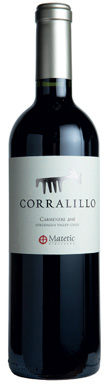

With its name of Croatian origin, Matetic Vineyards is based in the Rosario Valley of San Antonio appellation, founded in 1999. This family winery is...
2016
Matetic

Viña La Rosa, La Rosa Carménère, Peumo, Cachapoal Valley, Chile, 2014
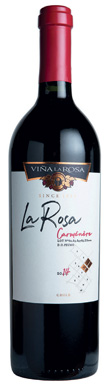
Viña La Rosa boasts a long history with wine – mining entrepreneur Francisco Ossa bought the estate in 1824, making it one of the oldest...
2014
Viña La RosaPeumo
Echeverria, Limited Edition Carménère, Maipo Valley, Chile, 2016
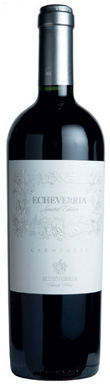
Beautiful cassis and pencil shaving nose, followed by currants, spice, cassis, cedar and wet earth. On the palate it is well structured and harmonious, with...
2016
Echeverria
Concha y Toro, Carmín de Peumo Carménère, Peumo, Cachapoal Valley, Chile, 2014
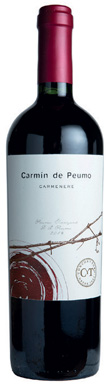
A soft palate that caresses the mouth; the acidity is fantastic and really shines through. It’s youthful with good intensity of fruit, subtle notes of...
2014
Concha y ToroPeumo
Hacienda Araucano, Araucano Reserva Carménère, Colchagua Valley, Chile, 2017
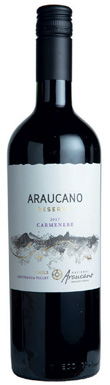
A wine full of personality with excellent notes of dark fruits, cedar, spices and roasted coffee. A refreshing style, well made and well put together:...
2017
Hacienda Araucano
Tarapacá, Gran Reserva Carménère, Maipo Valley, Chile, 2017
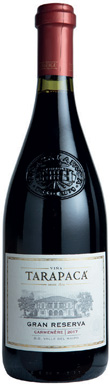
Elegant, sleek, ripe dark fruit and a hint of wood smoke. It’s seductive and youthful, a chocolate and cassis delight. There’s pleasant fruit concentration with...
2017
Tarapacá
Terranoble, CA1 Carménère, Colchagua Valley, Chile, 2015
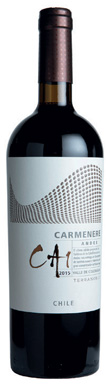
A minty bombshell initially that eases into an attractive, intense mix of herbs, sage and spice with charred meat, kirsch, and a finish of mocha....
2015
Terranoble
Viu Manent, El Incidente Carménère, Colchagua Valley, Chile, 2016
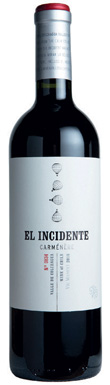
Herbal, roasted red pepper notes. Good spice and energy, nice focus. It’s complex without being overly weighty. There is a lovely dense concentration to the...
2016
Viu Manent
Chateau Los Boldos, Grande Réserve Carménère, Cachapoal Valley, Chile, 2016
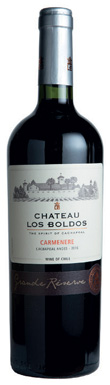
Real Christmas spice, ginger, mace and clove on the nose which follows onto a succulent palate, with lovely underlying freshness. Good red fruit core at...
2016
Chateau Los Boldos
Errazuriz, Max Reserva Carménère, Aconcagua Valley, Chile, 2015
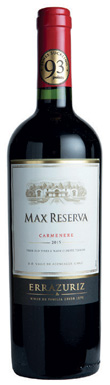
Elegant, complex nose of roasted herbs, sweet blackberry and toasty smoky hints. Bags of spicy character on the palate. Still feels young. The finish is...
2015
Errazuriz
Koyle, Royale Carménère, Colchagua Valley, Chile, 2016
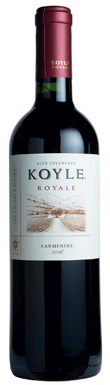
Ripe, juicy and exuberant. This wine is well structured and harmonious with overt dark fruit, tobacco spice, great concentration, nice freshness and a pleasant persistent...
2016
Koyle
Terranoble, CA2 Carménère, Colchagua Valley, Chile, 2015
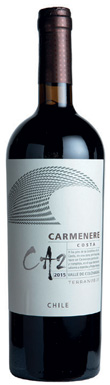
A lifted nose with some earth, balsamic and minty notes. The palate delivers, with cocoa and spice, fruitcake too. It’s dense and quite attractive with...
2015
Terranoble
Undurraga, TH Terroir Hunter Carménère, Peumo, Cachapoal Valley, Chile, 2016
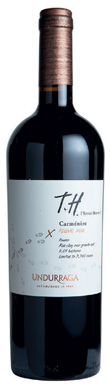
A huge hedonistic nose, with spice, blueberry ripe dark fruits and pencil shavings. It’s a really seductive palate with fine tannins that are really well...
2016
UndurragaPeumo
