
Clos de Tart: 1947-2019 vertical tasting
Burgundy's majestic grand cru monopole of Clos de Tart is set to enter a dazzling new chapter. A remarkable vertical tasting of its wines gave Charles Curtis MW the opportunity to chart its history and assess its standing today.

‘The Clos de Tart is a dream,’ explained Frédéric Engerer at a recent vertical tasting of its wines. Engerer is the managing director of Artémis Domaines (owner of Château Latour) which purchased Clos de Tart in 2018. As Engerer said: ‘When you own Château Latour, you need to have a very special vineyard in Burgundy. Clos de Tart was number one on the list’.
Engerer has put together a cohesive team with lightning speed and managed a staggering investment from Artemis’ principal François Pinault, turning this ancient property into one of the stars of the Côte de Nuits.
Scroll down to see tasting notes and scores for 15 Clos de Tart wines from 1947-2019
There are five wholly owned grand cru appellations in Burgundy (as distinct from climats such as the Corton ‘Clos des Cortons Faiveley’). These include Romanée-Conti, La Tâche, La Romanée, La Grande Rue, and Clos de Tart; this last cru is the largest of these monopoles and the only one not located in Vosne-Romanée.
The first three of these are legendary wines, with stratospheric prices: the average retail price in the UK for Romanée-Conti across all vintages is more than £21,000; La Tâche averages more than £6,000 per bottle and La Romanée just over £5,700. La Grande Rue is a comparative bargain at just under £500, while the current vintage of Clos de Tart averages £583. This has been slowly increasing in recent years: five years ago, it was barely above £300.

The Vineyard
The vineyard itself is 7.52ha and fully enclosed by walls. The average age of the vines is 60 years and massale selection is used to replace any vines that need replanting. In this process, cuttings from the vineyard’s old vines are grafted onto rootstock in their own nursery.
The domaine began organic conversion in 2015 and was certified in 2018; the following year it was certified as biodynamic. Yields are kept low, with vines generally pruned to five bunches each and production limited to 30 hl/ha.
The vineyard is bordered to the north by Clos des Lambrays grand cru (almost, but not entirely, a monopole of its own) and to the south by Bonnes-Mares grand cru. Up the slope is En la rue de Vergy, and at the base of the vineyard lies Morey-St-Denis premier cru Les Ruchots.
According to author and merchant Remington Norman, the final shape of the vineyard came into place in 1956 when 0.28ha of Bonnes-Mares that lay within the walls of the Clos de Tart were officially included.

The Soil
Although it is a compact vineyard, the subsoil varies. There are three main types of terroir: at the base of the slope on the southern edge by Bonnes-Mares, the vines are planted on calcaire à enroques (‘crinoidal limestone’), formed from the remains of sea lilies.
Engerer feels this gives a wine with much more body (‘huge shoulders’ is his description). The vines at mid-slope are on roughly 30cm of clay over Premeaux limestone which produces a wine with tension and a saline minerality to the bright red fruit. The vines at the top of the slope are on white marl known as Ostrea acuminata because it contains the remains of oyster shells that give a feminine, crisp and elegant wine.
Clos de Tart at a glance
Founded 1141
Appellation created 1939
Size 7.52ha
Location Morey-St-Denis, Côte de Nuits
Ownership Artémis Domaines (François Pinault)
Winemaker Alessandro Noli
Annual production 2,000–2,400 cases in a normal year
The History
The vineyard has only changed hands four times since it was established in 1141 by Abbaye de Tart. The abbey was the female counterpart to the exclusively male Abbaye de Cîteaux, the reformist off-shoot of the Benedictine Abbaye de Cluny in the Mâconnais.
The Abbaye de Tart was located a few kilometres east of the Côte d’Or, not far from the monks of Cîteaux. The charter establishing the abbey was drawn up in 1132. Ducal donations followed and the nuns began by purchasing the central parcel in the lieu-dit of La Forge from the Hospitaliers de Brochon in 1141, adding slowly over the centuries to form the present vineyard.
The abbey welcomed travellers and pilgrims, and accepted the daughters and widows of the nobility, who did not always share the austere discipline of the nuns; at times, the nuns were accused of leading a scandalous and dissolute life.

The lax conditions that followed led to reform in the 16th century, and the nuns were relocated to a poor quarter of Dijon during the wars of religion. Throughout these changes, however, the nuns maintained control of their clos.
The independence of the nuns came to an abrupt end after more than 600 years when the government of the French Revolution sold the property to an associate of Nicholas-Joseph Marey, founder of the Marey-Monge dynasty of vignerons.
The Marey-Monge heirs held on to the clos for over a century, but in 1932 it was sold along with most of the family’s vineyard holdings to settle estate taxes. It was purchased by the Mommessin family, who were négociants like Marey-Monge.
During this time, the vineyard was overseen by metayeurs (‘sharecroppers’), including Champy and Chauvenet. The wines were often sold in barrel, and it is possible to find many négociant-bottled wines from the clos, including Vandermeulen and Nicolas.
Today’s Clos de Tart
Mommessin appointed noted winemaker and cartographer Sylvain Pitiot as régisseur (‘general manager’) in 1996, and he remained in this post through the 2014 vintage when he retired. Pitiot had a reputation for picking late and making powerful, concentrated wines aged entirely in new casks.
The wines were fermented in cement until 1998 when Pithiot introduced fermentation in temperature-controlled stainless steel. He fermented in fairly large lots, with six vats that correspond to the sizes of the principal subdivisions of the vineyard.
On his retirement, Pitiot was replaced by Jacques Devauges who had come from Domaine de l’Arlot and had worked at Domaine de la Vougeraie, among other properties. Devauges began the organic conversion and continued the work of Pitiot in analysing the complexities of the vineyard.
In 2017, however, the Mommessin family decided to sell Clos de Tart to François Pinault, and shortly after this Devauges announced his precipitous resignation. He was replaced by Alessandro Noli, who had been the director of Château Grillet after tenures at other prestigious Pinault properties including Château Latour and Domaine d’Eugénie.
Clos de Tart timeline
1141 The nuns of Abbaye de Notre-Dame-de-Tart purchased the lieu-dit La Forge from the Hospitaliers de Brochon.
circa 15th century Walls of the clos constructed.
1570 Wine press (‘pressoir à perroquet’) installed that was in use until the 1920s.
1623 The nuns leave Tart and move to Dijon.
1791 Dijon closes the convent; the clos is sold to Nicolas-Joseph Marey.
1932 Joanny Mommessin purchases the Clos de Tart at auction.
1939 Clos de Tart decreed a grand cru by the INAO.
1996 Sylvain Pitiot named regisseur by Mommessin.
2014 Retirement of Sylvain Pitiot; Jacques Devauges named régisseur.
2017 Mommessin sells Clos de Tart to Artémis Domaines.
2019 Jacques Devauges resigns his post as régisseur and is replaced by Alessandro Noli. New winery opens.
The Winemaking
Pinault has invested vast sums in the Clos de Tart. The winery and premises were completely renovated in a process completed in time for the 2019 vintage. The estate had been very well managed under Devauge who had modernised the style, but Noli can now do an even more exact vinification by parcel in the smaller vats Pinault purchased.
For the 2019 vintage, Noli divided the vineyard into 16 plots, each of which were all picked, vinified and matured separately before blending.
There are two pre-blends (‘Jeanniard’ and ‘Cîteaux’), and two declassifications: some of the wine is sold as premier cru La Forge de Tart, and the wine from the young vines is sold as village-level Morey-St-Denis. There is also a parcel in the northwest corner of the clos that was replanted in 2018 that is not yet in production.
The proportion of each lot fermented as whole clusters is decided separately (either none, one-third, or two-thirds), and fermentation is done in open-top wood vats on ambient yeasts. Noli extracts colour and tannin with a gentle combination of punching down and pumping over.

The grand vin is aged in new casks from the cooper Sylvain, while the premier cru La Forge de Tart is aged half in new casks and half in used; the village-level Morey-St-Denis generally sees no new wood. The style of the Clos de Tart today has been thoroughly modernised. Noli is picking earlier – ‘We don’t want prune juice,’ he says – but not too early.
Now that the new winery has been finished and biodynamic certification obtained, it will be interesting to see what the future holds for the Clos de Tart. A gambler might hazard the guess that one item that will not feature prominently is lower prices.
Pinault’s other notable investment in Burgundy was the purchase of the former René Engel estate in 2006, which he renamed Domaine d’Eugenie. This estate is now among the hottest properties in Burgundy, and prices have continued to edge higher.
It was once the received wisdom in Burgundy that Pinault and Engerer were outsiders who produced wines that lacked regional typicity. This is an outdated view that should change, and smart buyers will stock up on Clos de Tart before prices rise any further.
The wines today have an accessible, forward style underpinned by elegant extraction of tannin and colour. The aromas are fairly bursting with ripe red and black fruit, and coloured with floral notes and a firm minerality from the limestone.
These are wines that have the purity of fruit and elegance that has made Burgundy’s renown – one has to feel that the nuns would be proud.
See Charles’ tasting notes and scores for 15 special Clos de Tart wines from 1947-2019
Related content
Mature Burgundy: best from the 1960s, ’70s and ’80s
Understanding Echézeaux plus 16 wines worth seeking out
Record sales for Burgundy’s Hospices de Nuits 2022 auction
Clos de Tart, Clos de Tart Grand Cru Monopole, Burgundy, France, 2019

The 2019 Clos de Tart is a triumph, and significantly more structured and complex than La Forge de Tarte, the Morey premier cru. The north-south...
2019
Clos de TartClos de Tart Grand Cru Monopole

Clos de Tart, Clos de Tart Grand Cru Monopole, Burgundy, France, 2018
The 2018 Clos de Tart demonstrates the superior nature of great terroir and mature vines. This is still a big year with very ripe fruit,...
2018
Clos de TartClos de Tart Grand Cru Monopole
Clos de Tart, Clos de Tart Grand Cru Monopole, Burgundy, France, 2017
This wine is superbly elegant and more accessible at this stage than either the '18 or the '19 vintage. The texture is silky, almost soft,...
2017
Clos de TartClos de Tart Grand Cru Monopole
Clos de Tart, Clos de Tart Grand Cru Monopole, Burgundy, France, 2016
This youthful, concentrated wine shows a charming exuberance halfway between the brooding power of the hotter vintages and the perfumed elegance of the '17: kirsch,...
2016
Clos de TartClos de Tart Grand Cru Monopole
Clos de Tart, Clos de Tart Grand Cru Monopole, Burgundy, France, 2015
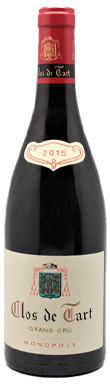
The hot, dry growing season in 2015 produced small grapes with a high ratio of skin to juice, but despite the concentration this young Clos...
2015
Clos de TartClos de Tart Grand Cru Monopole
Clos de Tart, Clos de Tart Grand Cru Monopole, Burgundy, France, 2009
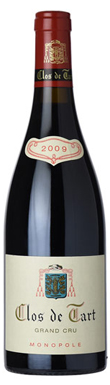
Early budbreak and an easy flowering meant green harvesting was needed to maintain concentration in 2009. The result at Clos de Tart was a wine...
2009
Clos de TartClos de Tart Grand Cru Monopole
Clos de Tart, Clos de Tart Grand Cru Monopole, Burgundy, France, 2005
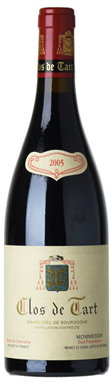
The 2005 vintage was among the sunniest in memory: more than 90 hours above the 30-year average. The bright sun and drought conditions produced thick...
2005
Clos de TartClos de Tart Grand Cru Monopole
Clos de Tart, Clos de Tart Grand Cru Monopole, Burgundy, France, 2001
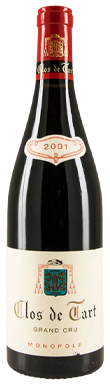
The wine shows earthy pomegranate and currant fruit notes with a suggestion of wild herbs, spice and earth. The tannins seem a bit tough, and...
2001
Clos de TartClos de Tart Grand Cru Monopole
Clos de Tart, Clos de Tart Grand Cru Monopole, Burgundy, France, 1990
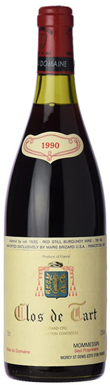
The warm spring in 1990 led to an early budbreak, but the flowering was disrupted by cold spells, reducing yields. After a hot, dry summer,...
1990
Clos de TartClos de Tart Grand Cru Monopole
Clos de Tart, Clos de Tart Grand Cru Monopole, Burgundy, France, 1985
There is a deep and almost porty character to the plum and fig fruit, now shot through with aromas of wood smoke, sous-bois and truffle....
1985
Clos de TartClos de Tart Grand Cru Monopole
Clos de Tart, Clos de Tart Grand Cru Monopole, Burgundy, France, 1959
Marvellous notes of liquorice, truffle and brown sugar on the nose that deepen and open up with time in the glass to show a distinctly...
1959
Clos de TartClos de Tart Grand Cru Monopole
Clos de Tart, (Vandermulen bottling), Clos de Tart Grand Cru Monopole, Burgundy, France, 1949
The wine is mature and somewhat past its peak, with profound aromas of figgy fruit accented strongly with truffle, earth, forest floor and a hint...
1949
Clos de TartClos de Tart Grand Cru Monopole
Clos de Tart, (Vandermulen bottling), Clos de Tart Grand Cru Monopole, Burgundy, France, 1947
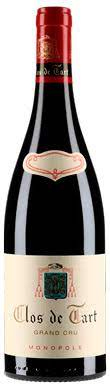
This wine is the product, like the 1949, of a scorching year that produced a wine that is slightly porty and perhaps a bit volatile,...
1947
Clos de TartClos de Tart Grand Cru Monopole
Clos de Tart, La Forge de Tarte, Morey-St-Denis, 1er Cru, Burgundy, France, 2019
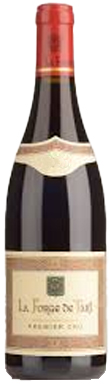
This wine is blended from parcels at the top of the slope, including Ballonge and La Forge, along with some mid-slope vines planted in 2011....
2019
Clos de TartMorey-St-Denis
Clos de Tart, La Forge de Tarte, Morey-St-Denis, 1er Cru, Burgundy, France, 2018
The imprint of the vintage is apparent from the initial aromas of the Forge de Tart, with notes of damask plum, fig and blackberry, along...
2018
Clos de TartMorey-St-Denis