
Pietro Ratti walks among the rows of his newest vineyard, located in the highest part of La Morra, one of the 11 communes that make up the Barolo DOCG area.
It’s a scorching summer day but here at Serradenari, situated almost 500m above sea level, the woods surrounding the vineyard allow for a light breeze to blow.
‘My father did not consider Serradenari a cru,’ Ratti (pictured, below) says. ‘He thought that this hill was too high, too cold for Nebbiolo grapes. Now we enjoy with satisfaction our new Barolo, produced from grapes grown here.’ (The 2019 was the first vintage, released in 2023.)
Global wine geography is changing, and Ratti’s ‘Barolo of the peaks’ is a clear example of this.
Scroll down to see notes and scores for eight cooler climate Barolos
Redrawing the map

Areas that were once considered unsuitable for viticulture – and even more unsuitable for producing great wines – are now on the rise due to climate change.
Pietro’s father, the late Renato Ratti (born 1934), published the Carta del Barolo map in 1970, on which the historic sub-zones of Barolo wine were indicated for the first time, including those most suited for producing high-quality bottles.
For geological and environmental reasons, the Serradenari zone doesn’t appear on that map.
‘Until 30 years ago, the cultivation of Nebbiolo vines, intended for Barolo, stopped below around 400m of elevation,’ explains Ratti, indicating the main road below leading north to La Morra that, in the past, constituted a sort of commonly accepted boundary.
Even today, most of the vineyards of the denomination are located below the road that cuts across the hill.
In 2004, however, the legendary producer Bruno Giacosa from Neive vinified the grapes grown above that road in his Barolo Croera ($179.99 K&LWines), a one-year experiment.
Mapping like mad
Langhe winemakers like mapping.
Long before Renato Ratti, two local scholars, the surveyor Lorenzo Fantini and botanist Ferdinando Vignolo Lutati, had already attempted to highlight the areas suitable for Barolo in their texts, titled respectively Monografia sulla Viticoltura ed Enologia nella Provincia di Cuneo (1879) and Sulla delimitazione delle zone a vini tipici (1929).
Following on from Ratti’s Carta del Barolo, the Atlante delle vigne di Langa was drawn up in 2000 by the experts of the Slow Food movement (headquartered in Bra, just northwest of the Barolo region).
Then, in 2010, came the official map of the 170 Menzioni Geografiche Aggiuntive (MGA) delimited production areas, pushed through by the local winemakers’ consorzio and now an integral part of the regulations of Barolo DOCG.
Except for Ratti’s map, the works cited don’t introduce a hierarchy between the vineyards (the MGAs don’t classify the sub-zones).
To identify the best locations, researchers asked locals, indicating the sub-zones considered most sought-after, whose grapes were promised to brokers year after year, or those for which the demand from bottling companies exceeded the supply of landowners.
They were the slopes exposed to the sun, the so-called sorì, in Piemontese dialect. This gave rise to the myth of the great crus of the Langhe.
In practice, these were the vineyards on hills at 300m-350m facing south and southwest. The feeling today is that something is changing because of climate imbalances, so other sub-zones, once undervalued, are unexpectedly getting their time in the sun.

When did the Langhe start to heat up?
Opinions among Barolo producers differ. Elio Altare said in an interview that 1997 was a turning point, while Angelo Gaja calls 2008 a ‘year of no return’. And many of us remember the torrid summer of 2003, a bit of a halfway point between those two.
In fact, when Barolo’s 2003 vintage hit the market four years later, the wines were loaded with alcohol and jammy fruit.
Winemakers realised that it was time to take some countermeasures and so, since then, summer thinning of the vines has been reduced, thick foliage is encouraged and anti-sun (and anti-hail) nets have appeared in the Barolo crus.
The ‘2003 climate’ has become the norm, but Barolo producers have equipped themselves.
Pietro Ratti claims that Nebbiolo is ‘a vine more influenced by the microclimate than by the soil’, a variety that, in order to adapt to the recent climatic context, is rather willing to grow in the ‘blank’ areas of the known maps.
Castelletto

The most striking case is Castelletto – a sub-zone of Monforte d’Alba commune in the southern sector of the Barolo DOCG zone – which occupies a rather steep hillside exposed to the morning sun. Opposite, on the other side of the valley, stands the legendary sorì of Serralunga d’Alba commune, with Vignarionda MGA in the foreground.
Castelletto was recognised as an MGA in 2010, but on Ratti’s map, the area had been left blank (whereas Vignarionda was included), just like in the geographical maps of antiquity: ‘Here be dragons’.
In the past, only the central part of the ridge, Pressenda, was recognised as a quality vineyard; other grapes from Castelletto were delivered to the historic Fontanafredda winery, which mixed them with those from other vineyards.
About 10 years ago, two new wineries, Fortemasso and Castello di Perno, decided to focus on this MGA, and the destiny of Castelletto changed.
Despite having different styles, the Barolos of Castelletto are fine, elegant, mineral and deliciously fresh.
Fortemasso’s entire production of Barolo comes only from vineyards in the Castelletto area, using the highest part of the hill for its Barolo Castelletto Riserva, which seems to give its best in years of high temperatures.
It’s too early to say what the actual ‘role’ of climate change is; what is certain is that now, the Castelletto zone consistently gives surprisingly pleasant wines without abdicating Barolo’s structure and tannic nature.
Curiously, the owners of both wineries aren’t originally from the Langhe. ‘I respect the local tradition, but coming from outside, I am not conditioned by it. Perhaps at the start I was considered a bit naive,’ admits Gregorio Gitti (pictured, below), university professor, lawyer and owner of Castello di Perno.
That may be so, but in the meantime Barolo’s great names have landed in Castelletto, one above all: Comm. GB Burlotto (2020, £307 Vinum/$249.95 Somms Cellars).

Ravera

Another MGA on the rise is Ravera, in the municipality of Novello, also in Barolo DOCG’s southern sector.
This is a large and varied sub-zone in terms of elevation and exposures, but at its heart is a wonderful amphitheatre of vineyards dominated by Cascina Nuova, Elvio Cogno’s winery.
Elvio’s daughter Nadia and her husband Valter Fissore believed in the potential of Ravera, whose grapes used to end up blended with those from other areas.
Fissore recalls: ‘In 1991, we were the first to come out with a Barolo Ravera, and for many years we were the only ones. The best area is the one facing southeast, open to the valley, ventilated and blessed by the temperature range.’
Today, they produce three Barolo Ravera from vineyards in the sub-zone: Ravera, Vigna Elena (both grown at 380m; Ravera 2020, £80.45 Shelved Wine/$125 Morrell Wine, Vigna Elena 2019, £129.72 Goedhuis Waddesdon/$249.79, Craft Wine) and Bricco Pernice (at 320m; 2019, £105 Vinvm/ $129.94 JJ Buckley).
According to Fissore, ‘Ravera teaches that freshness does not come at the expense of structure and longevity’.
If, at the start, Barolo from Ravera amazed for its chromatic transparency, salinity and finesse, over time these same characteristics have become rewarding: the sub-zone has been the great discovery of the 2000s, as demonstrated by some of the best wineries of the Langhe, such as Vietti, Vajra, Réva and ArnaldoRivera.
Blending benefit

In the Langhe region there are also those who prefer to keep alive the tradition of blending grapes from multiple vineyards to obtain ‘classic’ Barolos.
This offers the advantage of balancing the contribution of grapes from warmer and cooler plots, depending on the vintage conditions.
Pietro Ratti takes advantage of this for his Barolo Marcenasco (2020, £47.99 Cockburns of Leith/$65 Empire Wine), obtained from several estate-owned vineyards in La Morra, spread across different elevations.
But there are wineries that have always produced only classic Barolo: Bartolo Mascarello (see recommendations, below) has always blended the grapes from its five vineyards, some of which are in the famous Cannubi sub-zone, while others are in the east-facing Ruè MGA (both in the Barolo commune).
‘No one denies that the climate has changed, but chasing the highest or least sunny crus makes no sense,’ states owner Maria Teresa Mascarello (pictured, above).
‘The great sorì have not gone out of fashion, because the vineyards have the ability to self-regulate: in hot and dry years they produce fewer bunches to safeguard the integrity of their fruit,’ she continues.
In Maria Teresa’s opinion, it isn’t even necessary to apportion the grapes according to whether they come from more or less warm vineyard parcels, because ‘through the blend, each sub-zone makes a different contribution, so it’s easy to find the optimal balance in the final product’.
With wine region zoning in vogue, claiming that the most balanced Barolo is one that results from a blend may sound provocative.
But thanks to new vineyard locations and new agronomic measures, Barolo is one of the few Italian red wines whose alcohol content hasn’t skyrocketed, staying stable at around 14%. In this way, in the Langhe of 2025 and beyond, there are hopes of overcoming the challenge of global warming.

Barolo’s fresher face: Gaia’s pick of eight to try
Italy newsletter: Sign up today
Get the best recommendations, vintage analysis, regional and cultural insights and more delivered to your inbox once a month, helping you to stay up-to-date with the latest in Italian wine.

Related articles
- Frontier Spirit: The pioneer winemakers of northern Italy
- The insiders’ guide to Tuscany – how to get around and the best places for lunch and dinner
- Italy newsletter: Sign up today
Elvio Cogno, Barolo Ravera, Novello, Piedmont, Italy, 2021
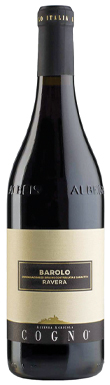

The bright red colour, obtained thanks to a marathon 40-day maceration, anticipates a symphony of aromas: rose petals, citrus, cinnamon, graphite, mint. In the mouth, a refined elegance. Persuasive and framed by silky tannins, the acidity is exhilarating and the crunchy fruit returns on the finish. Partly whole-bunch vinified, using yeasts indigenous to the Ravera sub-zone, then refined only in large barrels. A post-modern Barolo.
2021
Elvio CognoBarolo Ravera

Castello di Perno, Barolo Castelletto, Monforte d’Alba, Piedmont, Italy, 2020
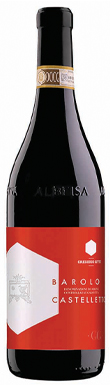
The nose bursts with small red fruits, violet and field herbs. The palate is in masterful balance between intensity and finesse, with slender tannins, electric minerality and a distinctly balsamic finish. A fresh, vertical Barolo, it ferments without the addition of yeasts and macerates for 30 days in contact with the skins. It then matures for 18 months in large barrels and spends a few additional months in concrete before being bottled.
2020
Castello di PernoBarolo Castelletto
ForteMasso, Barolo Castelletto, Monforte d’Alba, Piedmont, Italy, 2020
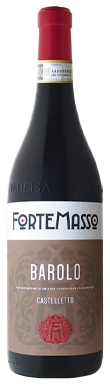
The sloping vineyard from which this originates faces east-southeast; the grapes at the top are destined for the intense Castelletto Riserva (produced only in the best years). The wine refines in barrique and then in large barrels. Bright ruby red, elegant, chiselled. Scents of violet, hay and cherry. On the palate, it’s savoury and harmonious, with great progression. The persistent finish is marked by liquorice hints. Representative of the Castelletto MGA.
2020
ForteMassoBarolo Castelletto
Bartolo Mascarello, Barolo, Piedmont, Italy, 2021
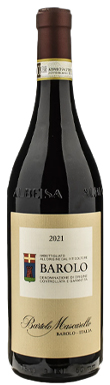
Cannubi, Ruè, San Lorenzo and Monrobiolo di Bussia in the municipality of Barolo; Torriglione in La Morra – a handful of historic crus contribute to this very ‘classic’ Barolo. The clear brick red colour is only the prelude to the triumph of tradition that emerges both on the nose – mineral hints, cinchona, dried flowers, tobacco leaves – and in the mouth, which is compact and tense, with an extraordinary saline depth. An iconic and timeless Barolo.
2021
Bartolo MascarelloBarolo
Renato Ratti, Barolo Serradenari, La Morra, Piedmont, Italy, 2021
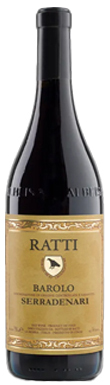
The 2021 harvest was, for its freshness and balance, a vintage of a bygone era. The grapes were harvested in the second half of October and underwent a 30-day maceration on the skins. Aged for a year in barriques (25% new) then in large casks. The bouquet is varied, with notes of fleshy fruit and sweet spices that gradually give way to sensations of powder and small berries. Medium-bodied, with silky, refined and stylised tannins, while the acidity is invigorating. A perfect ‘high-altitude Barolo’.
2021
Renato RattiBarolo Serradenari
ArnaldoRivera, Barolo Ravera, Novello, Piedmont, Italy, 2021
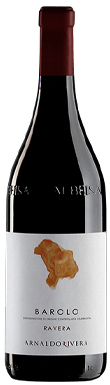
<p>This is one of the nine crus presented by the Terre del Barolo cooperative in the ambitious ArnaldoRivera Barolo line. Created from the blending of five plots, owned by as many members, at elevations of 360m-450m, the aromas evoke a carpet of flowers – particularly violets and rose petals – at the foot of an orchard heavy with cherries and crunchy plums. The palate is agile and round, savoury, fresh and marked by a dynamic and invigorating acidic vein.</p>
2021
ArnaldoRiveraBarolo Ravera
Matteo Ascheri, Barolo Ascheri, La Morra, Piedmont, Italy, 2021
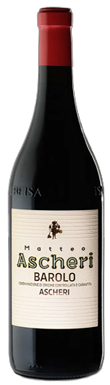
The Ascheri sub-zone is situated on the western side of La Morra, where there’s a much lower density of vineyards compared to the eastern sector. Vinification follows a classic approach: two weeks of fermentation then ageing in Slavonian barrels. The nose fascinates with vivid notes of blueberries, dried roses and cloves; the mouth is rich in flavour, acidity and freshness. A harmonious Barolo, thanks to the successful balance between tannic presence and softness.
2021
Matteo AscheriBarolo Ascheri
Cascina Fontana, Barolo, Piedmont, Italy, 2020
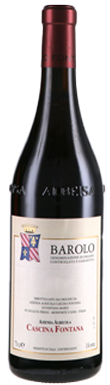
A blend of grapes from the MGAs of Villero and Mariondino in Castiglione Falletto, and Giachini in La Morra (70% and 30% respectively). Intense garnet red. Wild strawberry, violets, earth and moss. In the mouth it’s juicy, extremely drinkable and fresh, with round tannins and a finish that recalls macerated cherries. The grapes are vinified separately in cement tanks. Maceration lasts 40 days, and the wine ages for two years in 25-hectolitre barrels, then one year in cement.
2020
Cascina FontanaBarolo