
Decanter at Home masterclass: Tasting the La Las with Philippe Guigal
Matt Walls and Philippe Guigal presented a immersive virtual masterclass detailing the personalities of each of the estate's famous La Las; La Mouline, La Turque and La Landonne from three different vintages.


Last chance: You can still buy tickets to watch this E Guigal LaLas virtual masterclass and taste the wines, via the Decanter at Home series – book here
A so-called ‘vertical’ tasting is of the same wine, but over multiple vintages. A ‘horizontal’ tasting is of different wines, but in the same vintage. That’s what makes the Decanter at Home tasting particularly special – it’s both horizontal and vertical.
Not only do we taste the three jewels in Guigal’s Côte-Rôtie crown; La Mouline, La Turque and La Landonne, but we taste each cuvée across the same three vintages; 2017, 2016 and 2012.
To top it off, we have Philippe Guigal himself to guide us through these extraordinary wines.
The result is an insight into the unique personality of these three legendary Côte-Rôties – and the character of each vintage.
Scroll down to see Matt Walls’ Guigal masterclass tasting notes and scores
The estate
When I visit Guigal each year in the autumn to taste the new vintage, I join Philippe in the endless cellars under the winery. But this time Philippe joined us from the altogether smarter setting of Château d’Ampuis, one of a number of properties the family has acquired since the company was established in 1946 by Philippe’s grandfather Etienne Guigal.
Etienne’s son Marcel joined the family business at a young age when Etienne was struck temporarily blind in 1961. Philippe and his wife Eve represent the third generation.
Today they make 8.5 million bottles across the southern and northern Rhône each year, and they own over 150 hectares of vineyards, 40ha of which are in Côte-Rôtie.
The two sectors
Côte-Rôtie is commonly split into two halves, the Blonde side to the south, the Brune side to the north, ‘two sectors next to each other with a very different expression of Syrah,’ says Philippe.
He explains that the Blonde side has soils containing silica and limestone, producing a particularly fine style of Côte-Rôtie. ‘Syrah on limestone is always in elegance, a sophisticated and delicate Syrah,’ says Philippe.
The Brune side however has more clay, and Philippe points out the presence of plentiful iron oxide and manganese, ‘these two elements are extremely important in the final expression of the wines… more ‘shoulders’, probably more colour, definitely more tannins.’
La Mouline

Of the dozens of lieux-dits that make up the Blonde side, there is one known simply as Côte Blonde, and this is home to the one-hectare parcel of vines that produces La Mouline.
‘It’s the oldest vineyard of the entire Côte-Rôtie appellation,’ says Philippe, ‘we have an average age of vines of 90-years-old in La Mouline, and we still find vines dating back to 1893.
‘The walls have been built by the Romans 2,400 years ago – this vineyard is a living museum.’
In terms of style, Philippe describes La Mouline as ‘the most Burgundian’ thanks to its natural finesse, and its exuberant aromatic display of flowers and spices.
La Turque

The vineyard that produces La Turque is on the Brune side, in lieu-dit Côte Brune, ‘but extremely close to the Côte Blonde,’ says Philippe, producing a wine which is ‘an interesting mix of Brune and Blonde.’
He goes on to explain the vineyard’s history – from producing the ‘unofficial wine of the President of the Republic’ at the beginning of the 1900s, to being abandoned in the 1930s, then finally replanted by the Guigals in the 1980s.
A deeper, more resonant wine than La Mouline, it also makes itself known by the rich velvetiness of its tannins.
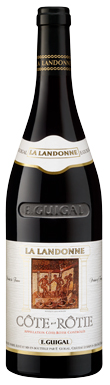
La Landonne

La Landonne is further north than La Turque, in an area particularly rich in iron oxide. ‘It’s a very sentimental vineyard to me,’ says Philippe, as it was planted by hand in 1975 by his father to celebrate Philippe’s birth.
Unlike the other two cuvées, La Landonne contains no Viognier and is whole-bunch fermented, resulting in a dark, structured and ageworthy style. ‘Whatever vintage you choose, you will have a powerful wine,’ says Phillipe.
It’s always the most tannic and savoury of the set, brimming with roasted meat, beef jus, black olives and woody herbs.
Vintage variation
Though the main thrust of their personality comes from their individual sites, each new vintage puts its stamp on these wines.
When it comes to the 2017, ‘I like to talk about the generosity that a young wine can provide in its youth,’ says Philippe. Thanks to the warm, sunny summer weather, ‘the 2017s are extremely open and extremely generous.’
As for 2016, ‘it’s an extremely balanced vintage; what I truly enjoy about 2016 vintage is this beautiful harmony between the different elements.’ It wasn’t as hot as 2017, and has slightly higher acidity as a result.
Regarding 2012, ‘we could take the time to pick at the perfect phenolic ripeness, so it’s definitely a ripe vintage,’ says Philippe. He believes it gives an idea of how the 2017s might taste in five years’ time.
The fourth La-La
This tasting reminded me what I love about this suite of wines: their impact, scale and flamboyance. They have an undeniable star quality and razzle-dazzle that would be obvious even to the occasional wine drinker.
We touched on other topics as we tasted through the wines, including the use of Viognier in the blend, Philippe’s vision of oak élevage, their ageing potential, and even the historic white wines of Côte-Rôtie.
Towards the end, Philippe shares some information about the forthcoming fourth La-La, La Reynarde. A good excuse to rerun this tasting in a few years’ time – with 12 wines instead of 9!
See Matt Walls’ Guigal masterclass tasting notes and scores
Wines are listed in descending vintage order by type; La Mouline, La Turque and La Landonne
Related content
Rhône 2020 En Primeur: full vintage report and top-scoring winesWalls: Tasting Hermitage 2001 20 years onWalls: 10 exciting estates to know in Cornas
E Guigal, La Mouline, Côte-Rôtie, Rhône, France, 2017
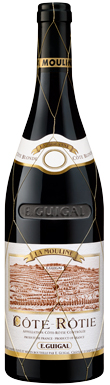

Immediately fresh and highly perfumed - tobacco, star anise and wood - before the fruit appears. There's an intensity on the palate, the tannins are...
2017
E GuigalCôte-Rôtie

E Guigal, La Mouline, Côte-Rôtie, Rhône, France, 2016
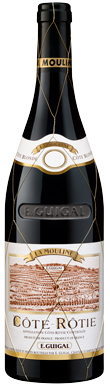
Here the blackberry fruit is more to the fore compared to La Mouline 2017, the higher-toned aromatics and cedar notes are more in the background....
2016
E GuigalCôte-Rôtie
E Guigal, La Mouline, Côte-Rôtie, Rhône, France, 2012
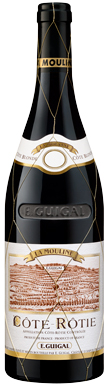
Immediately more mature and developed than the 2017 and 2016 which were tasted alongside - more developed than I was expecting at nine years old....
2012
E GuigalCôte-Rôtie
E Guigal, La Turque, Côte-Rôtie, Rhône, France, 2017
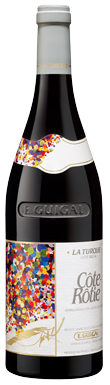
You can almost smell the fresh clay, immediately a different register compared to La Mouline with star anise, incense notes and rolling tobacco as opposed...
2017
E GuigalCôte-Rôtie
E Guigal, La Turque, Côte-Rôtie, Rhône, France, 2016
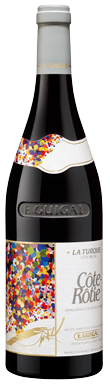
Lighter and more perfumed than the 2017 La Turque, more aerial in aroma, violets. I love the smoothness of the tannins, the silkiness on the...
2016
E GuigalCôte-Rôtie
E Guigal, La Turque, Côte-Rôtie, Rhône, France, 2012
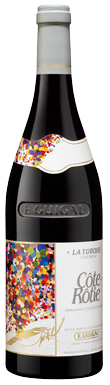
Much more developed than the 2016 and 2017 tasted alongside. Voluminous, rich, voluptuous, really mouth-coating tannins, great intensity and impact as well as huge length....
2012
E GuigalCôte-Rôtie
E Guigal, La Landonne, Côte-Rôtie, Rhône, France, 2017
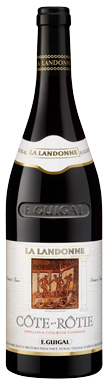
Much more introverted than the Mouline and Turque of this vintage at this stage. Dark chocolate and liquorice, but very savoury with slightly herbal, woody...
2017
E GuigalCôte-Rôtie
E Guigal, La Landonne, Côte-Rôtie, Rhône, France, 2016
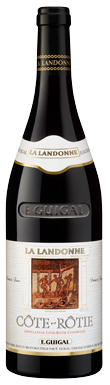
A more perfumed, delicate and precise iteration of La Landonne compared to the 2017. It still has the power, but without the force, with finer...
2016
E GuigalCôte-Rôtie
E Guigal, La Landonne, Côte-Rôtie, Rhône, France, 2012
More herbal intensity compared to the 2017 and 2016, there's bay leaf, black olive and tomato paste. This is finally approaching readiness to drink for...
2012
E GuigalCôte-Rôtie
