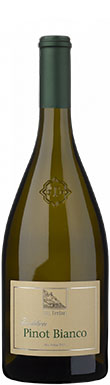
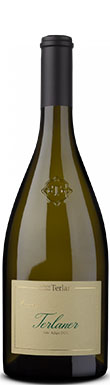
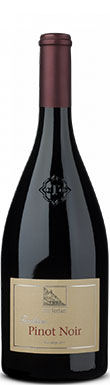
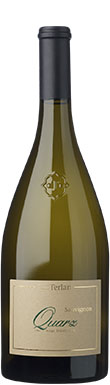
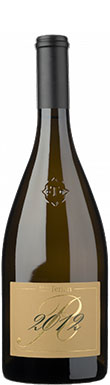
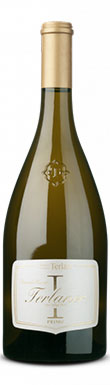
Super-premium whites, Primo Grande Cuvée and Rarity – both Platinum Medal winners at the Decanter World Awards and ‘100 pointers’ across the wine press at large – may be Cantina Terlano’s flagship wines, but delve deeper and you’ll find stunning quality and value throughout the entire portfolio.
This exemplary co-operative lies less than 10 kilometres west of Bolzano, regional capital of the Alto Adige in northeast Italy.
Notes and scores for six Cantina Terlano wines below
Michael Garner: Cantina Terlano’s white wines have extraordinary ageing potential and need time in bottle to develop, yet the reds are delicious to drink young. How do you explain this apparent anomaly?
Klaus Gasser: This is white wine country. We’re on the left bank of the Adige and growing conditions here are pretty much unique. It’s cooler and the soils have a much higher limestone content over the river.
The village itself sits in the crater of an extinct volcano with mainly sandy, fast-draining, siliceous soils over a bedrock of red porphyry.
We have a very particular microclimate, with huge differences between day and night-time temperatures governed by our proximity to the Alps and warm afternoon breezes which blow up from the south.
White grapes are planted at up to 900 metres, many on steep slopes. As a result, our whites demonstrate great nervosity and tension: marked sapidity and above-average acid levels promise great longevity thanks to the low pH of the soils.
Our legendary winemaker Sebastian Stocker was the first to recognise and start developing this potential. The reds, however, are mainly from lower-lying vineyards on the eastern side of the village towards Bolzano: they’re a very different proposition, though they can age quite well too.
MG: How do you highlight these very distinctive characteristics?
Rudi Kofler: It’s mainly the age of the vines: we use younger ones for our Tradition range and older for our Selection and Riserva wines. Our aim is to maintain fruit integrity and purity through to the bottle, so we avoid cold-maceration and aromatic yeasts.
We ferment the simpler wines at cool temperatures (around 18-19 ℃) in stainless steel, with up to around six months of lees ageing.
We prefer whole-bunch fermentation for the Selection range, and slightly higher fermentation temperatures with a mixture of large wood and stainless steel plus longer lees ageing, because the fruit is more concentrated.
MG: What about your background in wine?
RK: After studying agronomy, I worked at Cantina San Michele Appiano under Hans Terzer between 1997 and 1999, then moved to Terlano where Hartmann Dona was the head oenologist. He left in 2002 and I took over. The spirit of Sebastian Stocker lives on here, so I’ve followed in the footsteps of three great local winemakers.
MG: Can you explain a little more about the innovations Stocker brought in?
RK: Under his guidance the winery acquired its first stainless steel vats in 1977; they proved perfect for the singular kind of storage regime he was interested in and the effects of lengthy lees ageing in particular.
These days our Rarity wine is fermented and undergoes malolactic in large wooden barrels. It stays there for a year with regular batonnage and is then transferred to those original stainless steel drums and stored for 10-12 years – sometimes more – on the noble lees.
The wine is still turbid so we don’t stir the lees any further. People say that the yeast autolysis process is over after about four years, but we’ve seen how our wines go on developing long after that. Stocker laid the groundwork for us.
MG: How have the warmer vintages of the last decade affected the character of your wines?
KG: We’ve been lucky so far. The red wines have benefitted and have a much riper style. Overall there’s better phenolic maturity but also greater focus on getting the picking date just right to avoid over-ripeness.
The changes we’ve seen are more in terms of random patterns, hotter spells certainly, but seriously cold snaps and an increased danger of hail. But we’re already used to extremes here!
RK: Ironically, we were harvesting earlier in the first decade of this century than the second! In 2021 we picked our white grapes in October, about a month later than usual. But we don’t pick early for higher acid levels: our style is based on low yields of perfectly mature grapes.
MG: Finally the future. Which wines will carry the name of Terlano forward?
KG: Over time, Pinot Bianco, Sauvignon and Chardonnay have established themselves as the grapes that grow best here.
They work both as single varieties (eg Pinot Bianco for Rarity or Sauvignon Blanc for Quarz) and in combination (eg Primo Grande Cuvée or Terlaner Nova Domus).
Terlaner Cuvée, a blend of all three grapes, is actually the original wine of the area; varietals didn’t take off until the 1970s.
Factbox: Terlano
Founded: 1893 (as a cooperative)
Current members: 143
Hectares under vine: 190
White varieties: Pinot Bianco, Chardonnay, Sauvignon Blanc, Pinot Grigio, Gewürztraminer, Müller Thurgau
Red varieties: Lagrein, Pinot Nero, Merlot, Cabernet Sauvignon
Product ranges: In addition to Primo and Rarity, there are two ranges: Selection is the single-vineyard or Riserva line, and Tradition the introductory line consisting mainly of single varietals.
Annual average production: 1.5m bottles
Tasting Terlano: Six of the best
Related articles