
Decanter meets: Marco Balsimelli, production director for Ornellaia and Masseto
Decanter's regional editor for Italy travelled to Bolgheri last week to meet the new production director for Ornellaia and Masseto, Marco Balsimelli – an exclusive interview with the man who replaces Axel Heinz, and the man who hired him, Lamberto Frescobaldi.


In March 2023, Decanter reported on Axel Heinz’s departure for Château Lascombes in Bordeaux, which unintentionally kickstarted a reshuffle at Ornellaia and Masseto.
Ornellaia’s winemaker, Olga Fusari announced her intention to leave in August, lured to a new project in Bolgheri. This was followed by the announcement in September that Ornellaia’s CEO, Giovanni Geddes da Filicaja, would be retiring imminently.
This latter announcement was big news. Geddes had been the architect of not only Frescobaldi’s acquisition of Ornellaia, but also Masseto’s La Place listing (the first Italian wine to be distributed through the Bordeaux négociants), and the long-term vision to create two discrete brands from what was once the same estate (culminating in a brand new winery for Masseto in 2019).
Scroll down for tasting notes and scores for Ornellaia and Masseto
A new team
Of the key figures from the old team, only Giuliano Tarchi (longstanding vineyard manager for both estates) and Gaia Cinnirella (winemaker at Masseto) remained, leaving Lamberto Frescobaldi, president of Frescobaldi Wines, which owns both Ornellaia and Masseto, plenty of work to do to find suitable replacements.
‘The work here is about fine-tuning every year,’ he tells me, explaining that he was looking for team players rather than superstar individuals.
Ornellaia’s winemaker, Olga Fusari has been replaced by Denise Cosentino, a Calabrian who has spent the past seven years working for Domaines Barons de Rothschild in China, most recently at Domaine de Long Dai.
Lamberto says that she was highly recommended by a friend. ‘I called Saskia [Rothschild] and said, “I’ve been told that Denise wants to return to Italy, would this bother you?” Saskia was sweet enough to say, “we know her very well, she’s a very talented lady.”‘
Following Saskia’s blessing, Lamberto recounts how he set up a Whatsapp call between himself, Denise and Marco Balsimelli, an Italian enologist who had been recommended to Lamberto. They had an introductory conversation and then Lamberto left them on the call to get to know one another.
Marco Balsimelli
Marco, born in Italy, lived and worked in Bordeaux for 17 years after studying enology in Florence. As enologist for Eric Boissenot since 2010, he was responsible for working with some of the most prestigious names of the Left and Right banks as well as some renowned estates elsewhere around the world.
Softly spoken but exuding confidence, he is clearly enthusiastic about his new role with two of Italy’s biggest names, almost chomping at the bit as he examines the vines and thinks ahead to his first harvest.
‘I wanted somebody who was humble,’ explains Lamberto. ‘There was already in place a lovely team; we didn’t need evolution, we needed a director of the orchestra.’
Marco arrived in Bolgheri in November, and already seems at home in his new environment – although he still slips into French occassionally during our conversation. We drive to the Bellaria vineyard close to the winery; 30 stunning hectares of vines cascading down from the hills towards the sea, planted with all the varieties of the estate – Cabernet Sauvignon, Merlot, Cabernet Franc, Petit Verdot, Sauvignon Blanc, Petit Manseng, Viognier, Verdicchio and Vermentino.

Marco explains that there is a frost pocket with affects around two hectares of vines – especially now that budbreak is occurring earlier than in the past. To combat this, pruning is delayed for as long as possible. Lamberto says that in Chianti Classico, pruning used to take place in December but now begins in January. Pruning at Ornellaia, meanwhile, was only completed two weeks ago.
Inevitably, conversation turns to the impact of climate change. ‘Canopy management is the main solution against climate change,’ states Marco, explaining how the canopy can help to shade the bunches and control vigour, but adding that correct pruning and rootstock selection are also important elements.
Ornellaia was one of the first Italian wineries to employ Simonit & Sirch, who pioneered a way of pruning that has since caught on among some of the most revered estates in the world – as well as ambitious smaller estates. Today, they employ UVA Sapiens, which follows a similar philosophy.
The theory is that minimal cutting keeps wounds on the vines as small as possible, reducing the likelihood of trunk diseases such as eska. Vines are therefore able to live longer and, as old vines, produce better quality fruit. ‘Now we can keep the plots for 40 years,’ says Marco enthusiastically.
Soil similarities
Marco is of course very experienced working with Cabernet and Merlot in particular, and while the sandy, alluvial and volcanic soils that make up Ornellaia’s vineyards can be loosely compared to the Left bank, ‘the [blue clay] soils of Masseto are maybe more similar to Pomerol – L’Evangile etc.’
The 11ha of vines at Masseto are much more manageable than Ornellaia’s 134ha, and so the former is managed with a completely organic programme, although it’s not certified. We make the short drive there to taste the new vintages of Masseto and second wine, Massetino.
The blue clay soils retain moisture and help to cool the vines, delaying budbreak and refreshing them during the scorching summer months which often see drought. ‘That’s the trick for this wine,’ says Lamberto.
‘The clay allows the vines less vigour, maybe; more concentration and great acidity,’ Marco adds.
Winemaking changes
So what about winemaking? Is there anything you’d like to do differently at Ornellaia and Masseto?
‘I will vinify around 10% of the blend [of Ornellaia] in amphorae for more fruit, minerality, movement of lees and freshness,’ Marco replies, adding that he wants to try to harvest a little bit earlier too in order to maximise the elegant character that has increasingly become a signature of Ornellaia in the past four or five vintages.
‘In Bordeaux, I come from the school of soft extraction, but I think Axel had this philosophy also,’ he concludes.
The older vintages Marco chooses to open at both Ornellaia and Masseto are years with similar conditions to 2021 and – in the case of Ornellaia – similar blends, yet the refinement of the winemaking process from then to now is striking.
Both Marco and Lamberto struggle to hide their grins when talking about the new releases from the 2021 vintage, and Marco is full of enthusiasm as he looks ahead to his first complete vintage this year.
‘Here I find a fantastic team…a fantastic piece of land where we can make one of the greatest wines in the world,’ Marco says. ‘My contribution to the history of Ornellaia.’
It seems that Lamberto has chosen an extremely modest yet capable and intelligent pair of hands to guide the estates’ futures.
‘Do you have any developments planned in the near future?’ I ask Lamberto. ‘We already did quite a lot!’ he jokes. ‘We have blue skies for the future.’
A taste of 2021 (and more):
A wet, mild winter replenished underground water reserves, which proved vital as spring was dry and summer saw periods of drought and above average temperatures.
Related articles
- Italy’s future greats: 10 wineries from Piedmont to Campania nominated by their peers
- Bolgheri 2020: Vintage overview and top-scoring wines
- First taste: Ornellaia 2021
Ornellaia, Bianco, Bolgheri, Tuscany, Italy, 2021
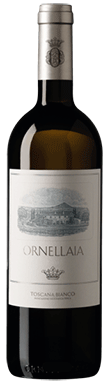

For the first time, Ornellaia Bianco becomes a Bolgheri DOC wine in the 2021 vintage. It's again 100% Sauvignon Blanc, vinfied in a mixture of...
2021
OrnellaiaBolgheri

Ornellaia, Bolgheri, Superiore, Tuscany, Italy, 2021
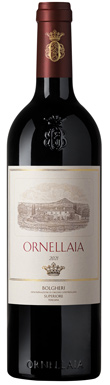
While the summer was hot and dry, with three months of drought, the vines' roots were able to tap water reserves which had been topped...
2021
OrnellaiaBolgheri
Ornellaia, Bolgheri, Superiore, Tuscany, Italy, 2016
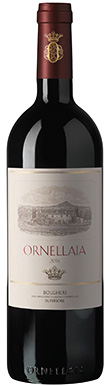
Known as ‘La Tensione’, Ornellaia 2016 is everything you expect from a great wine in a great vintage following a few years of bottle age:...
2016
OrnellaiaBolgheri
Ornellaia, Bolgheri, Superiore, Tuscany, Italy, 2006
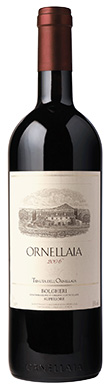
Ornellaia 2006, dubbed ‘L'Esuberanza’, today expresses fresh and dried dark fruit aromas and even some green hints from the Cabernet Franc. Structured and saline, with...
2006
OrnellaiaBolgheri
Masseto, Toscana, Tuscany, Italy, 2021
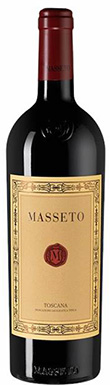
2021 was a hot vintage, but you can feel plenty of freshness in this wine. It has a lovely perfume of crushed hedgerow berries and...
2021
MassetoToscana
Masseto, Massetino, Toscana, Tuscany, Italy, 2022
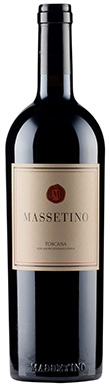
Massetino 2022 is a stunning wine. It doesn't quite have the concentration of Masseto, but offers a beautiful nose of youthful dark cherry and florals....
2022
MassetoToscana
Masseto, Toscana, Tuscany, Italy, 2006
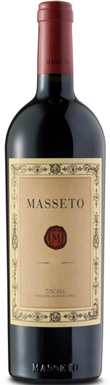
‘A great wine is not only concentration, it is balance, elegance’, remarks Marco Balsimelli, Masseto's new production director, and Masseto 2006 delivers the trifecta of...
2006
MassetoToscana
