
Discovering Spain’s new winemakers plus their top wines worth seeking out


Have the vision to look beyond the Rioja and Ribera del Duero mainstream, and the rewards can be great indeed. Hidden in rural corners and on inhospitable slopes, you will stumble across those who prefer to carve their own path, mixing new methods with old, breathing new life into traditional grape varieties and wine styles as they go. Sarah Jane Evans MW explains the fascination behind nine of her favourites among Spain’s new guard...
Spain is buzzing with exciting small projects. The fact that they are small makes the wines harder to find for those of us who love them, but it is all the more rewarding when you can track them down. Often, in fact, the best solution can be to visit the wineries directly (so long as you follow the protocol of buying some wine when you do). Many of the wineries here are in exceptionally beautiful places: natural parks, UNESCO biospheres, rugged mountains, islands in the midst of the Atlantic, and high isolated inland plateaus.
Scroll down for Sarah Jane Evans MW’s top wines from 9 new Spanish winemakers
What unites them is a focus on their own land and on their relationships with their contract growers; their commitment to local varieties (hence the excitement of some of the rarities featured here below); their desire to stay small; and, for many, their commitment to reviving the old ways. It’s a tightrope. How do they produce enough to satisfy demand? And how can they avoid spending their lives trudging the halls at industry trade fairs and all the other wine shows? Right across Spain there are wineries and producers to look out for. Some of these are established, such as Dani Landi, one of the best known of the producers working with Garnacha in the Sierra de Gredos hills. Others, less well known, include Borja Pérez in Tenerife (Baboso Negro wine, anyone?). Down south in Montilla-Moriles and Sanlúcar de Barrameda, there’s a surprising amount of change. Towards the Mediterranean in Manchuela and Utiel-Requena, Altolandon and Noemí are bringing a new energy to those who make and sell the formerly unloved Bobal variety. In Catalonia, there is constant innovation. Keep up!
Sedella, Málaga
Lauren Rosillo leads a double life, and one which he manages with great success. He’s the well-established winemaker for the Familia Martínez Bujanda wineries, which include Finca Valpiedra in Rioja and Finca Antigua in La Mancha, among others. Yet at the same time he is a young start-up in somewhere completely different: the Axarquía of Málaga. Just inland from the Mediterranean, with its astonishing landscape of 45% slatey slopes at 750m, this is a zone that has been discovered and recovered by several small producers.
In the 10 years since his first vintage in 2006, Sedella Vinos has won critical acclaim. Undoubtedly there’s a particular fascination with his wine because in his 2.5ha vineyard, he works with the rare Romé variety. (Bodegas Bentomiz in the Axarquía is also working with Romé.) More recently he’s launched Laderas de Sedella Anfora – as the name suggests, an amphora wine; and last year (2018) his first white wine, Vidueños de Sedella. For lovers of rare varieties, the latter is a field blend: Moscatel with Calona, Montúa, Doradilla, Vijiriega, partly fermented on skins.
Here at Sedella, Rosillo combines old and new: ploughing with animals in the vineyard, some biodynamic practices (though not all), using concrete and oak eggs as well as barriques, in addition to the amphoras. Production is tiny – just 4,000 bottles in 2012.
MicroBio, Castilla y León
MicroBio’s Ismael Gozalo is part of Rueda royalty, though he would laugh if I told him so. His father founded the exceptional Viñedos de Nieva, and he himself was a founder of Rueda great Ossian, along with Javier Zaccagnini.
However, he had been making his own wines for 20 years in the village of Nieva, at 800m-900m, which is one of the finest areas for old-vine Verdejo. The MicroBio wines draw on pre-phylloxera vines, survivors because of the sandy soil. The earringed, denim-clad enthusiast Gozalo is a survivor, making the wines that express his terroir best. Viticulture, and the vineyard, are his second names.
Living outside the DO regulations, ploughing his own furrow, his portfolio includes a pet-nat, a Verdejo aged in Sherry casks, and a wine that’s fermented in tinajas. In the cellar at the tiny MicroBio estate, there are barriques, foudres, glass demi-johns – every kind of container. He has made a wine with Rioja’s Benjamín Romeo of Contador – each made half and then they blended it together, with a cheerful disregard for formal regulation. MicroBio is all about the life, and that includes harnessing the microbial life in the winery. Come here to discover the full potential of Verdejo.
VidAs, Asturias
Bea Pérez has been president of the denomination of Cangas in Asturias since 2016. She’s also joint owner of Bodegas VidAs (Vinos de Asturias) with her husband Pepe Flórez. At the DO, her job is to build the profile of one of Spain’s least-known wine regions. Given the quality of the wines she and Pepe make, it should be relatively easy. While it is still not widely known (most visitors say, ‘Asturias? Great cider!’), a few companies have started to put Cangas on the map in the last five years. It is a beautiful, mountainous region, recognised for its ‘heroic viticulture’. It is also isolated, with the great advantage that it was not overrun by outsiders bringing their usual grape varieties.
Here you will find something original – Carrasquín, Albarín Negro, Verdejo Negro, Albarín Blanco – Atlantic wines all of them, typically grown on slate. Both Pérez and Flórez are scientists: he did his PhD in chemistry in London, she did hers in physics in Murcia. They realised on their return that their contribution to bringing life back to Cangas was to help revive its wine business. VidAs started in 2012, and they now make 30,000 bottles in total.
Celler del Roure, Valencia
Pablo Calatayud did not start his life in wine (his family business was furniture), but it is second nature to him now. Perhaps that’s why he has been able to be more creative than colleagues who inherit traditions. Admittedly he was advised to start out with the usual suspects: Tempranillo, Cabernet Sauvignon and Merlot, classic varieties but not ones which would necessarily flourish in Valencia. Sara Pérez, from Mas Martinet in Priorat, put him right. Initially he chose the local variety Monastrell and subsequently Mandó (also known as Garró).
In 2006, the Calatayuds bought an estate in their home town, not far from a 400BC settlement which has its own traces of winemaking. Along with 40ha came a cellar that has made him famous: it has 100 tinajas (amphoras) buried up to their necks in earth. He only uses the better ones, unlined, which are about 2,500 litres in capacity. What he likes about them is the way they keep the wines fresh despite the summer heat, which can reach 40°C.
His first tinaja wine was Cullerot, a multifaceted white blend. Vermell is a youthful red blend of Monastrell with Alicante Bouschet and Mandó. Parotet is the top tinaja red. More recently Calatayud has reintroduced foot treading in the old stone lagares. He has, along with Pepe Mendoza and Toni Sarrión of Mustiguillo, transformed Valencia’s wines.
Doniene Gorrondona Bizkaia, Basque country
In 1994, Itziar Insausti, her brother and two colleagues bought a winery called Gorrondona in the coastal town of Bakio, east of Bilbao. Bakio had a tradition of Txakoli wine – they were keen to revive this and to improve the reputation of the wines. In particular it was known for its red wines, from Hondarrabi Beltza, though they had fallen out of favour.
A quarter of a century later they have established a range of wines with distinct expressions and are part of a group of bodegas exporting Txakoli in different styles. They farm 15ha spread over some 15 plots, as no vineyard is extensive in these parts.
At a time when Txakoli is still too often seen as a cliched, light white spritz, this is a winery that is revealing the potential of the style as a gastronomic wine, and as a wine to age. Thus, in addition to its ‘basic’ Txakoli, Doniene Gorrondona has a terrific lees-aged version, and a successfully barrel-aged style, Ondarea. The latest addition is Iri, a single-vineyard Txakoli with no added sulphur. There’s also a traditional-method sparkling, Aparadune; aguardiente de orujo (spirit); and a rare red Beltza. Insausti says Hondarrabi Beltza is distantly related to Cabernet Franc. And Doniene? It means ‘St John’ (the patron saint of Bakio).
Victoria Torres Pecis, La Palma
Tenerife may be the Canary Island that has been getting all the attention from wine lovers, but Victoria Torres Pecis (at her eponymous winery) is making sure that the smaller La Palma is not forgotten. Her unique sweet Malvasía, grown on blackened volcanic soils, features on many of the finest restaurant wine lists. Torres is the fifth generation to run the business, continuing much of her father’s philosophy. It’s a small business – some 17,000 bottles across seven wines, working with the local Negramoll, Vijariego, Listán Blanco, Albillo Criollo and Malvasía. Yet she is making a reputation not only for the winery (now named after her) but for the wines of La Palma itself.
While Torres is taking the winery in new directions, she’s also renewing important traditions: for instance she uses lagares made of Canary Island pine for the Negramoll and the sweet Malvasía. The Malvasía doesn’t come out perfectly every year: 3,000 bottles were made of the 2012, 1,000 in 2013, then nothing until 2017. Her Listán Blanco, Las Machuqueras, is aged in 1,200-litre chestnut foudres – another return to traditional materials. These are unquestionably Atlantic wines. While other regions may suggest they have a note of salt or zestiness from the sea, Torres’ wines are the real, windswept deal.
Cámbrico, Salamanca, Castilla y León
Cámbrico flourishes in a very special place, a UNESCO biosphere reserve in the Sierra de Francia natural park, near the historic university town of Salamanca. In that zone of splendid isolation, Cámbrico was founded in 2000, based on the purchase of some 130 parcels, including vines up to 110 years old, grown on granite and slate. It’s an exciting project, like so many to be encountered across Spain, that is reviving old vineyards and the old ways. This includes dry farming, no chemicals, ploughing by horse and hand harvesting. Excavated out of the mountain, the winery is gravity fed, using native yeasts, minimal fining and filtration, and low sulphur. On the granite terraces they grow Calabrés (an old Garnacha clone, thought to have come long ago from Calabria), Tempranillo and Rufete, a rare variety of growing interest in the area.
Fernando Maíllo is the tall, elegant, smiling figure behind Cámbrico. Living locally, he saw the potential for Rufete, a variety that his neighbours merely regarded as the basis for a cheap and cheerful beverage. ‘My plan?’ He answers the question with another smile: ‘Never to grow, and to try to make the best wine possible from each plot. What I seek is ever-greater finesse without losing flavour.’
Alfredo Maestro, Castilla y León
Alfredo Maestro is a very different voice in Ribera del Duero. The DO’s history is still relatively short, and it has had great success – especially in the Spanish market – with its forthright, intense reds. Now, some 30-40 years on, styles are becoming a little more diverse. This is where Maestro fits. In the late 1990s, a self-taught winemaker, he was making the textbook, powerful, hi-tech wines of the period, but soon realised that his interest was in telling the story of the land, without make-up or chemical additions. He has plenty of stories to tell now, with some 11 different wines from parcels in Ribera and the Sierra de Gredos north of Madrid, where Garnacha is king.
Delicacy and freshness unite the wines, giving a new vision of Tempranillo in a region of black fruit and tar. While the majority of his vineyards are in Ribera del Duero, he prefers to work outside the DO, hence they usually carry the looser Castilla y León or Tierra de León denomination. Maestro may look the sensible, conformist winemaker, but his fun labels are anything but, and the liquid inside is confidently different from the mainstream.
Casa Agrícola, Alicante
Pepe Mendoza, with his beetling brows, effervescent warmth and pet dachshund, appears as the generous godfather of Alicante’s Monastrell producers. He’s been known for the last 25 years for his family business, Enrique Mendoza, and latterly for its fine Monastrells from Alto Vinalopó, notably La Tremenda and Las Quebradas. Then recently Mendoza decided it was time to start ‘a small personal project’.
‘I don’t want to have a big bodega and spend all my days travelling the world selling wine,’ he explains. ‘My dream is to become the reference point for viticulture in Alicante, to have the time to prune my own vines and to make a few thousand bottles of high quality. This is Pepe Mendoza Casa Agrícola, Vinos Artesanos del Mediterraneo.’
The project has begun with 14ha, contract or rented, of Monastrell, Syrah and Alicante Bouschet, and another 9ha of old-vine Giró, Garnacha and Moscatel Romano, which were planted between 1940 and 1960 on 12th- and 13th-century terraces. He’s building a small bodega in the valley of Jalón/Xaló, with great excitement: ‘The building I’m renovating has old, Arab-style arches… the vineyard has incredible soils.’ A vigneron transformed.
See Sarah Jane Evans MW’s top wines from nine new Spanish winemakers
You may also like
Spain’s top 40 Tempranillo winesQuality Rioja 2010: Panel tasting resultsBest Cava sparkling wines from top producersKnow your Sherry stylesTop Seville restaurants and wine bars
Sedella, Mediterranean Mountain Wine, Sierras de Málaga, Andalucia, Spain, 2015
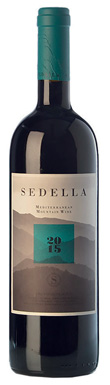

Romé and Garnacha grown on slate meet the Mediterranean. Aromatically fresh with herbal notes, this is dark and concentrated, as dense as the colour, with...
2015
SedellaSierras de Málaga

MicroBio, Correcaminos, Vino de la Tierra de Castilla y León, Castilla y Léon, Spain, 2016
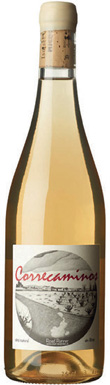
From bush-vine Verdejo on its own rootstock, pressed in a vertical press and fermented in stainless steel, followed by five months on the lees. This...
2016
MicroBioVino de la Tierra de Castilla y León
Bodega Vidas, Cien Montañas Carrasquin, Cangas, Asturias, Spain, 2015
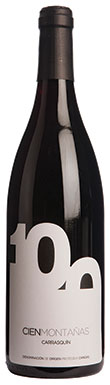
Seductive aromas of red plum and damson fruit, augmented by a touch of sweet spice. Dark-fruited, earthy and savoury in the mouth with terrific freshness...
2015
Bodega VidasCangas
Celler del Roure, Cullerot, Valencia, Spain, 2017
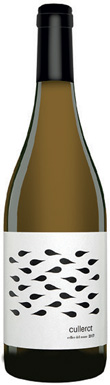
A lively organic blend of Pedro Ximénez, Macabeo, Malvasía, Verdil, Mersequera, Tortosí, Chardonnay and ‘others’. It's wonderfully complex, with all the flavours of a Mediterranean...
2017
Celler del Roure
Doniene Gorrondona, Gorrondona Beltza, Txakolí, de Bizkaia, Northern Spain, Spain, 2017
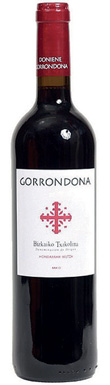
Txakoli is always white and spritzy, isn’t it? Not when it comes from the Bizkaia region, close to Bilbao, and especially not when it comes...
2017
Doniene GorrondonaTxakolí
Victoria Torres Pecis, Malvasía Aromática Naturalmente Dulce Cepas Viejas, La Palma, The Islands, Spain, 2012
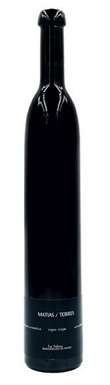
The Malvasía here is grown on the classic horizontal canopy close to the ground. It's pressed with some stems then fermented in Canary Island pine...
2012
Victoria Torres PecisLa Palma
Viñas del Cámbrico, Rufete, Sierra de Salamanca, Castilla y Léon, Spain, 2016
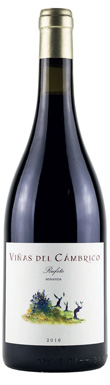
Rufete is something of a rarity, making delicate wines with firm tannins and brisk acidity. It’s usually used as a blending component, so this is...
2016
Viñas del CámbricoSierra de Salamanca
Alfredo Maestro Tejero, El Marciano, Vino de la Tierra de Castilla y León, Castilla y Léon, Spain, 2016
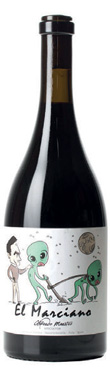
From 70-year-old Garnacha grown on granite at 1,100m, the grapes are hand-picked, foot-trodden whole bunches (100% stems), fermented with native yeasts in stainless steel, with...
2016
Alfredo Maestro TejeroVino de la Tierra de Castilla y León
Casa Agrícola, Blanco, Alicante, Spain, 2017
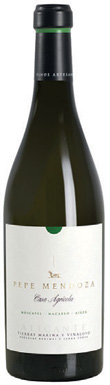
Casa Agrícola is just starting out, and this was Pepe Mendoza’s first vintage. His aim is ‘pureza’ (purity) and the wine is definitely a clear,...
2017
Casa Agrícola
