
Domaine Rostaing Côte-Rôtie Ampodium vertical: 2008 – 2012
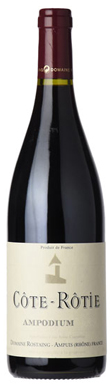
Matt Walls visited this renowned northern Rhône estate to taste five mature vintages of Ampodium, the traditionally blended 100% Syrah from 25 prime parcels of vines, known previously as Cuvée Classique...


There aren’t many Côte-Rôties that sell for over £1,000 a bottle.
There are only three producers whose top wines, when mature and in great vintages, regularly hit four figures: Guigal, Domaine Jean-Paul Jamet and Domaine Gentaz-Dervieux. The last of these might be unfamiliar. The estate no longer exists: Marius Gentaz-Dervieux’s last vintage was 1993. But his vineyards live on, and are now part of Domaine Rostaing.
Scroll down for Matt Walls’ Ampodium tasting notes and scores
The expressions of these vineyards, though now in different hands, once again features among the most impressive – and expensive – wines of the appellation.
More accessible is Domaine Roasting’s blended Côte-Rôtie called ‘Ampodium’.
It doesn’t pretend to be in the same league as the single vineyard wines – it is less than half the price after all. But in top vintages it can be a smart buy. I recently tasted five mature vintages at the domaine to see how they develop.

René Rostaing stepped back from the family domaine he created after the 2014 vintage, but he’s still in good shape. Smiling and effervescent, he resembles a priest when speaking about wine, relaying his sermon with unfailing precision and lucidity. His son Pierre, more laidback but no less meticulous, has been in charge since 2015.
To complete the story, we need to go back a little further, to René’s grandfather-in-law, Jean Dervieux. When he retired, he shared his Côte-Rôtie holdings between his two children: Albert and Yvonne.
Albert Dervieux-Thaize was René’s father-in-law. Mayor of Ampuis and president of the Côte-Rôtie growers’ syndicat after the Second World War, René describes him as ‘the most important pioneer’ of the appellation, and the first local of this era to focus his activities solely on growing vines.
‘He was very kind, very open,’ says René ‘always listening and ready to help.’ Albert Dervieux-Thaize made powerful wines that were considered among the best in this northernmost point of the Northern Rhône. When he passed away, the vineyards were bequeathed to René.
Albert’s sister Yvonne married Marius Gentaz, and in doing so established Domaine Gentaz-Dervieux. Marius was ‘very discrete, very meticulous, very strict,’ says René, who praises the immaculate state of his vineyards. These parcels were also handed down to René, and thus the original estate of Jean Dervieux was reunited once again.
This is how Domaine Rostaing came to possess coveted old-vine parcels of some of the finest lieux-dits in Côte-Rôtie.

Ampodium is a blend of 25 parcels over fifteen lieux-dits. It’s almost pure Syrah, except for a few Viognier vines dotted around the vineyards that barely make up 1% of the wine. They make on average 20,000 bottles of this cuvée every year.
All their wines are fermented in stainless steel with natural yeasts. Neither René’s forebears nor René himself have sought to use new oak barrels to age the wines. René believes that ‘it hides typicity and terroir,’ and the estate still only uses older barrels where possible (228l and 600l) for between 18 and 24 months. They also use as many stems as possible in their wines as they give the wine a ‘vertebral column,” according to René.
Using stems also lends a particular aromatic dimension to the wines that lies somewhere between herbal and spicy depending on the vintage. It can bring freshness and complexity, but in more difficult vintages of Ampodium such as 2008, they give the wine a distractingly vegetal character.
Avoiding destemming also gives the wines longevity. For a relatively inexpensive Côte-Rôtie, Ampodium typically develops for 10 years or more. It does however tend to be strongly reflective of vintage, so it’s worth seeking out better years.
Ampodium may not have the fireworks of their single-vineyard wines, but it’s a sound, well-made Côte-Rôtie in a traditional vein.
See Matt Walls’ Ampodium tasting notes and scores
You may also like
Domaine Clape: Cornas vertical tasting from 2017 – 1987Cornas, Côte-Rôtie & Hermitage 2010: Panel tasting resultsBest value Northern Rhône 2018 – Top buysWine Legend: Domaine J-P & J-L Jamet, Côte-Rôtie 1990
Domaine Rostaing, Ampodium, Côte-Rôtie, Rhône, France, 2012
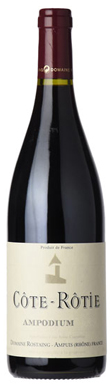

Lovely spicy style on the nose, with hints of cinnamon to the red berry fruit. There's a pleasing generosity on the palate that gives it...
2012
Domaine RostaingCôte-Rôtie

Domaine Rostaing, Ampodium, Côte-Rôtie, Rhône, France, 2011
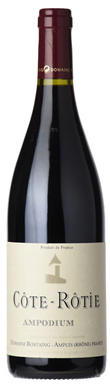
A difficult vintage, on the cold side according to René. It's tasting more mature than the 2010 despite being a year younger. A distinctly spicy...
2011
Domaine RostaingCôte-Rôtie
Domaine Rostaing, Ampodium, Côte-Rôtie, Rhône, France, 2010
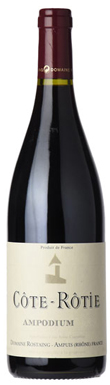
Harmonious on the nose, still with plenty of fresh berry fruit. Gentle, velvety, with blackberries and raspberries all shot through with spicy stalk elements. Cinnamon,...
2010
Domaine RostaingCôte-Rôtie
Domaine Rostaing, Ampodium, Côte-Rôtie, Rhône, France, 2009
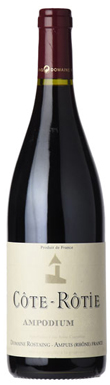
This is the first vintage bearing the name Ampodium. Pretty discrete on the nose for a hot vintage, with a touch of potpourri. Has some...
2009
Domaine RostaingCôte-Rôtie
Domaine Rostaing, Cuvée Classique, Côte-Rôtie, Rhône, France, 2008
What is now called Ampodium was known as the Cuvée Classique until 2008. A very difficult wet growing season, so all parcels, including the top...
2008
Domaine RostaingCôte-Rôtie
