
Domaines Ott’s Étoile: ageworthy rosé in the making
Elizabeth Gabay MW tastes a mini-vertical of Domaines Ott's top-end rosé, Étoile, with winemaker Jean-François Ott. It's early days, but she discovers that the wine 'reveals hidden depth, complexity and richness' as it ages.


In light of the boom in premium rosés, asking Jean-François Ott whether his decision to make Étoile was a commercial one is an obvious question.
‘Definitely not’, is his emphatic reply. ‘I regard each rosé from each of the Domaines Ott estates as being a premium rosé. We make three premium rosés and if the grapes or wine is not up to the quality I don’t put it in the final blend.’
Tasting rosé with Ott reveals his boundless curiosity of different expressions of the wine style, as well as a curiosity towards other winemakers’ visions of fine rosé wine.
Scroll down to see tasting notes and scores for a mini vertical of Domaines Ott’s Étoile
Domaines Ott’s Étoile – the birth of a star
Working with the three Domaines Ott estates, reflecting three very different terroirs and varieties, Ott’s aim is to create a pure expression of rosé from each estate.
So it was no surprise that during the winemaking for the three estate rosés he would consider how to identify the essence of each terroir. These terroirs are Château de Selle in central Provence at 300m, Clos Mireille on the coastal schist vineyards of La Londe, and the calcareous sandstone and sandy marls of Château Romassan in Bandol.
Discussions with his cousin Christian Ott developed the idea further. What if they blended the most expressive juice from each of their three estates to create one wine? What would it taste like?

See our full producer profile of Domaines Ott here
Initially the discussion remained an intellectual curiosity reserved for the blending table, with a few bottles produced for family consumption.
But with the 2019 vintage, the first Étoile was released, more to provoke discussion around the character of terroirs than to compete on the super-premium market.
The wine is labelled as Vin de France because the grapes come from the three different estates.
Commercial release not guaranteed
Despite the potential of Étoile as an ageworthy, premium product, Ott’s priority remains making the three separate estate rosés. Étoile will not necessarily be made commercially every year. If no wine is available to make it, or if the wine is needed to make the estate rosés to their usual high standard, no Étoile will be made.
Each vintage of Étoile is a limited release, with only 6,000 bottles produced, using the signature Domaines Ott bottle shape. The name refers to the trademark star which appears after the name Ott.

Étoile’s intricacies
Over the past three years Jean-François has noticed a clear pattern emerging in the blend of wines used in Étoile. Hand-harvesting, chilling, gentle direct pressing with no maceration, and fermentation parcel by parcel is the same for all the rosés, up until blending.
At this point, Jean-François selects the wine for Étoile. He notes that the best wine always comes from the lowest yielding plots, from the same range of parcels and is always the first run juice.
The percentage of the varieties used is generally 80% Grenache and 20% Mourvèdre from Romassan, with differing percentages of each parcel used, so that depending on the vintage, terroir variations are more evident.
The ripeness is consistent, resulting in 14% alcohol every year. Étoile goes through extended lees ageing in tank until the following May.

Can rosé wines really age? See Elizabeth Gabay MW’s verdict
Is ageing the way forward?
True to Ott’s vision of rosé, he focuses on the neutrality and purity of the fruit, fermenting Étoile in inox and small ceramic spheres.
Asked if he would ever consider fermenting or ageing his rosé in wood, he pragmatically replies: ‘I would never say never, but only if it would benefit the wine, then maybe’.
A number of bottles are held back to see their ageing potential, an important new trend in the world of rosé, with serious producers looking at older vintages and conducting vertical tastings.
The Domaines Ott house style is restrained when youthful, an archetypal Provence elegance that can be a little underwhelming.
Tasting the wines as they age reveals hidden depth, complexity and richness behind their classic delicacy, and this is even more evident in the three Étoile vintages.
Tasting notes and scores for a mini vertical of Domaines Ott’s Étoile:
Related content:
Full-bodied rosés: proud to be pink
Expert’s Choice: Premium Spanish rosé
What makes a premium rosé?
Domaines Ott, Étoile, Vin de France, Provence, France, 2021
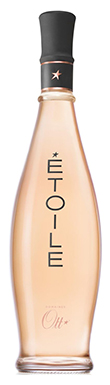

Creamy ripe red fruit, floral notes and garrigue aromas, showing similarity to Domaines Ott’s Château de Selle 2021. On the palate there’s juicy cherries, raspberries,...
2021
Domaines OttVin de France

Domaines Ott, Étoile, Vin de France, Provence, France, 2020
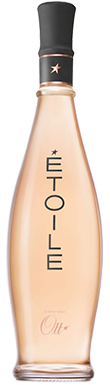
Very pale, creamy pink. The restrained floral notes of this wine's youth have developed into more evident perfumed Sorrento lemon and orange blossom aromas, a...
2020
Domaines OttVin de France
Domaines Ott, Étoile, Vin de France, Provence, France, 2019
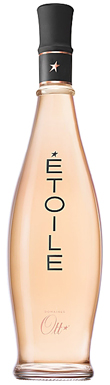
Pretty floral aromas are backed by fresh citrus and pomelo notes with a touch of candied fennel seeds. On the palate, behind the austere, slightly...
2019
Domaines OttVin de France
