
Exploring Les Monts Damnés: the unofficial ‘cru’ of Sancerre
It’s not officially a ‘cru’ as such, but this steep hillside of vineyards with rich, varied soils, in the west of Sancerre, can produce consistently excellent, ageworthy wines that may differ in style but never waver on quality.


Look to the north when visiting a wine producer in the small village of Chavignol in the central Loire, and you will most likely be confronted by the imposing face of Sancerre’s unofficial top cru, the dramatically named Les Monts Damnés (the ‘Hills of the Damned’) – or, to give it its full title, La Côte des Monts Damnés.
Although not the steepest vineyard in the world (that ‘honour’ is usually credited to the 65° slope of the Bremmer Calmont vineyard in the Mosel), the 45° slopes of Les Monts Damnés make viticulture here challenging at best. But the results are outstanding; it is viewed by many as the source of Sancerre’s finest wines.
Scroll down for 14 top Les Montes Damnés wines to try
Unlike the wines of the Médoc and Burgundy, the appellation system for Sancerre is relatively simple, with no officially designated premier cru or grand cru vineyards. It appears there is a reluctance to emphasise individual hamlets or specific ‘lieu-dit’ sites that might divert consumers from the easily identifiable Sancerre brand.
Chavignol and Les Monts Damnés have historically had a strong reputation for wine, while Chavignol itself is also rightly famous for Crottin de Chavignol, its distinctive AP goat’s cheese, which is perfect with a crisp glass of Sancerre.
Like Burgundy’s Chablis, Sancerre is a name widely recognised by white wine drinkers around the world. These two appellations share many similarities yet have significant differences. Both are focused on a single grape variety, are situated at cooler northerly latitudes, and are marked by strong terroir influence driven by geological factors dating back more than 150 million years.
Sancerre and Chablis wines share similar taste profiles, too – crisp, elegant white wines with drive, strong acidity and a flinty, mineral taste. While Chablis is a unique, cooler-climate expression of Chardonnay, white Sancerre must be produced with Sauvignon Blanc. The style of Sauvignon Blanc here (and in neighbouring appellations Pouilly-Fumé and Menetou-Salon) is completely different to the more pungent, passion fruit style often found in New Zealand.
Arnaud Bourgeois, newly appointed co-president of the BIVC (Bureau Interprofessionnel des Vins du Centre-Loire), and managing director of renowned producer Domaine Henri Bourgeois, says: ‘Sauvignon Blanc is a wonderful grape variety because it is an enhancer of terroir.’
Sancerre facts
Appellation created White 1936, Red & Rosé 1959
Vineyard area White 2,393ha, Red 335ha, Rosé 260ha
Average production over past five years White 143,000hL
Source: Loire Valley Wine Bureau 2022

The finest soils
In Sancerre, three distinct categories of soil are found – silex, caillottes and terres blanches. Silex soils, generally found to the east of Sancerre, are derived from siliceous rock with a high proportion of flint, imparting a spicy, smoky taste to many wines. Caillottes soils contain large quantities of small pebbles, and are found where Jurassic-era limestone has long weathered, giving floral, fruit-driven and earlier-drinking wines.
Arguably the finest, most important soils are those of the terres blanches, found to the west of Sancerre, with the sites of Le Cul de Beaujeu and Les Monts Damnés offering the best expressions. These are wines of grand cru quality without the price tag.
The secret is a strong presence of marly Kimmeridgian soil, derived from Jurassic limestone formed 151-157 million years ago, and notable for the abundance of small fossilised oyster shells (Exogyra virgula). This is the same band of rock that appears in Chablis (only about 90km northeast of Sancerre as the crow flies), before resurfacing in Champagne’s Aube region.
Exposed slopes
The vineyards of Les Monts Damnés have thin terres blanches soils combined with a vertiginous, south-southeast facing slope. The wines produced here are closed when young, and are structured, concentrated and capable of extended ageing (top examples will easily age for 10 years). Les Monts Damnés is about 35ha in total and individual producers’ holdings are correspondingly small. As a result (like in Burgundy’s Côte d’Or), there is certainly a variation in style between producers, yet the quality of Sancerre produced from Les Monts Damnés is rarely in doubt.
Plots here are dominated by old vines, with widespread use of hand-harvesting and sustainable vineyard practices. Raphaël Thomas of Domaine Paul Thomas highlights the importance of Kimmeridgian marl on Les Monts Damnés: ‘The clay content is between 35% and 65%, with a large proportion made up of a clay called smectite. This swells in the rain and then slowly releases water to the vine in drought conditions.’ Arnaud Bourgeois agrees, saying, ‘even though the hill has full southerly exposure, the vines do not suffer from drought’.
Despite this direct exposure, Les Monts Damnés wines always show a finesse and balance between fruit ripeness, concentration and acidity. Bourgeois sums up the style perfectly: ‘La Côte des Monts Damnés is a wine that will always be on the edge, meaning a precise balance between the terroir and the variety, where neither of them will ever dominate.’
However, the style of Les Monts Damnés wines is by no means uniform, with altitude and exposition [alignment of the vineyards] playing a significant part in shaping style. Luc Prieur of Domaine Paul Prieur & Fils notes the ‘significant difference between those vineyards facing south and those which have a southeast or easterly exposition’.
Prieur’s wines are sited in this sector, close to the village of Verdigny. David Girard of Domaine Anthony & David Girard agrees: ‘The slope of Les Monts Damnés starts on Kimmeridgian and finishes with Portlandian/Kimmeridgian at the top – this diversity, and the exposition of the hill, makes Les Monts Damnés very rich and varied.’

Style diversity
A wine from Les Monts Damnés will almost certainly be of cru quality, yet producers have clear views as to the style they are trying to achieve. Harvest date, altitude and aspect lead to a divergence in terms of alcohol (from 12.5% to 14.5%), fruit character and residual sweetness. Although most Les Monts Damnés wines are technically dry, the density of sun-ripened fruit can leave a sensation of sweetness, with some top producers – for example, cousins François and Pascal Cotat – choosing to harvest very late.
This can result in wines with some residual sugar – occasionally labelled as Vin de France if they fail to meet the technical requirements of the Sancerre AP. Whatever the appellation rules, the wines of François and Pascal Cotat will always be at the top of the Monts Damnés quality pyramid – individual expressions of great Sancerre offering serious long-term ageing potential.
Pristine wines
Gérard Boulay is another famous producer, whose family have been cultivating wines in Chavignol since 1310. The domaine has 9ha overall, with 1.8ha in Les Monts Damnés and another 1.5ha in Cul de Beaujeu.
Boulay is focused on showing the greatest respect for the terroir, and he achieves wonderful purity of fruit from higher-density planting, the absence of herbicides/fungicides and pesticides, and hand-harvesting of all vines. Boulay is revered by many yet remains humble – and driven to produce the finest expression possible of the land and grape. These are pristine wines to behold.
Another famous, and important, name is Domaine Didier Dagueneau, perhaps the most sought-after producer of groundbreaking Sancerre and Pouilly-Fumé wines. After the untimely death of Didier Dagueneau in 2008, his son Louis-Benjamin has taken the domaine forward without losing sight of any of the principles of his father.
Surprisingly, Dagueneau’s Le Mont Damné (singular on the label) often commands a lower price than its famous Silex Pouilly-Fumé, although this is still expensive for a Monts Damnés wine. Quality-wise, Dagueneau’s wine compares favourably with the best of the appellation, with a crystalline purity making it more intellectual and restrained.
No mention of Chavignol could be complete without noting the importance of the Famille Bourgeois. Located at the western end of the hamlet, the domaine (Domaine Henri Bourgeois) currently totals 70ha. Much of the credit for putting Chavignol on the map must go to Henri Bourgeois, who was working with about 2ha in the 1950s, but it is a new generation that is pushing the boundaries further. As well as producing single vineyard bottlings, the Bourgeois family is experimenting with massal selection (replanting vineyards using cuttings from the best-quality old vines) on a 1ha section of Les Monts Damnés. This wine, yet to be produced commercially, seems likely to raise the quality bar even higher.
Highest expression
Given the strong geological links between Sancerre and Chablis, one might conclude that these two wines are very close in character. However, this isn’t a view shared by producers in Chavignol. Arnaud Bourgeois observes: ‘In La Côte des Monts Damnés, we find mineral notes that are also present in the best climats of the Chablis area.’ But he goes on to say: ‘The combination of Kimmeridgian terroir and Sauvignon Blanc is unique. Les Monts Damnés represents the highest expression of Sauvignon Blanc in our region, rather than being a wine to compare to Chablis grand cru.’
Les Monts Damnés is an area that is undoubtedly of cru quality, and one that exemplifies the style of Sauvignon Blanc derived from Kimmeridgian soils. Being one third of the size of Chablis Grand Cru [which totalled 100ha in production in 2018, according to bourgogne-wines.com], producers’ holdings are small, leading to individual interpretations of the slope.
Despite this, the wines are of exceptional quality and still represent good value compared to cru-level wines from Burgundy. The biggest issue is tracking them down, as volumes are inevitably small. However, buy Les Monts Damnés and you will have a top Sancerre that will age and develop beautifully for many years.
Sancerre Les Monts Damnés leading producers
Gérard Boulay
Hubert Brochard
Clos La Néore
François Cotat
Pascal Cotat
Didier Dagueneau
Vincent Delaporte
Famille Bourgeois
Anthony & David Girard
Pierre Martin
André Neveu
Paul Prieur
Paul Thomas
Other top Sancerre lieux-dits
Clos de la Poussie (Bué),
La Grande Côte (Amigny),
Le Cul de Beaujeu (Chavignol),
Le Chêne Marchand,
Le Grand Chemarin
See Andy Howard MW’s selection of 14 Les Montes Damnés wines to try
Related articles
- A drink with… Pascal Jolivet
- Loire alternatives to Sancerre & Pouilly-Fumé: expert’s choice
- Sancerre 2021 vintage: Frost, mildew and storms fail to dent spirits
Didier Dagueneau, Le Mont Damné, Sancerre, Loire, France, 2016
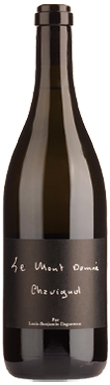

A very elegant, thought-provoking wine with a weightless quality. Even with several years of bottle age, this 2016 is reserved and fresh, and will benefit...
2016
Didier DagueneauSancerre

Gérard Boulay, Monts Damnés, Sancerre, Loire, France, 2019
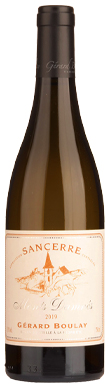
It might not be a blockbuster like some other top names, but this quiet, understated wine says all that needs to be said about the...
2019
Gérard BoulaySancerre
Henri Bourgeois, Le MD de Bourgeois, Sancerre, Loire, France, 2020
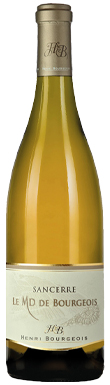
Showing a nettle character on the nose, with notes of warmer exotic fruit and lime leaf, this is pure, fresh and youthful. Although 14.5% alcohol,...
2020
Henri BourgeoisSancerre
François Cotat, Monts Damnés, Sancerre, Loire, France, 2018
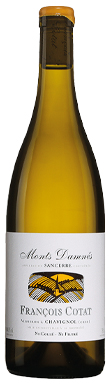
The Cotat cousins share a different view to many Chavignol vignerons, creating individual Sancerres that don’t conform to the script. This wine is made with...
2018
François CotatSancerre
Paul Prieur & Fils, Monts Damnés, Sancerre, Loire, France, 2020
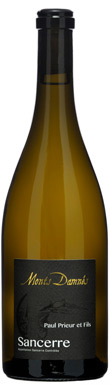
The Prieur vines are situated to the east of the Monts Damnés slope, with an easterly rather than southerly aspect. Even with vines at higher...
2020
Paul Prieur & FilsSancerre
Domaine Vincent Delaporte, Les Monts Damnés, Sancerre, Loire, France, 2017
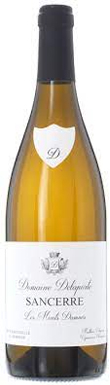
A very elegant, focused, mineral Monts Damnés with notes of slate and zesty citrus fruit. Showing more finesse and less weight than some other Monts...
2017
Domaine Vincent DelaporteSancerre
Pascal Cotat, Les Monts Damnés, Sancerre, Loire, France, 2017
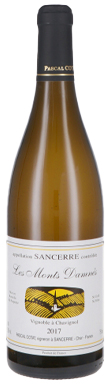
Made from grapes harvested later than most, giving a lovely texture, weight and ripeness, yet it manages to be restrained, with subtle notes of white...
2017
Pascal CotatSancerre
Domaine Hubert Brochard, Côte des Monts Damnés, Sancerre, Loire, France, 2017
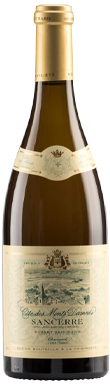
A fine balance between power and finesse, this is a rich wine with plenty of concentration yet also marked by the mineral edge and plentiful...
2017
Domaine Hubert BrochardSancerre
Domaine André Neveu, La Côte des Monts Damnés, Sancerre, Loire, France, 2018
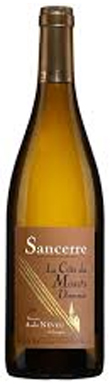
Relatively light in alcohol for Monts Damnés, this classy Sancerre combines brisk acidity with a peppery, slightly spicy edge, combined with hints of tropical fruit....
2018
Domaine André NeveuSancerre
Pierre Martin, Les Monts Damnés, Sancerre, Loire, France, 2016
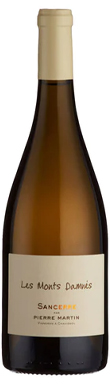
Powerful, zesty, grassy and floral nose with green fruit character, a touch of nutmeg and cinnamon spice, and still very fresh despite the (relative) age....
2016
Pierre MartinSancerre
Anthony & David Girard, Les Monts Damnés, Sancerre, Loire, France, 2019
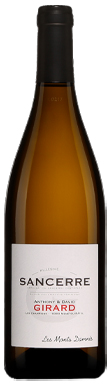
Very precise and emphasises crisp apple and lemon-lime acidity over plush, ripe stone fruit. This also exhibits a spicy, slightly smoky, green tea edge adding...
2019
Anthony & David GirardSancerre
Domaine Bailly-Reverdy, Les Monts Damnés, Sancerre, Loire, France, 2019
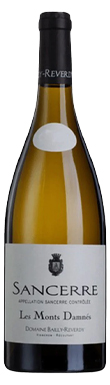
With 1ha on Monts Damnés, Bailly-Reverdy produces this rounded, ripe and generous wine of which a proportion is matured in one-year-old, 228-litre and 500-litre barrels...
2019
Domaine Bailly-ReverdySancerre
Thomas-Labaille, Les Monts Damnés, Sancerre, Loire, France, 2020
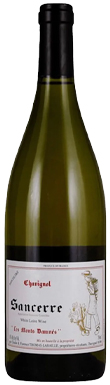
A complex Monts Damnés which has been fermented in concrete tanks before nine months ageing on fine lees in steel tanks and older wood. Golden...
2020
Thomas-LabailleSancerre
Roger & Christophe Moreux, Les Monts Damnés, Sancerre, Loire, France, 2019
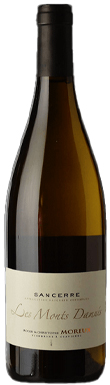
Plush and exotic on the palate, the wine is freshened by a splash of zesty white grapefruit, together with a salty finish. Established in 1895,...
2019
Roger & Christophe MoreuxSancerre
Didier Dagueneau, Le Mont Damné, Sancerre, Loire, France, 2016
A very elegant, thought-provoking wine with a weightless quality. Even with several years of bottle age, this 2016 is reserved and fresh, and will benefit...
2016
Didier DagueneauSancerre
Gérard Boulay, Monts Damnés, Sancerre, Loire, France, 2019
It might not be a blockbuster like some other top names, but this quiet, understated wine says all that needs to be said about the...
2019
Gérard BoulaySancerre
Henri Bourgeois, Le MD de Bourgeois, Sancerre, Loire, France, 2020
Showing a nettle character on the nose, with notes of warmer exotic fruit and lime leaf, this is pure, fresh and youthful. Although 14.5% alcohol,...
2020
Henri BourgeoisSancerre
François Cotat, Monts Damnés, Sancerre, Loire, France, 2018
The Cotat cousins share a different view to many Chavignol vignerons, creating individual Sancerres that don’t conform to the script. This wine is made with...
2018
François CotatSancerre
Paul Prieur & Fils, Monts Damnés, Sancerre, Loire, France, 2020
The Prieur vines are situated to the east of the Monts Damnés slope, with an easterly rather than southerly aspect. Even with vines at higher...
2020
Paul Prieur & FilsSancerre
Domaine Vincent Delaporte, Les Monts Damnés, Sancerre, Loire, France, 2017
A very elegant, focused, mineral Monts Damnés with notes of slate and zesty citrus fruit. Showing more finesse and less weight than some other Monts...
2017
Domaine Vincent DelaporteSancerre
Pascal Cotat, Les Monts Damnés, Sancerre, Loire, France, 2017
Made from grapes harvested later than most, giving a lovely texture, weight and ripeness, yet it manages to be restrained, with subtle notes of white...
2017
Pascal CotatSancerre
Domaine Hubert Brochard, Côte des Monts Damnés, Sancerre, Loire, France, 2017
A fine balance between power and finesse, this is a rich wine with plenty of concentration yet also marked by the mineral edge and plentiful...
2017
Domaine Hubert BrochardSancerre
Domaine André Neveu, La Côte des Monts Damnés, Sancerre, Loire, France, 2018
Relatively light in alcohol for Monts Damnés, this classy Sancerre combines brisk acidity with a peppery, slightly spicy edge, combined with hints of tropical fruit....
2018
Domaine André NeveuSancerre
Pierre Martin, Les Monts Damnés, Sancerre, Loire, France, 2016
Powerful, zesty, grassy and floral nose with green fruit character, a touch of nutmeg and cinnamon spice, and still very fresh despite the (relative) age....
2016
Pierre MartinSancerre
Anthony & David Girard, Les Monts Damnés, Sancerre, Loire, France, 2019
Very precise and emphasises crisp apple and lemon-lime acidity over plush, ripe stone fruit. This also exhibits a spicy, slightly smoky, green tea edge adding...
2019
Anthony & David GirardSancerre
Domaine Bailly-Reverdy, Les Monts Damnés, Sancerre, Loire, France, 2019
With 1ha on Monts Damnés, Bailly-Reverdy produces this rounded, ripe and generous wine of which a proportion is matured in one-year-old, 228-litre and 500-litre barrels...
2019
Domaine Bailly-ReverdySancerre
Thomas-Labaille, Les Monts Damnés, Sancerre, Loire, France, 2020
A complex Monts Damnés which has been fermented in concrete tanks before nine months ageing on fine lees in steel tanks and older wood. Golden...
2020
Thomas-LabailleSancerre
Roger & Christophe Moreux, Les Monts Damnés, Sancerre, Loire, France, 2019
Plush and exotic on the palate, the wine is freshened by a splash of zesty white grapefruit, together with a salty finish. Established in 1895,...
2019
Roger & Christophe MoreuxSancerre
