
Exploring the potential of País in Chile plus 10 top bottles to seek out
For centuries it was written off as a variety destined only for rustic wines, but today País is enjoying a new lease of life in southern Chile. And some much-needed TLC from a few key winemakers is revealing its full potential.


The story of País is a classic Cinderella tale. It started life as Listán Prieto, probably in the Gredos mountains of Castilla-La Mancha, central Spain. Via the conquistadores, with their missionary entourages carrying knowledge and tools for viticulture and winemaking, it travelled along the Columbian trade route, first to the Canary Islands, then the Americas.
For more than four centuries, País was a secret treasure. In homesteads throughout Chile’s southern countryside it was used to make wines known as pipeños – rustic country wines fermented in rauli pipas (open wooden lagares).
Scroll down to see 10 top País wines worth seeking out
As Chile’s wine industry developed further north, País from the south was largely dismissed as a peasant variety unfit for ‘proper’ wine – too light in colour or too ‘rustic’ in character. It took a young Frenchman to set in motion a renewed appreciation of País and a revival of the south’s winemaking heritage.
The southern revival
Burgundian winemaker Louis-Antoine Luyt arrived in Chile in 1998, and over two decades showed that high-quality, terroir-focused País could be made with a ‘natural’ philosophy. Having studied oenology in Beaune with Mathieu Lapierre, son of Beaujolais natural wine pioneer Marcel Lapierre, the wines he made in the semi-carbonic style drew ready comparisons to those of Lapierre, Guy Breton and other newly fashionable winemakers in the Beaujolais region.
The next link in the story is Roberto Henríquez Ascencio. A native of Bío Bío, Henríquez worked with Luyt before going solo as a winemaker in 2013. Previously he had been a government-paid agronomy consultant to farmers throughout Bío Bío and Itata – a job that gave him privileged access to the best growers and the otherwise hidden vinous treasures of what he calls ‘virgin wine territory’.
‘The soldiers who settled after the [Arauco] war with the Mapuche were the first to establish private property in the south,’ he explains. ‘But they only did this on a small scale, and in fragmented areas – so the properties that exist all over Itata and Bío Bío are very atomised. In Itata, for example, there are about 4,000 producers, and 3,000 of these are only 1ha-3ha. It lends itself to négociant winemaking.’
Following Luyt and Henríquez – and also Argentinian Leonardo Erazo of A Los Viñateros Bravos, who first arrived in the region in 2011 – more local winemakers and growers were encouraged to bottle their own País wines. Among them were Mauricio González Carreño (Estación Yumbel), Renán Cancino Abarza (Huaso de Sauzal), José Luis Bastías (González Bastías) and Manuel Moraga Gutiérrez (Cacique Maravilla).
Other important players were Thomas Parayre and Macarena del Río of Macatho. Inspired by Luyt, they brought an intense focus on organic and biodynamic vineyard practices to reveal the under-appreciated terroir potential of País.
‘I think País is one of the most resistant and strongest varieties that we have observed,’ says del Río. ‘It copes well with a lack of water [in spring and summer, this part of southern Chile often sees no significant rainfall for five months or more], extreme sun, fungal diseases such as powdery mildew, a lack of nutrients…
‘Because of these qualities we have plants that are more than 200 years old in the territory. But when you cultivate these plants and give them the necessary care, the grapes they give you are even more noble.’

Styles of País
As a drinker trying to understand the many expressions of País, the appellations of Maule, Itata and Bío Bío will bring only limited help. Yes, Maule, with its warmer [more northerly] climate, produces País with a riper fruit profile; while from Bío Bío it is spicier and more herbal. But one must look to the individual winemakers and specific terroirs to identify discrete wine styles.
Chilean sommelier Héctor Riquelme, a tireless advocate of País and the winemaking heritage of Chile’s south, believes the most distinctive wines are made by the most traditional winemaking methods – in particular, fermentation in open lagares made from rauli wood. ‘For me, what happens in the open tank is magical. It gives an extra flavour to the wine, an extra typicity,’ says Riquelme.
‘You can then age in stainless steel tank, concrete or tinajas – or whatever you want to use – but when you get the fruit of these old vines, from the right place, and then ferment in open rauli lagares, this gives you electricity.’
Well-travelled Argentina-born winemaker Leo Erazo has done more than most to bring the nuances of south Chilean terroir to light (it would be remiss not to also mention Concepción-born geologist-turned-winemaker Pedro Parra, who is also making terroir-focused País in Itata and Bío Bío). A soil and geology obsessive with a decade of experience working in diverse regions and terroirs of the world, Erazo has been bottling País from Itata’s two principal types of mother rock – granitic and volcanic – since 2014.
He believes his low-intervention techniques – and use of concrete – help to retain the subtle terroir differences of his Granítico and Volcánico País. The elegant structure of his wines also refutes the idea that all País is rustic in character. ‘Everybody talks about País having rough tannins,’ Erazo says, ‘but these rough tannins actually come from stressed vineyards. When País is in vineyards that are treated with herbicides and go into water stress by the end of the season, the natural response of the vine is to produce phenolic compounds, including tannins.’
For further proof that País can be elegant, taste the wines of Ignacio Pino Román. Based in Guarilihue, he is one of the most promising winemakers to emerge in southern Chile in recent years. His filigree, aromatic País is a world away from the rustic wines with which the region has long been associated. For Pino Román, the grape’s potential for finesse has always been there, it has simply been obscured from sight.
‘For a long time the wine industry in Chile made País invisible,’ he says. ‘The stubborn idea of making Bordeaux-type wines from “finer” French varieties hid its oenological potential. Today, Chile is recovering its winemaking identity, and this has attracted many talented professionals to Maule, Itata and Bío Bío to lead its rebirth by producing high-quality wines.’

The future is farming
With their relative wealth of dry-farmed, centenarian vines – thanks to their location and favourable soil types, unaffected by the phylloxera infestations that impacted most of the world’s vineyards – Chile’s southern valleys are blessed with some of the most precious vine material in the world. But that has not been enough to save them from economic pressures.
Since the 1960s, even in these relatively undeveloped regions, glyphosate (weedkiller) has come to dominate vineyard farming. And though organic farming and viticulture persists, the economic reality is that Secano Interior [a dry inland sector within Maule and beyond] is plantation country. Huge areas of what was once rich native forest have been replaced by endless hectares of pine and eucalyptus. According to Macatho’s Macarena del Río, before a government decree in the 1970s that inaugurated an era of state subsidies for forestry companies, there were more than 100,000ha of País in Chile. Today, no more than 15,000ha remain.

One radical wine project provides an example of how to restore soil health and biodiversity to land continually under threat from big agribusiness. Mingaco, run by Pablo Pedreros and his wife Daniela de Pablo, is a regenerative farm with vineyards close to the Itata river. Organic for the best part of a decade (and latterly also no-till), it is a model of how putting nature first can yield the most extraordinary grapes and, by turn, the most extraordinary wines.
‘Five years ago, we were the black sheep of the region,’ says de Pablo. ‘Now, we are still perceived as radical, but people are moving towards this way of working. It’s slowly growing, but I wish more landowners or local people would be persuaded to work this way.’
Slow it may be, but growth is there. New vineyard-focused producers – both local and from overseas – are coming together to form a loose community in the region. Some work with their own vineyards, others buy in grapes; some work traditionally with open lagares, others using barrels or steel tanks. But they all share a common understanding that – though the textbook narrative still focuses on the valleys further north – the soul of Chilean wine is in the south. And there is one grape variety that defines that soul more than any other: País.
Smith’s 10 País wines to try
Related articles
- What’s hot in Chile?
- Comment: Saving the heartland of Chilean wine
- Premium South American whites: panel tasting results
Ignacio Pino Román, País, Itata Valley, Chile, 2020
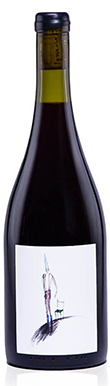

A País from 150-year-old vines on decomposed granite soil. Aged in steel tank, which gives greater fruit purity and linearity. Impressive concentration, even with its...
2020
Ignacio Pino Román

Roberto Henríquez, País Franco, Itata Valley, Chile, 2020
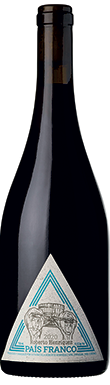
Beautiful pomegranate colour. Shows the wonderful balsamic herb expression of 200-year-old País on Roberto’s Santa Juana property in Bio-Bio. Almost Pinot-Noir-like spiced fruit, with dried...
2020
Roberto Henríquez
Louis Antoine Luyt, El País de Quenehuao, Maule Valley, Chile, 2019
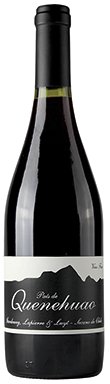
País made in a semi-carbonic style similar to Marcel Lapierre’s Morgon. Marcel Lapierre helped Louis-Antoine Luyt to choose this historic parcel of País because of...
2019
Louis Antoine Luyt
Macatho, Segundo Flores, Maule Valley, Chile, 2020
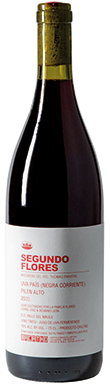
A País that expresses the soil and minerality of Pilen Alto in Maule. From a cool vineyard plot at over 350m elevation 20km away from...
2020
Macatho
A Los Viñateros Bravos, País Granítico, Itata Valley, Chile, 2021
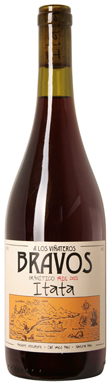
Evokes the underbrush aromas of Itata’s wild grass. Subtly smoky with bright red fruits and a touch of cassis. A pronounced white pepper note too....
2021
A Los Viñateros Bravos
El Viejo Almacén, Chileno, Maule Valley, Chile, 2016
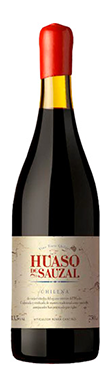
A País made the traditional way, in raulí wood pipas, by viticulturist-turned-winemaker Renan Cancino. From 300-year old own-rooted país vines. Earthy, rustic and unique, with...
2016
El Viejo Almacén
Roberto Henríquez, Fundo Unión, Itata Valley, Chile, 2020
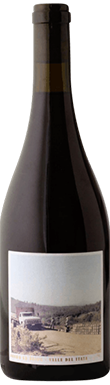
From a coastal Itata vineyard, with cooler conditions than the interior. A delicate, poised País. Soft and feathery but with concentration that comes from the...
2020
Roberto Henríquez
Viña González Bastias, País Matorral, Maule Valley, Chile, 2019
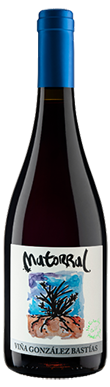
José Luis Gómez Bastías is the fifth generation of his family to make wine from around 4.5ha of centenarian vines on the south bank of...
2019
Viña González Bastias
Vinos Mingaco, País, Itata Valley, Chile, 2020
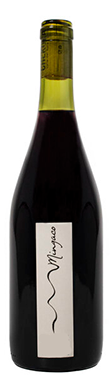
Aromatics of a different order. Surely down to the natural farming that Macatho practises and the microflora in the vineyards. Vivid eucalyptus and blackcurrant leaf,...
2020
Vinos Mingaco
Estación Yumbel, Pipeño País, Bío Bío Valley, Chile, 2021
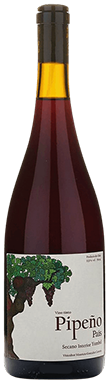
Based in Yumbel, Bio Bío, Mauricio Gonzalez Carreño is a winemaker with an uncompromising commitment to the traditional farming and winemaking of the south of...
2021
Estación Yumbel
