
First taste: Champagne Bollinger RD 2008
The 2008 vintage is gaining legendary status in the Champagne region, says Simon Field MW, and the new release of Bollinger's prestige cuvée RD is no exception.


In 1967, the redoubtable Madame Bollinger decided to challenge the contemporary fashion for youthful Champagne by releasing a recently disgorged older wine from the 1952 vintage.
Named RD – Récemment Dégorgé or Recently Disgorged – the wine proved an instant hit, all the more surprising as it had been dosed as extra brut, again in defiance of practice and taste at the time.
Scroll down for tasting notes and scores for Bollinger RD 2008 and 1979
History looks kindly on Madame Bollinger for two further reasons: firstly for the emphasis on Pinot Noir, then very much seen as playing second fiddle to Chardonnay in the region. Secondly in terms of vinification, where both the use of oak barrels for making the wine, and the ageing on lees under cork, have proved to be best suited to making a style such as this.
The RD name was quickly patented by Bollinger, but the style has been imitated again and again over the years. Quite a lady; the grandest of grandes dames!
See also: Champagne Bollinger producer profile
The 27th iteration of RD is launched
Appropriate, then, to celebrate the much-anticipated release of the 2008 RD in the historical surroundings of the Hotel de la Marine, in Paris’ Place de la Concorde. Designed by 18th century architect Ange-Jacques Gabriel for King Louis XV, the building captures the extravagance of absolute monarchy.
New chef de caves Denis Bunner used the occasion to remember his predecessor Gilles Descôtes, who made this wine and who died at the beginning of this year at the age of 57.
A vintage with promise
2008 is already gaining legendary status in the region, its benevolent climate throughout the growing season never straining to excess, but instead capturing conditions that were to prove perfect to harness the inherent tension required in a great Champagne. Bunner says the Bollinger RD 2008 is ‘as good as anything since 1928’.
According to Bunner, the key to the RD style lies in the juxtaposition of tertiary aromatics and freshness, the apparent contradiction explained away by the preservative character of lees ageing and the vitality resulting from a disgorgement that has been protected by the jetting process (where water is injected under pressure into a Champagne bottle after disgorgement, avoiding oxygen ingression at a time of potential susceptibility). Dennis identifies a third characteristic, oiliness, as one might find in a hazelnut, to explain the magical texture of this elixir.
The 71% of Pinot Noir in the blend is unusually high and reflects the supreme quality of the wines from great grand cru villages, in particular Aÿ and Verzenay, in 2008.
The new 2008 also sees a new bottle shape – petit magnum – whose neck is narrower by several millimetres compared to a traditional bottle neck, thereby mirroring the ratio of a traditional magnum. Again the idea is to reduce oxygen ingression, albeit only fractionally in this instance. The optimal time for drinking is either 12 months immediately after disgorgement, or waiting a further two to three years at which point the tertiary characters would be fully formed.
But when will it peak? Denis suggests that the wine will be good for 40 or even 50 years and proves it by showing us the breathtakingly brilliant RD 1979, child of a similar Pinot Noir-dominated vintage, he says, but not, apparently, quite as good. This bodes extremely well for the future of the 2008, to put it mildly.
Tasting notes and scores for two remarkable RD vintages:
Related articles
- First taste: Champagne Bollinger RD 2007
- First taste: Bollinger PN TX 17
- B13: A new limited edition Champagne from Bollinger
- Bollinger Group purchases Sancerre estate Hubert Brochard
Bollinger, RD, Champagne, France, 2008
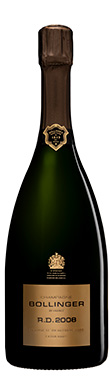

The late-disgorged edition of La Grande Année 2008 continues to dazzle, showing beautifully controlled, promising evolution since its debut in 2023. Roasted hazelnut, brown pastry...
2008
Bollinger

Bollinger, RD, Champagne, France, 1979
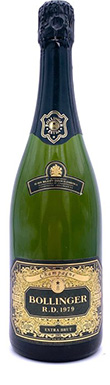
Deep gold, with a lustre and a pleasing effervescence. The aromatics recall pralines, figs, dried apricots and sour honey, and summer flowers too. The palate...
1979
Bollinger
