
First taste: Dom Pérignon new releases
Yohan Castaing tastes the new Champagne releases from Dom Pérignon including P2 2003, vintage 2012 and Rosé 2008.


The famous Dom Pérignon luxury Champagne brand, so closely associated with the legendary village of Hautvillers in the Montagne de Reims sector of the region, has just released two Champagnes from two very different vintages: 2012 for the regular bottling and 2003 for the special rarefied, long-aged edition known as P2.
Scroll down to see Yohan Castaing’s tasting notes and scores for the Dom Pérignon new releases
P2 2003
P2 stands for the Second Plentitude series in which some Dom Pérignon is held back from joining the general release for further cellaring on its lees to obtain different expressions of the same wine through its lifetime and let time work its magic to achieve additional complexity.
The regular bottling of the very singular, even controversial, 2003 vintage first arrived on the market in 2010.
‘2003 was in its way an experimental vintage that helped us to better understand what awaits us in the future’ explained Vincent Chaperon, the cellar master of Dom Pérignon.
‘We understood on August 15 that we had to pick just four days later. We then did some daring, incredible things. For example, we let the juice oxidise ever so slightly in the press machine to limit the concentration of polyphenols, which were quite high in this vintage.’
No one can forget that 2003 was a year marked by deadly hot weather in France, and an end to the growing season that caught many winegrowers by surprise in the Champagne region.
‘2003 was a year when the grapes attained ripeness in August, which had never happened in Champagne since 1822,’ added Vincent Chaperon, but it was also a case of ‘fast and concentrated ripening.’ He pointed out that ‘we have been looking forward for some time now to the P2 edition of this vintage, because we knew that the wine had the right stuff to follow a trajectory toward greatness’, which seems to be a hint that there might be an even rarer P3 version of this vintage in a few more years.
It must be said that this P2 2003 is indeed a very singular Champagne that stands out for its stunning harmony. It possesses the very ripe white fruit, concentration, and exotic allure of hot vintages, but it also conveys an almost tannic sensation on the palate, as well as a chalky and saline effect that is customarily more of a sign of cooler vintages.
2012
As for the highly praised, high-quality vintage of 2012, Chaperon sees it nevertheless as a one ‘belonging to the lineage of 2003’.
There is no doubt that the winegrowers have learned from the high temperatures of recent past vintages how to adapt their vineyard management and winemaking processes in such a year that began in hell before finishing in heaven.
Unlike 2003, however, 2012 was, in Chaperon’s words, a ‘slow-ripening year’ with a longer growing cycle that benefitted from fine fall weather that preserved a good amount of racy acidity, which resulted in vibrant, fresh, and precise Champagnes with crunchy textures.
The connection that 2012 has with 2003 is the apparent need for Champagne producers to adapt their traditional grape growing and pressing strategies in a manner that will enhance the expression of different terroirs.
The Dom Pérignon 2012 is a racy thoroughbred that can hardly contain its palpable energy and vivacity, so quite distinct from the creamy style of the 2003 while possessing the unmistakable Dom Pérignon personality, the hallmarks of which are autolytic aromas of hazelnut and pastry.
It is as if this Champagne points the way to a whole new dimension of possibilities without diminishing the brand pedigree.
For a long while, legend had it that Dom Pérignon was the inventor of Champagne sparkling wine. Nothing could be further from the truth. However, he was indeed an innovator when it came to the work to be done in the vat room, including the blending of different lots of wine in a way that lets diversity express itself within a common framework.
This is exactly the sort of challenge that Vincent Chaperon is now facing. So things are turning full circle in a return to the house’s roots.
See Yohan Castaing’s tasting notes and scores for the Dom Pérignon new releases
You may also like
Producer profile: Dom Pérignon ChampagneDom Pérignon 1990-2009: ‘The mother of all DP tastings’First taste: Krug new releasesFirst taste: Louis Roederer Cristal 2013
Dom Pérignon, P2, Champagne, France, 2003
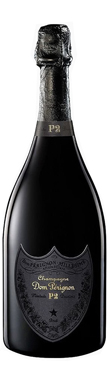

The bouquet of 2003 P2 is striking for its diverse range of complex scents. Succulent and exuberant aromas of white fruit such as pear and...
2003
Dom Pérignon

Dom Pérignon, Champagne, France, 2012
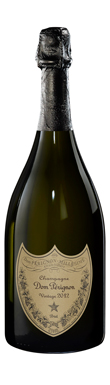
<p>What a magnificent bouquet for this Dom Pérignon 2012! Pastry, a hint of smoke and classic brioche notes provide a compelling counterpart to eager yet...
2012
Dom Pérignon
Dom Pérignon, Rosé, Champagne, France, 2008
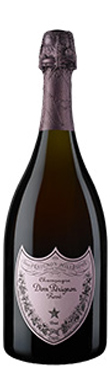
Offering up aromas of white flowers, red berries, toast and fresh pastry, Dom Pérignon rosé 2008 is medium to full-bodied, tense and vibrant, with a...
2008
Dom Pérignon
