
First taste: Dom Pérignon Rosé 2009
Almost four years on from the release of Dom Pérignon 2009, the rosé edition launched in Venice in June, themed around cellar master Vincent Chaperon’s journey ‘from matter to light.’ Tom Hewson reports from the tasting.


All prestige Champagnes worth their salt need more than a story; they need a philosophy. Dom Pérignon has long been master of this art and it’s not hard to understand why, given the scale of the blending task facing the winemaking team: ‘At the start of the year I had 100 wines to assess from 1,000 plots – the largest quality vineyard area in France, maybe the world,’ Chaperon points out, referencing the 600ha of vineyard available to Champagne’s most prominent prestige cuvée. The ‘matter’ is certainly complex.
Scroll down to see the tasting note and score for Dom Pérignon Rosé 2009
Dom Pérignon is ‘not a property that is bottled,’ says Chaperon. ‘Our vineyard is a potentiality – what we bottle is a choice each year.’
Dom Pérignon is always a vintage wine, although the size and flexibility of the vineyards available increasingly means both the white and even the rosé can be made most years. Of the rosé he says: ‘I am not obliged to make it every year…but that is the aim. It is the most challenging wine to make, because of the challenge of blending the power of the red wine with the harmony of Dom Pérignon blanc.’
Dom Pérignon rosé is a rosé d’assemblage, meaning that a still red wine from Pinot Noir, here from the villages of Hautvillers, Aÿ and Bouzy, is added to a white Chardonnay blend composed almost exclusively from vineyards located in grand cru villages before the bottle fermentation.
The rosé is always released later than the white, with this edition seeing at least 12 years on lees.

Chaperon offered a window into the blending process via an improvisation cuvée from the hot, dry 2022 vintage. ‘The feeling I got, as I tasted the grapes in the vineyard on 17 August last year, was that it took me back to 2003,’ days Chaperon, referencing the heatwave summer when small grapes and baking July temperatures pushed harvest into August for the first time in Champagne’s history. ‘Everybody was still on the beach!’ he jokes. ‘We realised we had to harvest in three days…we were there shouting, “come back! Come back!”’
The 2009 harvest was not as early as either 2003 or 2022, beginning on the 12 September for Dom Pérignon after a slow start and a warm, dry August. The vintage is ‘embracing, generous and soft’ according to Chaperon, who explains that the rosé allows him to stretch his blending, playing on the ‘chiaroscuro’ – light and shade – between the acidity of the white wine and the tannin from the red wine addition.
Hot years do seem to suit what Chaperon admits is the ‘lesser known’ Dom Pérignon rosé over the widely known white cuvée, playing into the natural generosity and food-friendliness of the style – something that Chaperon calls a ‘frontier’ wine.
‘It’s Champagne, but it’s beyond Champagne. It’s a rosé, but it’s beyond rosé,’ he says, referencing the cuvee’s typically dark, copper-to-orange colour that comes from a significant red wine addition and long ageing.
Just as the 2006 rosé was a step up from the white, the 2009 dials up the drama and interest from the standard 2009 white release. Another example, then, of how rosé is nothing to be made light of in the hands of Champagne’s most ambitious producers.
Dom Pérignon Rosé 2009 will be available in the UK from 23 August 2023 and will retail at £350 per bottle from Clos 19.
See the tasting note and score for Dom Pérignon Rosé 2009
Related content
First taste: Charles Heidsieck Brut Millésimé 2013First Taste: Billecart-Salmon Nicolas François 2008First Taste: Champagne Rare 2013
Dom Pérignon, Rosé, Champagne, France, 2009
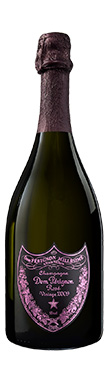

With a 13% red wine addition, this is slightly less vinous than the 2006 (which saw 20%), yet still lays closer to this bold, sunny...
2009
Dom Pérignon

