Gavi: The names to know and 10 wines to try
Location and geography make Gavi a haven for characteristically crisp, dry and minerally whites, perfect for summer drinking, be they young or bottle-aged Riservas.


Our story begins in the southeastern strip of Piedmont that borders the province of Genoa in Liguria: this is Gavi wine country.
The old Salt Route passed through here, following the Via Postumia Roman road on its way up to Pavia and ultimately the country’s far northeast; and in the 12th century, the small town of Gavi became a crucial defensive outpost for the Genoese, as evidenced by its imposing fortress.
Scroll down to see tasting notes and scores for 10 brilliant Gavi wines
Sea, snow and light: the three distinguishing features of this area that seems suspended in time, permeated with an age-old nobility. In a region famous for its reds, this terroir is ideal for white wine.
Gavi at a glance
Denomination DOC founded 1974, DOCG 1998, covering 11 communes in the province of Alessandria, Piedmont
Regulations 66hl/ha yield for Gavi DOCG, 45hl/ha for Gavi DOCG Riserva. Minimum 12 months of ageing for Riserva, with at least six months in bottle
Grape 100% Cortese
Planted area 1,600ha
Production average 14 million bottles, 85% exported to 100 countries
Producers 130 (30% female – owners and oenologists); 30% aged under 35; 32% certified organic
[Source: Consorzio Tutela del Gavi 2022]
One grape, different soils
Within this unspoilt ‘Middle-earth’, which has been protected by its natural beauty, Gavi represents the dividing line between different soils and, therefore, different wines.
The red soils to the north contain clay, sand and gravel, giving full-bodied, fruity wines. The white soils in the centre, characterised by marly limestone and clay, are the oldest and emerged from the sea; the wines here are graceful, more supple. To the south, at higher altitudes, the rocky, pebbly soil makes for more delicately scented, finely structured Gavis.
Grapes have been grown in Gavi for at least 1,000 years. The earliest evidence is a vineyard lease drawn up in 975. In the 17th century, the Genoese nobility began investing in the Gavi countryside, building mansions surrounded by farmland or vineyards.
The first mention of the variety grown to produce Gavi is in a letter from the bailiff of the Castello di Montaldeo (between Alessandria and Genoa) to the Marchese Doria in 1659: ‘The vines are all Cortese.’ The Genoese were also responsible for introducing the rest of the world to this white wine, via maritime routes in the 18th century.
In the 19th century, the Genoese families Raggio, Sartorio, Serra and Spinola established large vineyards, launching Gavi’s international reputation.

Gavi today
Gavi and Cortese: a perfect pairing. The Cortese variety offers a snapshot of the terroir, which is easily recognisable not least because most producers use only stainless steel in making the wine.
Gavi has always remained true to itself, resisting fleeting trends for international varieties or oak. It has been renowned as a formidable and cellarworthy white since the 18th century.
This is something confirmed by the older Gavis I have tasted – marine suggestions of wet rock and oyster swirl in the glass, with spices, fantastic palate tension and a saline, iodine-tinged length. It all goes to show that Gavi is a place for pedigree white wines in a league of their own.This appellation seems increasingly dynamic and ready to engage with new audiences, particularly internationally. The new generations taking over at family estates, and other young people investing in the area, speak foreign languages, love to travel and are willing to drive forward the local winemaking community, which consists mainly of small and medium-sized wineries.
Massimo Moccagatta of Villa Sparina says: ‘In 2004, my siblings Stefano and Tiziana and I decided to add a farmstay and a gourmet restaurant to the vineyard. We were the first. Others followed our lead, and now more and more estates are offering accommodation, allowing people to discover the authentic beauty of this little-known area.’
The Consorzio Tutela del Gavi, under director Maurizio Montobbio, is strikingly innovative – and not just in terms of technology and research. It is very much focused on respecting the region’s biodiversity heritage, and has also set up the Premio Gavi La Buona Italia, an award for the Italian agrifood, wine and gastronomy sector – the only one of its kind in Italy.
I’m convinced of this appellation’s distinct personality. It is pursuing a path of vigorous stylistic consistency and continuous growth. And Gavi is undoubtedly a contemporary wine, ideal to enjoy in any situation, with or without food.
Six names to know in Gavi
Gianlorenzo Picollo
Third-generation winemaker Gianlorenzo Picollo, 47, never left the land. His family’s 16ha straddle three communes: Rovereto (with vineyards up to 80 years old), Tassarolo and Francavilla.
‘My father Ernesto and I began bottling our wine in 1994. Since then, the quality of Gavi has improved significantly. It’s unique, unrivalled wine that typifies our terroir.’
Picollo has firm ideas: stainless steel vats only, whole-bunch pressing, and a fully functional business with a cutting-edge cellar. He produces about 125,000 bottles, of which 90% are exported.
Picollo prepares a vertical tasting of Gavi DOCG Rovereto for me, starting with the 2016. A distinctive leitmotif runs through the different vintages: freshness, finesse, verticality and length.
La Mesma
At La Mesma, Paola Rosina says: ‘My father, a seafaring shipowner, chose Monterotondo in Gavi as his holiday retreat. My mother loved wine, so she had us plant vineyards. We began bottling in 2003.’
Paola, Francesca and Anna Rosina are the sisters from Genoa who fell in love with Gavi. They later purchased more land in Novi Ligure and Tassarolo, where the cellar is located, covering a total of 25ha.
Certified organic since 2017, the estate includes some 53-year-old vineyards, while others are 22 years old. Paola continues: ‘Cortese, our sole focus, is a resilient variety that retains its acidity even in warmer years; that’s a good thing, considering global warming.’ The Rosina sisters also run a farmstay and hold dinner events among the vines.

La Raia
La Raia is a winery like no other. Purchased by the Rossi Cairo family in 2003, it is certified biodynamic (only two such vineyards exist in the appellation) and has a Steiner school on site.
Its Fondazione La Raia foundation was set up to promote artistic reflection on the landscape, with nine artworks on its art trail. The cellar was the first in Italy built using Martin Rauch’s pisé (rammed earth) technique, while its 48ha of vineyards are surrounded by 132ha of arable land, hazelnut groves, woodland and cattle pastures.
A trained lawyer, young Piero Rossi Cairo has been running the company since 2015. ‘We’ve branched into hospitality, too, with two offerings for different markets. We’re committed to environmental and social sustainability, without forgetting that the wine must be good, above all else,’ he explains.

Marchese Luca Spinola
At Marchese Luca Spinola, Andrea Spinola – the scion of a noble Genoese family with a thousand-year history – is utterly charming and has an endless supply of anecdotes about his illustrious ancestors.
Spinola shows me his highest vineyards, at 330m, which – at 67 years of age – are also his oldest. Across the lane stands the winery and the Rovereto vineyards: the commune of Rovereto is on one side, Tassarolo on the other, with different soils.
Spinola moved to Milan to work for a multinational, but in 2006 childhood memories pulled him back to his roots.
This enthusiastic vintner, who obtained organic certification in 2017, says: ‘I experiment with my 15ha, all Cortese: I make the world’s only kosher Gavi; I was the first to make a Gavi sur lie; and I have other innovations in mind.’
Molinetto
Diego Carrea at Molinetto left a hectic corporate career in Milan to return to his family vineyard in 2008. ‘My parents wanted a different, more ambitious life for me,’ he says, ‘without the sacrifices of farming. But here I regained serenity, working in my 8ha of vineyards and a rented cellar.’
The vineyards are on partly red and partly white soils, and Carrea bottles the wines separately. He produces 15,000 bottles, under just two labels. Now, the 50-year-old vintner is experimenting with two new methods: one using amphorae and the other with metodo classico for sparkling.
Taste the wines and you can sense that this is Carrea’s true calling – they’re as unpretentious, authentic and coherent as he is.

Tenuta La Meirana
Tenuta La Meirana overlooks the appellation’s largest vineyard in terms of surface area: 65ha of Cortese on a single plot. The Broglia family’s first Gavi vintage was in 1974, the same year that the DOC was established.
Roberto is the third generation, leading the winery with his brother Filippo and cousin Bruno. ‘Back then, the hectares planted with Cortese were one sixteenth of what they are now,’ he tells me. ‘Gavi is the king of Piedmontese whites, but was made popular by the Genoese, who paired it with their seafood dishes. Today, we produce around 800,000 bottles and remain a family-run business.’
The estate is enchanting and includes a farmstay surrounded by vineyards. The Broglias have always believed in Gavi’s ageing potential, as superbly showcased by their Vecchia Annata.
See notes and scores for 10 of Gavi’s very best wines
Related articles
Italy’s finest white wines: 20 top bottles, region by region
New Chianti Classico releases 2023: Top recommendations & best-value picks
Winemaking partnerships of Italy & America plus six wines to try
Broglia, Vecchia Annata, Gavi di Gavi, Piedmont, Italy, 2010
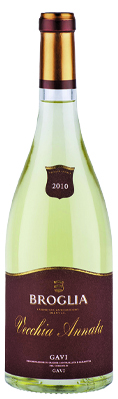

The bouquet is sumptuous and multi-layered. A lengthy 108 months on the lees gives the wine complexity, graceful elegance, tantalising salinity and freshness through to the long finish. This selection from Vigneto Fasciola – a 6ha site at 270m on marly-limestone soil planted with 70-year-old vines – is only released in the best vintages.
2010
BrogliaGavi di Gavi

La Mesma, Vigna della Rovere Verde Riserva, Gavi, Piedmont, Italy, 2018
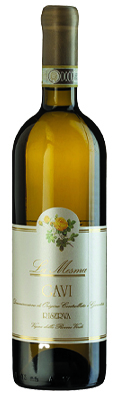
Fermented in cement, this has hints of camomile, gooseberry, flint and citrus fruits. The palate progresses from sapidity and freshness to succulent length. Planted more than 50 years ago, the Rovere Verde ('Green Oak') vineyard extends over about 1.5ha beneath an extremely rare example of a hybridised green oak tree of at least 400 years of age.
2018
La MesmaGavi
La Zerba, Primin, Gavi, Piedmont, Italy, 2017
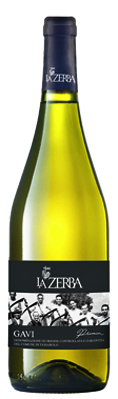
Balsamic notes along with citrus fruits and hints of flint on the nose. The structured body carefully balances between finesse and sapid punch. Founded in 1973, La Zerba is run by Andrea Mascherini and his wife Grazia Lorenzi with 12ha of organic vineyards surrounding the winery. Comes from 30-year-old vines on clay soil.
2017
La ZerbaGavi
Morgassi Superiore, Volo, Gavi di Gavi, Piedmont, Italy, 2020
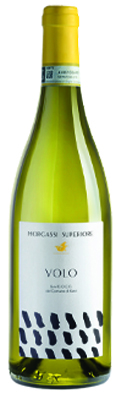
Intense on the nose with hints of citrus and white fruit, hawthorn flowers and flint, it features a vibrant, savoury and tense mouthfeel. In 1993, Marina and Cecilia Piacitelli's father chose Gavi’s higher ground to produce the white wine of his dreams, and the sisters engaged specialist agronomists Claude and Lydia Bourguignon to interpret every plot.
2020
Morgassi SuperioreGavi di Gavi
La Raia, Vigna della Madonnina Riserva, Gavi, Piedmont, Italy, 2019
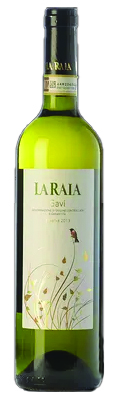
Fragrant with nectarine, flint, sage and citrus fruit aromas. Initially soft in the mouth, it continues with finesse and great class towards a persistent, tangy finish. The product of a 6ha biodynamically cultivated and certified vineyard located at an altitude of 260m-290m on marly-limestone soil.
2019
La RaiaGavi
Castellari Bergaglio, Rolona, Gavi di Gavi, Piedmont, Italy, 2021
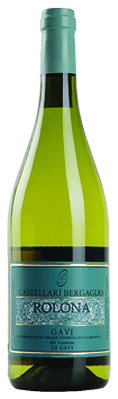
Rolona, from a steep, marly limestone vineyard, offers hints of white fruit, flowers and herbs. The taste reveals a marked savoury matrix with an ample, intense profile. The Castellari Bergaglio family has owned vineyards in Gavi since the late 1800s. Marco Bergaglio has managed the 12ha here since 1991, vinifying the various vineyards separately.
2021
Castellari BergaglioGavi di Gavi
Ernesto Picollo, Rovereto, Gavi di Gavi, Piedmont, Italy, 2021
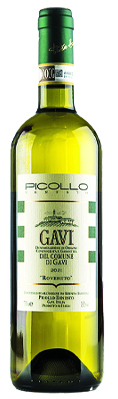
A fine floral bouquet with hints of aromatic herbs and citrus fruits leads to an elegant and fresh palate with a savoury marine touch on the finish. Rovereto is a well-situated, historical sub-zone of Gavi. Lying at up to 260m, the vineyards from which this wine comes have an average age of 60 years, with some vines as old as 80.
2021
Ernesto PicolloGavi di Gavi
Giordano Lombardo, Cascina dei Ronchi, Gavi, Piedmont, Italy, 2021
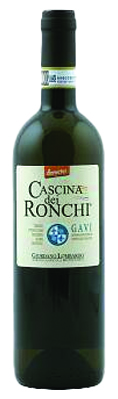
Produced on clay soil, this is structured and dense with a citrussy profile and incisive palate, followed by a pleasant hazelnut aftertaste. After graduating in oenology and gaining experience in local wineries, in 2002 Lombardo founded his organic winery with its 13ha of vineyards surrounded by woods.
2021
Giordano LombardoGavi
Marchese Luca Spinola, Carlo, Gavi di Gavi, Piedmont, Italy, 2021
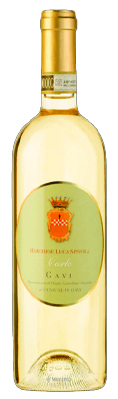
A pleasantly fragrant nose has floral notes and hints of yellow fruit. It's fine in the mouth, with weightless power bolstered by a fresh, savoury and inviting tail. Dedicated to one of Andrea Spinola's three sons, this organic Gavi fermented with indigenous yeasts is the product of a 50-year-old vineyard.
2021
Marchese Luca SpinolaGavi di Gavi
Molinetto, Re.lys, Gavi, Piedmont, Italy, 2020
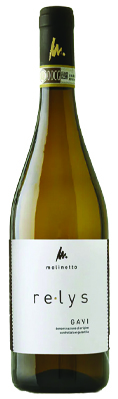
Yellow fruit, hazelnut and citrus aromas lead to a tangy, sapid taste with a saline trait. The only wine in this line-up matured in barriques (one third in French oak for six months, the rest in steel tanks), from a vineyard of just 0.3ha which is almost 60 years old.
2020
MolinettoGavi
