
Georgian wine guide plus 17 wines worth seeking out
Georgia is often regarded as the birthplace of wine, with archaeological evidence of viticulture and winemaking dating back to 6000 BC...


For at least 8,000 years, wine has played a prominent role in the cultural and economic activities of these ancient lands. It was said that when the nation adopted Christianity as the national religion in the 4th century, Saint Nino bore a cross made from vine wood.
The ‘buried’ wine
The nation is perhaps best known for its ancient winemaking tradition, which is still being followed by many of its modern winemakers. The earliest archaeological traces of winemaking in Georgia include grape seeds found in what the locals refer to as qvevri (ქვევრი, which literally means ‘buried’).
Scroll down for 17 top-rated Georgian wine tasting notes and scores
Qvevri are clay vessels coated with beeswax inside and lime outside. These egg-shaped pots do not usually have a flat base, thus are buried in the ground to stay upright. By doing this, these vessels naturally maintain a relatively constant temperature during fermentation, just like the contemporary temperature-controlled tanks. Their sizes can vary between 20 to 10,000 litres, according to the official body Wines of Georgia.
Traditionally, crushed grapes are fed into the quevri, then fermented and aged in contact with the stalks and skins. Wines made this way, including reds and ‘whites’ (more in golden or amber colour), tend to pick up a richer and more tannic texture.
This method was recognized by UNESCO as ‘Intangible Cultural Heritage of Humanity’ in 2013.
Although qvevri wines only account for a small fraction of wines made in Georgia, the ancient method is now adopted and modernised by producers around the world, especially for making orange and natural wines.
Amber champions: Top 30 orange wines
Geography
Georgia is situated south of the High Caucasus range, facing the Black Sea to the west. It borders Russia to the north, Azerbaijan to the east and Turkey and Armenia to the south.
A third of its land is mountainous, hosting a number of rivers and shielding the country from the cold air of the north. The Black Sea to the west provides increased rainfall and moderates the temperature. The complex topography means Georgia is home to varied microclimates and soil types.
Viticulture
Like many vineyards across Europe, Georgia was hit hard by phylloxera at the end of 19th century, which devastated half of its vineyards.
However, today the nation still has a wealth of more than 525 recorded indigenous grape varieties, 38 of which are approved for commercial wine planting.

Although international varieties such as Chardonnay, Cabernet Sauvignon and Merlot are present, the vast majority of wines produced in Georgia are made from indigenous varieties with Rkatsiteli and Saperavi the most widely planted white and red grapes.
Rkatsiteli is high in acid and tends to give refreshing apple and stone fruit flavours.
Saperavi is native to Georgia, literally meaning ‘the place of colour’ and as the name suggests, is capable of making deeply coloured red wines with black fruit and meaty, spiced flavours.
The Russian influence
Throughout the last century, Georgia’s neighbouring countries have been one of the key factors in shaping its wine industry.
During the Soviet Union years from the early 20th century, massive lands in Georgia were assigned to make wines in large quantities, at the expense of quality, to meet the thirst of the USSR market. Unsurprisingly, vineyard plantings in Georgia dropped sharply after the fall of the USSR in the 1990s.
The Russian market continued to consume 89% of wines produced in Georgia until 2006, when the Kremlin decided to ban all wines from the country, claiming that the public health authorities found heavy metals and pesticides in the Georgian wine exports.
The ban, which was imposed during a series of political disputes between the two countries, forced Georgian producers to improve the quality of their wines, while seeking new markets including Europe, the UK and Greater China.
Though the Russian ban was eventually lifted six years later, in 2013, Russian authorities again warned consumers about a ‘deterioration’ in the quality of Georgian wine when the political tension between the two countries arose.
Georgian Wine Appellations
Georgia has 10 registered wine regions, the principal being Kakheti in the southeast which contains the micro-regions of Telavi and Kvareli and is home to 72.1% of the country’s 55,000ha grape plantings.
In alphabetical orders the 10 appellations are*:
- Adjara
- Apkhazia
- Bolnisi (new in 2020)
- Guria
- Imereti
- Kakheti
- Kartli
- Meskheti
- Racha-Lechkhumi
- Samegrello
(*Source: Wines of Georgia)
See Decanter’s top selection of Georgian wines worth seeking out
You may also like
Jefford On Monday: Georgia – the tasting challengeThe rebirth of Armenian wine, and bottles to tryAmber champions: Top 30 orange winesWhat is orange wine? Ask Decanter
Papari Valley, 3 Terraces Saperavi, Kakheti, Georgia, 2017
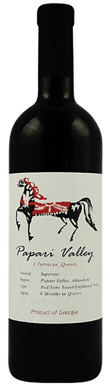

The exceptional quality of Nukri Kurdadze’s estate-grown fruit sets this traditional qvevri-fermented and aged wine apart from its peers. The concentrated brambly fruit is balanced...
2017
Papari Valley

Dakishvili Family Selection, Kisi, Kakheti, Georgia, 2018
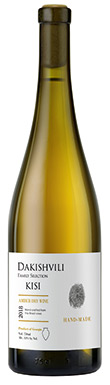
Giorgi Dakishvili and sons continue to turn out brilliant traditional qvevri wines, even if it’s a challenge to keep up with their label changes (what...
2018
Dakishvili Family Selection
Orgo, Qvevri Rkatsiteli, Kakheti, Georgia, 2016
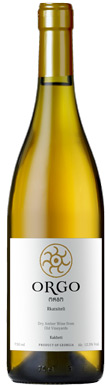
93
Oz Clarke: Bitter stone notes; dry and chewy, with tamarind, peach skin and apple pips. Sarah Jane Evans: Sumptuous auburn colour. Subtle aromas of roasted fruits and nuts. The palate is driven by texture rather than fruit, with a slight rasp of tannin. Notes of mint and eucalyptus. Tina Gellie: Amber hue. Mellow, roasted pear and fresh green apple aromas. More nutty and woody on the textured, grippy palate. Contemplative and food-friendly, but not for everyone. Recommended by Andrew Jefford
2016
Orgo
Casreli, Chitistvala, Kakheti, Georgia, 2017
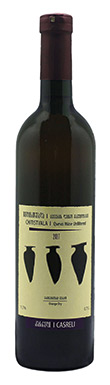
Five doctors created Casreli in 2015, initially just to make wine for themselves. Using entirely their own organically farmed fruit, in a blend based on...
2017
Casreli
Dakishvili Family Selection, Qvevri Amber Dry Wine, Kakheti, Georgia, 2015
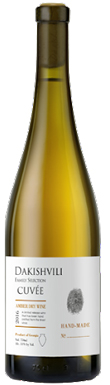
93
A brilliant blend of Rkatsiteli, Mtsvane and Kisi vinified in qvevri by Temur Dakishvili. It's glowing amber in colour, with scents of nuts, mushrooms, plant sap and sweet curds. Supple, long and vivacious, it has a wealth of walnut and apricot, with generous, soft, slippy tannins and plump, ripe, well-rounded acidity. A gourmet amber wine.
2015
Dakishvili Family Selection
Vakhtang Beruashvili Family Wine Cellar, Vakhtanguri Kvareli of Qvevri Saperavi, Kakheti, Georgia, 2017

This silver-medal winning qvevri-fermented wine comes from a small Kakhetian winery which also won a gold medal in the 2018 International Qvevri Wine Competition. It’s...
2017
Vakhtang Beruashvili Family Wine Cellar
Katchiuri Vineyards, Damarchine-Bevrnairi Saperavi, Kakheti, Georgia, 2018

The qualities of this very young, qvevri-fermented Saperavi sing out so clearly that even those judges sceptical of youth were won over sufficiently to see...
2018
Katchiuri Vineyards
Avtandil Bedenashvili, Qvevri Tsarapi, Kakheti, Georgia, 2014
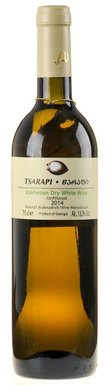
92
It’s fun to explore Georgian white grape varieties, but wines like this make you realise that Rkatsiteli is hard to better. Dramatic, authoritative aromas of orchard fruits, fresh flowers and umami are followed by a vivid, crystalline palate weaving apple, quince and pear together with beeswax, tea and a little mushroom, but the fruits retain their primacy. There are fine, abundant tannins and a well-judged, complexing oxidative note, too.
2014
Avtandil Bedenashvili
Papari Valley, 3 Terraces Chinuri-Rkatsiteli, Kakheti, Georgia, 2018
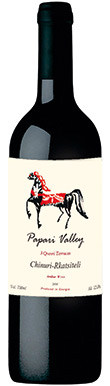
Lovely lift in this unusual blend of Chinuri from the Kartli region and Rkatsiteli from Kakheti. Exotic fruits (kiwi, rambutan) do battle with perfectly ripe,...
2018
Papari Valley
Iberieli Zurab Topuridze, Saperavi, Kakheti, Georgia, 2018
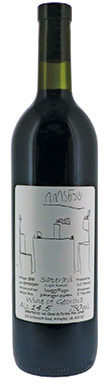
Dense and vibrant, with intriguing aromas of dark fruits combined with citrus zest and floral complexity. Classy winemaking is evident here.
2018
Iberieli Zurab Topuridze
Shermadini Winery, Saperavi, Kakheti, Georgia, 2017
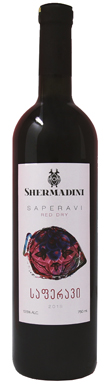
Shermadini is based in Gurjaani, another white-wine appellation of origin in Shida Khakheti. This silver-medal-winning qvevri-fermented Saperavi is a dense, saturated purple black-red in colour,...
2017
Shermadini Winery
Archil's Wine, Telavi Old Cellar Saperavi, Kakheti, Georgia, 2016
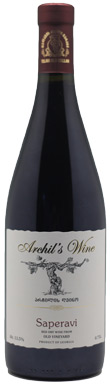
This wine from viticulturist and wine-maker Archil Utiashvili is made from 30-year-old Saperavi growing in the Tsinandali zone of Kakheti (Tsinandali is an appellation of...
2016
Archil's Wine
Vita Vinea, Kisi Amber Dry, Kakheti, Georgia, 2016
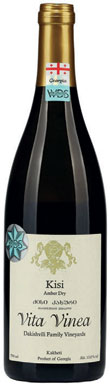
Oz Clarke: Pretty full style; dusty, clay-scented, with a little pale orange and apricot fruit, dried out but there, to soften the bitter bite. Sarah...
2016
Vita Vinea
Orgo, Qvevri Saperavi, Kakheti, Georgia, 2015
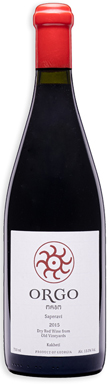
92
Deep black-red in colour, this has quiet, classy aromas of mulberries, blackberries and the living forest floor. Deep and concentrated on the palate, the acids are beautifully bonded to that rooty black fruit, and the tannins are of middling weight and fine texture. It’s on the finish that you see the the distinctive, exotic Saperavi spice, like a distant Caucasian echo of a fine Northern Rhône red.
2015
Orgo
Orgo, Qvevri Tsolikouri, Racha-Lechkhumi, Georgia, 2016
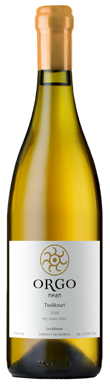
92
This wine is sourced from Tsolikouri grapes (13%) grown in the Western Georgian region of Racha-Lechkhumi, on limestone soils at around 550m. The variety is late-ripening - this was harvested at the end of October - yet it retains its acidity very well. It’s deep gold rather than full amber in colour, with less mushroomy warmth than for the Rkatsiteli, and more apple, grape and leaf aromas. On the palate it is bright, elegant and darting, acid-structured rather than tannin-structured. The rich acids hint at apple, lemon, pear, quince, even pomegranate. A genuine contrast in style, clearly illustrating regional and varietal differences.
2016
Orgo
Baia’s Wine, Tsitska-Tsolikouri-Krakhuna, Imereti, Georgia, 2018
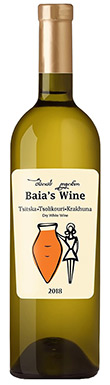
Baia Abuladze is emerging as one of westerly Imereti’s best winemakers, working at her family’s estate. Her sister Gvantsa also makes wine. This blend of...
2018
Baia’s Wine
Kakhuri Gvinis Marani, Qvevri Saperavi, Kakheti, Georgia, 2017

This Gurjaani winery won a bronze medal for its 2017 and a silver-medal for its 2014 – though I scored the two wines equally, and...
2017
Kakhuri Gvinis Marani
