
Gérard Bertrand’s Clos du Temple: Vintage vertical
Following the release of the 2022 vintage, Elizabeth Gabay MW revisits all previous iterations of Gérard Bertrand’s Clos du Temple rosé and reveals the story behind the label.

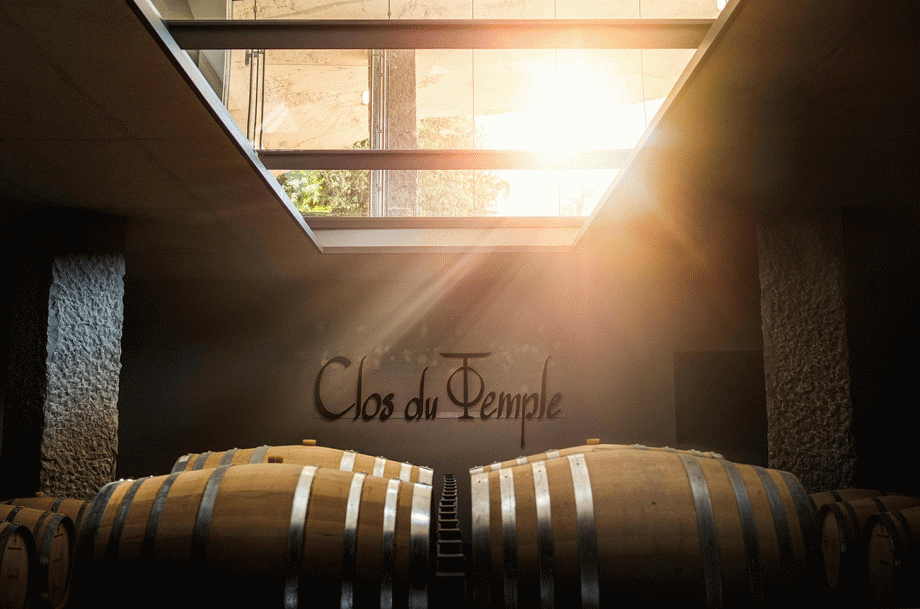
When Gérard Bertrand decided to create a top-tier rosé to partner his top-tier red, Clos d’Ora, he set about searching for the perfect terroir. Bearing in mind the freshness that could be found at higher altitude along the foothills of the Massif Central, Bertrand’s search brought him to the small wine region of Cabrières, north of Montpellier.
Scroll down to see tasting notes and scores for five vintages of Clos du Temple
The location
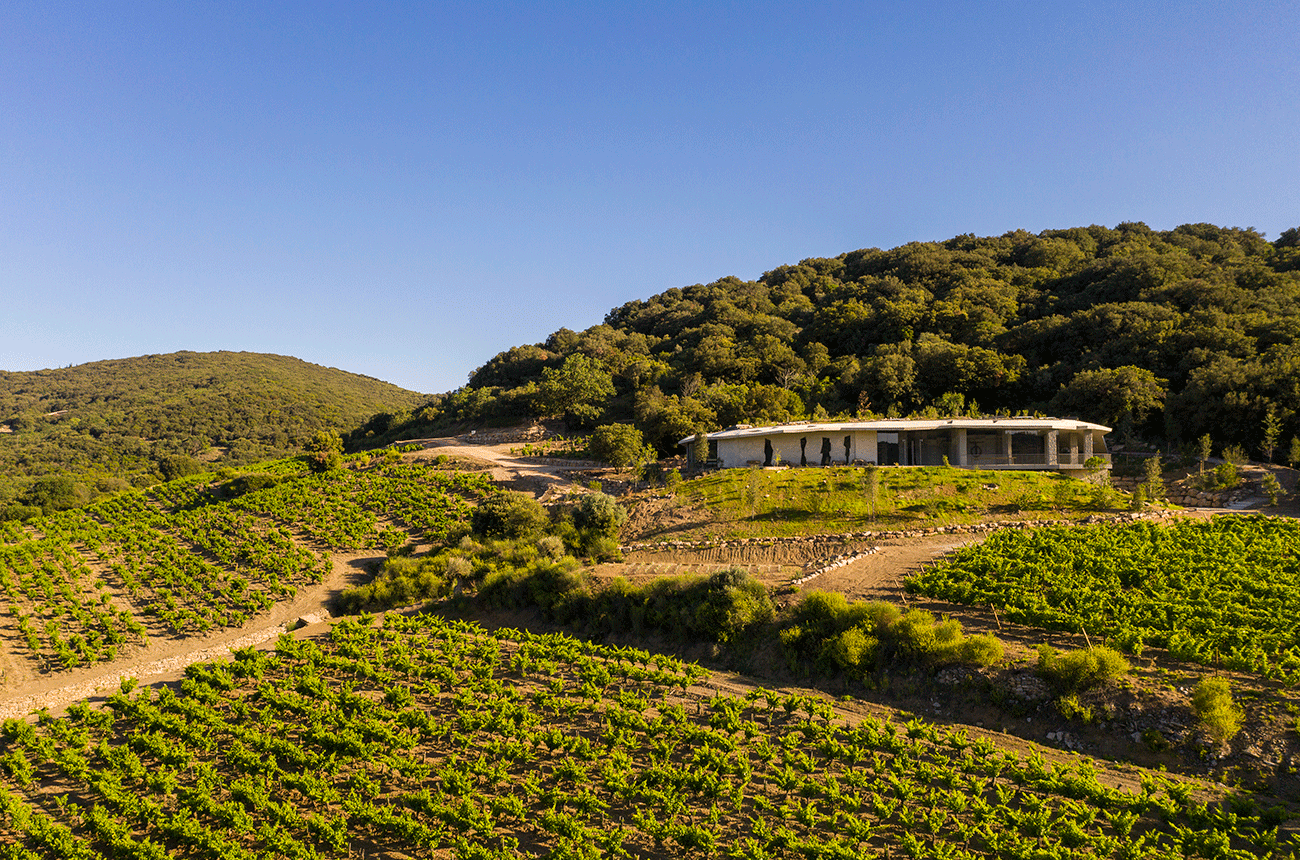
Cabrières is an extension of the schist soils of Faugères to the west. There are also occasional limestone and volcanic outcrops, including the extinct 480m Pic de Vissou volcano, around which the vineyards extend in an undulating amphitheatre. There are many underground springs and waterways here – including the famous Estabel spring which has only flowed 11 times since 1856 – all helping maintain freshness and acidity in the grapes.
One of the Languedoc’s many sub-appellations, Cabrières is the only one to allow Cinsault as its primary grape variety. Archival records dating back to 1357 mention a ‘vin vermeil de l’Estabel’, a dark, oaked rosé made with Carignan and Cinsault in this area. Grenache, Bertrand’s favourite variety for rosé, was introduced in the 1970s, and he was keen to find a vineyard with old vines.
The rosé project begins
In 2016 Bertrand bought Domaine du Temple and Château des Deux Rocs, combining them to reach 35ha. For the next two years, biodynamic practices were introduced and fruit and wines were studied to identify the best terroir for the rosé. Bertrand identified an area of 12ha on steep, south-southwest facing slopes rising from 150-240m. The area was already partially defined by walls, which Bertrand completed, creating the Clos. A modern cellar was constructed into the hillside, designed by French architect François Fontès.
There is some co-planting in the oldest plots of 50-to-60-year-old Cinsault and Grenache vines, as well as some old Aramon, Terret Gris and Blanc, Piquepoul Noir, Carignan Blanc and Noir, and Mourvèdre, as well as more recently planted Syrah and Viognier.
Clos du Temple rosé: the details
Bertrand’s group technical director, Guillaume Barraud, and Clos du Temple winemaker, Benjamin Gadois, direct the harvest, which is done in three goes. The first harvest focuses on freshness and acidity, the second on ripeness and plumpness and the third on concentration and complexity. The grapes are chilled and pressed, some without destemming or crushing, under inert conditions.
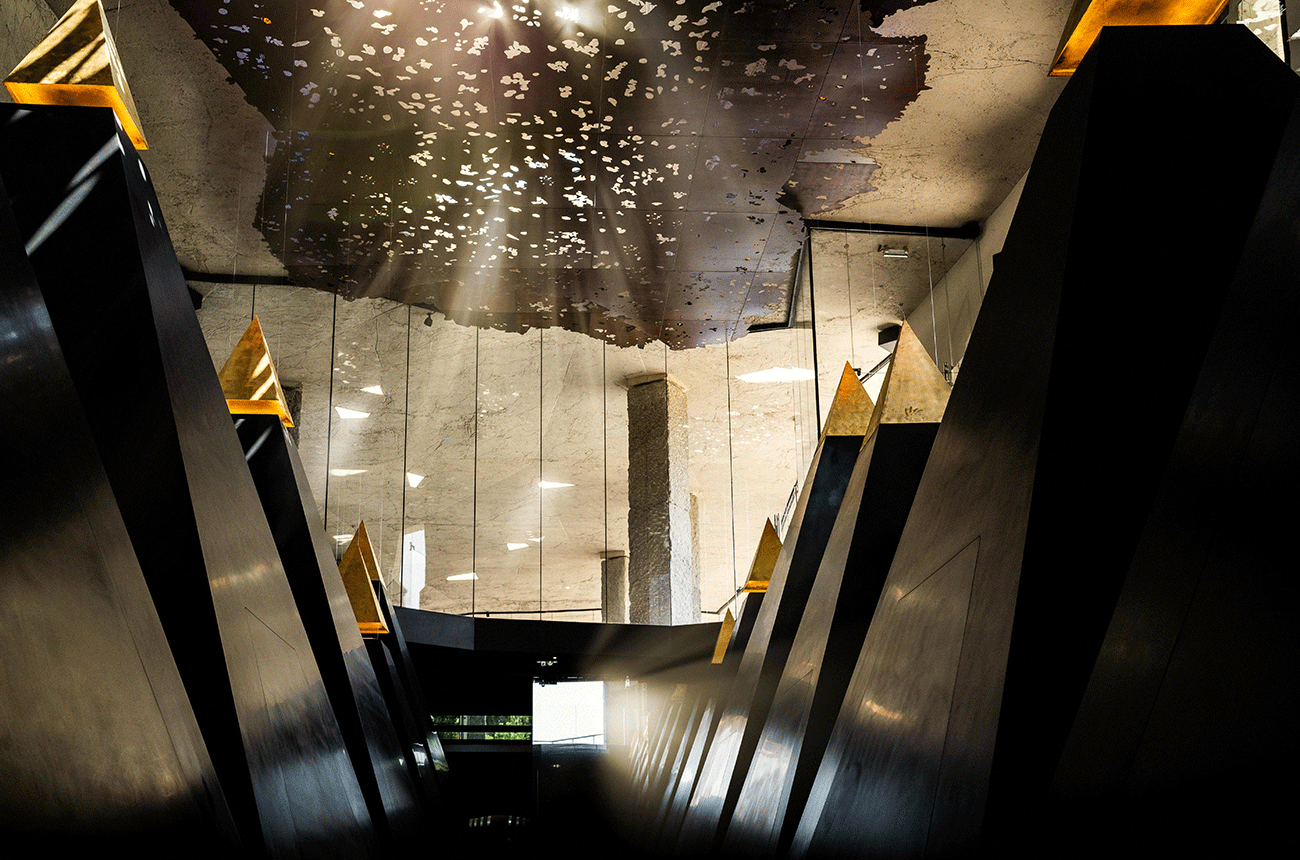
The grapes start their temperature-controlled fermentation using indigenous yeast in a combination of pyramidal vats, steel tanks and concrete tanks, which allow for micro-oxygenation. Halfway through fermentation, the wine is transferred to barrels. Bertrand is a firm believer in adapting the barrels to variety and vintage, using oak and acacia in different sizes and from different sources.
Malolactic fermentation is prevented to preserve freshness. Half of the wine is aged in new wood for six to 10 months to give structure, ageing capacity and aroma. Bottling is carried out on a fruit day in the lunar calendar.
During blending, Bertrand finds that ‘old vine Cinsault, Grenache and Syrah give structure; Mourvèdre brings the final touch, enhancing the wine, and Viognier contributes to the aromatic complexity.’ In all vintages but the 2022, floral notes are evident, attributable to the Viognier.
How does Clos du Temple taste?
Clos du Temple is far from being a classic, fresh, fruity rosé. It has the weight and structure to accompany stronger white meats such as veal and game, but also the freshness to accompany fish.
Chefs such as Guy Savoy, of the eponymous restaurant in Paris, have raised the level of food matching by introducing unique seasoning and flavour combinations: the earthiness of lentils, the aromatic notes of Timut pepper, the sweetness of lobster and the saline notes of liquorice go extremely well with the rosé.
Bertrand made a conscious decision to make a quality rosé which would age, and therefore has kept back a significant number of bottles from each vintage to allow for vertical tastings.
Beautiful as the bottle is, it would be impressive to see these older vintages in dark glass for protection from light strike. It also may benefit from a slightly later release date – the 2022 is certainly not ready to be drunk today.
Know your vintages
2018 – A wetter than usual vintage. This was a tropical year, with a wet, humid spring that caused the vines to grow fast, which resulted in fresh ripe fruit.
2019 – A hot summer. This was the year of the heatwave, with two days over 45C, creating robust, intense wines. Some refrigeration was carried out to preserve freshness, aromas and a pale colour.
2020 – There was a humid spring, and rainfall for the year was 600mm-700 mm, as opposed to the more normal 400mm-500mm. This was followed by a hot dry summer. More wine was aged in 500-litre barrels this year, and there was a little more Syrah for extra minerality.
2021 – Following a damp winter and mild spring, the season was marked with alternating hot and temperate patches and drought conditions. Wines achieved fresh acidity.
2022 – Following a mild, wet winter, the vines experienced early budding, 15 days in advance. After a cool spring there was a hot dry summer, with storms at the end of June. Despite the heatwave, there was no hydric stress. Harvest started slightly earlier with Viognier and finished with the Mourvèdre.
Five vintages of Clos du Temple:
Related articles
- Revisiting Languedoc’s Château d’Aussières
- Top 10 Languedoc wineries to visit
- Best rosé wines beyond Provence
Gérard Bertrand, Clos du Temple, Cabrières, Languedoc-Roussillon, France, 2022
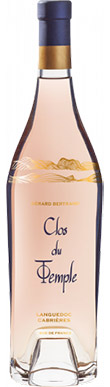

Still very youthful, and it needed to be decanted to bring out the richness. Similar to the 2021 with fresh mint, dill and creamy white...
2022
Gérard BertrandCabrières

Gérard Bertrand, Clos du Temple, Cabrières, Languedoc-Roussillon, France, 2021
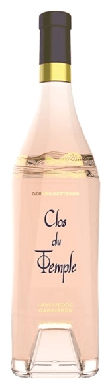
In many ways this vintage is the exact opposite of the 2019, with the smallest percentage of Syrah and Mourvèdre, and is the most silky...
2021
Gérard BertrandCabrières
Gérard Bertrand, Clos du Temple, Cabrières, Languedoc-Roussillon, France, 2020
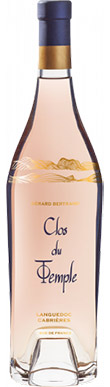
This has consistently been the most floral of all five vintages. Aromas of white flowers, ripe peach, the sweetness of dill and oak and a...
2020
Gérard BertrandCabrières
Gérard Bertrand, Clos du Temple, Cabrières, Languedoc-Roussillon, France, 2019
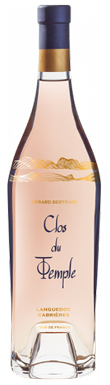
Since its debut, this vintage has had intense dark fruit concentration running through its inner core. This is a serious wine with notes of damsons...
2019
Gérard BertrandCabrières
Gérard Bertrand, Clos du Temple, Cabrières, Languedoc-Roussillon, France, 2018
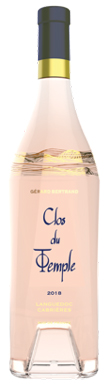
This vintage has proved to be one of the creamiest and nuttiest of the vintages produced so far. Fresh and concentrated with a hint of...
2018
Gérard BertrandCabrières
Gérard Bertrand, Plantabelle, Cabrières, Languedoc-Roussillon, France, 2019
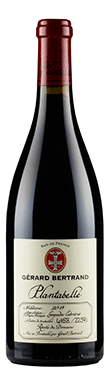
The only red wine from the estate, but located outside the Clos. Using old vine Grenache, this wine shows the potential ripeness of the estate....
2019
Gérard BertrandCabrières
