
Grace Wine: From the foothills of Mount Fuji
With a history that can be traced back over a century, Grace Wine and the Misawa family are at the forefront of producing quality, ageworthy Koshu. Decanter's Sylvia Wu visited the winery earlier this year and tasted six wines.


The rain stopped as our high-speed train from Tokyo entered into Yamanashi Prefecture’s Kofu Basin. Changing to a local train at Kofu station, we continued northwest to Nirasaki, where we were greeted by the soft-spoken Mr Shigekazu Misawa, the fourth-generation proprietor of Grace Wine. He personally drove us on a quiet Sunday morning up the winding hills to his family vineyards 700 metres above sea level.
When we arrived at the vantage point, Mount Fuji remained hidden behind the clouds. Yet the towering mountains surrounding us rose high all around us, creating a natural rain barrier. Indeed, the Akeno site is said to enjoy the longest sunshine hours in Japan.
Scroll down to see tasting notes of the top wines from Grace
The Japanese wines that made history
This visit had been a longtime-coming for me – as I told Shigekazu. In 2013, my second year working at Decanter, I was there when Grace’s ‘Gris de Koshu’ 2012 won the Gold medal for Japanese wines at the Decanter Asia Wine Awards (now merged into the Decanter World Wine Awards).
I still remember the excitement in the conference room of Hong Kong Cyberport, when co-chair Ch’ng Poh Tiong announced the first Gold medal awarded to a Japanese wine in the history of the Decanter Awards.
The entries were tasted blind, of course. Even the panel judges and the co-chairs didn’t know the producer of the pink-skinned Koshu grape from Yamanashi Prefecture, Japan’s ‘fruit kingdom’ north of Mount Fuji. But it wasn’t long until the wine world took note of a family producer named ‘Grace’ – and the five generations of Japanese winemakers behind it.
100 years in wine

The Misawa family’s wine venture started a century ago. In 1923 – the same year as the devastating Great Kanto Earthquake – Chotaro Misawa launched his winery in Katsunuma, a small town in Yamanashi Prefecture, and began selling his wines.
The brand ‘Grace’ – inspired by The Three Graces in Greek mythology – was founded in 1953 by the third-generation owner, Kazuo. He expanded the business to establish today’s Chuo Budoshu Ltd (‘Central Wine Company’) and built underground cellars.
The fourth-generation Shigekazu worked as a ‘salaryman’ (or a white-collar worker) for nearly a decade in one of Japan’s major trading companies, Mitsubishi Shoji, before returning to the family business in 1982. Under Shigekazu, the company switched from using pergolas and introduced the Vertical Shoot Positioning (VSP) system for its Koshu vines. He also oversaw the planting of a new vineyard – the Misawa Vineyard – in nearby Akeno.
In 2008, having studied winemaking in France and South Africa, Shigekazu’s daughter, Ayana, joined as Grace’s head of viticulture and winemaking, marking a new era for the family enterprise.
2009 saw the establishment of Koshu of Japan, the promotional association on a mission to export Japan’s poster white grape to the world. Grace was one of its 15 founding members and Shigekazu shouldered the responsibility of chairman.
Their activities proved fruitful; the following year, Koshu was officially registered as a wine grape by the OIV (International Organisation of Vine and Wine), with Yamanashi granted recognition as a Geographical Indication (GI) for wine by the Japanese government in 2013.
And Grace Wine’s historical accolade in 2013 wasn’t just a fleeting moment of glory. A year later, the producer won Japan’s first Regional Trophy (now Platinum) at the Decanter World Wine Awards (DWWA) – the world’s largest wine competition – with its Cuvée Misawa Akeno Koshu 2013, followed by four Regional Trophies (Platinum) and five Gold medals in the next five years.
Grace Wine at a glance
Owner: Shigekazu Misawa (4th generation)
Winemaker: Ayana Misawa (5th generation)
Appellation: Yamanashi, Chubu Region of Japan
Vineyards: Katsunuma (Toriihira and Hishiyama), Akeno (Misawa Vineyard and Mount Kayagatake)
Plantation: 20ha own vineyard, 20ha by contract
Key grape varieties: Koshu (40%), Chardonnay (20%), Bordeaux reds (Cabernet Franc being the most important red variety)
Exports: 30% of production is exported to 15 countries and regions in 2023.
Key overseas markets: Hong Kong, UK and Australia. Also available in Singapore, Canada, Belgium, Norway and the Netherlands
The woman winemaker from Japan

Joining her father, Ayana Misawa greeted us at the Misawa Vineyard in Akeno on the chilly Sunday morning in early February. The high-altitude vineyard, first planted by her father in 2002, has since become the most significant site for Grace, responsible for its signature Misawa range.
Speaking in fluent English, Ayana explained the trailblazing viticultural techniques practiced under her careful watch. After a brief visit to the cellar, she guided us through a tasting of recent releases.
At a time when Japanese wine was entirely unknown in the world, Ayana’s father and grandfather both decided to return to the countryside for the family business, despite working in the city in their youth. Their commitment inspired her as a child, and she was always keen to help out at the winery.
However, born into a traditional winemaking family in Japan with a brother just two years younger than her, the first-born daughter wasn’t an obvious choice to assume the role of a winemaker and the next-generation proprietor. ‘My father wanted me to be a sommelier, but I always wanted to be a winemaker,’ Ayana explains.
As the pressure was initially on her younger brother, Kazushi – who was studying winemaking in California – to inherit the family enterprise, Ayana left university with a non-wine related degree. The pivotal moment in her career came when the late Professor Denis Dubourdieu visited the Yamanashi region during a project aimed at enhancing the quality of Koshu wines. His visit had a profound impact on the shift toward more scientific, modern winemaking in Yamanashi.
Encouraged by the renowned winemaker and scholar, Ayana embarked on an oenology degree at the University of Bordeaux. After honing her skills at a winemaking school in Burgundy, she went on to work and study further at Stellenbosch University in South Africa.
Into the fire
‘Welcome to hell,’ Shigekazu apparently joked as his daughter joined him back home to work full-time at the winery.
The daily chores at the family business, which included caring for owned and contracted vineyards, harvesting, monitoring fermentation, and greeting overseas visitors, were indeed hellish to handle, as Ayana recalls.
Yet, while fulfilling the responsibilities at the vineyard and winery, the knowledge-hungry young winemaker seized the opportunity to make vintages in the southern hemisphere during less busy months, working alongside producers in Australia, Chile, Argentina and New Zealand.
By 2008, the Kazunuma-born 28-year-old was ready to take over the viticulture and winemaking operation of Grace Wine and become the first woman to inherit the family business in its century-long history.
‘Japanese wine that can age’

With Shigekazu supporting the business operations and marketing aspects of the company (while Kazushi runs his own winery in Hokkaido), Ayana has set her sights on enhancing quality to fulfil the Misawa family’s long-held ambition of crafting age-worthy Japanese wines.
In a warm region with substantial annual rainfall (reaching 1,000mm), especially during flowering and harvest season, how to control the vigour while concentrating flavours is the primary challenge for quality, as multiple local producers disclosed during our visit.
For decades, Ayana and her father have been working on a solution in the vineyard. After an initial trial in 1995, Grace has gradually adopted the Vertical Shoot Positioning (VSP, or 垣根仕立て in Japanese) system on its top site – the Misawa Vineyard at 700 meters altitude in Akeno. Currently, Grace cultivates four hectares of VSP-trained plantings on this 12-hectare site.
Surrounded by the Southern Alps to the west, Mount Kayagatake to the east, Mount Yatsugatake to the north and Mount Fuji to the south, the Akeno area of Hokuto prides itself on being one of the sunniest spots in Japan.
Ayana believes that compared to the widely adopted ‘X-line’-shaped overhead pergola in conventional Yamanashi vineyards, the VSP system, where fruit hangs in clusters beneath a narrow ‘curtain’ of upward-grown vine shoots, can efficiently concentrate the flavours of the vigorous Koshu grape, leading to smaller berries and higher sugar content. Meanwhile, natural malolactic fermentation was made possible due to sufficient malic acid present in the juice, which is rare for the variety.
The results are evident in Grace’s signature wine, Koshu Misawa Vineyard Akeno 2021. It was one of the few Koshus from the region that doesn’t need chaptalisation to reach 11.7% alcohol. The spectacular concentration of flavours and the textural weight were accomplished without ageing on lees – a common practice used by many Koshu producers to enrich the linear body of the grape.
Although there wasn’t an older sample to try during our visit, re-tasting this wine in five to 10 years time would be certainly be an interesting exercise.
Terroir-driven winemaking

For red wine production, Ayana is convinced that with improved viticultural and winemaking techniques, winemakers in Yamanashi today can opt for high-quality international red grapes in place of the widely planted indigenous Muscat Bailey A, which the older generation relied on for easy-drinking red wines.
She took the advice from her professor at Stellenbosch University and planted Merlot, Cabernet Sauvignon and Cabernet Franc vines on an artificial ridge she created in the Misawa Vineyard known as ‘high ridge (高畝式)’, its improved drainage enhancing water stress during the ripening season.
Cabernet Franc, with its bud break and ripening slightly earlier than Cabernet Sauvignon, exhibits the highest quality potential for red wines from this site, said Ayana. Her barrel samples of Cabernet Franc exude vibrant and perfumed red berry fruits, accompanied by bright acidity and delicate, fine-boned tannins.
Besides the Misawa Vineyard range (which also includes a top-notch traditional method Chardonnay Blanc de Blancs – a must-try), it’s worth exploring Grace’s terroir-specific Koshu bottlings from the diverse microclimates across Yamanashi.
Within the realm of Akeno, ‘Kayagatake’ foothills at 400 to 700 metres altitude make some of the most delicate Koshus from Grace. Moving southeast towards the town of Katsunuma, the granite and gravel-rich ‘Hishiyama’ site at 500-600m grants more floral elegance and zesty acidity to the grape, as opposed to a riper, yellow fruit-driven profile derived from the gravel-clay soils of the sunny ‘Toriibira’ site, which used to produce the estate’s top wine (hence the ‘Private Reserve’ mark on the label).
Sustainable wine production is also on Ayana’s agenda. She refrains from the use of herbicides and chemical fertilisers while committing to reducing production waste and recycling rainwater. The winery has been trialling organic viticulture since 2016.
Now exporting 30% of its production to 15 countries and regions, Grace continues to communicate its ‘respect for nature, manners, and traditions’ through meticulous craftsmanship true to the cultural heritage of Japan. Simultaneously, as an industry pioneer for over a century, it is braving its way into a new chapter of winemaking for both Koshu and Yamanashi. Don’t look away.
Grace Wine: Six wines to try
Related articles
- Expert’s Choice: Koshu
- Japanese curry & noodles with wine: Pairing advice
- Sake: A beginner’s guide & top recommendations
Grace, Blanc de Blancs, Akeno, Yamanashi, Japan, 2016
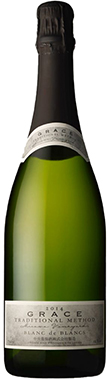

A top-notch traditional method sparkling wine hailing from the heart of Akeno town, on the northwest side of the Kofu basin in Yamanashi. The base...
2016
GraceAkeno

Grace, Koshu Misawa Vineyard Akeno, Akeno, Yamanashi, Japan, 2021
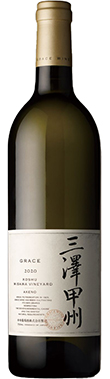
Definitely one of the most concentrated Koshu wines I have ever tried. The Akeno vineyard, situated 700 metres above sea level, prides itself on enjoying...
2021
GraceAkeno
Grace, Koshu Toriibira Vineyard Private Reserve, Katsunuma, Yamanashi, Japan, 2022
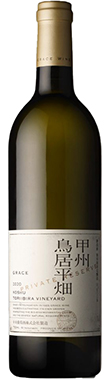
This is an old oak-fermented and tank-aged Koshu with an ambition to age. Located 450 metres above the sea, the southwest-facing Toriibira vineyard features slate...
2022
GraceKatsunuma
Grace, Kayagatake Koshu, Katsunuma, Kayagatake, Yamanashi, Japan, 2022
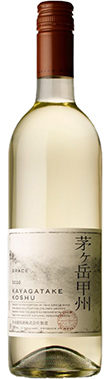
A pure, linear expression of the Koshu grape, fermented and aged in stainless steel tanks without ageing on lees. Sourced from the volcanic foothills of...
2022
GraceKatsunuma
Grace, Koshu Hishiyama Vineyard, Katsunuma, Hishiyama, Yamanashi, Japan, 2022
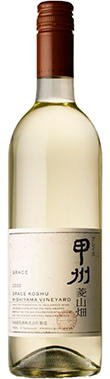
The Hishiyama vineyard is situated at the highest point of Katsunuma town, 550 metres above sea level, and boasts granite soils. Once again, tank-fermented and...
2022
GraceKatsunuma
Grace, Cuvée Misawa, Akeno, Yamanashi, Japan, 2019
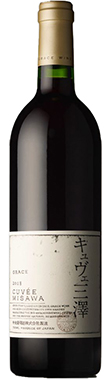
A Bordeaux blend predominantly composed of Cabernet Franc (60%), crafted from the producer's Akeno vineyards trained using the Vertical Shoots Positioning (VSP) system and located...
2019
GraceAkeno
