
Gramona: producer profile and latest releases tasted
Founded in 1850, the Penedès winery has become a sparkling Spanish icon. Simon Field MW looks back at its history and tastes a selection of current and rare releases.


Champagne’s two best-known sparkling siblings have fared rather differently over the last decade or so. Italy’s Prosecco, ethereal, approachable and flirtatious, has gone from strength to strength. Meanwhile Spain’s Cava has struggled to free itself from a reputation for wines somewhat lacking in charm – even if it is Cava that cleaves to traditional method winemaking.
Scroll down to see tasting notes and scores for 12 recently-tasted Gramona wines
What to do? One grower above all others has demonstrated the potential quality at play in its pretty Catalan vineyards. Founded in 1850, Gramona is now run by its fifth and sixth generations. Xavier Gramona and his son Leo Gramona are in charge of all things commercial, while Jaume Gramona and his son Roc Gramona looking after the vineyards.
A family affair
Inherited skills take us all the way back to founder Pau Batlle who – benefitting from the fact that phylloxera took several years to cross the Pyrenees – established a successful business selling his Catalan wines to French sparkling wine producers. His daughter Pilar married Bartolomé Gramona, son of a wine family from Sant Sadurní d’Anoia and they began selling sparkling wines under the Gramona label in the early 20th century.
Forced to block up the family cellars during the Spanish Civil War and then again during the Second World War, Bartolomé and Pilar’s children – brothers Bartomeu Gramona and Josep Lluis Gramona – came to realise that their wines could actually age rather well. No shortage of serendipity, then, in the backstory, but no lack of integrity and humanity in the approach of their successors.
Xavier is very specific. ‘My mission is to change the paradigmatic perception of Xarel.lo,’ he says, considering that grape to be the ‘DNA of Gramona’. If you think that fizz from Penedès is unable to perform the elegant pas de deux between acidic tension and the complexity engendered by autolytic ageing, you really will have to think again…
In the vineyard

Gramona’s 119ha of vineyard are located 30km or so south of Barcelona and overlook the town of Sant Sadurní d’Anoia in the heart of the Penedès DO. The winery also buys fruit from 12 local growers who are members of a biodynamic association, Alliances per la Terra.
Of the 70 or so individual vineyard parcels, swathed in woodland, Gramona is most proud of its original vineyards: La Plana, Font Jui, Mas Escorpí and La Solana. All of these benefit from proximity to the Anoia River, but with the additional virtue of climbing terraces that encroach the Montserrat mountains. The vines are generally old and the soils, reasonably enough, are more alluvial closer to the river and contain more slate as the vineyards start to climb.
Key to the Gramona philosophy are the winery’s organic and biodynamic vineyard accreditations. It is signed up to Demeter and in 2018, was the first winery in Spain to join Biodyvin. The alliance with the soil takes on a near-mystic significance. The estate’s animals – cows, goats and sheep in addition to the hard-working plough-horses and, most recently, peregrine falcons – are part of a virtuous cycle of nourishment.
Jaume describes ‘an animal transaction and traction’ which allows him to understand, measure and respect the rhythms of nature and its lunar guidance. Claude Bourguignon was hired to teach about the living soil; its natural medicines are now provided by biodynamic preparations, with yarrow, dandelion, horsetail and nettle all helping to revitalise the vines and encourage the roots to dig deep.
Winemaking secrets

In the winery a respect for gravity, the use of the gentlest Coquard press and a disavowal of all but the most necessary intervention maintains the theme. Autolytic ageing is key for the sparkling wines, with hand riddling and manual disgorgement employed. For the (several) lines that are aged for over 60 months, the re-introduction of cork and staple stoppers during tirage is perceived as better than the crown cap for the gentlest oxygen ingress.
Dosage is from a solera and is kept at around five to six grams per litre. This may be slightly surprising in a warm region where ripeness is not an inherent problem. However Roc is adamant that this level is necessary given the structural evolution of the wines after such lengthy time on the yeast. He reminds me that Xarel.lo has one of the highest amounts of resveratrol, together with other antioxidant elements, of any white grape. In a quest for texture and complexity, this modest addition of solera-aged dosage in no way inhibits structural integrity.
Roc also reminds me that, along with his cousin, the sixth generation is collectively developing the still wine range. Today labels such as Finca Mas Escorpí and the delightfully named Vins Per Estimar El Vi make up 50% of the Gramona portfolio. It is a fascinating set of wines, most made with indigenous grapes and rejoicing in the diversity of the Catalan terroir.
The sparkling range is better known of course, with the larger volume Imperial and La Cuvée making an impressive ‘entry level’ statement. At the premium end are the outstanding Celler Batlle, III Lustros and an increasingly significant Enoteca offering. Here an already long ageing becomes even longer. Gramona’s Chardonnay-dominated Argent may be seen as the joker in the pack, but a very wise joker it has to be said. Otherwise Xarelo.lo is king, although Macabeo and Parellada both have significant parts to play.
From Cava to Corpinnat
Behind these outstanding wines, the vinous politics of the region have loomed large for several years. Initially Xavier felt that he would try to address dissatisfaction with the Cava DO from inside – unlike, for example Pepe Raventós, who jumped ship to set up the Conca Del Riu Anoia designation as far back as 2013.
Eventually, however, Xavier changed tack and helped to inaugurate the EU-legislated Corpinnat designation, in effect a rebellion against perceived qualitative inadequacies within the Cava body politic. Cava’s qualitative moves, exemplified by the introduction of the top Cava de Paraje category, were seen as a case of ‘too little, too late’…
So far Corpinnat has nine members. Its philosophy is centred on organically grown fruit sourced from Penedès only, on stricter control over all stages of the winemaking process, ageing in particular, and on a requirement to vinify in situ. It is a brave and stark challenge to the hegemony of extremely large and powerful companies such as Freixenet and Codorníu, and the work is still in progress.
Xavier is stoical in the face of the challenges inherent in such a bold move; Corpinnat members have lost, for example, the ability to use terms such as gran reserva. Nor is he remotely phased by the slow process to gain greater recognition. He should not worry unduly; quality generally will out and Gramona does not want for either quality of product, integrity of approach or strength of message. The reputation of the best sparkling wines in Catalonia rests in the mud-splattered hands of the Gramona family.
See Simon Field MW’s scores and notes for 12 recently-tasted Gramona wines
Related content:
Expert’s Choice: Premium Spanish Sparkling Wine
Best Cava and Spanish Sparkling Wines under £25
Sparkling Wine: A Decanter Guide
Gramona, Celler Batlle Biblioteca de Añadas Brut Nature Corpinnat, Catalonia, Spain, 2005
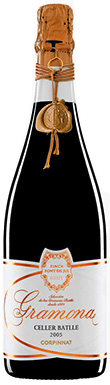

The masters of long ageing in Catalonia go a step further with this wine, ageing it for more than 10 years on the lees, disgorging,...
2005
Gramona

Gramona, Enoteca, Penedès, Spain, 2006
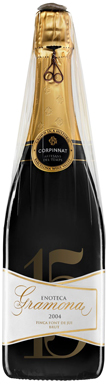
Enoteca is a long-aged version of Celler Batlle (same blend, same wine) but disgorged without the addition of sugar. So that’s 171 to nil in...
2006
Gramona
Gramona, III Lustros Biblioteca de Añadas, Penedès, Spain, 2007
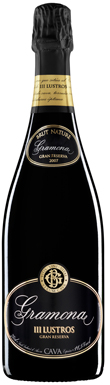
An exceptionally rare library bottling, disgorged in 2015 and benefitting from the additional virtue of a long post-disgorgement ageing. Forget the theory and the numbers,...
2007
Gramona
Gramona, III Lustros Brut Nature, Catalonia, Spain, 2012
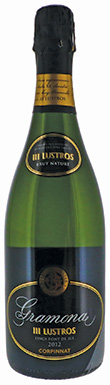
Biscuit and brioche aromas, with hints of baked apple and honey. Lovely age and complexity, a very good example with beautiful refreshing acidity.
2012
Gramona
Gramona, Celler Batlle Brut, Corpinnat, Catalonia, Spain, 2009
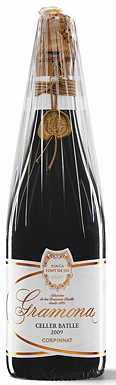
This 2009 is an undoubted keeper. Even with 10 years it's still tight and yet to reveal its full glories. The 2000 is in its...
2009
GramonaCorpinnat
Gramona, Celler Batlle, Penedès, Spain, 2011
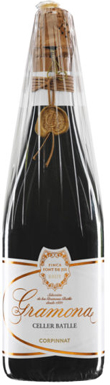
Disgorged in May 2021, this 60:40 blend of Xarel.lo and Macabeo is a gem sourced from the same ancient vine stock as III Lustros –...
2011
Gramona
Gramona, III Lustros, Penedès, Spain, 2013
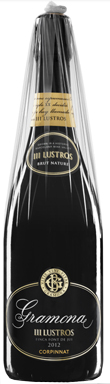
Aged for 87 months (Corpinnat producers update the label reference to the length of the tirage with each disgorgement), this is a definitive statement of...
2013
Gramona
Gramona, Imperial, Penedès, Spain, 2015
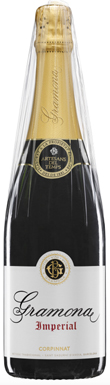
Gramona’s flagbearer, representing over 60% of the winery's sparkling output (around 300,000 bottles), the Imperial is well named – although history doesn’t relate which particular...
2015
Gramona
Gramona, Innoble, Penedès, Spain
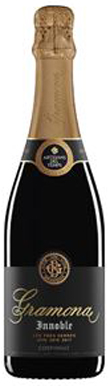
New to the range, Innoble is a single varietal Xarel.lo, made from a single vineyard (Las Tres Serras), wood-aged and blended from three different vintages:...
Gramona
Gramona, La Cuvee, Penedès, Spain, 2016
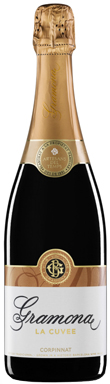
Disgorged in May 2021, its mere 50 months of tirage relatively modest for Gramona, this is a benchmark blend. Unerringly complex: spring flowers wrap around...
2016
Gramona
Gramona, Imperial Brut, Cava, Catalonia, Spain, 2014
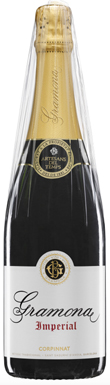
Typical Xarello character evident here; lime, lanolin and quince. Complex palate.
2014
GramonaCava
Gramona, Font Jui, Penedès, Spain, 2017
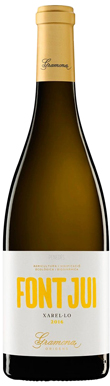
An impressive barrel-fermented single vineyard Xarel.lo, farmed biodynamically and aged on lees for three months. Generous gold colour, with aromatics of chamomile and lemon pith,...
2017
Gramona
Gramona, Celler Batlle Biblioteca de Añadas Brut Nature Corpinnat, Catalonia, Spain, 2005
The masters of long ageing in Catalonia go a step further with this wine, ageing it for more than 10 years on the lees, disgorging,...
2005
Gramona
Gramona, Enoteca, Penedès, Spain, 2006
Enoteca is a long-aged version of Celler Batlle (same blend, same wine) but disgorged without the addition of sugar. So that’s 171 to nil in...
2006
Gramona
Gramona, III Lustros Biblioteca de Añadas, Penedès, Spain, 2007
An exceptionally rare library bottling, disgorged in 2015 and benefitting from the additional virtue of a long post-disgorgement ageing. Forget the theory and the numbers,...
2007
Gramona
Gramona, III Lustros Brut Nature, Catalonia, Spain, 2012
Biscuit and brioche aromas, with hints of baked apple and honey. Lovely age and complexity, a very good example with beautiful refreshing acidity.
2012
Gramona
Gramona, Celler Batlle Brut, Corpinnat, Catalonia, Spain, 2009
This 2009 is an undoubted keeper. Even with 10 years it's still tight and yet to reveal its full glories. The 2000 is in its...
2009
GramonaCorpinnat
Gramona, Celler Batlle, Penedès, Spain, 2011
Disgorged in May 2021, this 60:40 blend of Xarel.lo and Macabeo is a gem sourced from the same ancient vine stock as III Lustros –...
2011
Gramona
Gramona, III Lustros, Penedès, Spain, 2013
Aged for 87 months (Corpinnat producers update the label reference to the length of the tirage with each disgorgement), this is a definitive statement of...
2013
Gramona
Gramona, Imperial, Penedès, Spain, 2015
Gramona’s flagbearer, representing over 60% of the winery's sparkling output (around 300,000 bottles), the Imperial is well named – although history doesn’t relate which particular...
2015
Gramona
Gramona, Innoble, Penedès, Spain
New to the range, Innoble is a single varietal Xarel.lo, made from a single vineyard (Las Tres Serras), wood-aged and blended from three different vintages:...
Gramona
Gramona, La Cuvee, Penedès, Spain, 2016
Disgorged in May 2021, its mere 50 months of tirage relatively modest for Gramona, this is a benchmark blend. Unerringly complex: spring flowers wrap around...
2016
Gramona
Gramona, Imperial Brut, Cava, Catalonia, Spain, 2014
Typical Xarello character evident here; lime, lanolin and quince. Complex palate.
2014
GramonaCava
Gramona, Font Jui, Penedès, Spain, 2017
An impressive barrel-fermented single vineyard Xarel.lo, farmed biodynamically and aged on lees for three months. Generous gold colour, with aromatics of chamomile and lemon pith,...
2017
Gramona
