
Hentley Farm: producer profile plus six wines tasted
From the outset, Hentley Farm’s Keith Hentschke was focused on making his Shiraz-focused winery not just iconic in South Australia’s Barossa Valley but globally. David Sly finds out how he did it…
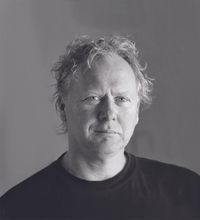

No expense has been spared. Keith Hentschke had very specific intentions when he decided to create his own wine brand. Its focus would be big-framed Barossa Shiraz from an ideally suited site, to best express the terroir that has made this South Australian region famous.
So, from the ground up, he developed Hentley Farm vineyard, winery and restaurant in the western Barossa. His ambition, from its outset, was to achieve iconic status.
Scroll down for David Sly’s tasting notes and scores on the latest releases from Hentley Farm
Hentschke (a different spelling to the Henschke family, makers of Hill of Grace) knew precisely what he wanted. Having graduated with distinction in agricultural science from South Australia’s reputed Roseworthy College (later adding an MBA), and then having a diverse wine career – from production executive at Orlando Wyndham (home of Jacob’s Creek) to managing vineyard management giant Fabal – Hentschke had the smarts and local knowledge to search prudently.
He studied the Barossa region, using 1950s soil maps as a reference guide, to identify ideal sites for Shiraz that had been overlooked.
Hentschke found exactly what he wanted in 1997 by the banks of Greenock Creek: a forgotten mixed farm with red clay and loam soils atop broken limestone that elevated sharply from both sides of the creek bed.

He first dug 40 soil pits across the property and found unusual diversity of soil makeups, with seams of bluestone and ironstone. He then started a busy six-year planting program, with different clonal selections chosen to best suit specific locations.
Elevation differences across the property had created surprising microclimate pockets, and such extreme diversity provided an opportunity to plan a meticulous vineyard layout. He divided the site into nine blocks, and then further divided them into collections of rows to identify separate fruit characteristics.
Luxury Shiraz
The vines established quickly and showed exceptional fruit in only a few years, which Hentschke reflected in his marketing of the wines. He firmly fixed his gaze on premium quality when he released the first Hentley Farm wines in 2002, immediately pricing his best Shiraz as a luxury item.
‘At the time, the prestigious St Hallett Old Block Shiraz was $A45/£24/$32 a bottle and we came out with a $A60/£32/$43 Shiraz,’ explains Hentschke.
‘I knew from experience that it was very hard to elevate a brand once people identified it at a certain price point, so I took the risk of shooting high from the outset.’
This initial star performer was The Beast: 80 cases of robust, raw-boned Shiraz that found an immediate fan club.

The Hentley Farm personality came into sharper focus a few years later when he released The Beauty – a more fragrant, silken-bodied, blue-fruited Shiraz. Purposely designed as a counterpoint to The Beast, it showed the extraordinarily differences between fruit sourced from blocks that face each other across a shallow gully.
The swift success of both wines vindicated Hentschke’s belief that this site was something special.
Three years later, he identified an exceptional neighbouring 6.5ha vineyard, purchased it in 2004, and created an icon wine with Shiraz from a 1.5ha portion. He called it Clos Otto, acknowledging the previous owner’s christian name, and marketed it at an even higher price (the current 2017 Clos Otto is $A210/£113/$152 a bottle).
This release introduced a different type of site-specific wine in Australia, where single-vineyard releases tend to stand as comparisons of grape characteristics from different subregions.
Magical terroir
Hentley Farm’s single-site wines took a more personal view, highlighting significant differences between blocks within its own compact 48ha estate.
It became a very specific conversation about changes in soil depth and structure, of the amount of sunlight hitting fruit, and – what Hentley Farm head winemaker Andrew Quin determines as this site’s magical ingredient – unusually soft and supple tannins that pull the big, powerful fruit flavours into balance.
‘When we bought the block from Otto, we had heard rumours that it was a great site, but the fruit tended to be blended away by whoever previously bought it,’ says Hentschke.
‘When we finally picked the fruit and examined it as a separate parcel, we were intrigued that it presented such rich flavours framed by an earthiness and soft, silky tannins.’

Hentschke says it provided a mouthfeel, taste and finesse quite different to its Barossa neighbours, and definitely a stride apart from Henley Farm’s Beast block situated directly beside it, on the same east-facing slope.
Reading this location to get an accurate terroir representation became a serious focus of attention for Quin, who was aged only 29 when he arrived at Hentley Farm as head winemaker in 2009.
‘It was a big challenge initially,’ says Quin. ‘We had to learn the quirks and understand the nuances of the entire vineyard before we could confidently tell different stories about different sites and how they reacted to different vintages.’
Initially, he approached this task with great caution. ‘For the first five years, I kept all 60 fruit components separate as they maturated, right up until final blending in the weeks before bottling. I didn’t yet know this vineyard, so I wanted to give every component the opportunity to shine – and some of them surprised me.’
Single-vineyard specialisation
Now, Quin is confident enough to combine key components together early and return them to barrel, so they can mature as blended wines for another year. He says this makes the finished wine more cohesive, integrating the fruit more harmoniously with oak.
‘It’s more balanced, more complete,’ he says. ‘Coming from this part of the western Barossa, the wines are always going to be big, but we want freshness and vibrancy as well. The wines certainly shouldn’t look disjointed when they are young.’
Quin’s role in steering the direction of these wines is significant. His choice to pick fruit earlier – and his fastidious new oak barrel selection – has allowed the personalities of different Hentley Farm Shiraz styles to shine.
This has led to more single-vineyard specialisation with the introduction of The Creation Shiraz (a different single-block Shiraz expression issued each year, since 2007) and H Block Shiraz Cabernet (from part of the Clos Otto vineyard).

These wines now have their own specific story, and Quin says it’s his job as winemaker to remain true to that history.
‘To me, this is a terroir story that uses winemaking to highlight the differences in our blocks. My view is that the romance is in the story, and you have to tell the story in the glass.’
It reinforces Hentley Farm’s confidence in making big wines – especially in an era when many customers and critics are instead heralding wines of more modest weight and structure.
‘By making site-specific wines, we don’t concern ourselves with trends,’ says Quin. ‘If you are going to follow trends, you are always going to be behind the trends.’
Investing in success
So, while Hentley Farm boldly stands apart from the pack, Hentschke has been careful to read shifts in the global wine market. In 2008, the company’s focus was on export, with 70% of production heading to a wildly enthusiast US market, along with strong UK purchases and growing Chinese demand.
When the Global Financial Crisis bit, Hentschke grew nervous about US orders, and focused harder on Australia, which now accounts for 70% of Hentley Farm sales. ‘
‘Things that are easy are never going to last forever,’ he says. ‘We needed to understand who are our loyal customers – the ones who collect and drink these wines in their prime, who know our story and respond to our authenticity.’
Hentschke acknowledges that the majority of Hentley Farm customers have an Australian wine bias – so is it his ambition for his icon wines to scale the top tier of the world wine stage?
He takes his time before answering. ‘It would certainly tick a significant box to be viewed in the top pack of the wine world, but I can’t control such decisions.’
Hentschke has never baulked at investing big to get the biggest results, but he estimates vineyard costs are up 50% from 10 years ago. However, the chutzpah of his big venture paid off when James Halliday’s Wine Companion awarded Hentley Farm its Australian Winery of the Year in 2015.
Two decades after creating Hentley Farm, Hentschke admits that the wine world wondered at his audacity to immediately apply prestige prices to his wines, but he was determined to elevate Hentley Farm far beyond ordinary commodity wine.
‘I had no interest in making something boring. Like any artist, I want to create something exciting.’
Hentley Farm: the facts
Owners Keith and Alison Hentschke, established in 1997
Chief winemaker Andrew Quin
Production 20,000 cases annually
Vineyards 38ha
Hentley Farm: a timeline
1997 Keith and Alison Hentschke buy a farm in the Barossa’s Seppeltsfield region to create a new premium vineyard. Extensive planting begins
2002 First wines released
2004 Estate vineyards expand to 38ha after purchase of neighbouring Clos Otto vineyard
2007 The first Creation parcel of Shiraz goes into barrel for three years, released in 2010
2008 Andrew Quin joins as head winemaker
2010 A new winery opens; wines made on site for the first time
2012 Hentley Farm Restaurant opens, with head chef Lachlan Colwill presenting degustation fine-dining, judged among Australia’s elite winery dining experiences
2015 Leading Australian critic James Halliday awards Hentley Farm his Winery of the Year
2016 The winery introduces its own bottling line. A new barrel shed ensures controlled-temperature storage
Hentley Farm: David Sly tastes the latest releases
The vintages of the wines recommended are not yet in the UK. For allocations and estimated prices, contact importer Carson Wines (www.carsonwines.com/)
You might also like…
Grant Burge Wines: producer profile
The Standish Wine Co: producer profile
Henschke releases 2015 Hill of Grace
Hentley Farm, Riesling, Eden Valley, South Australia, Australia, 2020
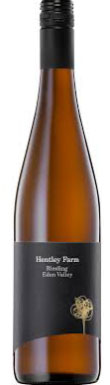

Looking at Eden Valley fruit through a different prism, winemaker Andrew Quin has highlighted a lush, textural mid-palate that celebrates lemon and grapefruit pith more...
2020
Hentley FarmEden Valley

Hentley Farm, The Beast Shiraz, Barossa Valley, South Australia, Australia, 2018
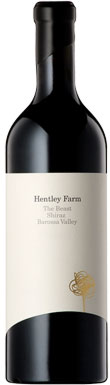
Built for the future, this big-framed beastie is a rather dense block in its youth, suggesting that a different wine will unfold and reveal greater...
2018
Hentley FarmBarossa Valley
Hentley Farm, The Beauty Shiraz, Barossa Valley, South Australia, Australia, 2018
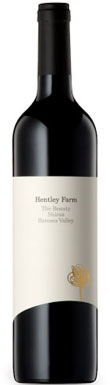
Pretty allure of velvety tannins (and 1.5% Viognier) drives a full, generous palate. Clean mulberry and leafy notes are polite on the nose, but the...
2018
Hentley FarmBarossa Valley
Hentley Farm, The Quintessential Shiraz-Cabernet, Barossa Valley, South Australia, Australia, 2018
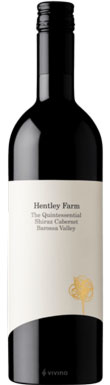
The sum of two big components framed by expensive oak. It’s plush, mouthfilling and generous, but needs years in the cellar to show at its...
2018
Hentley FarmBarossa Valley
Hentley Farm, Von Kasper Cabernet Sauvignon, Barossa Valley, South Australia, Australia, 2018
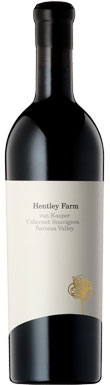
Big and brawny, this dark Cabernet still retains leafy herbal freshness on the nose. Bombastic blackcurrant and dark plum are offset by the bite of...
2018
Hentley FarmBarossa Valley
Hentley Farm, Old Legend Grenache, Barossa Valley, South Australia, Australia, 2019
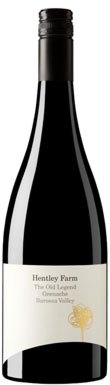
<p>Lots of clenched-fist strength in the body, but also the lift of sweet raspberry and a mist of confectioner’s sugar dusting over the top, and...
2019
Hentley FarmBarossa Valley
