
Luczy: Hirsch Vineyards and the 2018 Pinot Noirs
Winemaker Jasmine Hirsch tells Matthew Luczy how her father turned this Sonoma Coast sheep ranch into one of California’s most noted Pinot Noir properties.

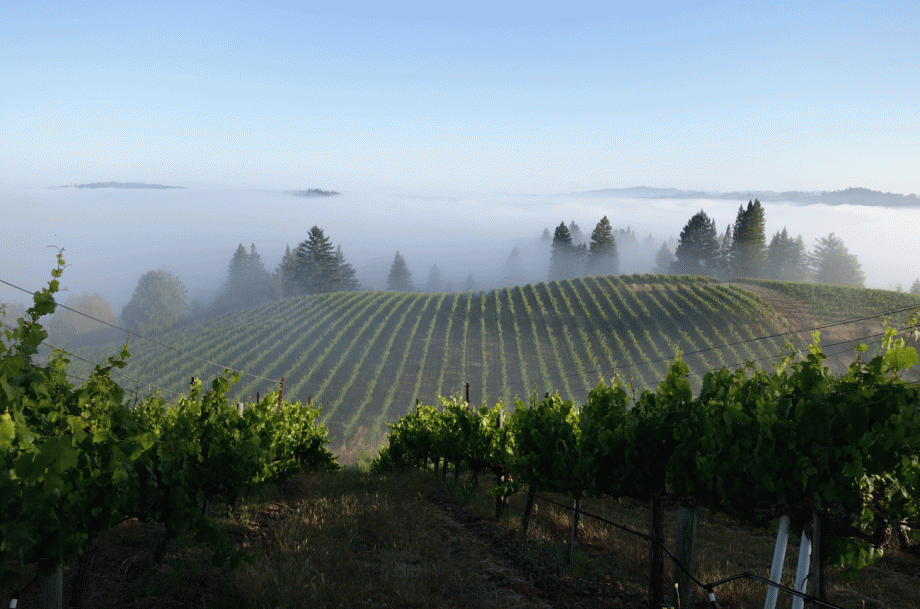
In the pantheon of classic California Pinot Noir sites, Hirsch Vineyards is at the pinnacle. A two-hour drive north from the town of Sonoma itself, this remote, maritime estate has deservedly built a reputation for producing complex and ageworthy wines.
‘My father didn’t buy the property to plant vineyards,’ explains Jasmine Hirsch, general manager, winemaker and daughter of founder and owner David Hirsch. ‘It was a complete coincidence that it turned out to be this great spot for Pinot Noir.’
Scroll down for Matthew Luczy’s verdict on the 2018 Hirsch Vineyards Pinot Noirs
A ‘working-class kid from The Bronx’, as his daughter describes him, Hirsch purchased what was then a 405ha sheep ranch in 1978. ‘The land was originally a redwood forest that started being lumbered around the time of the Civil War,’ she details. ‘This accelerated after the 1906 San Francisco earthquake, so people brought sheep and cattle here because once the trees were gone, there was no economy. It’s still ranching country much more than it is wine country.’
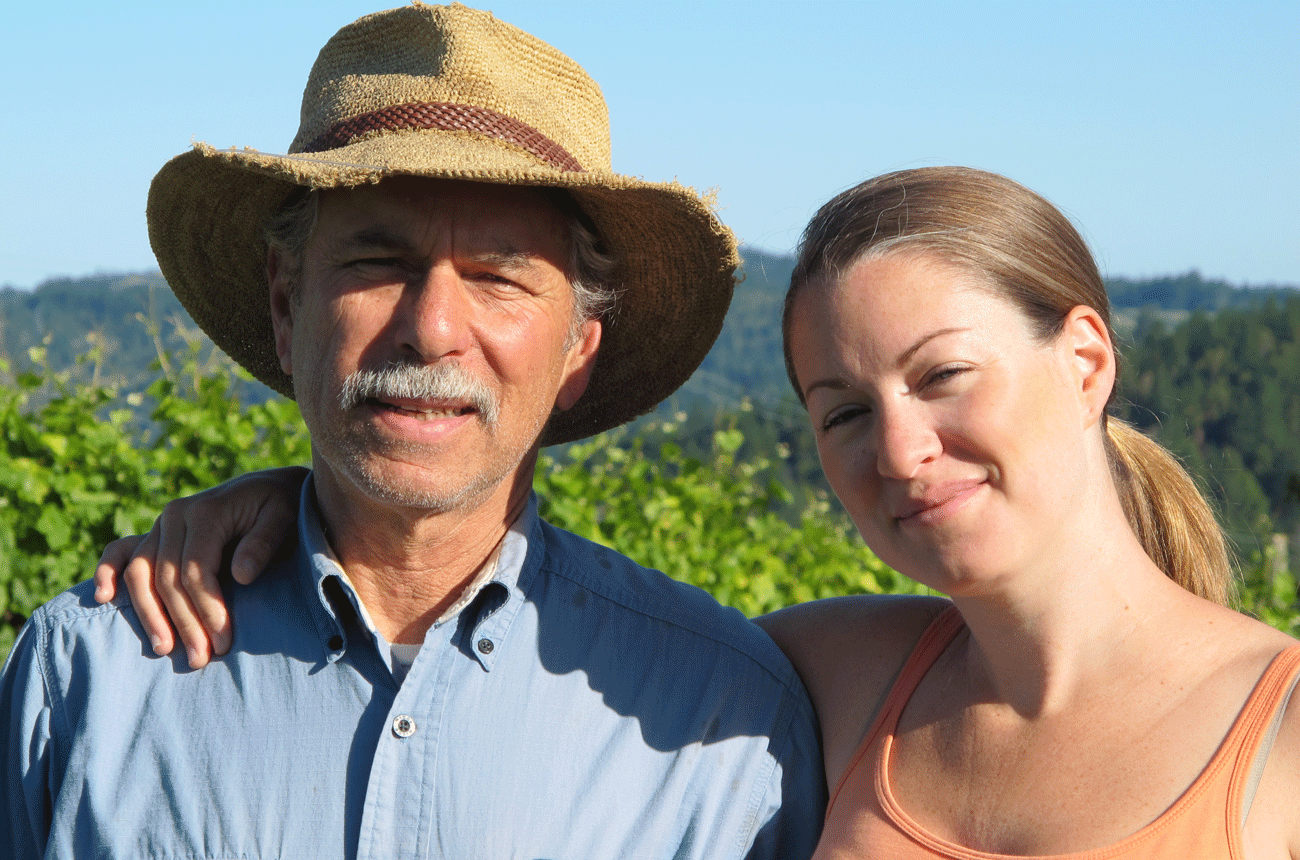
At the behest of early Santa Cruz Mountains winemaker Jim Beauregard, Hirsch planted 1.2ha of Pinot Noir in 1980. ‘Jim and a few others got my father into Burgundy,’ notes Jasmine. ‘He was in the fashion industry, so would go to Paris for work, then take the train down to Beaune. He became totally enamoured with Pinot Noir.’
Hirsch retired from the fashion world in 1989 and dedicated himself to the vineyards, eventually expanding to 29ha.
Biodynamic, Burgundian blocks
For the first 20 years, Hirsch sold 100% of his grapes, initially to large-production wineries. In 1994, Pinot Noir-focused winemakers Burt Williams and Ed Selyem (Williams-Selyem), Ted Lemon (Littorai) and Steve Kistler (Kistler Vineyards) – all in a tasting group together – discovered Hirsch Vineyards while starting to source fruit grown closer to the true Sonoma coast.
‘Some small local producers had put our name on their labels before, but those were the first big, up-and-coming wineries to credit Hirsch Vineyards on their labels,’ recalls Jasmine.
The estate’s plots sit between 485m and 650m in the Fort Ross-Seaview AVA. This puts the vineyards largely above the fog line, allowing grapes to achieve full ripeness while retaining the tension provided by their proximity to the Pacific Ocean. The San Andreas Fault is less than a kilometre away, providing a dizzying array of exposures, soil types and microclimates.
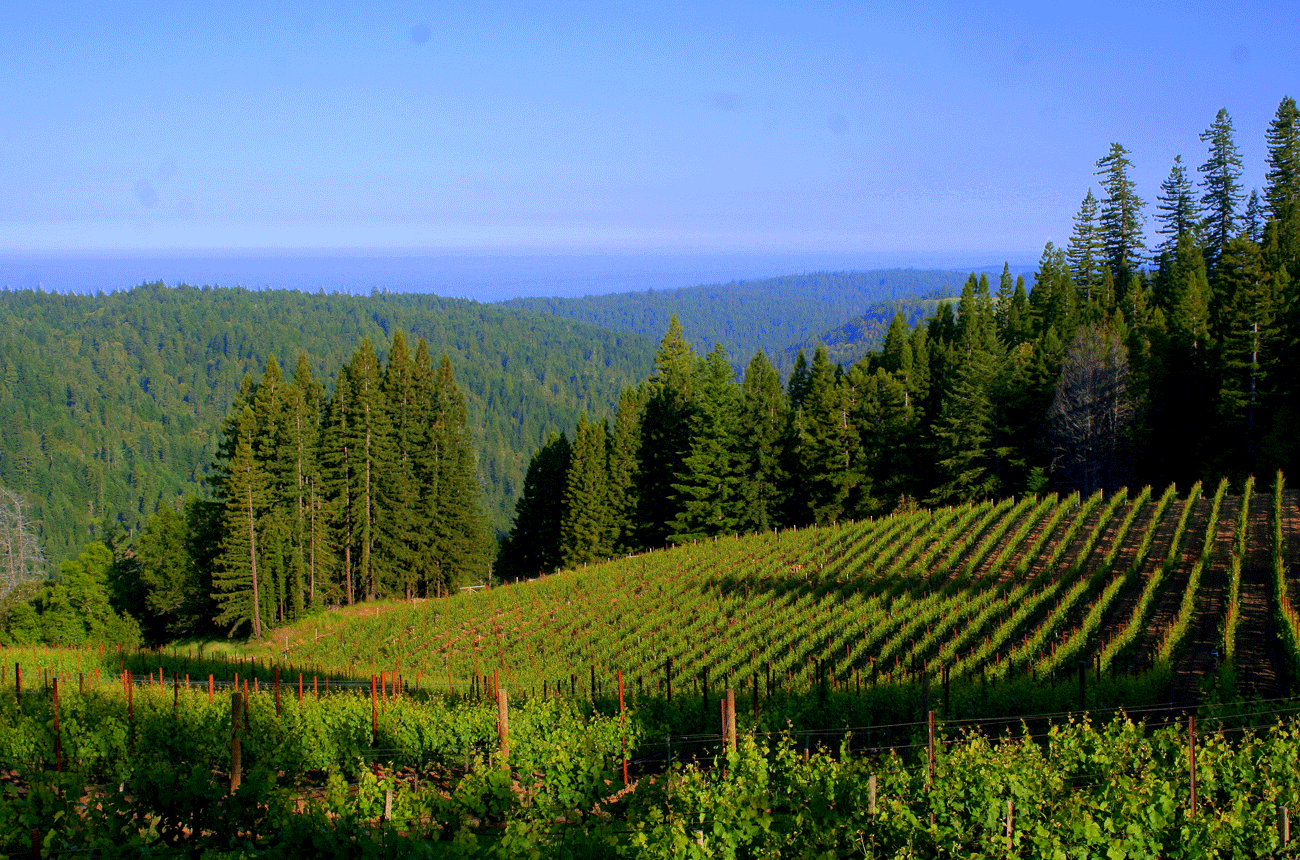
Each vineyard block is farmed as a separate site, says Jasmine. ‘People look at Hirsch like it’s a single vineyard, but it’s actually super-fragmented like a village in Burgundy. We have 28ha of Pinot Noir in 60 parcels with 30 different soil combinations.’
This diversity demands attention to detail in farming practices, which have always been of paramount importance at Hirsch Vineyards. To translate each unique block from vine to bottle as accurately as possible, protocols include ‘using low-vigour heritage clonal selections and rootstocks, careful use of water, no chemical fertilisers, and pruning as late as we can’.
Conversion to biodynamics began in 2011. And while not yet certified, all vineyards, orchards and gardens have been farmed biodynamically since 2014.
Pinot Noir trailblazers
In 2002, David Hirsch transitioned out of exclusively selling grapes and began bottling estate wines. He has employed several esteemed winemakers over the years. Peay’s Vanessa Wong initially took the helm, then Ross Cobb of Cobb Wines between 2009 and 2015, and Anthill Farm’s Anthony Filiberti after him. The 2019 vintage saw Jasmine herself assuming the role, though she did the cellar work and blending for the 2018s.
The wines are silky, upright and precise, framed by elegant but persistent tannins. ‘We feel the tannins are part of the character of the site,’ says Jasmine. ‘And let’s be honest: good Pinot Noir has tannins!’ As a result of this structure, the wines spend an extra year in bottle before release.
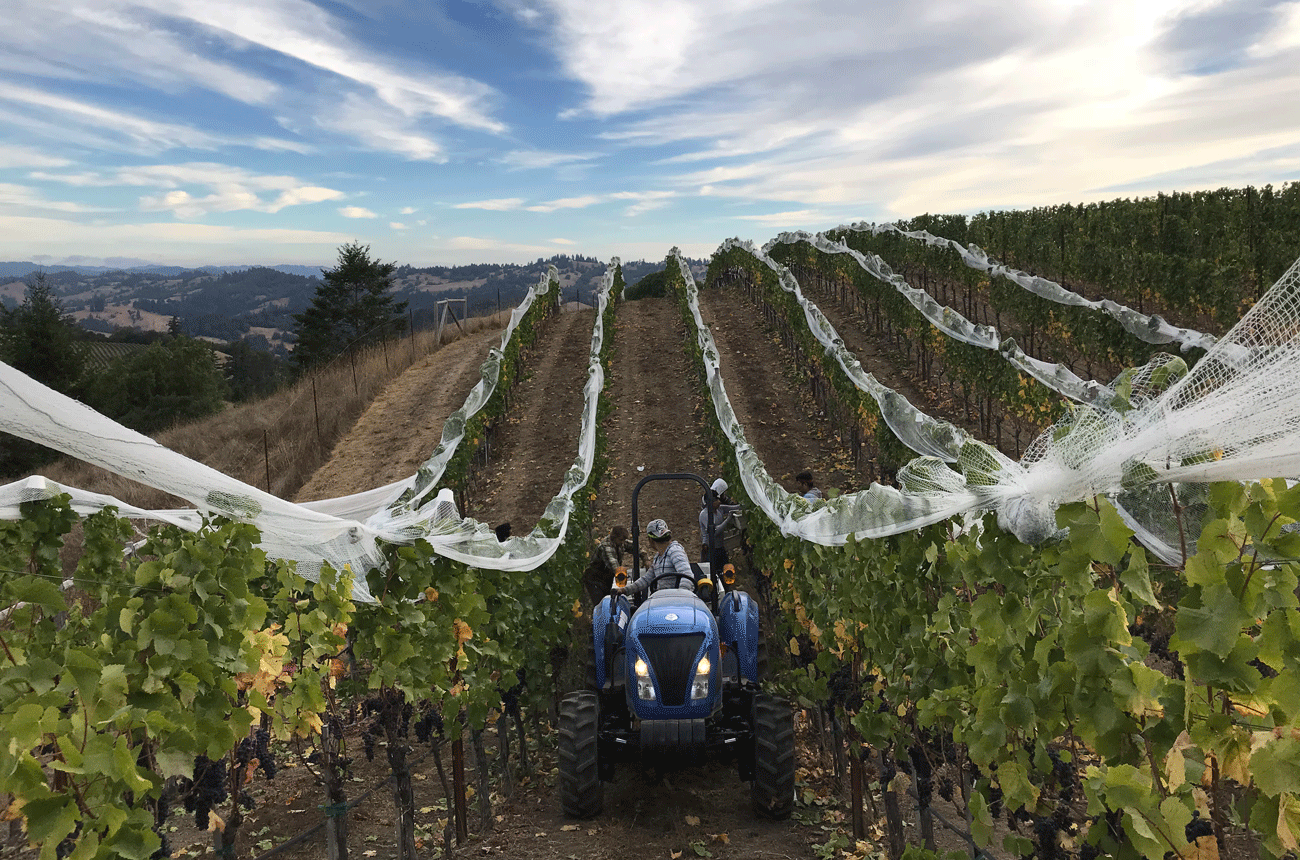
In the winery, she uses small, open-top stainless fermenters, ambient yeasts and cold-soaks ranging from three to seven days. Stem inclusion hovers around 30% depending on vintage conditions. She basket presses the grapes, and always combines both free-run and press wine. Ageing takes place in mainly French barriques with a small amount of Eastern European oak. Barrels are 25% to 30% new for most of the wines, with the Bohan-Dilon bottling seeing 20% to 25% new wood.
Hirsch Vineyards and its wines are trailblazers. As winegrowers, the family has supplied grapes for many of California’s most complex and long-lived Pinot Noirs. As a wine producer they have crafted some of the most definitive wines on the Sonoma Coast.
There are only a few vineyards in California where a wine lover can ‘buy blind’ and feel confident they are getting what they pay for. Hirsch Vineyards certainly belongs in that select group.
Hirsch Vineyards: tasting the 2018 Pinot Noirs
You might also like…
Matthew Luczy: why it’s time to revisit California Chardonnay
Cobb Wines: playing the Pinot Noir long game
Napa Cabernet 2018: top 10 producers and wineries to watch
Hirsch Vineyards, Block 8 Pinot Noir, Sonoma County, Fort Ross-Seaview, California, USA, 2018
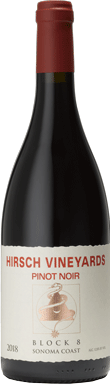

The definitive Hirsch Pinot Noir; a noticeable step up in every way from an already impressive lineup. Sappy, brooding and commanding aromas of dark fruit,...
2018
Hirsch VineyardsSonoma County

Hirsch Vineyards, Raschen Ridge Pinot Noir, Sonoma County, Fort Ross-Seaview, California, USA, 2018
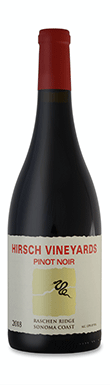
With ripe, succulent and velvety red fruits flavours, this is the most forward of Hirsch's 2018 Pinots. Herbal, beaming and energetic aromas continue from through...
2018
Hirsch VineyardsSonoma County
Hirsch Vineyards, East Ridge Pinot Noir, Sonoma County, Fort Ross-Seaview, California, USA, 2018
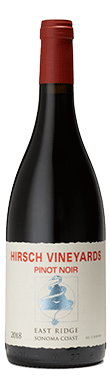
Smouldering, introspective nose of black cherry, red plum, cocoa and potting soil. The same characters are subsequently broad and mouthcoating on the palate, which has...
2018
Hirsch VineyardsSonoma County
Hirsch Vineyards, Reserve Pinot Noir, Sonoma County, Fort Ross-Seaview, California, USA, 2018
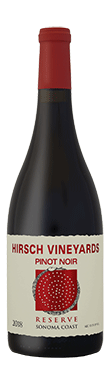
Red and black fruits combine on the nose for a floral yet decadent profile. The palate is spice-driven with great power and balance. Fine but...
2018
Hirsch VineyardsSonoma County
Hirsch Vineyards, West Ridge Pinot Noir, Sonoma County, Fort Ross-Seaview, California, USA, 2018
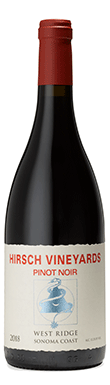
The most elegant, ethereal and delicate wine of the Hirsch Pinot catalogue: this vintage exhibits blue flowers, fresh herbs and pomegranate on the nose. The...
2018
Hirsch VineyardsSonoma County
Hirsch Vineyards, San Andreas Fault Pinot Noir, Sonoma County, Fort Ross-Seaview, California, USA, 2018
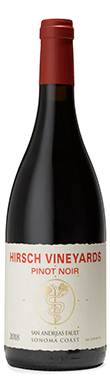
The flagship Hirsch Pinot Noir. Fresh flowers, sage and candy floss aromas lead to a spry and polished palate, with a soft but upright spine...
2018
Hirsch VineyardsSonoma County
Hirsch Vineyards, Bohan Dillon Pinot Noir, Sonoma County, Fort Ross-Seaview, California, USA, 2018
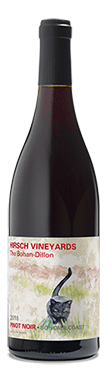
Rhubarb, blueberry and violet on the nose, then a deft, lacy palate of red cherries, tomato and fresh herbs. This wine exudes a focused charm...
2018
Hirsch VineyardsSonoma County
