
How Māori winemakers are finding their voice in New Zealand’s wine industry
For years New Zealand’s indigenous people were underrepresented or misrepresented in its wine scene. Now that is changing. Emma Jenkins MW explores how increasing presence and visibility for Māori winemakers and culture is impacting the country’s vinous landscape.


Despite their deep connection to the land and food production, New Zealand’s indigenous Māori have historically had little presence in one of its highest-value modern-day agricultural products: wine.
Vines were first planted in New Zealand in 1819 by missionary Samuel Marsden and were well established by the signing of the Treaty of Waitangi in 1840.
But for much of the 20th century, Māori participation was largely limited to vineyard labour.
Meanwhile, many NZ European-owned brands freely borrowed Māori words, motifs and place names for marketing – often without consultation or understanding.
Subscribe today to read all Decanter Premium articles
Seeds of change
That picture is shifting. A small but growing cohort of Māori winemakers and wine businesses are now asserting a distinctly indigenous voice.
From individual talents like Jannine Rickards (Huntress), Richelle Tyney (Greywacke), Ben Trinick (Ata Rangi), Kelly Thomas (Rippon) and Barry Riwai (Alpha Domus), to established companies such as Tohu and the TUKU Collective, through to tiny newcomers such as Tawhiti and Tūāpae, Māori involvement is steadily broadening.
Their rise is not only about representation, it is also bringing new ideas and frameworks for sustainability, authenticity, identity and cultural respect to an increasingly receptive sector.

What’s in a name?
Māori culture has long been visible on New Zealand wine labels, but too often at surface-level appropriation. Evocative names, stylised symbols or te reo Māori language are used as a veneer of place.
As Haysley MacDonald, owner and founder of Marlborough’s te Pā Wines, has pointed out: ‘There are a lot of foreign companies that want to be Māori. They get a wine brand with a Māori name, whack a label on a bottle and sell it around the world. That’s a tough one when you are Māori; you see your names and places being ripped off.’
The rise of genuine Māori-owned producers offers a counterbalance, but cultural sensitivity remains paramount. Certain concepts, particularly those tied to tapu (sacred) traditions, risk being trivialised if used casually in association with alcohol.
Greywacke winemaker Tyney explains: ‘Wineries would just grab some concept out of the air and stick it on their bottle, without thinking about the consequences.’
The Māori Advisory Committees of the Intellectual Property Office of New Zealand now help assess trademarks or branding proposals to prevent such misuse.

Reclaiming agency
The relationship between Māori culture and alcohol is complex. Alcohol was not traditionally part of Māori life, and the legacy of colonialism means Māori communities today – as with other indigenous communities worldwide – are overrepresented in statistics on addiction and poverty.
The tension of whether wine is an appropriate pathway for Māori development is acknowledged. The goal is not to romanticise alcohol, but to reclaim agency, create opportunities for Māori, and embed cultural values in a significant industry.
As Matua Murupaenga, co-founder with partner Imogen Weir of Tawhiti Wines (above), puts it: ‘A lot of the reasoning behind doing this was because I was moaning about all these wines with Māori names on the labels where nothing else about it is Māori. You can only moan for so long, then you’ve got to do something about it.’

Protecting the land
What increasingly distinguishes Māori producers is not only cultural representation, but how they approach the land.
Central to this is kaitiakitanga, a principle that loosely translates as guardianship. It is both practical and spiritual – farming not just for profit today but also for the well-being of future generations.
This perspective resonates strongly with the global shift towards regenerative agriculture.
Long before the term ‘regen’ became a buzzword, Māori farming was guided by maramataka (the lunar and astronomical calendars that directed planting, hunting and fishing), which emphasised cyclical balance, soil health and community well-being.
Marlborough-based Wakatū, which owns Tohu Wines – the first Māori-owned winery, founded in 1998 – operates under a 500-year business plan. That horizon speaks volumes about the Māori worldview, where stewardship extends well beyond the present.

Past, present and future
‘For us, Te Ao Māori (the Māori worldview) is fundamentally who we are. It is our identity, guides how we work, and continually reminds us of our purpose,’ says Joe Hanita, tumu whakarae (CEO) of Wakatū.
‘Our story began with our tūpuna (ancestors) who will always be our biggest influence. The legacy that they have entrusted to us gives us the opportunity to tell our story, grow our interests, and connect people with place,’ he adds.
Veteran winemaker and consultant, Jeff Sinnott, frames this connection through tūrangawaewae – ‘the place where you stand’ – a concept akin to terroir.
‘To me there is great alignment between Kaupapa (principles) Māori and the principles of sustainable winegrowing. The unique multi-generational perspective that exists in Te Ao Māori, the idea of the interconnectedness of everything, brings a lot of principles into one place,’ he says.

Holistic approach
As Hanita explains: ‘For us at Tohu, this is not just about viticulture and winemaking. It’s about ensuring the whenua (land) thrives, so our people and communities thrive too.’
This alignment is increasingly visible in frameworks such as Te Waka Kai Ora, the National Māori Organics Authority.
Its Hua Parakore verification system validates food and other products, not only through soil and plant health but also whakapapa (genealogy), tikanga (protocol) and wairua (spirituality).
For Māori-led producers, it offers a uniquely indigenous lens on regenerative practices.

Deeper understanding
Much of the current energy is grassroots. In Wairarapa, Rickards of Huntress and Ata Rangi’s Trinick helped develop a te reo Māori booklet for local growers. While the Wairarapa Winegrowers Association hosted a hākari (feast) and noho (overnight stay) at the local community Hau Ariki Marae to educate visitors.
It was, says Rickards, ‘a starting point’ towards deeper integration between winemakers and iwi (the Māori people, tribe or nation).
‘We have ambitions to grow and further this initial project to encompass more learning that can be shared within the region,’ she adds.
These small initiatives matter. Wakatū’s Hanita notes: ‘As an export business, we often work with partners who are unfamiliar with our culture and practices, which can bring challenges – especially around understanding tikanga (customs), storytelling and decision-making processes.’
Connection and collaboration
Collaboration is also building through larger-scale initiatives such as the TUKU Collective. This network – which includes te Pā Wines, Tiki Wine & Vineyards, Steve Bird Wines, Kuru Kuru Wines and others – positions itself on shared values of kaitiakitanga, rangatiratanga (self-determination), manaakitanga (hospitality), and particularly, whanaungatanga (creating a sense of belonging, embracing people).
By presenting as a collective, these producers strengthen their own voices in the marketplace while signalling a move towards Māori-centric industry structures.
Globally, wine-drinkers are demanding more authenticity and connection. Younger consumers especially are drawn to producers who can offer more than marketing gloss; they want heritage, story, and values embedded in actual practices.
By bringing cultural depth, regenerative vision and authenticity, Māori winemakers are not just diversifying New Zealand wine, they are reshaping how the industry understands itself.
Visitors to recent flagship wine events such as Pinot Noir 2025 will have noticed how much more visible Māori culture and values have become within New Zealand wine.

Looking ahead
As the wider New Zealand wine industry seeks to distinguish itself on the global stage, Māori perspectives may prove pivotal. Kaitiakitanga, manaakitanga, tūrangawaewae: these are not borrowed slogans but increasingly lived frameworks for New Zealanders of all ancestries.
For some, such as Rickards, whose career began within European wine traditions, the journey has been personally transformative.
‘With the revitalisation of Māori culture it is very fulfilling and tika (right). I now “feel” Māori. My tīpuna are within me and support me in my journey.’
Sinnott, too, is optimistic. ‘I’m incredibly positive about the role Māori wine professionals will play in the future. Coming from a position of genuine connection to whenua, iwi, hapū and whānau (land, tribal and family connections), the next generation will hopefully have things a little better defined. I see a great future for them.’

Māori winemaking: Eight wines to try
Related articles
Huntress, Matiti Pet Nat, Martinborough, Wairarapa, New Zealand, 2024
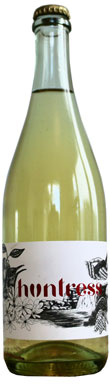

Fragrant and fresh like a summer’s day, befitting its name, which means ‘summer’ in the reo Māori. Delicate tropical and citrus notes, light-bodied with a...
2024
HuntressMartinborough

Tohu, Rewa Méthode Traditionnelle Rosé, Awatere Valley, Marlborough, New Zealand, 2018
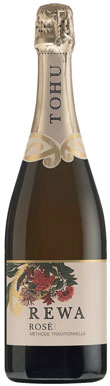
Pretty red berry fruit, nectarine and brioche notes along with savoury mushroomy richness; this 100% Pinot Noir Blanc de Noir style has a layered, creamy...
2018
TohuAwatere Valley
Greywacke, Marlborough Sauvignon Blanc, Marlborough, New Zealand, 2024
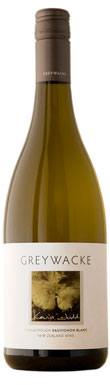
Aromatic and evocative, bursting with pink grapefruit, tropical fruits, elderflower, lemongrass and snow pea, with a creamy lees undertow and flashes of herbal/mineral notes. A...
2024
Greywacke
Tohu, Whenua Matua Single Vineyard Albariño, Upper Moutere, Nelson, New Zealand, 2021
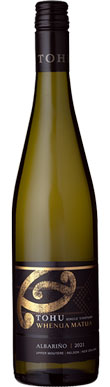
From Tohu’s Whenua single-vineyard series; the Whenua Matua vineyard is a clay and sunshine-rich site in Nelson’s Upper Moutere Valley. Albariño is generating excitement in...
2021
TohuUpper Moutere
Te Pa, The Reserve Collection Seaside Sauvignon Blanc, Wairau Valley, Marlborough, New Zealand, 2023
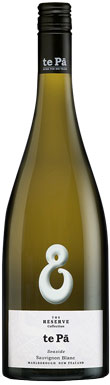
Classically vivid aromatics, with passionfruit, pineapple, red capsicum, fresh cut grass, herbs and tangy lime. This is a deliciously crunchy crisp wine, ticking all the...
2023
Te PaWairau Valley
Huntress, Kuratea, Martinborough, Wairarapa, New Zealand, 2024
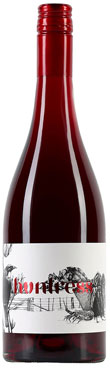
Kuratea means ‘light red’ and this multi-variety wine is a blend of skin-fermented Pinot Gris, Pinot Noir and Syrah, sourced from various Martinborough Vineyards. A...
2024
HuntressMartinborough
Tawhiti, Ōwhiro Gamay Pinot Noir, Hawke’s Bay, New Zealand, 2024
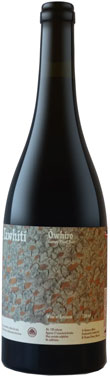
Sourced from the acclaimed Two Terraces Vineyard in Hawke’s Bay, this vibrant wine immediately draws you in with juicy red fruits and savoury/spicy notes. The...
2024
Tawhiti
Tiki, Single Vineyard Pinot Noir, North Canterbury, Canterbury, New Zealand, 2021
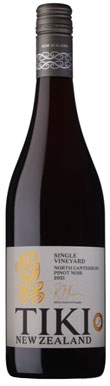
A bright, sweet-fruited wine with ripe red cherry, blackberry and dried thyme, plus baking spice aromatics. The palate is open, juicy and supple, with good...
2021
TikiNorth Canterbury
Huntress, Matiti Pet Nat, Martinborough, Wairarapa, New Zealand, 2024
Fragrant and fresh like a summer’s day, befitting its name, which means ‘summer’ in the reo Māori. Delicate tropical and citrus notes, light-bodied with a...
2024
HuntressMartinborough
Tohu, Rewa Méthode Traditionnelle Rosé, Awatere Valley, Marlborough, New Zealand, 2018
Pretty red berry fruit, nectarine and brioche notes along with savoury mushroomy richness; this 100% Pinot Noir Blanc de Noir style has a layered, creamy...
2018
TohuAwatere Valley
Greywacke, Marlborough Sauvignon Blanc, Marlborough, New Zealand, 2024
Aromatic and evocative, bursting with pink grapefruit, tropical fruits, elderflower, lemongrass and snow pea, with a creamy lees undertow and flashes of herbal/mineral notes. A...
2024
Greywacke
Tohu, Whenua Matua Single Vineyard Albariño, Upper Moutere, Nelson, New Zealand, 2021
From Tohu’s Whenua single-vineyard series; the Whenua Matua vineyard is a clay and sunshine-rich site in Nelson’s Upper Moutere Valley. Albariño is generating excitement in...
2021
TohuUpper Moutere
Te Pa, The Reserve Collection Seaside Sauvignon Blanc, Wairau Valley, Marlborough, New Zealand, 2023
Classically vivid aromatics, with passionfruit, pineapple, red capsicum, fresh cut grass, herbs and tangy lime. This is a deliciously crunchy crisp wine, ticking all the...
2023
Te PaWairau Valley
Huntress, Kuratea, Martinborough, Wairarapa, New Zealand, 2024
Kuratea means ‘light red’ and this multi-variety wine is a blend of skin-fermented Pinot Gris, Pinot Noir and Syrah, sourced from various Martinborough Vineyards. A...
2024
HuntressMartinborough
Tawhiti, Ōwhiro Gamay Pinot Noir, Hawke’s Bay, New Zealand, 2024
Sourced from the acclaimed Two Terraces Vineyard in Hawke’s Bay, this vibrant wine immediately draws you in with juicy red fruits and savoury/spicy notes. The...
2024
Tawhiti
Tiki, Single Vineyard Pinot Noir, North Canterbury, Canterbury, New Zealand, 2021
A bright, sweet-fruited wine with ripe red cherry, blackberry and dried thyme, plus baking spice aromatics. The palate is open, juicy and supple, with good...
2021
TikiNorth Canterbury
