
Il Marroneto: Producer profile & 10 wines rated
A Montalcino estate where less is more, thanks to owner Alessandro Mori's traditional philosophy.


Alessandro Mori is a staunch advocate for traditional winemaking; a ‘naturalista’. Call him stubborn, call him single-minded, or call him a man on a mission – it’s irrelevant: there’s no denying the fact that his wines are consistently some of the finest examples of Sangiovese produced within the Brunello di Montalcino DOCG. He’s unlikely to admit it though.
Scroll down to see tasting notes and scores for 10 Il Marroneto wines
Buy Brunello di Montalcino masterclass tickets at the Decanter Fine Wine Encounter NYC
Alessandro has nurtured a reputation of fierce independence, steadfastly refusing to bow to the whims of the market. Even during the heyday of muscular wines aged in new oak barriques, Il Marroneto’s wines continued on their own course, always showing a reliably light touch with restraint and finesse.
The modest cellars at Il Marroneto have changed little since Alessandro’s father, Giuseppe, purchased the estate in 1974. ‘Il Marroneto’ is named after this 13th century building which was once used to turn chestnuts (‘marrone’) into flour. Alessandro recounted how they began with ‘two barrels, one tun, one press’ in two small rooms, later enlarged to three rooms.
Since the first vintage in 1980, Alessandro has managed the winemaking at Il Marroneto, initially alongside his brother, Andrea until 1993. Key to Alessandro’s winemaking style are his experiences with the two enologists who guided him in the estate’s formative years; Mario Cortevesio and Giulio Gambelli, who he describes as ‘masters in the world of wine’.
Wine masters
It was Cortevesio who first taught Alessandro to respect the earth and respect the wine – ‘I am respecting the promise made in this little room,’ he says, referring to this fundamental winemaking philosophy Cortevesio passed on to him during their time together in the original cellar. Cortevesio consulted at Il Marroneto from 1975 to 1985 and developed in Alessandro an almost obsessive fascination for cleanliness – a necessity, given the lack of temperature control and the use of indigenous rather than cultivated yeasts for fermentation.
Following an operation, Cortevesio suffered from pain in his throat and spoke less and less. Alessandro recounts that hearing him utter the word ‘preciso’ (precise) after tasting the wine one day was the ultimate accolade.
Cortevesio’s childhood friend, Gambelli – known to many as ‘i grande maestro del Sangiovese’ – took over as enologist at the estate from 1985 to 1993. Having already cemented his reputation with his work for the likes of Biondi Santi, Soldera and Montevertine, he was known for his incredible palate and was an early advocate for Sangiovese in purezza when many Tuscan producers were blending in international varieties.
Gambelli continued to impress on Alessandro the importance of cleanliness, as well as the need for long ageing in the estate’s large Slavonian oak botti in order to bring out the best in his grapes.

Up until this point, Il Marroneto had been little more than an expensive hobby for Giuseppe and his family. Both he and Alessandro had law careers in Rome and visited the estate at the weekends, but in 1994 Alessandro made the bold decision to turn his blossoming passion into a full-time role and quit the city to focus on winemaking.
Alessandro today farms nine hectares of vineyards on the northern slopes of Montalcino, below the town walls at an altitude of around 400 metres. It’s not only the cooler microclimate here that promotes elegance and lightness, however. In fact, Alessandro mentioned – more than once – at a recent seminar that it’s the ‘identity of the area and the hand of man that makes the wine.’
The seminar in March 2022 hosted by Il Marroneto’s UK importer, Armit, was an opportunity to compare several vintages of the estate’s Brunello di Montalcino wines in large formats. I recall attending a similar masterclass with Alessandro in 2017 but what made this most recent occasion stand out was that all the wines were in magnum or double-magnum. Another difference was that this time Alessandro’s son, Iacopo was with him. Now aged 60, the process of handing over the baton to the next generation has begun.
Methodical
Alessandro has always kept his promise to Cortevesio, made in that small cellar many years ago; he remains fastidious about the minutiae yet gives the wines the time and space they need. One of his favourite catchphrases is ‘slowly, slowly,’ which encapsulates his belief that patience is key. Both his classic Brunello and his single-vineyard Madonna delle Grazie are products of this philosophy, however they are made quite differently – using the ‘hand of man’ to get the most from the different sites.
In the vineyard, organic practices are followed, with inter-row grassing encouraging biodiversity and controlling the vigour of the vines.
For the estate Brunello, a three-vineyard blend, the grapes macerate for 48 hours in Allier oak vats, during which Alessandro and his small team are on round-the-clock watch, regularly pumping over the must to extract the phenolic compounds and full flavour and aromatic potential of the grapes. Spontaneous fermentation is fast and hot due to the manipulation of the must, often complete after a week.

For the single-vineyard Madonna delle Grazie, the grapes are left to macerate for 48 hours in Allier oak vats, with no pump overs. This no-intervention approach avoids over-extraction of the higher polyphenolic content of the grapes from this vineyard. The fermentation temperature is consequently lower and as a result often takes around 25 days to complete.
Both wines are placed in the estate’s large Allier and Slovenian oak barrels to mature for between 36 and 48 months. This is where the ‘magic’ happens according to Alessandro.
Madonna delle Grazie
The original vineyard of Il Marroneto, Madonna delle Grazie was first planted in 1975 then expanded in 1979 and 1984. It is named after the 13th century church which overlooks the site, which is located at around 400 metres above sea level. In the second half of the 1990s, when bold, muscular Brunellos were in vogue, Alessandro conceived the idea to produce a more powerful, single-vineyard expression of Sangiovese from his best vines. He doesn’t see himself as following in the footsteps of his peers, however: ‘Instead of changing barrel for barrique, I decided to make something totally different.’
Alessandro soon realised that, ‘in Sangiovese there isn’t the power. Nature doesn’t fix power,’ concluding that, ‘Madonna delle Grazie isn’t a powerful wine, it’s a complex wine’. Since its first vintage in 2000, Madonna delle Grazie has indeed been an ode to Sangiovese’s complexity and beauty, the result not of impressing a style upon the grape, but listening intently and letting time work its magic – with a little guidance from Alessandro and Iacopo.
Tasting Il Marroneto: 10 wines rated
Related content
Fuligni Brunello di Montalcino Riserva: vertical tasting
Castello Banfi’s Poggio all’Oro: vertical tasting
Brunello di Montalcino 2017 vintage report and top-scoring wines
Il Marroneto, Madonna delle Grazie, Brunello di Montalcino, Tuscany, Italy, 2017
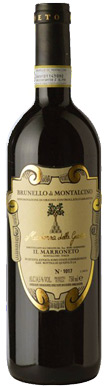

Il Marroneto's northern exposition and altitude, surrounded by cooling woodland, saved the day in the drought and heat of 2017. Balsamic black cherry, earthy red...
2017
Il MarronetoBrunello di Montalcino

Il Marroneto, Madonna delle Grazie, Brunello di Montalcino, Tuscany, Italy, 2015
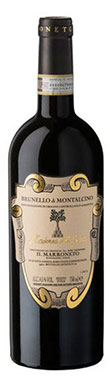
The warm, highly-rated 2015 vintage has produced an intense, structured and vibrant Madonna delle Grazie, with an elevated, balsamic nose, juicy acidity and youthful fruits....
2015
Il MarronetoBrunello di Montalcino
Il Marroneto, Madonna delle Grazie, Brunello di Montalcino, Tuscany, Italy, 2013
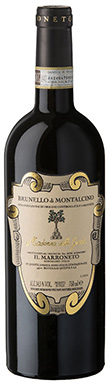
Is this going through a dumb phase? 2013 was a fairly classic vintage in Montalcino and this Madonna delle Grazie reflects that in its firm,...
2013
Il MarronetoBrunello di Montalcino
Il Marroneto, Madonna delle Grazie, Brunello di Montalcino, Tuscany, Italy, 2011
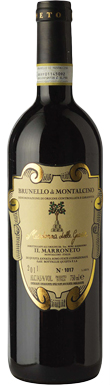
Just as in 2012, the hot 2011 vintage was a year where the cooler north fared better, avoiding the worst of an August heat spike....
2011
Il MarronetoBrunello di Montalcino
Il Marroneto, Madonna delle Grazie, Brunello di Montalcino, Tuscany, Italy, 2009
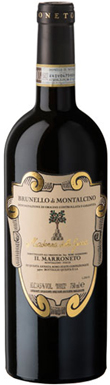
Il Marroneto's 2009 Madonna delle Grazie is a masterpiece in what was a variable year quality-wise. It has huge structure and intense, inky depths of...
2009
Il MarronetoBrunello di Montalcino
Il Marroneto, Brunello di Montalcino, Tuscany, Italy, 2016
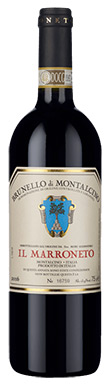
The 2016 is a fine rendition of the estate's Brunello in a fine year overall. It was 'a very easy vintage,' according to Alessandro, with...
2016
Il MarronetoBrunello di Montalcino
Il Marroneto, Brunello di Montalcino, Tuscany, Italy, 2014
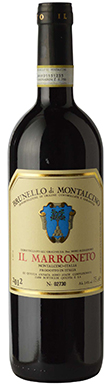
While 2016 was a 'deckchair' vintage, 2014 demanded much more work. Alessandro notes that the team did five passages through the vineyard - the equivalent...
2014
Il MarronetoBrunello di Montalcino
Il Marroneto, Brunello di Montalcino, Tuscany, Italy, 2012
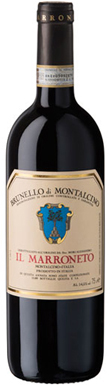
Hot and very dry, 2012 was a vintage where location was key - and Il Marroneto's vines are situated in one of the coolest parts...
2012
Il MarronetoBrunello di Montalcino
Il Marroneto, Brunello di Montalcino, Tuscany, Italy, 2010
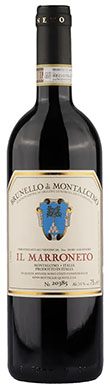
As is the case with all of its wines, Il Marroneto provides a window into the vintage; therefore this 2010 is steadfast in its firm...
2010
Il MarronetoBrunello di Montalcino
Il Marroneto, Brunello di Montalcino, Tuscany, Italy, 2008
Very elegant and lively, the 2008 was from a cool year and it reflects this in the gorgeous delicacy of its chestnut and undergrowth aromas...
2008
Il MarronetoBrunello di Montalcino
