
Isole e Olena’s Cepparello: the Paolo de Marchi effect
As Paolo de Marchi prepares to leave his beloved Isole e Olena after 47 years, he visited London for a retrospective of his flagship 100% Sangiovese wine, Cepparello.


‘Being a vintner means having a view for the long term,’ said Paolo de Marchi at a recent vertical tasting of Cepparello hosted in London by importer, Liberty Wines.
Paolo has indeed demonstrated a long-term view, deftly guiding Isole e Olena for the last 47 years. In the process, he has become admired among his peers for his vast knowledge of how to get the most from the grapes which grow on his land, built upon pioneering research and decades of practical experience.
Scroll down to see tasting notes and scores for six vintages of Cepparello
The mood in the room was reflective, as his last harvest at Isole e Olena is now behind him and this year he will move back to his family’s historic estate in Piedmont, Proprietà Sperino – run by his son, Luca – following a buyout of Isole e Olena by French group, EPI, which owns several French wine brands and acquired fellow Tuscan estate, Biondi-Santi in 2017. More recently, it also acquired a minority share in Liberty Wines.
Isole e Olena: the beginning
Paolo’s father purchased the separate, historical Isole and Olena estates in Chianti Classico’s western San Donato in Poggio zone in 1956, combining them into one larger estate which today spans 50 hectares.
Paolo’s story at the winery began in 1976, when he took the helm. He inherited vineyards his father had established following the collapse of the traditional sharecropping economy in the mid-1960s. The traditional terraces had been destroyed to make way for low-density, high-yielding vineyards suitable for mechanisation, with the encouragement of European funding. Paolo’s priority was to begin replanting with better material but he didn’t have the time or the expertise to do anything at first: ‘We needed a quick solution,’ he explained.
So instead, he began tagging the Sangiovese vines each year based on how they performed, in order to track quality and hardiness. He finally replanted his first vineyard in 1987, having gained a deep understanding of the soils, plant genetics and planting densities. Paolo used clonal material from his best vines, but was always wary of using a single clone: ‘To select too much is a real risk to the adaptability of the vineyard,’ he said. Through the 1990s, Paolo continued to replant more of his father’s vineyards, gradually upping the planting density from 3,000 vines per hectare to 7,350 v/ha. He also restored the traditional terracing.

Paolo’s newest vineyards are massal selections of those first replanted vineyards. His focus on selection was pioneering when he began in the 1970s, and it cannot be underestimated how much of an influence his research had on other producers in the region. Paolo readily admits that his first efforts at Isole e Olena weren’t as good as if he had had some experience (he went in with sleeves rolled up immediately after graduating from agricultural school). But, after almost five decades of continual research, experimentation and development, his biggest achievement is the legacy he leaves to Tuscan winemaking.
Paolo was also one of the first to use oak barrels (used chestnut barrels and casks were the typical option in Chianti Classico at the time), and one of the first in Tuscany to commercially release a 100% Sangiovese with Cepparello. Notoriously, he also began illegally bottling his Chianti Classico without the then-required white grapes (he used those for Vin Santo instead). He was also the first producer in Italy to release a Syrah, and an early adopter of Cabernet Sauvignon and Chardonnay.
Cepparello
In 1977, Paolo produced his first experimental 100% Sangiovese with the aim of better understanding the variety. Several years later he released the first vintage of Cepparello, 1980, labelled as a Vino da Tavola. Rather than a single-vineyard concept, however, Cepparello has always been an estate selection of the best grapes, fermented in open-top conical oak vats, treated to extended maceration, and matured in small barrels. It’s basically Isole e Olena’s Chianti Classico on steroids.
Paolo didn’t release a 1981 follow up, as he wanted to see how the 1980 performed on the market before ‘filling the cellar with table wine’. 1982 was ‘the first real success’, thanks to lower yields from the warm year which dramatically improved the concentration and overall quality (remember that at this point, Paolo was still working with his father’s vines).
Cepparello is named after a little stream found at the highest point of the estate’s vineyards – at around 480 metres. The south/southwest-facing slopes are located at the western limit of the Chianti Classico zone on galestro and clay soils. Vine age on the estate ranges from 12 to 54 years old.
‘I think in m² of leaves per kilogramme of grapes,’ said Paolo, explaining that since young leaves consume more sugar than fully mature leaves, maintaining a healthy proportion of young leaves can reduce the potential alcohol of his wines by up to 1% abv. The young leaves are deleafed a few weeks before harvest as their metabolism begins to slow down.
Working closely with UK importer Liberty Wine’s David Gleave MW for several decades now, Paolo began bottling small amounts of Cepparello under Stelvin screwcap in 2005, following discussions between the two of them. ‘If I do not try what is new and available, how can I be sure I’m using the best solution?’ he asked. The Stelvin versions are specifically for the UK, New Zealand and Australian markets. In the UK it’s possible to purchase either cork or Stelvin, while in Australia and New Zealand only Stelvin closures are available.
Comparing the 2010 vintage of Cepparello under both closures, the cork version is more obviously tannic as the fruit is beginning to dry out, while the Stelvin version retains a beautiful brightness and more fresh fruit character.
All of Paolo’s work over the years has led to the production of some reliably well-made and delicious wines, with Cepparello (and the relatively new Gran Selezione, which is far pricier) leading the charge. They are the product not only of the place, but also of the man behind it all – the ‘de Marchi effect’, if you will.
So what happens after he has departed? ‘I do not have an answer, but the wines would change anyway,’ he said. Paolo is no doubt right; his constant quest to improve and adjust things means things at Isola e Olena rarely stay the same for long.
Tasting Cepparello: Six vintages
Related articles
- Chianti Classico guide: drink, cellar, invest
- Brunello di Montalcino 2018: full report plus top-scoring wines
- Ipsus: The making of a modern Italian cru
Isole e Olena, Cepparello, Toscana, Tuscany, Italy, 2006
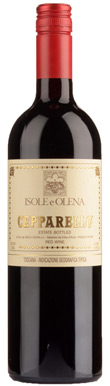

Marking the 50th anniversary of Isole e Olena and the 30th anniversary of Paolo de Marchi taking the helm, this 2006 Cepparello displays a good...
2006
Isole e OlenaToscana

Isole e Olena, Cepparello, Toscana, Tuscany, Italy, 2010
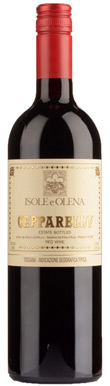
In 2010 the estate didn't finish picking until the first days of November due to a long, slow ripening season. The vintage is known for...
2010
Isole e OlenaToscana
Isole e Olena, Cepparello, Toscana, Tuscany, Italy, 2013
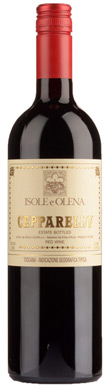
A cool and wet start to the year was saved by a warm and sunny July through to September. Harvested mid–October. Mulchy aromas of hedgerow...
2013
Isole e OlenaToscana
Isole e Olena, Cepparello, Toscana, Tuscany, Italy, 2017
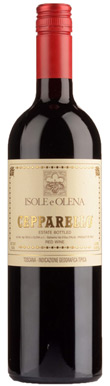
The infamously hot and dry 2017 vintage has yielded an incredibly medicinal Cepparello with a ripe fruit character. Delicious mouthfilling black cherry gives way to...
2017
Isole e OlenaToscana
Isole e Olena, Cepparello, Toscana, Tuscany, Italy, 2019
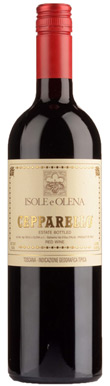
The weather in 2019 was beautiful, with a hot, even summer with no temperature spikes, continuing into September with high variation between daytime and nighttime...
2019
Isole e OlenaToscana
Isole e Olena, Cepparello, Toscana, Tuscany, Italy, 2020
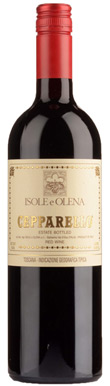
A long, hot summer with good day and nighttime temperature variations led to an even ripening. Balsamic and medicinal tones introduce a bright, chewy cherry...
2020
Isole e OlenaToscana
