
Jefford: Challenge Burgundy


Andrew Jefford is brought to book...
Back in January 2018, I wrote a Decanter magazine column about my personal lack of success in Burgundy purchasing.
Why the confession? If you read a lot of wine writing and critical reviews, particularly about fine wines, it’s easy to come away with the impression that every wine matches or exceeds expectations, and that if you’re lucky enough to have a bit of a wine cellar, you’ll spend most of your evenings somewhere between cloud nine and seventh heaven. It’s not quite as straightforward as that. Critics tend to judge wines when they are young and sometimes unfinished; they often taste those wines in the cellars of origin, before the wine has done any travelling, and in the company of their creators, with whom they may have a bond of friendship and dependence (critics, notably, depend on the gift of access in order to have the chance to taste the wine in the first place). Most significantly, critics reach most of their conclusions on the basis of tasting, not on drinking.This process is the best we have, but it is comprehensively flawed – hence the importance of blind tastings of bottled wines organized by Decanter and other leading wine publications. Even then, no mass assessment can ever overcome the lack of essential drinking scrutiny every wine needs.
Burgundy presents glaring difficulties. Red Burgundy hates being bottled: there is often a gulf between barrel sample and finished wine which no one tasting the former could have anticipated. White Burgundy has been hobbled over the last two decades by premox problems (see my previous columns, Shedding light on air and Debating Diem. The Burgundy ageing trajectory is a far less regular and predictable one than is that of Bordeaux. Older Burgundy of both colours (but particularly red) can often behave oddly when exposed to air, running through a succession of character changes in a very short period, and sometimes veering from downright unpleasant to sublime in ten or twenty fascinating minutes.
It is, as is so often said, a capricious wine. Even the most committed Burgundophile grows accustomed to setting aside disappointing bottles for the sink or the cooking pot in a way that few Bordeaux drinkers would be ready to countenance.
See also: Hugh Johnson – when bottles surprise you
My old friend Frank Ward contacted me after the appearance of this column, in a spirit of mild reproof. He is a lifelong collector and importer with the most magnificent cellar of French classics that I know, and a distinguished taster and writer in his own right (see his Oeno-File blog). His Deal home is a temple of fine eating and drinking; I had, indeed, purchased some of the wines about which I wrote from him. He suggested the organization of a pre-Christmas ‘Challenge Burgundy’ evening, with most of the wines drawn from his own collection, and to include a number of the key domains which had featured in my original piece. Further Burgundies were offered by fellow collector Duncan Richford. The three of us tasted all of the wines prior to dinner (with Duncan and I tasting blind), and we then enjoyed most of them at a dinner afterwards with other enthusiasts and collectors at the excellent Fordwich Arms near Canterbury.
None of us claimed this good-humoured and generous riposte was an objective one, but it was indeed a ringing endorsement for Burgundy, with only three wines out of the eighteen we examined failing to ignite as their lustrous names suggested they should. Notes on ten of the most interesting and exciting wines are given below.
I would also like to mention Sauzet’s truly excellent and impressive 2015 Puligny-Montrachet, a warm, nourishing, oatflake-and-hazel village wine of great poise and balance which I was convinced had to be a Premier Cru of some sort. Even better was the much older village level 1993 Puligny-Montrachet from Leflaive which had seen out a quarter century without any oxidative spoilage, and which I also considered to be at the very least Premier Cru level. This was a remarkably articulate classic white Burgundy, hinting at cream, sandalwood, chicken broth and even flowers in its aromatic sussurations, yet on the palate still taut and vital. Burgundy lovers without the extravagant resources now required to buy Premier and Grand Cru wines should note that high-quality white village-level wines are a much better long-term ageing prospect than many of their red equivalents. Top-level village whites need a little time to acquire articulacy and can then hold effortlessly, assuming they are not afflicted with premox, whereas the fruited charm that forms the core of village-level red Burgundy’s appeal tends to dissipate more swiftly.
I can’t fail to mention, too, the 1927 Taylor’s Vintage Port which Duncan Richford very kindly supplied to bring the meal to a conclusion: still masterfully sweet, dense and meaty, now ‘tawny’ in articulation but with much more power and presence than any true tawny port would ever have. Ninety years young, and still in fine fettle.
See also: Burgundy 2017 en primeur
Domaine Dujac, Morey-St-Denis, 1er Cru Monts Luisants, Burgundy, France, 2012
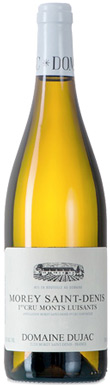

In contrast to the Aligoté of Ponsot’s celebrated Monts Luisants, the Dujac version is pure Chardonnay, which makes for an easier comparison with Côte de...
2012
Domaine DujacMorey-St-Denis

Domaine Rapet, Corton-Charlemagne Grand Cru, Burgundy, France, 2003
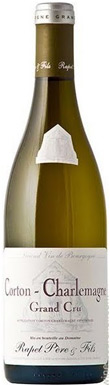
This magnum was the biggest surprise of the evening. It has gorgeously beguiling aromas of sweet summer fruits, thick cream and balsam, while on the...
2003
Domaine RapetCorton-Charlemagne Grand Cru
Domaine des Comtes Lafon, Meursault, 1er Cru Perrières, Burgundy, France, 2007
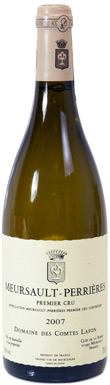
If it was easy to assume that Rapet’s 2003 Corton-Charlemagne was a Meursault, the opposite was true with Lafon’s `07 Perrières, particularly once you had...
2007
Domaine des Comtes LafonMeursault
Etienne Sauzet, Chevalier-Montrachet Grand Cru, Burgundy, France, 2011
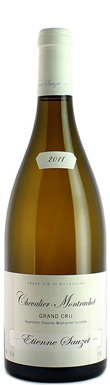
This wine is relatively pale, but anyone expecting a taut and reductive Chevalier-Montrachet would be in for a surprise. It's powerfully aromatic, though a little...
2011
Etienne SauzetChevalier-Montrachet Grand Cru
Domaine Leflaive, Bienvenues-Bâtard-Montrachet Grand Cru, Burgundy, France, 1991
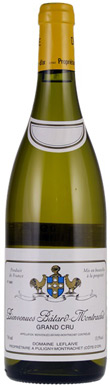
This was served right after the 1993 ‘village’ Puligny-Montrachet from Leflaive, which it topped, though not by as much as the labels themselves would leave...
1991
Domaine LeflaiveBienvenues-Bâtard-Montrachet Grand Cru
Domaine Tollot-Beaut, Rouge, Bourgogne, Burgundy, France, 2015
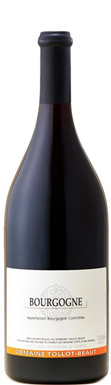
This bright, translucent red is emphatically not a wine for keeping, but its cherry fruit is energetic, vigorous and enticing on the nose, and even...
2015
Domaine Tollot-BeautBourgogne
Domaine Henri Gouges, Nuits-St-Georges, 1er Cru Clos des Porrets St-Georges, Burgundy, France, 1999
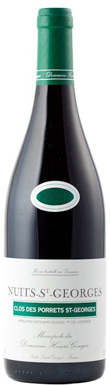
This Nuits came after a run of characterful but sometimes confronting Côte de Beaune reds, and the aromatic authority of this fine vintage in the...
1999
Domaine Henri GougesNuits-St-Georges
Domaine Dujac, Clos St-Denis Grand Cru, Burgundy, France, 2005
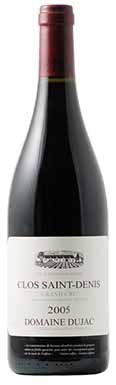
It's evident from the off that this is still a young wine, not so much by its colour as by its immediacy of primary fruit:...
2005
Domaine DujacClos St-Denis Grand Cru
Domaine Comte Georges de Vogüé, Musigny Grand Cru, Burgundy, France, 2001
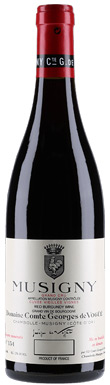
The change to taste a Musigny from this emblematic domain blind, when one has no idea exactly what's in the glass in front of you,...
2001
Domaine Comte Georges de VogüéMusigny Grand Cru
Domaine Armand Rousseau, Chambertin Grand Cru, Burgundy, France, 1983
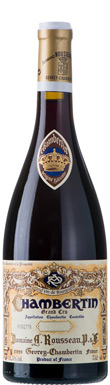
An even older treat followed. I’ll spare you the primary jottings this time, but in colour this was the lightest and most translucent wine on...
1983
Domaine Armand RousseauChambertin Grand Cru
