
Lambrusco: Back on the menu plus top wines worth trying


Simon Woolf finds the perfect antidote for Emilia Romagna’s hearty food, in the form of Lambrusco...
How long are you staying in Emilia Romagna,’ asks Mattia Montanari, director and winemaker at boutique Lambrusco producer Opera02. ‘One week,’ I reply. He feigns a quick mental calculation, and jokes: ‘Okay, so you’ll gain about three kilos by the time you go home.’ He then presides over a lavish lunch and I realise that maybe it wasn’t a joke.
Scroll down for Simon Woolf’s top Lambrusco picks
This corner of Italy is famed for its substantial cuisine, home to everything from Parmigiano-Reggiano and Parma ham to ravioli, lasagne and myriad pastas. Emilia also harbours the perfect foil for all that indulgent fare on the table: the delightfully frothy red frizzante, Lambrusco.
It remains hugely popular within the region and across Italy, but Lambrusco’s international reputation is less than sparkling. It all went flat after the glory days of the 1980s, before Prosecco took over the world.
Lambrusco’s major producers courted American consumers and their famously sweet tooths with a sugary amabile concoction that had little to do with the original style. The giant Giacobazzi pioneered the idea of canned Lambrusco, earning it the nickname of Coca-cola wine.
Director of the two Lambrusco consorzios Ermi Bagni recalls: ‘In the 1970s and ’80s we had one full cargo ship a week going to the east coast of the US.’
The market became flooded, and predictably enough the bubble burst. Lambrusco producers realised that they had dug their own graves. That might have been the end of the story, with Lambrusco doomed to be bargain-basement swill forever, except that almost ironically, its more artisanal persona has started to creep back into the hearts and minds of hip wine lovers in New York, London and beyond. The irony?
Easygoing Lambrusco was rejected in an age when 200% new oak, high alcohol and blockbuster wines from Tuscany reigned supreme. But as drinkers increasingly focus on fruit purity, regionalism and lighter, more digestible styles, the flippant froth of Emilia has a chance to be on trend once more.
Reflecting on its renewed popularity, Lena Mattson of June Wine Bar in Brooklyn says: ‘The opportunity to access dry styles is important. Lambrusco has suffered a bad reputation of being only sweet. Having a sparkling red category helps disassociate those negative terms. For people who cannot get out of the red realm, it’s another layer for them to explore just like chilled reds.’
Out with the old
The Lambruscos enjoyed in New York haunts such as June Wine Bar or Fausto are a far cry from what Riunite or Giacobazzi were shipping by the gallon in the 1970s. They are not sweet but dry, they have strong varietal character, and their sparkle hasn’t necessarily been created in a large pressurised steel tank but in bottle.
Lambrusco refers not to a specific place, but to a family of closely related red grape varieties and the wines they produce. More than 60 different varieties of Lambrusco grape have been identified across Italy with the six most common being indigenous to the Emilia-Romagna region and comprising Lambrusco Salamino (the most widely planted) as well as Lambrusco Grasparossa, Lambrusco Maestri, Lambrusco Marani, Lambrusco Montericco and Lambrusco Sorbara.
They are typically red, but can also be rosé and even white (by limiting grape skin contact with the must), and traditionally always frizzante – produced using the Charmat, Traditional or Ancestrale methods. They can be anything from bone dry to horrifically sweet.
There are eight Lambrusco regions that are protected designations of origin (DOP) including Colli di Parma Lambrusco, Lambrusco Grasparossa di Castelvetro, Lambrusco di Sorbara, Lambrusco Salamino di Santa Croce, Reggiano Lambrusco, Colli di Scandiano e Canossa Lambrusco, Modena Lambrusco and Lambrusco Mantovano.
A number of these DOP classifications have their own individual sub-zone and focus on its most significant grape variety. The most southerly, Lambrusco Grasparossa di Castelvetro, consists of approximately 1,120 hectares planted on the dry soils of the Modenese uplands and lower hill-slopes in the Emilia Romagna region around Castelvetro.
Higher up the soils are largely composed of sand and marl clays with lower soils made up of silt deposits and sand on beds of gravel. Here, Grasparossa achieves its best expression with lipsmacking cassis fruit and assertive structure.
The Lambrusco di Sorbara sub region, near to Modena, focuses on the more ethereal, delicate pink-coloured wines from the Sorbara variety. Sorbara has inspired many producers to make traditional-method wines which ape Champagne in their leaner, more austere build – look out for producers Paltrinieri and Zucchi.
Further north, Lambrusco Salamino di Santa Croce focuses on the most structured and substantial of the region’s major varieties: Salamino tends more to a brambly character and is always a little more robust than its neighbours. Additional classifications such as DOP Modena and Lambrusco Emilia IGT are much broader in scope, usually scooping up the lower quality output still produced in prodigious amounts.
Fruit first
Whatever the quality level, the usual aim of Lambrusco is to be youthful and fresh, not to hog the limelight. ‘The food is the protagonist of our table, not the wine,’ explains Alicia Lini, the latest generation of her family to take the reins at Lini 910, close to the city of Reggio Emilia. ‘Wine just has to balance the richness of our cuisine. It’s the opposite of a region like Tuscany, where the cuisine is simple and rustic, but the wines are complex and grand.’
Her point is expanded by Rita Covezzi, co-owner of Lusvardi, a small, organically certified estate nearby: ‘We’re not in Piedmont or Tuscany. Our land gives us fruit, and that’s what we want to emphasise.’
Fruit is key to Lambrusco’s charm. The best wines have an effusive, joyful character which is hard to resist. It’s a wonderfully naked expression, unblemished by any temptation to use oak or other such distractions. Also, good Lambrusco is often almost embarrassingly cheap.
Sandro Cavicchioli heads up the winemaking team at Cavicchioli, his family’s giant operation. ‘Lambrusco has evolved a very efficient business model,’ he says. ‘You have all these naturally high-yielding varieties, and then the Charmat method of refermenting, which is also highly cost-effective.’
The growing popularity of metodo classico, or bottle fermentation, has partly been driven by producers’ ambitions for higher quality offerings. All the Lambrusco DOPs permit spumante wines, as well as the softer-textured, less bubbly frizzantes, and Cantina della Volta is the unequivocal leader of the spumante pack.
‘The idea here is to do the Champagne style but in the Lambrusco region,’ says its winemaker Christian Bellei. There’s no argument about the high-quality results, but it’s an open question if this is the most authentic expression of Lambrusco.
Arguably, another bottle-fermented style has more historical relevance than wannabe Champagnes. Lusvardi is one of an increasing number of wineries also producing ancestrale Lambrusco. These are wines that complete fermentation – or undergo a second, spontaneous fermentation – in the bottle, and are typically sold undisgorged with their lees.
There are marked similarities with Prosecco’s col fondo tradition, with more tertiary, yeasty notes adding interest and complexity without dominating the fruit.
The more savoury character of ancestrale craves food – but so do all Lambruscos. The versatility of their fresh, delicate effervescence, tannic prickle and low alcohol is peerless.
Everything pairs beautifully with it, from tender pork cutlets to the most opulently filled tortellini, Bolognese sauce or even pizza – something best experienced by visiting the region. If you’re on a diet though, run for Bologna’s hills.
Beyond Lambrusco
Lambrusco may be the best known of Emilia Romagna’s effervescent offerings, but there is a multitude of other varieties and areas that also produce delightful frizzante and spumante wines. Bubbles are the norm for many of the traditional wines in Colli Piacentini, the DOP tucked in the far northwestern corner of Emilia Romagna.
The heady Malvasia di Candia Aromatica often plays a leading role in white frizzante wines and some of its most successful producers, including Massimiliano Croci, Montesissa Emilio and Podere Pradarolo, continue the area’s ancient tradition of macerating white varieties on skins before a spontaneous second fermentation in the bottle. These wines have charm, an attractive rusticity and often fairly substantial tannins.
Colli Piacentini is also home to reds, both still and sparkling, made under the Gutturnio DOP. A blend of Barbera and Bonarda (also known as Croatina), the frizzantes are slightly more full-bodied than their Lambruscan cousins, but with similarly delightful freshness, subtle grip and sousbois overtones.
In the hills south and west of the city of Bologna, there is a special DOP for Pignoletto, a white grape variety from Emilia-Romagna, known as Grechetto Gentile (for its genetic likeness) or Rébola in Romagna, and used nowadays as the name of a Grechetto-based wine from the protected historic area rather than as a synonym of Grechetto that any producer could use – not to be confused with Grechetto di Todi which has its own DOP or Umbria’s Grechetto di Orvieto.
DOCG Colli Bolognesi Classico Pignoletto is typically crisp, offering gooseberry-like pungency and nutty notes. Frizzante and spumante versions can be produced in both the Pignoletto DOP and as Pignoletto dell’Emilia IGP or Pignoletto di Modena DOP.
Many producers within the various Lambrusco sub-regions grow a small amount of Pignoletto or Spergola (another local variety) in order to make a white sparkling wine.
Francesco Bellei’s Pignoletto ancestrale is an excellent col fondo style, while Cavaliera produces a superb metodo classico version, made with no added sulphites. Both wines are under the Pignoletto di Modena designation.
Simon Woolf is the Domaines Ott International Feature Writer of the Year 2018 and also publishes www.themorningclaret.com
See Simon Woolf’s top Lambrusco picks
You may also like
Franciacorta: For those in the knowMost exciting sparkling wines of 2018How does English sparkling wine compare to Champagne? The non-vintagesBest Cava sparkling wines from top producersTop-rated Crémant from France
Francesco Bellei, Metodo Ancestrale Pignoletto, Modena, Emilia Romagna, Italy, 2016
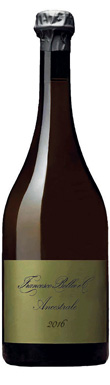

Expect spicy, pungent aromas in this col fondo – a bit of a pet project of winemaker Sandro Cavicchioli. Tangy apple fruit along with earthy,...
2016
Francesco BelleiModena

Ca’ de Noci, Sottobosco, Lambrusco, Emilia Romagna, Italy, 2015
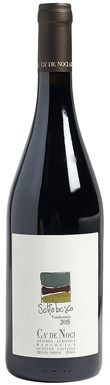
Made with Lambrusco Grasparossa and some rarer varieties including Lambrusco di Montericco, Sgavetta and Malbo Gentile, this spontaneously refermented blend is complex, crammed with bright...
2015
Ca’ de NociLambrusco
Lusvardi, Lambrusco dell’Emilia Brut, Lambrusco, Emilia Romagna, Italy, 2017
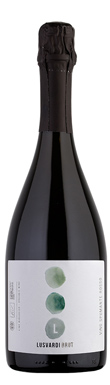
The Salamino variety’s assertive tannins provide the perfect foil for generous spiced blackberry fruit in this youthful, joyful spumante, from this small organic producer.
2017
LusvardiLambrusco
Medici Ermete, Concerto, Lambrusco, Reggiano, Emilia Romagna, Italy, 2017
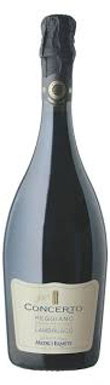
Firm structure with mouthfilling blackcurrant fruit and an attractive stalky, savoury character. The trademark frothiness unfolds to a lovely creamy finish. Deserving of rich, porky...
2017
Medici ErmeteLambrusco
Bruno Zanasi, Sassostorno, Lambrusco, Grasparossa di Castelvetro, Emilia Romagna, Italy
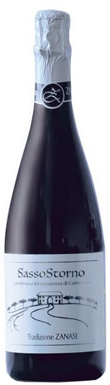
Grasparossa at its most expressive: pure berry coulis, lively acidity and a delightful earthiness. A great example that puts a smile on your face.
Bruno ZanasiLambrusco
Cavicchioli, Col Sassoso, Lambrusco, Grasparossa di Castelvetro, Emilia Romagna, Italy, 2017
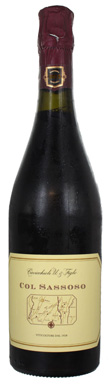
Cavicchioli is one of the region’s major producers, capable of very high quality. Its Grasparossa ‘cru’ offers nicely defined cassis fruit, subtle grip and thirst-quenching...
2017
CavicchioliLambrusco
Paltrinieri, Radice, Lambrusco, di Sorbara, Emilia Romagna, Italy, 2017
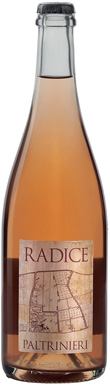
Bone-dry, minerally ancestrale style (natural refermentation in the bottle), with charming raspberry fruit and a gooseberry tang. Sorbara’s pretty, translucent pink hue lends this the...
2017
PaltrinieriLambrusco
