
The best Italian co-ops plus 12 top wines tasted
The force behind more than half of Italy’s wine, cooperatives were once considered a byword for mediocrity. But as many embrace precision winemaking and become more specialised, their top wines can rank alongside the finest the country has to offer, as Michael Garner reports.


Their heartening success story comes tinged with relief: nearly 500 cooperatives produce six out of every 10 bottles of Italian wine, and so they shoulder huge responsibility for the country’s overall image.
Traditionally, northern regions have been the stronghold of quality, but standards are improving significantly both in the centre (Lazio, Marche, Tuscany and Umbria) and the south and islands, where many still rely on bulk production (wine sold in tank rather than bottle) for most of their income.
Scroll down for Michael Garner’s scores and tasting notes for the 12 wines from leading Italian co-ops
Small but mighty
At least half of any list of Italy’s top 10 co-ops would come from the Alto Adige. This tiny alpine region bordering Austria accounts for less than 1% of the country’s total production and, with only about 5,000ha under vine, there’s literally no room for bad wine. Co-ops here deftly illustrate the styles and strengths of the area’s varied growing conditions.
At the northernmost and highest limits of Italy’s wine-growing area, the region’s youngest and smallest co-op, Cantina Valle Isarco, specialises in a stunning range of high-altitude, semi-aromatic whites made from Grüner Veltliner, Kerner, Müller- Thurgau and Sylvaner, as well as the more popular varieties. The wines show tremendous style: racy and fragrant with shining clarity of fruit and marked mineral tones, across both ‘classic’ and ‘premium’ (Aristos) ranges.
At the bottom of the Isarco valley lies the regional capital, Bolzano, where surprisingly warm daytime temperatures favour red wine production. Cantina Bolzano makes benchmark examples of the local reds: weighty and rich Lagrein; the lighter, more savoury Schiava (Santa Maddalena); and one of Italy’s finest examples of Cabernet, Mumelter Riserva (mainly Cabernet Sauvignon with Cabernet Franc). Formed from a fusion of two co-ops in 2001, Cantina Bolzano has since been encouraging members to plant white varieties on the higher slopes of the Renon mountain overlooking the city.
The region’s iconic white, Pinot Bianco, reaches a peak further west around Terlano, where a combination of the sandy, quartz and porphyry soils of the village’s steep slopes and precision winemaking methodology produces wines with remarkable ageing potential. Cantina Terlano has earned a well-deserved reputation as the leading source of premium Pinot Bianco, though rivals Cantina San Michele Appiano and Cantina Nals Margreid give it a run for its money.
Cantina Terlano also makes excellent Sauvignon Blanc, bottling it as a varietal since 1956, and its Terlaner label, the Alto Adige’s original white blend from the Terlano DOC area – a convincing mixture of mainly Pinot Bianco and about 25% Chardonnay spiked with a little Sauvignon.
A little further south in the slightly warmer microclimates around the village of Termeno, Cantina Tramin makes white wine in a slightly fuller, richer style without compromising the defining regional characteristics of freshness and balance. Winemaker Willi Stürz, a wizard with whites, masterminds the production of some of the finest Gewürztraminer you’ll find anywhere, as well as exceptional examples of Pinot Grigio and Chardonnay.

Red specialists
In Piedmont, the much-vaunted Produttori del Barbaresco continues to set impeccable standards. The management team – managing director Aldo Vacca and head oenologist Gianni Testa – has been in charge for the past 30 years, developing a finely honed system to get the best out of noble but capricious Nebbiolo. The cellars work exclusively with the variety; even the entry-level Langhe Nebbiolo is effectively declassified Barbaresco. The co-op’s Barbaresco and nine Barbaresco Riserva wines from individual plots receive extra cask ageing. It’s a range of outstanding red wines that can rank alongside the finest Italy has to offer. Reassuringly, a careful succession plan has been put in place: change happens slowly in conservative Piemonte.
The region’s other great red wine grape, Barbera, produces some of its best results in the Monferrato hills to the southeast of Asti, especially around the town of Nizza Monferrato, which has its own DOCG. One of the largest producers, Cantina Sociale Barbera Sei Castelli at Agliano Terme, is building up an enviable reputation for the variety. Though selling wine mainly in bulk, the winery’s bottled range showcases Barbera’s impressive versatility with notable style and authenticity.
Organic focus
To the east, in the Veneto, Verona is becoming a centre of excellence for the cooperative movement. In Valpolicella Classico, Cantina di Negrar remains a leading force. Instrumental in creating Amarone some 80 years or so ago, the winery is now helping to blaze a trail for organic versions of the denomination’s full range of wines. Members have registered 120ha of organically certified vineyard in recent years. ‘Today’s consumer is looking not only for a high-quality product, but one that is produced sustainably, with respect for the environment,’ maintains winemaker Daniele Accordini.
In nearby Soave, some 80% of the DOC/G wine is produced by four co-ops. Though overshadowed by the massive Cantina di Soave, Cantina di Monteforte d’Alpone stands out as a particularly reliable source. Exports account for approximately 80% of sales, though in some countries – including the domestic market – Soave’s success is under threat from nearby Lugana DOC, where wines are made mainly with the native grape Turbiana, grown around the southwestern shores of Lake Garda. Monteforte d’Alpone’s Gaetano Tobin acknowledges that Soave has to up its game: ‘We’re still over-producing. The future for Soave is to focus on hillside vineyards and organic wine.’

Nearly 100ha of members’ vineyards are given over to sustainable production, and transition to organic viticulture is under careful scrutiny. Vineyard fragmentation remains a major concern, though at nearly 2ha, the average individual holding here is relatively large in comparison with elsewhere.
Heading south, the neighbouring Emilia- Romagna region is the powerhouse of the co-op movement. Cantine Riunite, which owns Gruppo Italiani Vini, is at the forefront, and Lambrusco is the number one wine of the region. Though mainly produced along sound, commercial, value-for- money lines, the odd pocket of excellence also exists: the delightfully authentic Lambrusco Salamino di Santa Croce from the Cantina Santa Croce cooperative is well worth seeking out.
Quality whites
Less than 15% of the country’s total production comes from central Italy, where co-ops are less of a major force, except in the Marche. This coastal region is primarily famous for its Verdicchio whites, and two high-quality co-ops operate in the Castelli di Jesi area: Moncaro and Colonnara. The inland area of Matelica produces the ‘other’ Verdicchio, which, though lesser known and available in much smaller quantities, has a burgeoning reputation for its distinctively crisp, mineral- toned and structured wines from vineyards at altitudes up to about 650m. Meanwhile, co-op Belisario produces every conceivable style of Verdicchio di Matelica, including an organic version, another made without added sulphites and the splendid Cambrugiano Riserva, as well as sparkling and passito versions. Another local cooperative, Pro.Vi.Ma works to similarly high standards.
Southern promise
Antonio Verna, president of Abruzzo’s Cantina Tollo, has absolutely no doubt about what kick-started this excellent co-op’s drive for premium quality: ‘In 1970 we bought a bottling line.’ Many of the south’s cooperatives still labour on the treadmill of bulk production, a thankless task that offers scant reward and little incentive to upgrade quality. Tollo, from a standing start in 1960, has grown to 700 members farming 2,700ha of vineyard, producing more than 13 million bottles a year.
In addition to the always reliable Montepulciano, Trebbiano and Cerasuolo d’Abruzzo (one of Italy’s finest rosé wines), Tollo makes the full range of local whites – Cococciola, Passerina and Pecorino – including organic versions from the new local DOCG Tullum, promoted from DOC in 2019, under the Feudo Antico label.
Above the instep of the Italian boot, the extinct volcano Monte Vulture broods over the landscape of northern Basilicata. Established in 1957, Cantina di Venosa’s members own more than half of the denominated territory for the south’s sleeping red wine giant, Aglianico del Vulture DOC. At the start of the new millennium, the young management team organised a wake-up call, revamping the winery and investing in new equipment (including a bottling line), all informed by sustainable principles. One to watch, the winery produces 1.5m bottles annually, 95%
of them Aglianico-based. The wines are promising, if sometimes a little too reliant on oak for some tastes.
Garner’s View: Other Italy co-op names to note
A selection of other Italian cooperatives (north to south) working from reliable to good standards would include…
Alto Adige – Cantina Andriano; Cantina Girlan
Trentino – Cantina Toblino
Tuscany – Cantina di Montalcino; Cantina i Vini di Maremma; Vecchia Cantina di Montepulciano
Campania – Cantina del Taburno; La Guardiense
Puglia – Cantine Due Palme
Sardinia – Cantina Gallura
Italian co-op highlights: Garner’s dozen
You may also like:
Great value Chianti under £20
Brunello di Montalcino: The 10 must-know estates
Barolo & Barbaresco: 10 high-flying vineyard sites
Cantina Terlano, Primo Grande Cuvée, Alto Adige/Südtirol, Terlaner, Trentino-Alto Adige, Italy, 2017
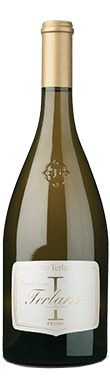

Mainly Pinot Bianco from 50-year-old vines, with 20-25% Chardonnay and a squeeze of Sauvignon. It’s bracingly fresh and expansive with an almost-bristling intensity of lime,...
2017
Cantina TerlanoAlto Adige/Südtirol

Cantina Tramin, Nussbaumer, Trentino-Alto Adige, Italy, 2018
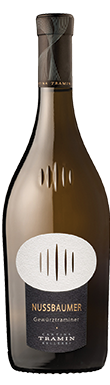
An unswervingly sure-footed Gewürztraminer, fermented and stored for almost a year on its fine lees in stainless steel. Rosewater-infused nectarine and yellow-peach aromas and flavours...
2018
Cantina Tramin
Cantina Valle Isarco, Aristos Sylvaner, Valle Isarco, Trentino-Alto Adige, Italy, 2019
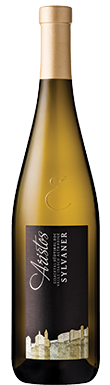
From vines grown at up to 750m and part-aged in large acacia barrels with seven months on the fine lees, this is a classic high-altitude...
2019
Cantina Valle IsarcoValle Isarco
Cantina Tollo, Tre, Trebbiano d’Abruzzo, Abruzzo, Italy, 2019
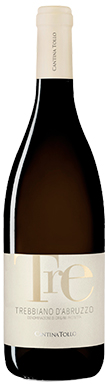
Though frequently the butt of bad press for its supposed inherent neutrality, when it’s as well made as this, Trebbiano is one of the great...
2019
Cantina TolloTrebbiano d’Abruzzo
Cantina di Monteforte d’Alpone, Vigneti di Castellaro, Soave, Classico Superiore, Veneto, Italy, 2017
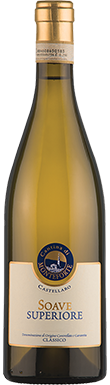
Later-harvested Garganega grapes from the mainly south-facing Monte Castellaro hillside are fermented in stainless steel, and 50% of the wine is wood-aged. Ranging from preserved...
2017
Cantina di Monteforte d’AlponeSoave
Cantine Belisario, Meridia, Verdicchio di Matelica, Le Marche, Italy, 2017
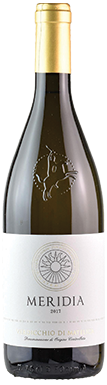
This premium cuvée undergoes traditional fermentation followed by a lengthy spell on the fine lees in cement vats. Bright golden yellow in colour, it shows...
2017
Cantine BelisarioVerdicchio di Matelica
Produttori del Barbaresco, Barbaresco, Piedmont, Italy, 2016
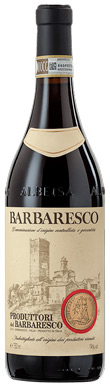
While the riserva wines usually occupy centre stage, it is easy to forget just how good this co-op’s generic Barbaresco can be. In great years...
2016
Produttori del BarbarescoBarbaresco
Cantina Santadi, Terre Brune, Carignano del Sulcis, Superiore, Sardinia, Italy, 2016
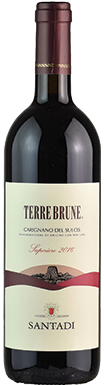
This remarkable wine is made from mainly Carignano grapes grown on ungrafted bush-trained vines, and is matured in barriques for up to 18 months, plus...
2016
Cantina SantadiCarignano del Sulcis
Kellerei Bozen-Cantina Bolzano, Taber, Trentino-Alto Adige, Italy, 2017
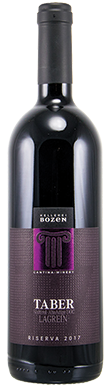
From 80-year-old vines grown at Gries, the standout area for the Lagrein variety, Taber is fermented in wood then aged in a mixture of French...
2017
Kellerei Bozen-Cantina Bolzano
Cantina Sociale Barbera Sei Castelli, Angelo Brofferio, Barbera d'Asti, Superiore Nizza, Piedmont, Italy, 2016
Made in tiny lots (just 1,000 bottles) in the best vintages only, this riserva spends six months in stainless steel, 12 in barrique and a...
2016
Cantina Sociale Barbera Sei CastelliBarbera d'Asti
Cantina di Negrar, Domìni Veneti, La Casetta, Valpolicella, Ripasso Classico Superiore, Veneto, Italy, 2017
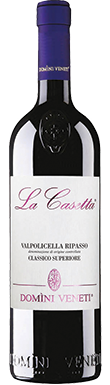
Ripasso doesn’t get much better than this highly polished example. Here, Valpolicella Classico is re-fermented on the lees of recioto (rather than Amarone) and the...
2017
Cantina di NegrarValpolicella
Cantina di Venosa, Verbo, Aglianico del Vulture, Basilicata, Italy, 2017
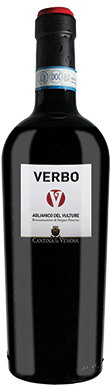
Fermentation at cool temperatures followed by a year in oak allows the primary aromas of Aglianico to shine in this forward, accessible red. Sprightly and...
2017
Cantina di VenosaAglianico del Vulture
