
Loire Volcanique: The renaissance bubbling upstream
After decades in the doldrums, the vineyards of the Loire Volcanique in the heart of France are stirring once again. Jim Budd looks at what he thinks is one of the Loire Valley's most dynamic winemaking areas today.


Are you looking for Loire wines with a difference? Whites beyond Sauvignon Blanc, or Gamays with real character? Do you want to surprise wine-loving friends with a wine they’ve never tried?
Then look no further than the ‘Loire Volcanique’.
The area referred to as the Loire Volcanique covers four appellations, situated upstream towards the source of the Loire river. In fact, the area is only 70km directly west of Beaujolais and the top of the northern Rhône.
The appellations are Côte Roannaise and Côtes du Forez on the upper Loire itself; St-Pourçain, and Côtes d’Auvergne on the tributary of the Allier; as well as the associated IGPs Val de Loire, Puy-de-Dôme and Urfé.
After many decades in the doldrums, this picturesque region is now making some of the most interesting and exciting wines in the Loire.
Scroll down for notes and scores for 15 great Loire Volcanique wines to try

These range from delicious, easy-drinking, unoaked examples, to serious wines aged in oak – or, increasingly, in amphorae – that have the potential to develop and age well, from both long-established domaines and ambitious newcomers.
Rise and fall and rise again
Currently there are just 1,315ha planted in the whole of the Loire Volcanique area, but all four appellations were considerably larger in the 18th and 19th centuries.
The Côtes d’Auvergne in particular had very substantial vineyards at this time, profiting from the demise of the vineyards of the Midi, which were being consumed by phylloxera.
In the last decade of the 19th century, there were over 44,000ha of vines planted in the Puy-de-Dôme department. In Boudes, one of the five crus of the Côtes d’Auvergne, there are the remains of abandoned terraces on the steep hillside.
However, the four appellations eventually succumbed to phylloxera around the time of the First World War, and were subsequently impacted by rural depopulation, so this area sharply declined in importance.
Despite its small size, this region is now enjoying a renaissance, with a number of dynamic producers making very good, interesting wines under AP, IGP and Vin de France labels.
A painter’s palette of grape varieties
The wines are made from a range of grape varieties, including Aligoté, Chardonnay, Chenin Blanc, Gamay, Pinot Gris and Noir, Riesling, Roussanne, Syrah, Tressallier and Viognier.
This wide range, quite different from those found in the other parts of the Loire, reflects just how far south Côtes du Forez and Auvergne are, with St-Pourçain and Côte Roannaise being slightly further north.
The southern-most villages are on the same latitude as Côte-Rotie, so it makes sense to plant Viognier, Roussanne and Syrah.
Red and rosé
Gamay is the dominant grape variety – Côte Roannaise and Côtes du Forez reds must be made from 100% Gamay. There are two local variants: Gamay St-Romain (Roannaise and Forez) and Gamay d’Auvergne (Côtes d’Auvergne).
Pinot Noir is allowed in Côtes d’Auvergne and St-Pourçain but never 100%. That said, very good 100% Pinot Noirs are available bottled as IGPs or Vin de France.
White
A very interesting range of white varieties are used – principally Chardonnay (Auvergne and St-Pourçain) and Tressallier, which is St-Pourçain’s local grape variety.
In addition Aligoté, Chenin Blanc, Pinot Blanc and Gris, Riesling, Roussanne, Sauvignon Blanc and Viognier also feature.
Remnants of a volcanic past
As the name suggests, the region is known for its extinct volcanoes.
In the Côtes d’Auvergne area, the Puy-de-Dôme itself is the highest of the region’s extinct volcanoes, and is notable for being a famous climb in the Tour de France cycle race.
In the Côtes du Forez, Château Sainte Anne is an ancient fortified castle which perches atop a volcanic peak, high above the village of Marcilly-le-Châtel, a site which dates back to the beginning of the 11th century. Cave Verdier-Logel has some of its vines here, on the steep slopes.
Many of the region’s vines are planted on volcanic soils, especially granite and basalt. These soils help to give the wines their attractive freshness, which is further aided by the altitude of the vineyards.
Gilles Bonnefoy in the Côtes du Forez has some vines at 600m, while Domaine Sérol (Côte Roannaise) has a parcel at 500m. Thus wines made with Rhône varieties are often fresher than those from the Rhône Valley.
In contrast, the vineyards of Sancerre top out at around 300m.
Appellation facts
St-Pourçain: (600ha) The most northerly appellation in the Allier Valley, where it is joined by its tributary, the Sioule. Reds: Gamay and Pinot Noir. Whites: Chardonnay and Tressallier.
Côtes d’Auvergne: (350ha) This AP straddles the north and south of Clermont-Ferrand, with vines up to 550m in altitude. Reds: Gamay and Pinot Noir. Whites: Chardonnay. Other: Also some Syrah in IGP and Vin de France.
Côte Roannaise: (215ha) Spread across 14 communes on the eastern foothills of the Monts de la Madeleine, with vines up to 500m in altitude. Reds and rosé: Gamay.
Côtes du Forez: (150ha) The most southerly of the four appellations, with vineyards widely scattered on the foothills of Monts de Forez with vines up to 600m. The most southerly vineyards are south of Lyon and in line with Côte-Rotie and Vienne. Reds and rosé: Gamay.
Climate
The climate is semi-continental with dry, relatively brief cold winters in comparison to the rest of the Loire, followed by hot summers.
The region has both the lowest minimum average January temperatures and the highest maximum average summer temperatures, along with substantially more annual sunshine, than elsewhere in the Loire, according to Meteo France.
Saint-Etienne enjoys 1,985 sunshine hours per annum – around 200 more than Nantes.
The region benefits from being in a rain shadow, and from the Foehn effect, whereby a warm, dry wind descends the leeward slopes of the mountains.
Sadly, frost is a perennial threat and 2021 saw severe damage, while violent summer hailstorms are also a problem.
Every time I visit this lovely, picturesque region I discover something exciting and new. Last year it was the dramatic Mont-Georges – a steeply sloping, terraced vineyard in St-Pourçain, a recent joint venture planted by a collection of three estates.
Previously it was the steep Bouthéran vineyard in the Côte Roannaise.
I am sure these remarkable sites would be famous if they were found in Burgundy or the Rhône.

Green approach
Many of the leading domaines are either organic, biodynamic or both, and this is borne out by many of the wines that showed best in this tasting.
Unfortunately, all too often green credentials do not extend to bottle weight. Excessively heavy bottles are still favoured by too many producers, perhaps mistakenly seeking to give their wines extra prestige.
Of the 80 wines tasted, and the 15 featured here, overall the standard was impressive. The most consistent appellation was Côte Roannaise, with some excellent wines from AP, IGP and Vin de France bottlings.
The fascinating wines of the Loire Volcanique await you.
Top producers to know:
St-Pourçain
Clos de Breuilly – a recently established, high quality, ambitious domaine. 2020 was the first vintage.
Domaine des Bérioles – run by Jean Teissèdre, sister Sophie Roux and her husband Jérôme, this organic domaine is one of the best in the Upper Loire.
Domaine Grosbot-Barbara – Denis Barbara, the loose-limbed rock star of St-Pourçain, had the vision and determination to create the beautiful vineyard of Mont-Georges.
Côte Roannaise
Domaine Sérol – a model organic and biodynamic estate with vines up to 500m and an excellent range of wines, including a long-term partnership with the famous Troisgros family.
Domaine des Pothiers – now run by the dynamic Romain Paire who makes fine organic and biodynamic Côte Roannaise wines, including Riesling.
Côtes du Forez
Cave Verdier-Logel – the first serious independent producer here when the local cooperative was virtually the only producer in the area. It makes a fascinating range of wines including Riesling. Jacky Logel is one of the region’s great characters.
Les Vins de la Madone, Gilles Bonnefoy – an excellent producer with some of the highest vines up to 600m, and biodynamic since 2009.
Côtes d’Auvergne
Bénoît Montel – an excellent and consistent producer based in Riom just north of Clermont-Ferrand.
Desprat-Saint-Verny – a cooperative now owned and managed by the Desprat family. By far the largest Auvergne producer and a frequent medallist at the Decanter World Wine Awards.
15 Loire Volcanique wines to try
Related articles
- The enduring appeal of Muscadet: 18 fabulous wines to try
- Loire Valley 2023 vintage report: White wines and the best new releases
- Hubert Brochard: Change in store for the Bollinger-owned Sancerre estate
Benoît Montel, Bourrassol, Côtes d'Auvergne, Loire, France, 2023
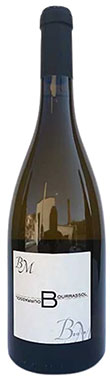

This has a light golden colour with buttery aromas and a rich, concentrated, stone fruit character. There's a lovely seductive texture and a long finish,...
2023
Benoît MontelCôtes d'Auvergne

Vincent Giraudon, Quercus, Urfé, Loire, France, 2022
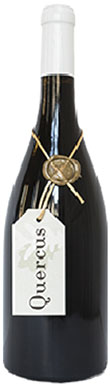
This Aligoté has attractive citrus aromas with a touch of vanilla, along with some butteriness from the oak. It is mouthfilling and quite richly textured...
2022
Vincent GiraudonUrfé
Domaine des Bérioles, Autochtone Tressallier, Val de Loire, Loire, France, 2022
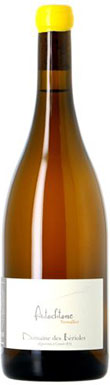
Light golden coloured, this has ripe citrus notes with a hint of petrol, an attractive mouthfilling texture, vibrant fruit and a very long finish. This...
2022
Domaine des BériolesVal de Loire
Clos de Breuilly, Barnabooth, St-Pourçain, Loire, France, 2022
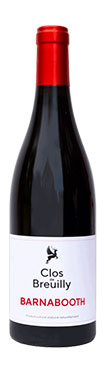
Light to medium plum coloured, Barnabooth has red fruit notes plus touches of toast. There's a lovely seductive, mouthfilling texture with the Pinot Noir character...
2022
Clos de BreuillySt-Pourçain
Domaine Désormière, Les Figollets, Côte Roannaise, Loire, France, 2022
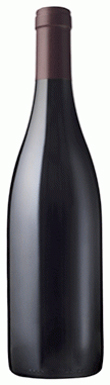
Les Figollets has a deep, dense plum colour with persistent notes of black fruits including black cherry, rich in concentration and texture. This is a...
2022
Domaine DésormièreCôte Roannaise
Florent Thinon, Mayençat, Côte Roannaise, Loire, France, 2022
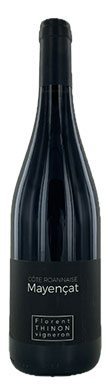
Mayençat has a dense, deep purple colour and is richly textured with a concentration of ripe black, spicy fruit and a touch of toast, attractive...
2022
Florent ThinonCôte Roannaise
Domaine des Pothiers, Clos du Puy, Côte Roannaise, Loire, France, 2022
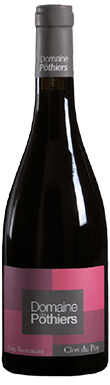
This Gamay St-Romain has a mid-plum colour, red fruit notes with a touch of spice, a rich and seductive texture, good concentration of ripe fruit,...
2022
Domaine des PothiersCôte Roannaise
Domaine Sérol, Chez Muron, Côte Roannaise, Loire, France, 2022
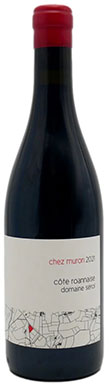
The mid-plum coloured Chez Muron has complex, rich aromas of red fruits. It is richly textured and concentrated, with ripe tannins, good length and delicious...
2022
Domaine SérolCôte Roannaise
Gilles Bonnefoy, Mémoire de Madone Gamay sur Volcan, Côtes du Forez, Loire, France, 2023
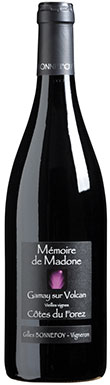
Mémoire de Madone has a youthful purple colour, dense in hue, and rich with black fruit aromas, especially black cherry. The palate is very concentrated,...
2023
Gilles BonnefoyCôtes du Forez
Les Chemins de l'Arkose, Arkose Vieux Gamays, Côtes d'Auvergne, Loire, France, 2022
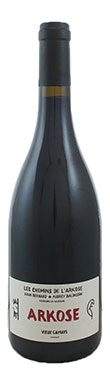
This old-vine Gamay has a deep plum colour with rich, spicy black fruit notes and an attractive, seductive texture thanks to well-integrated tannins. The vines...
2022
Les Chemins de l'ArkoseCôtes d'Auvergne
Domaine Vial, Bouthéran, Côte Roannaise, Loire, France, 2023

The mid-plum coloured Bouthéran has ripe black fruit notes, especially blackberry and black cherry. It is richly and seductively textured with concentration and length, and...
2023
Domaine VialCôte Roannaise
Cave Verdier-Logel, La Volcanique, Côtes du Forez, Loire, France, 2023
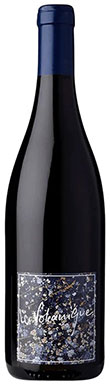
La Volcanique has a dense, youthful, dark plum colour, with soft black fruit notes. It is richly textured withy delicate acidity and structure, a long...
2023
Cave Verdier-LogelCôtes du Forez
Desprat Saint-Verny, L'Impromptu, Côtes d'Auvergne, Loire, France, 2023
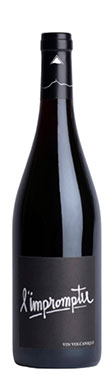
Mid-plum colour with rich, concentrated black fruits as well as liquorice and chocolate notes. A powerful wine with an attractive mouthfilling texture and lingering, vibrant...
2023
Desprat Saint-VernyCôtes d'Auvergne
Domaine de Bellevue, Vieilles Vignes Pinot Noir & Gamay, St-Pourçain, Loire, France, 2022
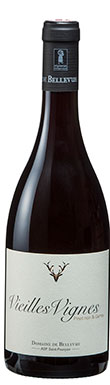
This Vieilles Vignes has rich black fruit aromas, a soft concentrated palate, seductive texture and chocolate notes. It has considerable structure and length with slightly...
2022
Domaine de BellevueSt-Pourçain
Domaine Grosbot-Barbara, Les Maltotes, St-Pourçain, Loire, France, 2022
This has black fruit aromas and is rich and concentrated, yet still youthful. It needs time or food, due to its considerable structure with currently...
2022
Domaine Grosbot-BarbaraSt-Pourçain
