
Masi Amarone: Comparing terroirs


Michaela Morris explores the differences between two of Masi's crus with tasting notes from four vintages spread across three decades...
To what extent can Amarone express terroir? That depends on your definition: when referring to Amarone, the ‘della Valpolicella’ – its region of origin – is typically dropped. Instead, it’s more commonly associated with the technique of drying grapes before vinification.
And surely no producer has invested more in studying this appassimento process than Masi. ‘Their technical and scientific research has benefitted the entire sector,’ said Veronafiere’s general director Giovanni Mantovani, as he introduced Masi’s 30th anniversary technical seminar at Vinitaly 2018.
Scroll down to see Michaela’s tasting notes & scores
Established by the Boscaini family in the late 1700s, Masi has been steered by Sandro Boscaini for the last 40 years. Dubbed ‘Mr. Amarone’ for his tireless championing of this unique Italian wine, Boscaini founded the Masi Technical Group in the mid-80s. The team, headed by his son Raffaele Boscaini, examines everything from indigenous grapes and appassimento to yeasts, fermentation and ageing.
The tasting
‘This year’s tasting is a synthesis of the last three decades,’ declares Boscaini. While he presents wines harking back to 1988 to demonstrate the evolutional arch, Boscaini has a double agenda.
‘Amarone is a simultaneous expression of technique and terroir,’ he continues. A vertical comparing Masi’s Vaio Armaron and Mazzano crus illustrates his point.
The crus
Vaio Armaron
Vaio Armaron represents Masi’s collaboration with the Conti Serego Alighieri family. Their property is in Sant’Ambrogio di Valpolicella, on the western edge of the classico zone close to Lake Garda and its moderating effect. The 15ha southwest-facing vineyard sits on limestone and clay soil between 230-265 metres above sea level.
Mazzano
Further east, in the Negrar Valley, Mazzano is Masi’s 7ha cru. West-facing on poor soil of marly limestone, schist and basalt, it rises from 350- 415 metres of altitude. This cooler site has a tendency to yield relatively austere wines.
The technical bits
The drying rooms for each wine are located in their respective vineyards, playing a key role in the character of the wines.
As Vaio Armaron is more humid, noble rot which forms in the vineyard develops further during the drying process. By the end, grapes are usually botrytis-affected between 10- 15%, imparting a viscous glycerol mouthfeel.
In Mazzano, however, ‘the development of botrytis during appasimento is limited because the climate is much windier,’ Boscaini explains.
While both blend Corvina, Corvinone, Rondinella and Molinara, Vaio Armaron sports a higher percentage of Molinara (15% until 2010) than Mazzano (5%). The freshness Molinara contributes offsets the impression of sweetness that comes from botrytis.
Wood regimes are similarly diverse. Since the 90s, Mazzano matures in 600-litre oak barrels whereas Viao Armaron continues to be aged in Slavonian oak botte of 7-20 hectolitres. Furthermore, the latter sees a four-month passage in cherry-wood casks, which are more porous and oxidative than oak.
Comparisons
The side-by-side comparison featured the 1988, 1995, 1997 and 2007 vintages. All four are rated excellent by Masi – only nine of the last 70 vintages have been ranked as such.
In the older pairs, I preferred the Vaio Armaron, especially the 1995, which was like well-worn jeans that had relaxed with age while moulding to the wearer’s form.
Conversely, it was the Mazzano which shone in the more recent pairs. The 2007 in particular had shed its youthful sternness while preserving freshness and firmness, suggest it has a long life.
These fascinating pairings demonstrated, above all, the complex factors that contribute to the terroir of Amarone, as well as the winemaker’s role in its expression.
Masi Amarone vintages:
1988 When the Masi Technical Group was created in the 1980s, initial experimentations included selecting yeasts strong enough to finish fermentation, reducing time for malolactic fermentation from several months to 3-4 weeks, and introducing ventilation to aid the drying process. The summer of 1988 was hot and dry with some hail in August, but with optimal conditions at harvest and during appassimento.
1995 The unusually cool summer of 1995 led to slow and uneven ripening. Picked at the end of September, the grapes nonetheless reached full maturity with elevated sugars, while retaining a good level of acidity.
This is also the decade in which Masi introduced its N.A.S.A. (natural appassimento super assisted) system which controls temperature, humidity and ventilation in the drying room. The parameters were set based on climatic conditions during the drying process of the best years of Amarone including this 1995 vintage.
1997 After a precocious start to the growing season August and September were dry, with temperatures well above average leading to harvest about one week early. Appassimento followed with low humidity and little fog yielding healthy grapes with lots of sugar concentration, though production was down 15-20% from the previous year.
2007 As the new century started, Masi focused its research on climate change, the positive effects of botrytis, and adapting vinification to highlight the character of each individual vineyard. Like 1997, 2007 was a highly-touted and hot vintage with a slightly earlier harvest and lower quantities than the norm. Weather during the drying period was mild without much rainfall or humidity.
Masi Amarone: Comparing terroirs
You might also like:
Tommasi Amarone Classico: A tasting full of surprises
Dal Forno Amarone: 1988-2010
Top Valpolicella Superiore: Panel tasting results
Masi, Viao Armaron di Serego Alighieri, Amarone della Valpolicella, Classico, Veneto, Italy, 1988
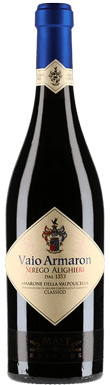

Prior to replanting in the early 90s, Vaio Armaron included 5% of the light and juicy Dindarella in the blend. Beautifully matured, this 30-year-old Amarone...
1988
MasiAmarone della Valpolicella

Masi, Mazzano, Amarone della Valpolicella, Classico, Veneto, Italy, 1988
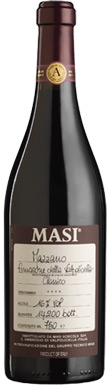
In this vintage, the Mazzano was still being aged in Slavonian oak botte ranging from 7-20 hectolitres in size. It starts off with distinctly oxidative...
1988
MasiAmarone della Valpolicella
Masi, Viao Armaron di Serego Alighieri, Amarone della Valpolicella, Classico, Veneto, Italy, 1995
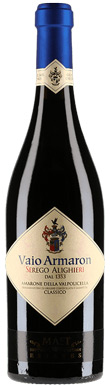
This wine has comfortably and confidently settled in its style, where complex tertiary elements lend intrigue to the soft, flattering mouthfeel. Leather, tobacco, tea and...
1995
MasiAmarone della Valpolicella
Masi, Mazzano, Amarone della Valpolicella, Classico, Veneto, Italy, 1995
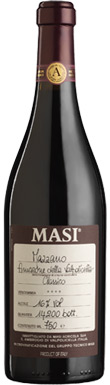
This vintage represents a change in the ageing regime for Mazzano, with small 600-litre Allier and Slavonian oak barrels of first, second and third passage...
1995
MasiAmarone della Valpolicella
Masi, Viao Armaron di Serego Alighieri, Amarone della Valpolicella, Classico, Veneto, Italy, 1997
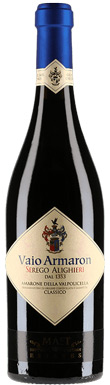
Marked by some volatile acidity on the nose, the 1997 Vaio possesses a slight bon-bon character. Aromas of vanilla lead to mocha, candied cherry and...
1997
MasiAmarone della Valpolicella
Masi, Mazzano, Amarone della Valpolicella, Classico, Veneto, Italy, 1997
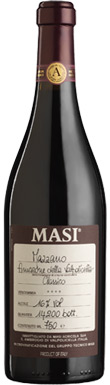
A little shy on the nose, with delicate yet very precise aromas of violets and mulberry and touches of white pepper, but with stunning, succulent...
1997
MasiAmarone della Valpolicella
Masi, Viao Armaron di Serego Alighieri, Amarone della Valpolicella, Classico, Veneto, Italy, 2007
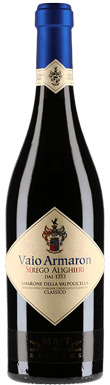
This is already demonstrating some tertiary leather and tobacco nuances against a backdrop of cinnamon, fig and prune. Full-figured and plush, it caresses the palate...
2007
MasiAmarone della Valpolicella
Masi, Mazzano, Amarone della Valpolicella, Classico, Veneto, Italy, 2007
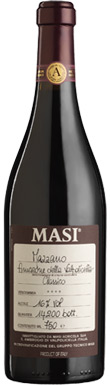
The 2007 Mazzano is just starting to shed its youthful shell to express a kaleidoscope of coffee, pepper, black cherry, blackberry preserve and liquorice. Rich,...
2007
MasiAmarone della Valpolicella
