
Matt Walls: M Chapoutier Chante-Alouette vertical tasting
Matt Walls shines a light on M Chapoutier's cuvée Chante-Alouette, delivering his verdict on 14 vintages of this arguably underappreciated white Hermitage.


According to Michel Chapoutier, the best way to eat a lark is to stuff it with foie gras, grill it, then eat it whole, bones and all. I’m tempted to try it, but they’ve been consistently out of stock at my local Tesco supermarket. He adds that they go very well with white Hermitage.
In French, a lark is une alouette, one of the small game birds, along with thrushes and woodcocks, that were once hunted in this part of the Rhône. The small building you can see on the label of Chapoutier’s Chante-Alouette cuvée is an old hunting lodge that still exists on the hill of Hermitage.
Scroll down for tasting notes and scores for 14 vintages of M Chapoutier’s Chante-Alouette
Blends and single vineyards
Hermitage is more commonly associated with red wine, but a surprising amount of white wine, about a third of production, is made here too. About two-thirds of white plantings are Marsanne, the rest Roussanne, and white Hermitage can be made solely from either, or a blend of both. M Chapoutier grows only Marsanne.
Chante-Alouette was the name of M Chapoutier’s single white Hermitage cuvée as far back as the 19th century, before Michel started bottling his range of single-vineyard wines, the Sélections Parcellaires. ‘It was a bit of a revolution when we did that in 1989,’ says Michel, and it’s no exaggeration. Until then, the tradition in Hermitage was to blend across various parcels, and that’s still the approach today with Chante-Alouette.
M Chapoutier makes three single-vineyard Hermitage wines: L’Ermite, Le Méal and De L’Orée. The first two are named after the lieux-dits, and De L’Orée comes from lieu-dit Les Murets. Chante-Alouette is a blend of these three lieux-dits. The difference is the age of the vines. The single-vineyard bottlings are selections of very old vines, typically with an average age of 100 years old, whereas the vines that go into Chante-Alouette are younger, around 40 to 50 years old.
Michel says that the old vines typically yield 12 to 15 hl/ha (or slightly higher now), while the younger vines produce 35 to 40 hl/ha. This explains the difference in price; at around £60 per bottle in UK retail, Chante-Alouette is a third the price of Le Méal blanc and De L’Orée.

Evolution in winemaking
Apart from a gradual increase in vine age, there were no major changes in the vineyards from 2000 to the present day. The major development was in 1991 when Michel converted the estate to biodynamics.
Old vines naturally produce less fruit, and Michel says that when he converted to biodynamics, yields dropped even further, as he transferred to using solely organic composts.
Michel says he ‘always wanted to work in a bit of a Burgundian way’ when making his white Hermitage, fermenting in barrel and maturing on the lees with limited stirring. By allowing a little carbon dioxide to remain in the wine, he finds he can get by with much less sulphite additions, and the CO2 also heightens the sense of salinity in the wine. He also finds that working biodynamically helps to further accentuate saline notes; ‘dead soils that have been killed by herbicides and fungicides… they never [produce wines with] salinity in the mouth,’ he says.
‘All the work we do on Chante-Alouette and our whites is to emphasise salinity and bitterness,’ says Michel. White Hermitage never has marked acidity, so salinity and positive bitter notes help to build structure and balance its opulent texture.
The most significant change in recent years has been the use of oak. An increasingly warm climate has led to rising levels of alcohol which, Michel notes, is a solvent, meaning more wood flavour is extracted from the barrels than before. So now only half the blend is fermented in barrels (the rest in stainless steel), and only 10% of barrels are new. Since 2008, he’s started using more demi-muids (600-litre) instead of barriques (228-litre) and has recently started introducing some even larger barrels of 1,200 litres.

The tasting
White Hermitage has a reputation for having an extravagantly rich texture, and for generous oaking. Neither is the case with Chante-Alouette; it tends to be a more compact and drinkable style, but still with strong Hermitage DNA.
The wines I tasted (2021-2010, 2007 and 2000) were impressively consistent in style and quality, and clearly reflected the personality of their vintages. Particular highlights were the rich but balanced 2020, the fresh and harmonious 2016, the focused and precise 2014, the opulent 2012 and the powerful 2010.
The 2007 had more noticeable oak work, but it wasn’t overbearing and showed how well this cuvée can age. Over time, the flowers and fruits dissipate, with nuts and honey taking their place. The 2000, though in an advanced stage of aromatic development, was still fresh and enjoyable on the palate.
I’ve long thought this wine was unfairly overlooked as a lesser ‘cuvée classique’ compared to the single-vineyard wines, and although it doesn’t always hit the same heights, it’s nevertheless an impressive wine in its own right and represents remarkable value for money in the context of white Hermitage.
With food, I’d suggest pairing mature vintages with guinea fowl and sautéed mushrooms or a veal chop with risotto alla Milanese. Michel suggests curried flavours, and I’d agree – even curried lamb I’ve found works well. At the end of the tasting, I paired them with pot-roast pheasant, Brussels sprouts and celeriac. It went well – the next best thing to grilled larks.
See Matt Walls’ tasting notes and scores for 14 vintages of Chante-Alouette
Wines are listed in order of vintage, from youngest to oldest
Related articles
- Walls: The next step for Jaboulet’s Hermitage La Chapelle
- Rhône 2022 en primeur: Full vintage report and top-scoring wines
- Regional profile: Condrieu plus 12 wines to seek out
M Chapoutier, Chante-Alouette, Hermitage, Rhône, France, 2021
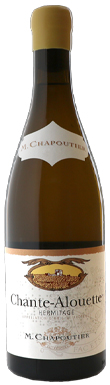

Less richly and ripely fruited on the nose than a typical year, this has starfruit and yellow plum nuances, and a subtle flinty note in...
2021
M ChapoutierHermitage

M Chapoutier, Chante-Alouette, Hermitage, Rhône, France, 2020
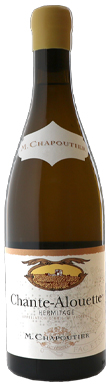
Appealingly ripe, primarily apricot fruit with mango notes. Full bodied but not fat, with good weight, presence, mango-like acidity and deft oak work helping to...
2020
M ChapoutierHermitage
M Chapoutier, Chante-Alouette, Hermitage, Rhône, France, 2019
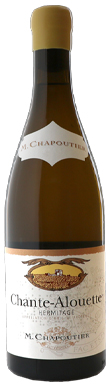
Open and pronounced, showing rich, ripe mango and honeysuckle. Very full bodied, with a lovely, smooth, silky and juicy mouthfeel. The acidity is tangy and...
2019
M ChapoutierHermitage
M Chapoutier, Chante-Alouette, Hermitage, Rhône, France, 2018
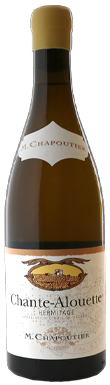
Lovely nose, like a freshly cut mango, with subtle tobacco and cigar notes behind. Full bodied, rich and powerful, displaying a touch of oatmeal and...
2018
M ChapoutierHermitage
M Chapoutier, Chante-Alouette, Hermitage, Rhône, France, 2017
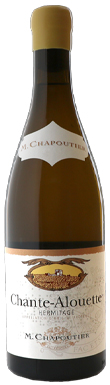
Feeling a little closed at seven years of age, and starting to take on subtle petrol and green tea notes alongside the apricot fruit. Full...
2017
M ChapoutierHermitage
M Chapoutier, Chante-Alouette, Hermitage, Rhône, France, 2016
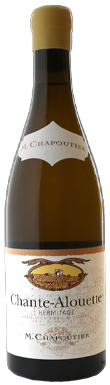
Lovely sense of freshness, the floral and spice notes are expressed as honeysuckle and coriander seed. Quite compact on the palate, with good acidity and...
2016
M ChapoutierHermitage
M Chapoutier, Chante-Alouette, Hermitage, Rhône, France, 2015
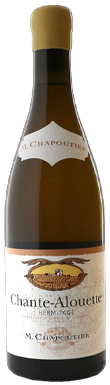
Very fruity, with mango and peach to the fore. Subtle honeyed notes and barley sugar are starting to develop, but it feels like it needs...
2015
M ChapoutierHermitage
M Chapoutier, Chante-Alouette, Hermitage, Rhône, France, 2014
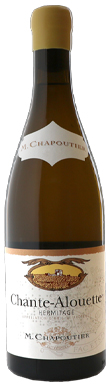
Reticent on the nose, with petrol notes and floral nuances. Full bodied, with an enjoyably fresh and precise feel, this has lovely acidity for a...
2014
M ChapoutierHermitage
M Chapoutier, Chante-Alouette, Hermitage, Rhône, France, 2013
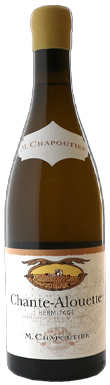
Feeling comfortably mature now, with confit pear, wax and honeyed peach notes. Full bodied and really quite lush on the palate, with sweet, dried apricot...
2013
M ChapoutierHermitage
M Chapoutier, Chante-Alouette, Hermitage, Rhône, France, 2012
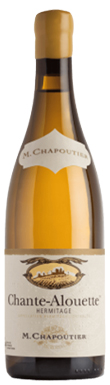
Fresh impression on the nose, with spicy nutmeg and tobacco notes. Full, rich, round and generous on the palate, comfortably in a mature phase, with...
2012
M ChapoutierHermitage
M Chapoutier, Chante-Alouette, Hermitage, Rhône, France, 2011
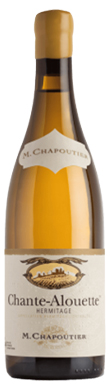
Enjoyably mature now, this is open and approachable, with quince, toffee apple and honey aromas. Petrol notes on both nose and palate, this is surprisingly...
2011
M ChapoutierHermitage
M Chapoutier, Chante-Alouette, Hermitage, Rhône, France, 2010
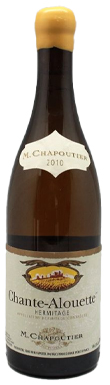
Full, intense, saline and powerful, there's no doubting this is Hermitage – it has the intensity, the grandeur and the power. Great length and complexity,...
2010
M ChapoutierHermitage
M Chapoutier, Chante-Alouette, Hermitage, Rhône, France, 2007
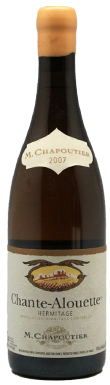
Full bodied but with real drive and focus. Lovely intensity, freshness and concentration, it's very long, with noticeable oak spice on the finish, which is...
2007
M ChapoutierHermitage
M Chapoutier, Chante-Alouette, Hermitage, Rhône, France, 2000
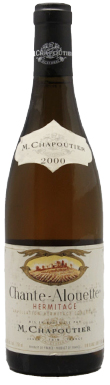
Fully mature now, with petrol and leather notes on the nose. Very broad and generous, with some oxidation apparent – a touch of fino Sherry....
2000
M ChapoutierHermitage
