
Maximin Grünhaus: Producer profile and wines to try
The wines of Maximin Grünhaus have a long standing reputation as some of the most precise and electrifying made in Mosel-Saar-Ruwer. And despite a winemaking heritage over 1,000 years old, this rare monopole vineyard isn't above using the latest technology to maintain its traditions and hard-won reputation.


The name Maximin Grünhaus has long been among the top legacies in Germany’s Mosel-Saar-Ruwer wine region.
Over the decades the name has consistently drawn eager bids at the famed Grosser Ring or ‘Great Ring’, the annual wine auction in Trier, with buyers happy to pay among the highest amounts to snap up barrels of Grünhaus Riesling that aren’t marketed elsewhere.
Located in Mertesdorf, just outside of the city of Trier, along the thin ribbon of the Ruwer River, the Grünhaus estate, the arched gate framing a manor house which dates to 1597 and, behind the house, its steeply sloping vineyards, cuts an impressive figure in this equally impressive landscape.
Scroll down to see tasting notes and scores for 16 new releases from Maximin Grünhaus
Historic in many ways
The Maximin Grünhaus estate was given to the Benedictine monks as the monastery of Saint-Maximin of Trier in the year 966 CE. Seized by Napoleon in the 18th century, it was acquired at auction by an ancestor of the von Schubert family in 1882, and now Maximin von Schubert, the sixth generation, owns and operates the legendary estate, having taken over from his father Carl in 2014.
In an interesting twist: Karl Marx’s father owned two hectares of vines on the modern-day Grünhaus estate in the Herrenberg Grosse Lage parcel. Heinrich Marx, a lawyer from Trier, bought the vineyard land as an investment.
When his father died in 1838, Karl Marx took ownership of the vineyard until his mother purchased it from him. Marx sold the last five full barrels of the family’s Riesling upon his mother’s death. While Marx may have eschewed the concept of profiting off personal property, he seems to have made an exception for Grünhaus Riesling.
Maximin’s great-great-great-grandfather bought the estate because of its long-held reputation. Documents from the 16th and 17th centuries show that the rate charged for grapes from Grünhaus vineyards was two and half times that from other nearby vines, a sign of the esteem garnered over the years. It remains a sterling expression of German Riesling today.

Many shades of green
The name ‘Grünhaus’ translates to ‘green house’ and dates back to 600 CE. There is plenty of speculation about the origins of the name, though, as it was not a colour historically associated with Saint-Maximin of Trier. There are theories of course. This portion of the Ruwer Valley where the one-time abbey stands remains verdant and largely undeveloped. The Grünhaus estate includes 34ha of vineyards, and the nearby lush Grünhauser forest (also owned by the estate) grows over much of the land.
The hill where the vineyards sit, the Grüneberg, has blue Devonian and red slates towards the top. Maximin von Schubert tells me the slate goes greenish in colour in some places. While he’s not sure of the chemical composition, he’s often found it in the roots of downed oak trees in the forest next to the vineyards. It’s likely veins of igneous diabase, a greenish basaltic rock which is found in the region.
On the other hand, the simplest explanation may be the most obvious. Renovations of the manor house in the 1980s showed evidence that, on more than one occasion, it was formerly painted green. So perhaps it was just that St Maximin lived in a green house.

A holy hierarchy
The three estate vineyards are the ‘Bruderberg’, the ‘Abtsberg’ and the ‘Herrenberg’ which run from right to left along the face of the unbelievably steep hillside. Like many of the top sites throughout the region, these names correspond to church hierarchies with wines of better quality going to those of higher rank. The south-facing slope of the Grüneberg is where the vineyards sit with gradients as steep as 70% in places.
Bruderberg
The Bruderberg is named for the simple ‘brothers’ of the Maximin Grünhaus priory when the abbey was established more than a thousand years ago, as the wines from this parcel were designated for their consumption. It is the smallest of the three sites, at only one hectare and planted exclusively to Riesling, at 140-170m in elevation with steep slopes between 50-70%. The soils are blue Devonian slate like the neighbouring Abtsberg cru.
The defining feature of the Bruderberg is that it abuts the forest on two sides. The forest protects the smaller parcel from cold winds from the north and west while also shading it from the afternoon sun almost completely. This means despite its lower elevation, it’s the coolest parcel of the three Grünhaus Grosse Lagen.
Herrenberg
The wines from the Herrenberg were designated for the abbey’s choirmasters; at 19ha, they must have done quite a bit of singing. Planted with both Riesling and Pinot Blanc, the size of this site lends it a good deal of diversity.
The Herrenberg sits between 190-290 metres with a gradient between 20-60%. There are sections of blue Devonian slate, with reddish slate (also Devonian in origin) appearing on the flatter portion of the cru, which abuts the forest. The slate breaks up, allowing the roots to go deeper, and at Grünhaus they believe this gives a spicy character to the wines.
Abtsberg
The Abtsberg sits dead-centre between the other two sites, representing the estate’s top wines, a veritable sweet spot of sorts. The wines from this site were designated for the Abbotts, the top of the monastery’s hierarchy. Pure blue Devonian slate, the Abtsberg slopes outwardly, facing both southeast and southwest at different orientations. This top site is 14ha in total, at heights of 140 to 270 metres and with gradients between 40-75%.
It is a legendary site and produces the estate’s top wines each vintage, some of the most age-worthy in all of Germany. The shallow, fossil-rich soils impart a more significant mineral impact to the wines than those from the slate subsoils. Pinot Noir is also planted in this Riesling-centric site, the top cru at Grünhaus.

Innovation meets tradition
Maximin von Schubert has been running Maximin Grünhaus since 2014. The young proprietor, named after the estate, believes that both the changing climate and modernity require innovation for things to retain their classical nature. His work maintaining character and elegance includes progressive stewardship of the vines and nearby forests and waterways.
‘Uniquely, we’re one of only three complete monopole estates in all of Germany,’ von Schubert explains. ‘We have 34ha of monopole vineyards and another 210ha of agricultural lands and forest. There is a great deal of stewardship that we are responsible for.’ For the region’s wines, mainly those made in the Prädikat style, to still be possible, progressive approaches to farming, viticulture, and even forestry will be necessary.
Climate change is unique in its challenge for Germany. Although warming temperatures in the near term have benefitted cool regions like the Mosel-Saar-Ruwer, there are longer-term issues. Most glaringly are concerns about rising sugars without the accompanying acids, which have long made the ethereal Prädikat wines unique to this place. As temperatures continue to increase, crafting Kabinett or Auselese-style wines in some sites has become more vexing with every passing year, and German Eiswein production has almost entirely disappeared.
During my visit, von Schubert was experimenting with drones for spraying – something that hadn’t been used in the region up to that point, where they have historically sprayed the steep slopes by helicopter. Drones give them greater control and accuracy and are more sustainable and economical than flying helicopters.
His willingness to push what is possible regarding the best available technologies in vineyard management, while remaining steadfast to traditional approaches in the cellar, demonstrates his commitment to the estate’s 1,000-year-old traditions and his family and region’s future.
New releases from Maximin Grünhaus
Related articles
- The Middle Mosel for wine lovers
- Joh. Jos. Prüm: Producer profile & 10 wines tasted
- Producer Profile: Weingut Willi Schaefer
Maximin Grünhaus, Riesling Sekt Brut, Mosel, Germany, 2019
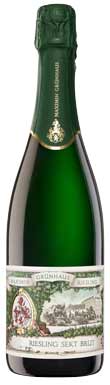

A crisp and superb vintage to hear Maximin von Schubert tell it, only 1,900 bottles of this beautiful Riesling Sekt was made. The wine is...
2019
Maximin Grünhaus

Maximin Grünhaus, Herrenberg Auslese Nr 59, Mosel, Germany, 2018
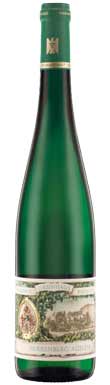
It's an astonishing wine, the Single Barrel # 59; in 2018, von Schubert bottled 12 different single barrels, much to his father's chagrin. A warm,...
2018
Maximin Grünhaus
Maximin Grünhaus, Abtsberg Kabinett Nr 50, Mosel, Germany, 2022
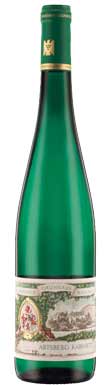
The top auction wine, finished in gold kapsel, barrel # 50, shows a deep opulence that is nearly unbelievable at the Kabinett level. Overwhelming richness...
2022
Maximin Grünhaus
Maximin Grünhaus, Abtsberg Kabinett Nr 15, Mosel, Germany, 2022
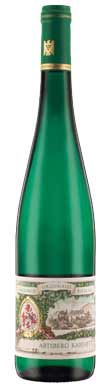
Grünhaus has a long history in the Trier barrel auctions and remains an element of the estate's traditions today. Barrel #15 is this Abtsberg Kabinett...
2022
Maximin Grünhaus
Maximin Grünhaus, Herrenberg Riesling GG, Mosel, Germany, 2021
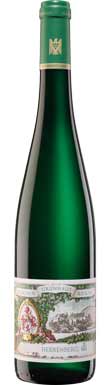
Concentrated notes of smoky lime leave off nervous energy from this pulsating GG Riesling. Crushed slate and grilled lemon aromas are a gateway to a...
2021
Maximin Grünhaus
Maximin Grünhaus, Abtsberg Beerenauslese, Mosel, Germany, 2018
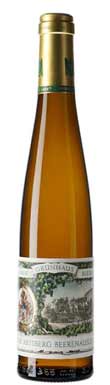
2018 was an incredibly ripe vintage in the Mosel with lots of heat and dry weather driving sugars but limiting botrytis — sweet concentrated nectar...
2018
Maximin Grünhaus
Maximin Grünhaus, Abtsberg Spätlese, Mosel, Germany, 2022
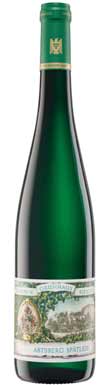
The Abtsberg Spätlese keeps a lively energy throughout, with aromas of smoky flint predominating notes of cardamom spice, white pepper and citrus blossoms. The palate...
2022
Maximin Grünhaus
Maximin Grünhaus, Abtsberg Riesling GG, Mosel, Germany, 2021
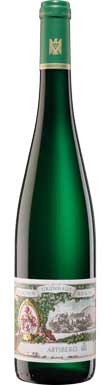
The Abtsberg GG shows the purity of the Grosse Lage site, its pure soils of Devonian blue slate and wildly steep slope. White peach skin...
2021
Maximin Grünhaus
Maximin Grünhaus, Bruderberg Superior, Mosel, Germany, 2022
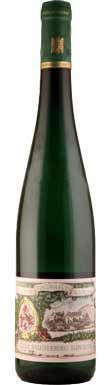
An off-dry style, these ‘Superior’ designations are the top wines for the site, selected from old vines, a sort of off-dry take on GG Maximin...
2022
Maximin Grünhaus
Maximin Grünhaus, Grünhäuser Feinherb, Mosel, Germany, 2022
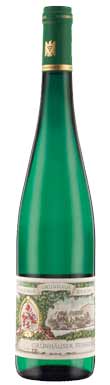
A spicy and herbal classic in the Grünhaus style to hear Maximin von Schubert's take. Spice and herbal elements have become the estate's signature over...
2022
Maximin Grünhaus
Maximin Grünhaus, Herrenberg Riesling GG, Mosel, Germany, 2022
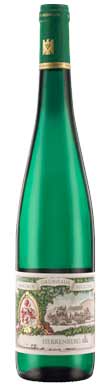
The 22 Herrenberg GG is a wine of zest and freshness. A ripe fruit aromatic profile is accented by nectarine and peach flesh, white florals...
2022
Maximin Grünhaus
Maximin Grünhaus, Pinot Blanc Réserve, Mosel, Germany, 2021
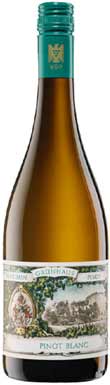
This Pinot Blanc (aka Weissburgunder) comes from some of the most highly regarded vineyards in all of the Mosel (though for Riesling), the red slate...
2021
Maximin Grünhaus
Maximin Grünhaus, Maximin Riesling, Mosel, Germany, 2021
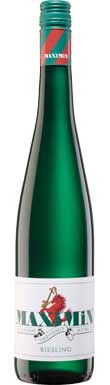
The 2021 vintage is seen as a classic in the Mosel region, a later harvest waiting on the higher acidities to come down. This Maximin...
2021
Maximin Grünhaus
Maximin Grünhaus, Schloss Riesling Trocken, Mosel, Germany, 2022
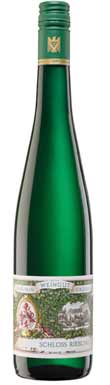
This entry-level bottling carries the official VDP classification of ‘Gutswein’, produced with fruit harvested from the estate’s Abtsberg, Herrenberg and Bruderberg vineyards. This is sort...
2022
Maximin Grünhaus
Maximin Grünhaus, Maximin Riesling, Mosel, Germany, 2022
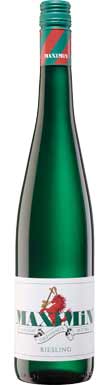
Simple and pure, the Maximin is made from non-estate sites and offers a Riesling gateway without fully appreciating the grape's complexities. Stony and flinty aromatics...
2022
Maximin Grünhaus
Maximin Grünhaus, Pinot Noir Gloria, Mosel, Germany, 2020
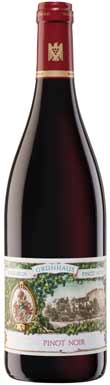
A gorgeously balanced Pinot Noir from the Abtsberg site, the estate's top cru, this wine is amply ripe at 14.5% but balances that with a...
2020
Maximin Grünhaus
