
Mayacamas: Producer profile
Matthew Luczy visits this storied Mount Veeder estate, lauded for its ageworthy, elegant Cabernets long before the 1976 Judgment of Paris tasting...


Both the wines and the property of Mayacamas feel like a world away from their surroundings, and there is a palpable mix of the old and the new throughout the vineyards, cellar and overall ethos.
John Henry Fisher built the winery in 1889 and Jack and Mary Taylor established the brand in 1940. The Bob Travers era began in 1969 and his ownership produced some of the most storied and long-lived wines to ever be made in the Napa Valley.
These transitions have brought changes to the winemaking team, with former cellar master and later assistant winemaker Braiden Albrecht being promoted to winemaker and Andy Erickson – of Dancing Hares, Harlan Estate and Screaming Eagle – serving as consulting winemaker.

Mayacamas is one of only a handful of producers in the Napa Valley to have truly and successfully eschewed the trends of ever-bigger and glossier Cabernet Sauvignons in favour of restraint and purity.
This commitment to a hands-off approach helps endow the Mayacamas wines with a longevity in the bottle that their higher-alcohol counterparts will not experience – at least not with the same balance and beauty.
The endgame here is clearly centred on these wines going the distance – and doing so at reasonable prices, considering the quality of fruit and winemaking one is getting with a purchase of a Mayacamas Cabernet Sauvignon.
The estate
The estate takes its name from its remote location in the Mayacamas Mountain Range, and sits in the Mount Veeder AVA in the southwestern corner of the greater Napa Valley. As with much of this mountain range, Mount Veeder itself is an ancient volcano, whose varied soil types also include fossilised seabed.
It is unique among Napa Valley AVAs in its combination of rugged hillside terrain and proximity to the oceanic influence of the San Pablo Bay. With this exposed location, the appellation finds itself with the longest growing season in Napa.
Also contributing to the grapes’ extended hang time is altitude: the Mount Veeder AVA has the highest elevation vineyards in the region, up to 760m above sea level. Its western edge abuts Sonoma County’s Moon Mountain AVA, and this break in the Napa/Sonoma divide can be seen from the highest vineyard blocks of Mayacamas’ estate vineyards.
The 2017 wildfires that ravaged much of California wine country took a nerve-ratting toll on the Mayacamas estate. The Distillery, a building constructed in 1889 and used today primarily as a tasting room for visitors, burned down. The winery itself, directly adjacent, was saved.
Designs for the reconstruction began soon after, headed by renowned architect Howard Backen, whose winery resumé includes work for Harlan Estate, Promontory and Continuum.
The new Distillery will be more modern in style, but as is consistent throughout Mayacamas, its history will be retained. The stones used to construct the original building in 1889 were sourced from the property itself, and these same raw ingredients – volcanic compressed ash and sedimentary rock – will be used in the reconstruction.
The vineyards
Also in a state of redevelopment are the vineyards themselves. Of the 188ha that make up the property, only about 20ha are planted with vines. There had already been a lot of replanting at the time of the 2013 acquisition by Banks and Schottenstein, and it was these younger vines that suffered much of the fire damage in 2017.
The oldest plantings date back to the 1980s, but the majority are these younger vines, in their fifth or sixth season, making the depth and complexity of Mayacamas’ new-release wines all the more impressive.
With these new plantings, experiments are being conducted with no-till viticulture – the complete absence of tractor ploughing in certain blocks. Also referred to as regenerative agriculture or carbon farming, this is happening more and more throughout the wine world, as the benefits of oxygenating soil verses the release of carbon into the atmosphere are realised.
In addition to damaging the young Mayacamas vineyards, the 2017 fires also burned through the tree-line atop Mount Veeder. This has exposed the vines even more to the cold ocean breezes that blow up the mountain from the San Pablo Bay.
Cabernet Sauvignon
The balance between old-school tradition and modern innovation carries through into the cellar practices at Mayacamas. The Cabernet Sauvignon is sourced from myriad blocks, rows and soil-types at elevations from 530m to 670m.
‘The diversity creates a whole list of variables, which is as good as you want it to be,’ says winemaker Braiden Albrecht, hinting at the level of detail and decision making required in working with so many different plots.
Once harvested, the Cabernet grapes are brought into the gravity-flow winery, one of the original buildings constructed in 1889, the bottom storey of which is referred to as the Red Cellar.
This room contains large-format fermenters between 70 and 100 years old, and primary fermentation takes place in a combination of these older vessels as well as stainless steel and open-top cement vats.

The wine matures for 32 months in a mix of neutral oak barrels and foudres before spending an additional year in bottle before release.
The resulting Cabernets boast fleshy, forward concentration harnessed by a soft, delicate touch. They display ripeness but not heft, and there is a consistent seam of fine, dusty, lacy tannins throughout multiple vintages.
Chardonnay
For all the fame and attention garnered towards its Cabernet Sauvignons, Mayacamas historically has been (and still is) focused on Chardonnay.
The Taylors were said to have stated in the 1940s that Mayacamas ‘was a white wine house’, and when the current owners took over the property, 60% of the area under vine was Chardonnay. While the 2013 transition has shifted this balance towards Cabernet, 25% of the vineyards remain planted to Chardonnay.
Napa Valley is of course no stranger to this variety, especially in the south, but planting it high on the volcanic slopes of Mount Veeder is a head-turning move to some.
This terrain provides a style unique among Napa wines, and California Chardonnay as a whole; it balances linear focus and precision with a forward tropical fruit quality, cashing in on the Mount Veeder signature of mountain fruit tempered by ocean breeze.
In what is becoming a popular regimen throughout California, Mayacamas ferments its Chardonnay in a mix of barrels, puncheons and foudres, and blocks malolactic fermentation.
This all takes place inside the White Cellar – the yin to the Red Cellar’s yang. ‘The Red Cellar is all about soul while the White Cellar is all about function,’ explains Albrecht.
‘Palpable soul’
It is impressive that, despite multiple ownerships, there is a palpable soul attached to this estate – the retention of what makes Mayacamas – that flows directly through to the finished wines.
This is to be commended and encouraged, especially in an ever-changing place like the Napa Valley, often referred to as the ‘Disneyland’ of wine.
It can be easy to feel that the end goal of some so-called ‘classic’ Napa wineries is to usher guests into a flashy and fancy tasting room, serve somewhat formulaic and fairly homogeneous wines, all the while preaching the good word about harmony, balance and viticulture.
Mayacamas feels like the opposite of this experience. If the wine is doing the talking, not much else needs to be said. If any estate in Napa can sit back and set a glass in front of someone and say nothing, it is Mayacamas.
Timeline
1889 Winery constructed by John Henry Fisher, a German immigrant
1906 San Francisco fire destroys John Henry Fisher’s businesses. The winery is sold at a bankruptcy auction for $5,000 in gold coins
1920-1933 During Prohibition, the winery falls into the hands of Pietro and Maria Marenco, a Catholic couple who make sacristy wine
1940 Jack and Mary Taylor purchase the winery and name it Mayacamas, which translates to ‘call of the mountain lion’ in the language of the Wappo indigenous people
1947 Mayacamas launches its current label, unchanged in 73 years
1964 Bob Sessions joins the winemaking team and remains on board until 1971
1969 Bob and Elinor Travers purchase the winery and retain ownership for 46 years
1976 Mayacamas Cabernet Sauvignon is one of the Napa wines featured in The Judgement of Paris tasting
2013 Mayacamas is purchased by the Scottenstein family. Winemaker Andy Erickson is brought on board
2017 Wildfires burn down the 1889-built tasting room
2018 Braiden Albrecht promoted from assistant winemaker to head winemaker, with Andy Erickson continuing as consultant
2019 The Mayacamas tasting room in downtown Napa opens while construction continues on the property’s razed building
Top Mayacamas Chardonnay and Cabernet
You might also like…
Producer Profile: Trinchero Family Estates
Interview: Robert Mark Kamen, Kamen Estate
Producer Profile: Silver Oak
Cakebread Cellars: a Napa stalwart
Mayacamas, Chardonnay, Napa Valley, Mt Veeder, California, USA, 2018
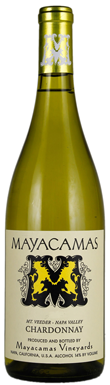

<p>Ripe and floral in the warm 2018 vintage. The nose gives off notes of pineapple rind, apple blossom and honeysuckle. The palate is fresh and...
2018
MayacamasNapa Valley

Mayacamas, Chardonnay, Napa Valley, Mt Veeder, California, USA, 2016
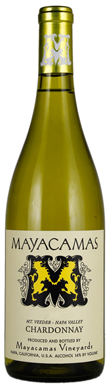
Bright but forward aromas of pie crust, French toast and ripe lemon peel give way to a chiselled, clean palate of green apple and wet...
2016
MayacamasNapa Valley
Mayacamas, Chardonnay, Napa Valley, Mt Veeder, California, USA, 2008
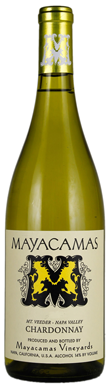
The 2008 saw no malolactic fermentation and spent a year in 10% new barriques. It's is rich and forward, with aromas of preserved lemons and...
2008
MayacamasNapa Valley
Mayacamas, Golden Hill Cabernet Sauvignon, Napa Valley, Mt Veeder, California, USA, 2014
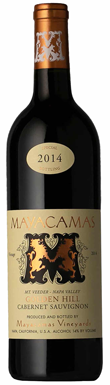
A rare single-site bottling from Mayacamas, the Golden Hill Cabernet Sauvignon was sourced from some of the highest-elevation vines on the hillside of Mount Veeder,...
2014
MayacamasNapa Valley
Mayacamas, Cabernet Sauvignon, Napa Valley, Mt Veeder, California, USA, 2015
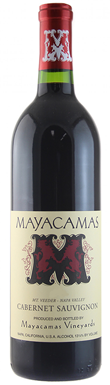
At first fairly inward, shut down and tannic, but after 30 minutes in the glass it softened and began to open up to reveal what...
2015
MayacamasNapa Valley
Mayacamas, Cabernet Sauvignon, Napa Valley, Mt Veeder, California, USA, 2012
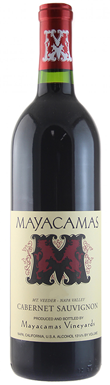
The 2012 vintage has a savoury, meaty quality that is enthralling and singular, with aromas of black pepper, wet earth and black plums. The texture...
2012
MayacamasNapa Valley
Mayacamas, Cabernet Sauvignon, Napa Valley, Mt Veeder, California, USA, 2009
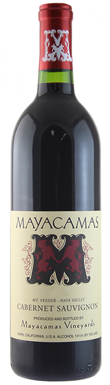
A vintage that shows the restrained and sometimes hidden power of Mouth Veeder Cabernet. The nose is initially reticent and understated, giving off subtle notes...
2009
MayacamasNapa Valley
Mayacamas, Cabernet Sauvignon, Napa Valley, Mt Veeder, California, USA, 2005
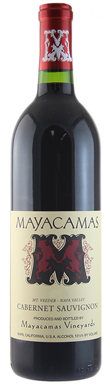
An earth-forward and rustic expression of its Mount Veeder origin, sourced from dry-farmed mountain vineyards between 550m to 730m above sea level. Aromas of brick...
2005
MayacamasNapa Valley
