
Montecillo Vineyard: Mountain magic in Sonoma
High above Sonoma County, on a ridge just over the boundary from Napa Valley, Montecillo Vineyard has sat like a sentry since its original planting in 1857. Now under the care of Blair and Caroline Guthrie of Stewart Cellars, its old-vine Cabernet Sauvignon, planted in the 1960s is making perhaps some of the country's most exciting modern Cabernets, a throwback to a fresher, balanced style.


Montecillo Vineyard has perhaps been one of the best-kept secrets in Sonoma County. Its old-vine Cabernet goes to some very talented winemakers.
Coming from gnarled vines planted in the 1960s, dry-farmed above the fog line in the Moon Mountain AVA, where the hot day’s sun creates perfect ripening conditions cooled at night by the high mountain temperatures.
This organically farmed site (not yet certified as such) is now owned by the Guthrie family, Blair and Caroline of Napa‘s Stewart Cellars, who purchased the 51-acre (20.5ha) site in June of 2022. It sits at 1800ft (550m) just below the peak of Nuns Canyon.
‘Today, Montecillo Vineyard stands as one of California’s most historic vineyards,’ says Blair Guthrie. ‘The vineyard’s high elevation, rich soils, and ideal climate allow us to craft bold, complex, and distinctive wines. For over a century, Montecillo has been a symbol of the best in California winemaking—resilient, innovative, and always forward-thinking.
‘It’s not only part of history but a place that produces some of California’s most extraordinary wines. We are incredibly proud to continue this legacy.’
Scroll down for the tasting notes and scores of Montecillo Vineyard Cabernet
Early beginnings

Historical records (a Californian Research document on the wine and business history of Glen Ellen, California) indicate that Montecillo Vineyard dates to the early 1860s.
Perhaps the vineyard was first planted as early as 1857 when Thomas Nau, who was friends with James Hamilton, one of the earliest owners of the land now called Montecillo, planted a neighbouring property.
This dates Montecillo, which was 22 acres originally, 25 to 30 years earlier than its famous nearby neighbour, the Monte Rosso Vineyard of Louis M Martini fame.
In the case of Nau and Hamilton, they were among the earliest in Sonoma – and likely California – to move their vineyards away from the valley floor.
Things get difficult from a cultivation point of view at elevations of 1,200 to 1,800 feet (365 to 550 metres) in the mountains, particularly in the latter part of the 19th Century. The rocky land was overgrown, difficult to farm and perhaps most remarkably, had no access to water.
The vineyard was likely planted with several varieties in those early days. The San Francisco daily newspaper, the Daily Alta California, on October 1, 1859, listed a number of grape varieties being planted in the Sonoma region.
They include international varieties: ‘Rose of Peru,’ Chasselas, Italia (primarily known as a table grape variety) and ‘Black Hamburg,’ likely Black Muscat, or Muscat Hamburg. Among the American grapes noted were Catawba, Isabella and Muscat.
A far cry from the mountain Cabernet that it is known for today.
In 1884, the property was acquired by an Englishman, J Laurence Watson, a Captain in the Royal Navy. Watson built a home on the property, which is still standing today. Watson grew the vineyard to 346 acres, of which about 60 were planted.
However, by 1893, the phylloxera epidemic devastated the vineyard and Watson’s fortune along with it. The property was eventually sold at a sheriff’s auction.

The modern era
As Montecillo moved into the modern era, like most of Sonoma, the predominant planted varieties became Alicante and Zinfandel. Montecillo Vineyard changed hands from a bank-owned vineyard to the hands of Garrett Nelligan of Santa Rosa in 1920.
Nelligan suspected that Prohibition wouldn’t last long and that his investment would pay off. Montecillo would come into the hands of one of Sonoma’s longstanding wine families, the Pedroncellis, for a time, whose history in the region dates into the 1920s.
Frank Pedroncelli was the foreman at Nelligan’s winery when the Internal Revenue Service descended on the property during Prohibition. There’s a historical recording of IRS agents destroying vats in the winery and the wine flowing down the hillside.
The wine was being sold to the church, but given the government’s intervention, perhaps some bootleg wine was also being produced.
‘The profile of Montecillo really rose under the ownership of Mike Lee,’ says current owner Blair Guthrie, winemaker at Stewart Cellars. ‘Those 1960s planted Cabernets made it into bottlings of the high profile Kenwood Artist Series wines, which were very popular with collectors in the 1990s and early 2000s.’
‘After the Kenwood Artist’s Series finished its run, the vineyard sort of went back under the radar. That is until it was discovered or rediscovered in 2011 by Morgan (Twain-Peterson MW of Bedrock Heritage) and Tegan (Passalaqua of Turley Vineyards),’ Guthrie explains.
‘Those Cabernet vines are among some of California’s oldest Cabernet in the ground,’ Guthrie continues.
The vine age is undeniably unique, with Ridge’s Monte Bello, dating to the 1950s, and Peter Martin Ray, also in the Santa Cruz Mountains, dating to the 1960s. Most notable is nearby Monterosso, a 15-minute drive from Montecillo, perhaps California’s oldest Cabernet, planted between 1937 and 1940.

A special site
‘The property was planted by old timers,’ says Rodrigo Soto of Far Mountain, long time estate director at Quintessa.
‘They followed a pattern that you do not see anymore, planting using the contours of the hill, which gives you diversity in the same row. In my opinion this gives natural complexity to the wines as the vines adapt as the aspect changes in the hillside.’
‘These old timers really knew what they were doing. They were better connected with nature than we are today. That is why Moon Mountain and Montecillo are so special and so unique. It has the rusticity of the mountain character amplified by the vines’ high adaptability to the place where they live.
‘The vines truly mirror the environment where they live; when they are happy, they thrive. When established, they can express their individuality and sense of place.’
Until last year, the site was long farmed by one man, Chuy Ordaz, who had planted some of the oldest Cabernet in the 1960s. That level of knowledge and consistency is uncommon in viticulture and has certainly contributed to the calibre and quality of the fruit.
‘It’s been farmed organic more or less for the last six years,’ Guthrie adds, ‘and we’ve moved to 100% organic as soon as we came on board. I think that once we’ve removed the chemicals, and with the site being dry-farmed for so long, the terroir really is given the opportunity to show through when the vines are healthy, and you have a symbiosis between the vine and the fungi in the ground.’

A classic style of Cabernet Sauvignon
The winemakers who began making Montecillo Cabernet over the last 8-15 years, are among a group of the most invigorating and promising winemakers in the country.
Guthrie, rightfully has embraced their love of the site and aims to continue these relationships which pre dated his and Caroline’s ownership, as well as bring on new names, Meghan Zobeck for example will soon be releasing a Montecillo Cabernet.
Words like gem, jewel and treasure were heard from a number of the winemakers I spoke to, who clearly feel fortunate to be able to make wine from these unique older vines.
‘The 10 acres of old-vine Cabernet Sauvignon at Montecillo are a California treasure,’ says Massimo Di Costanzo. ‘The berries are generally small and concentrated, and the vines’ sprawling canopy protects the fruit from damage.’
He continues: ‘These old vines are naturally in balance from all the years of dry farming. The wine makes such a unique expression of Cabernet Sauvignon that just explodes with complexity and nuance. The vineyard’s unique profile is present year in and year out.’
‘The Montecillo vineyard is a hidden gem,’ says Duncan Meyers of Arnot Roberts. ‘And walking through the vine rows is like going back in time. The gnarled, old, dry-farmed vines cling to the steep, rocky slopes and produce fruit of singular character. The wines we have made from Montecillo exhibit a rustic, mountain-grown personality and consistently achieve a balance of aromatic complexity, sturdy structure, and purity of fruit.’
‘Naturally low yields and even ripening across the site lead to a concentrated wine with the natural ability to age well for decades. The unique terroir of this mountaintop vineyard is due to the combination of extremely rocky, well-drained, volcanic soil coupled with steady, daily breezes that sweep in from the south and the west to moderate afternoon heat,’ Meyers explains.
‘When Mai (Errazuriz) and I decided to start Far Mountain, we had the opportunity to design our wines from places that felt special to us, with positive energy, surrounded by nature in remote locations with elevation and volcanic rocky soils as the driver,’ says Rodrigo Soto.
‘We started knocking on doors to see what was available and we found a couple of remarkable properties that not only had these elements, but they were dry-farmed. I called Chuy Ordaz and asked him if he remembered me and if we could go and visit Montecillo. He said yes and that he would put me in touch with the new owner. That is how I met Blair, we connected really well and after a couple of brief conversations, we started buying Cabernet from Montecillo.
‘I think that Blair will be an excellent guardian of this place. I hope to be part of that process, too. I am willing to dedicate my time, knowledge and energy to represent this property with our Far Mountain wines from Montecillo. From my perspective, Montecillo has all the elements of a world-class vineyard,’ Soto concludes.

Mountain magic: Seven Cabernet Sauvignons from Montecillo Vineyard
Related articles
- Sonoma Cabernet Sauvignon: Producers, styles & wines to try
- Sonoma County AVAs: Overview and 10 wines to try
- Sonoma County: 2021 vintage report
Di Costanzo, Montecillo Vineyard Cabernet Sauvignon, Sonoma County, Moon Mountain District, California, USA, 2022
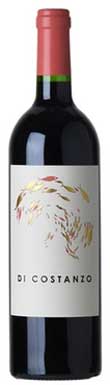

From the old vines planted towards the top of Montecillo Vineyard in 1968, this may be the purest, most complete Cabernet Sauvignon I've ever tasted....
2022
Di CostanzoSonoma County

Arnot-Roberts, Montecillo Vineyard Cabernet Sauvignon, Sonoma County, Moon Mountain District, California, USA, 2022
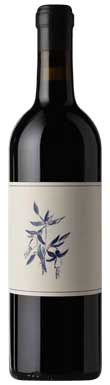
This glorious mountain wine comes from old, dry-farmed Cabernet planted on its roots in 1967. With a beautiful ruby hue and a diminutive 12%abv, this...
2022
Arnot-RobertsSonoma County
Stewart Cellars, Montecillo Vineyard Cabernet Sauvignon, Sonoma County, Moon Mountain District, California, USA, 2022
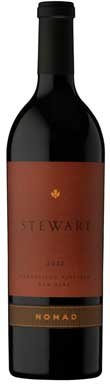
The new stewards of Montecillo Vineyard are Stewart Cellars (pun intended), who acquired the property in 2022. For Blair Guthrie, co-owner and winemaker, it was...
2022
Stewart CellarsSonoma County
Arnot-Roberts, Montecillo Vineyard Cabernet Sauvignon, Sonoma County, Moon Mountain District, California, USA, 2019
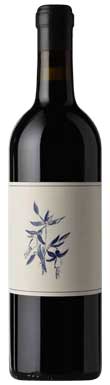
The use of 30% whole cluster in this mountain Cabernet from the old vine block planted in 1967 on its own roots at around 1700...
2019
Arnot-RobertsSonoma County
Bedrock Wine Co, Montecillo VineyardCabernet Sauvignon, Sonoma County, Moon Mountain District, California, USA, 2022
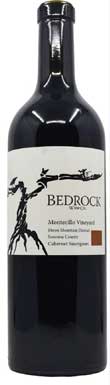
The Bedrock bottling from Montecillo comes from the 1960s planted vines at the top of the site, sitting at around 2,200 feet (670m). This wine...
2022
Bedrock Wine CoSonoma County
Far Mountain, Montecillo Vineyard Cabernet Sauvignon, Sonoma County, Moon Mountain District, California, USA, 2022
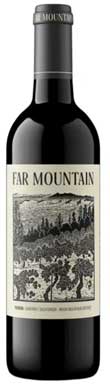
Beautiful forest aromas beguile from the Far Mountain Montecillo Cabernet, perched nearly 2,000 ft (600m) along the ridge that divides the Napa and Sonoma...
2022
Far MountainSonoma County
Turley, Montecillo Vineyard Cabernet Sauvignon, Sonoma County, Moon Mountain District, California, USA, 2019
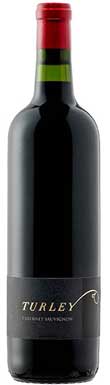
At five years old, this wine really shows its old vine pedigree. The Turley bottling comes from the old Cabernet towards the top of the...
2019
TurleySonoma County
