
What makes a wine collectible?
What makes some wine collectible and others not? Read our report below, including tasting notes for some of the most lauded wines on the market.


If your passion revolves around, say, Burgundy, getting your hands on the finest examples from a widely admired producer can feel a bit like winning the lottery.
But unlike the lottery, it requires more work than luck. Earning the right to an allocation to the finest Burgundy is often the fruit of several years of building up a balanced purchase history with a merchant.
So if you want a case of Anne Gros’ Richebourg Grand Cru, you’d better be prepared to buy her village wines, too.
Not all wine works this way, but in theory it does prevent those with the fattest wallets jumping to the front of the queue. That said, you’ll need a pretty chunky wallet either way to afford the best of Bordeaux, Burgundy and beyond.
Comparisons with other high-end collectibles
Buying a case of the most collectible wine for your cellar is perhaps the vinous equivalent of adding a pristine Porsche 356 or Ferrari 250 GTO to your stable of classic cars, or hanging a Picasso in your house.
Prices can rise over time in some cases. For instance, in August 2018, RM Sotheby’s sold a 1962 Ferrari 250 GTO for a world-record $48,405,000, smashing the previous record, which was also set by a 1962 Ferrari 250 GTO in 2014.
Later that year, auction house Sotheby’s said a bottle of Romanée-Conti 1945 had become the most expensive wine sold at auction after it fetched $558,000 during a New York sale.
But, as with all investments, it’s a case of ‘buyer beware’ when it comes to expecting collectible wines to rise in value.
The fine wine market bubble burst back in mid-2011. By January 2012, first-growth Château Lafite Rothschild 2008 was valued at just 45% of its peak a year earlier, for example.
The market has since recovered from the lows of 2011 and 2012, although few wines have reached the same values seen at the height of the bubble.
What makes a wine collectible?
Like most other collectibles, the market dynamics are complex. But it’s useful to start with ‘the three Ps‘:
- Production volumes – There are finite supplies of wines from the top estates from particular years, and this ‘rarity’ value can increase as a vintage ages. Also, one reason why top Burgundy commands such high prices is the small production volumes, even when compared to top-end Bordeaux.
- Producer reputation – Wines from producers with the best reputations tend to be the most desirable, but reputations can be built and lost, of course.
- Provenance – Even the best wine in the world will lose its appeal if the case has been opened, or if it has been stored under the stairs for 20 years instead of, say, in the producer’s own cellar.
In addition to the above, the following factors also have a major part to play in how desirable a wine may be to collectors:
- Appellation – Think Musigny rather than Mâcon.
- Vintage – The best rated vintages will command a big premium.
- Limited edition – An extension of vintage and appellation, to some extent, but consider the gold labelling of Angélus 2012 – to celebrate the estate’s promotion in St-Emilion – or the ‘millennium effect’ of Bordeaux 2000.
As with anything that becomes a collectible item, you also need to be watchful over authenticity, as the Rudy Kurniawan case proved. See our guide on how to spot a fake wine.
Diversity
Before the fine wine market nosedived back in 2011, the most tradeable wines were almost all from Bordeaux. The region accounted for 95% of trades on Liv-Ex.
By 2018, the market had become far more diverse. Bordeaux accounted for around 60% of trades on Liv-ex, while wines from Burgundy, Tuscany, Piedmont, Champagne and the Rhône had all gained bigger slices of the pie.

How do I get into collecting wine?
Collecting wine – particularly if you’re looking for a financial return – is far more nuanced that what we’ve outlined above.
Research is important, as is finding a trusted supplier, and even then you have to be prepared to drink your assets; a reasonable consolation as long as you haven’t bet the house on your cellar’s value.
Patience is a key part of success, and you’ll need to consider storage of your valuable wines.
When we talk about ‘wines for your cellar’, we don’t necessarily mean the cellar in your house. Since modern houses tend to lack cellars, it’s far more common these days for collectors to keep their fine wines ‘in-bond’.
This refers to the professional storage facilities overseen by HMRC in the UK. In return for a small fee per case per annum, the wines are cellared in perfect, constantly monitored, highly secure conditions. Similar facilities are also available in the US, France and elsewhere.
If you remove a case from one of these UK facilities, you will need to pay duty and VAT. UK excise duty currently stands at £26.76 per case of 12, and VAT is payable on the duty plus the original purchase price.
Most reputable wine merchants use these bonded facilities for their own stocks as well as customer reserves and will happily set you up with an account.
You don’t need to spend thousands to get started, either. A minimum spend of around £500 in-bond on a case of 12 bottles (£41.66 per bottle) should get you access to some great producers, although you’ll likely have to pay a lot more for producers’ top bottlings.
One piece of good news, as we approach the third decade of the 21st century, is that there are more world-class wines out there than in the past. See some of our favourite ‘money-no-object’ wines from top producers below.
A selection of the most collectible wines tasted by our experts:
Arranged by region. Please note these wines have been selected due to their collectibility based on the factors outlined above, and not on any form of price metric.
Find all the latest buying advice on Decanter Premium, including:
What makes a 100-point Hermitage?
Best French wines: 100 point scores
Bolgheri 2016: One of the best vintages ever?
Bordeaux 2018 wines: Our en primeur verdict
Burgundy 2017: Full en primeur report
Château Lafite Rothschild, Pauillac, 1er Cru Classé, Bordeaux, France, 1959
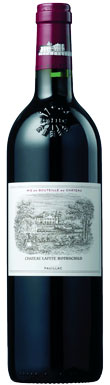

I have tasted this wine several times over the past few years, and each bottle has blown me away. Now almost 60 years old, it...
1959
Château Lafite RothschildPauillac

Château Latour, Pauillac, 1er Cru Classé, Bordeaux, France, 1982
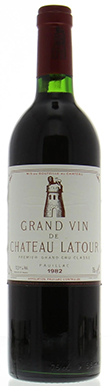
A sublime wine, unbelievably youthful and vibrant still and one that holds attention from the first sip. Beautiful aromatic complexity on the nose; floral notes,...
1982
Château LatourPauillac
Château Léoville Las Cases, St-Julien, 2ème Cru Classé, Bordeaux, France, 1986
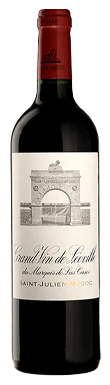
For the last two decades I have been perplexed by this wine. In that time it has not moved an inch. It is a wine...
1986
Château Léoville Las CasesSt-Julien
Château Cheval Blanc, St-Émilion, 1er Grand Cru Classé, Bordeaux, France, 2012
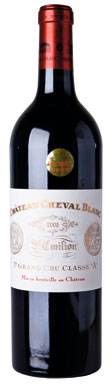
Understated, fresh, elegant nose. Beautifully pure fruit on the palate - blueberry and blackberry notes. Plump mid-palate then lovely, silky tannins. A notch better than...
2012
Château Cheval BlancSt-Émilion
Château Haut-Brion, Pessac-Léognan, 1er Cru Classé, Bordeaux, France, 1982
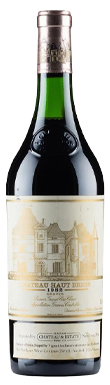
Although the colour of the wine is now bricking at the rim, the core still has a deep, tawny/garnet hue. The aromas here are significantly...
1982
Château Haut-BrionPessac-Léognan
Petrus, Pomerol, Bordeaux, France, 1982
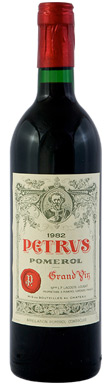
The floral, expressive nose was full of smoked meats, caramel, olives, roasted herbs, cherry jam and cedar. Fruity and smooth on the palate, mouthwatering with...
1982
PetrusPomerol
Domaine de la Romanée-Conti, Romanée-Conti Grand Cru Monopole, Burgundy, France, 2005
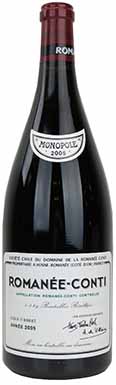
Medium-full colour. Ethereal nose. A lighter wine than many of these Vosne grands crus. Less new oaky also. This is highly individual and very, very...
2005
Domaine de la Romanée-ContiRomanée-Conti Grand Cru Monopole
Domaine Armand Rousseau, Chambertin Grand Cru, Burgundy, France, 1999
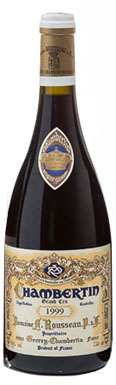
Fullish colour. Splendid rich, concentrated, profound nose. Very impressive! Fullish body. Lovely ripe tannins. Very harmonious, simply delicious fruit. A great wine.
1999
Domaine Armand RousseauChambertin Grand Cru
Domaine Jean Grivot, Richebourg Grand Cru, Burgundy, France, 2005
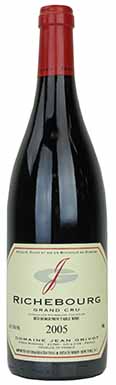
Full colour. Splendidly concentrated and complex on the nose, but still very closed in. Full body, finely tuned, fragrant, understated and very harmonious. Vigorous, intense...
2005
Domaine Jean GrivotRichebourg Grand Cru
Domaine Leroy, Richebourg Grand Cru, Burgundy, France, 1990
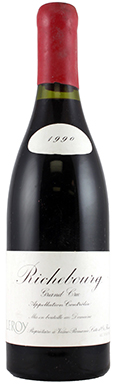
Full, vigorous colour. Very lovely concentrated fruit. Cool and balanced. Lots of finesse. Fullish body, excellent grip, lovely fruit. A profound, classy wine, but more...
1990
Domaine LeroyRichebourg Grand Cru
Anne Gros, Richebourg Grand Cru, Burgundy, France, 1999
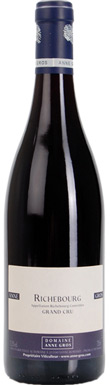
A vintage with very generous yields, yet many magnificent wines were made - this Richebourg included. The colour shows no sign of age, and the...
1999
Anne GrosRichebourg Grand Cru
Domaine Comte Georges de Vogüé, Vieilles Vignes, Musigny Grand Cru, Burgundy, France, 2015
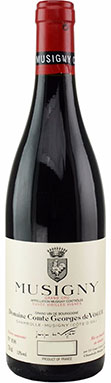
Subtle cherry nose with black fruits. More brooding and restrained than Bonnes Mares, becoming more heady with aeration. Sleek attack, again less forthright than Bonnes...
2015
Domaine Comte Georges de VogüéMusigny Grand Cru
Domaine Méo-Camuzet, Vosne-Romanée, 1er Cru Cros Parantoux, Burgundy, France, 2017
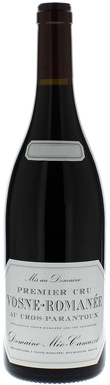
Made with old-vine fruit from one of Vosne's most famous premiers crus - partly because of its association with the legendary Henri Jayer - this...
2017
Domaine Méo-CamuzetVosne-Romanée
Domaine de la Romanée-Conti, Montrachet Grand Cru, Burgundy, France, 2006
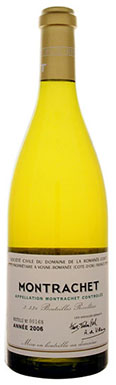
Rich, fat, oaky and quite exotic. Sumptuous and vanillary, yet very good grip. Underneath very minerally. Full bodied. Very ripe fruit. Honeyed and opulent and...
2006
Domaine de la Romanée-ContiMontrachet Grand Cru
Domaine Emmanuel Rouget, Vosne-Romanée, 1er Cru Cros Parantoux, Burgundy, France, 2016
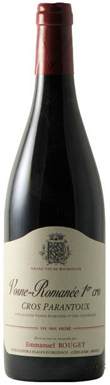
As good as the Echezeaux and Beaux Monts are, the Cros Parantoux is the king of the Rouget cellar in 2016, opening in the glass...
2016
Domaine Emmanuel RougetVosne-Romanée
Domaine Georges Roumier, Bonnes-Mares Grand Cru, Burgundy, France, 1999
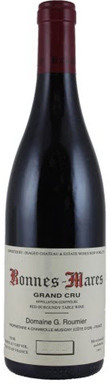
Good colour. Full, firm nose. Rich but still closed-in. Lots of class. Fullish body. Very lovely fresh, concentrated, distinguished fruit. Still a bit of tannin...
1999
Domaine Georges RoumierBonnes-Mares Grand Cru
Clos de Tart, Clos de Tart Grand Cru Monopole, Burgundy, France, 2002
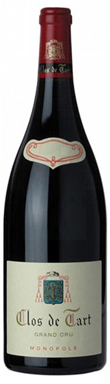
The antithesis, at present, of the 2003: fresh, lively and aromatically precise, with a cologne-like charm, with a smooth, pure, open cascade of flavour on...
2002
Clos de TartClos de Tart Grand Cru Monopole
Tenuta San Guido, Sassicaia, Vino da Tavola, Tuscany, Italy, 1985
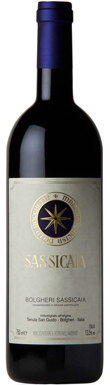
Wow, this is practically bursting out of the glass and out of the line-up. Black olive tapenade, salty anchovy tang, rosemary and sage, against the...
1985
Tenuta San GuidoVino da Tavola
Ornellaia, Bolgheri, Superiore, Tuscany, Italy, 1998
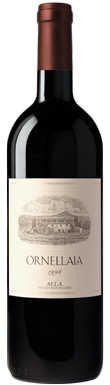
The wine of the flight, this 1998 is a wonderful wine, and it's hard to believe this is 25 years old. It has aromatic notes...
1998
OrnellaiaBolgheri
Giuseppe Mascarello, Monprivato, Barolo, Castiglione Falletto, Piedmont, Italy, 1970
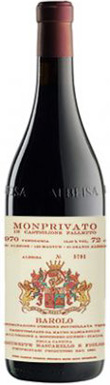
Until the 2013 vintage, Giuseppe Mascarello was the only producer to craft a Monprivato bottling from this 7ha cru. 1970 was the estate's first after...
1970
Giuseppe MascarelloBarolo
Bruno Giacosa, Falletto Vigna Le Rocche Riserva, Barolo, Serralunga d’Alba, Piedmont, Italy, 2012
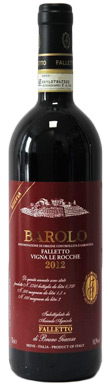
Bruno Giacosa, who passed away last January, was known for the extraordinary elegance of his Barolos and Barbarescos. This last 'red label' riserva is probably...
2012
Bruno GiacosaBarolo
Dominus Estate, Napa Valley, California, USA, 2010
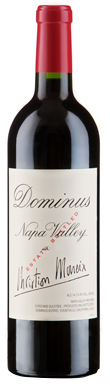
A brooding bouquet of cassis, wild berries, pencil shavings and exotic spice is followed by a deep, layered and intense wine, framed by fine tannins...
2010
Dominus EstateNapa Valley
Opus One, Napa Valley, Oakville, California, USA, 2012
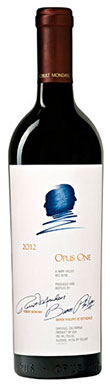
A near-ideal vintage, where all parts were perfect. Here we are at full peak Opus; satin-like in texture, packed with cassis, bilberry and crushed raspberry...
2012
Opus OneNapa Valley
Screaming Eagle, Cabernet Sauvignon, Napa Valley, California, USA, 1997
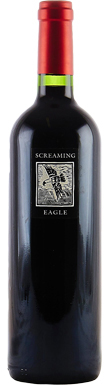
The 1997 Screaming Eagle, with its bouquet of blackcurrant fruit, liquorice, vanilla and a hint of espresso roast, seems to be fully mature. Plump, supple...
1997
Screaming EagleNapa Valley
Krug, Clos d'Ambonnay, Champagne, France, 2000
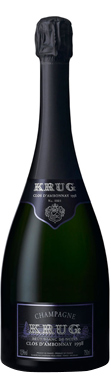
Only 5,100 bottles of Clos d'Ambonnay 2000 have been released. Gorgeous fresh colour with hints of emerald and buttercup yellow, and minuscule bubbles across the...
2000
Krug
Dom Pérignon, Champagne, France, 2008
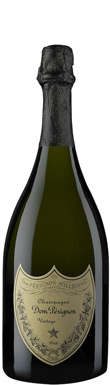
<p>Dom Pérignon is named after 17th-century Benedictine monk Dom Pierre Pérignon (1638-1715), who is said to have invented sparkling wine while cellarmaster at the Abbey...
2008
Dom Pérignon
Louis Roederer, Cristal, Champagne, France, 2008
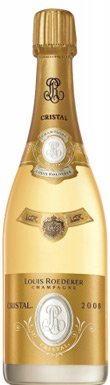
A sublime Champagne from Cristal from the famous and much praised 2008 vintage, which Jean-Baptiste Lécaillon calls a ‘dry and cool year that was a...
2008
Louis Roederer
Krug, Champagne, France, 1996
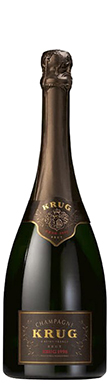
This is a handsome yellow-gold colour with hints of bronze. Still fresh and vigorous yet with a ripe acidity. Wow, this is something else in...
1996
Krug
Domaine JL Chave, Ermitage Cuvée Cathelin, Hermitage, Rhône, France, 2009
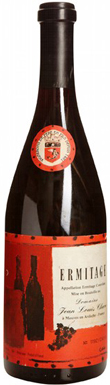
Wonderful wine: combines richness and decisive cut. A heroic, true Hermitage based on Bessards' smoky, close-knit intensity.
2009
Domaine JL ChaveHermitage
Paul Jaboulet Aîné, La Chapelle, Hermitage, Rhône, France, 1990
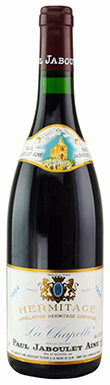
The subtle smokiness of cured speck is mellowed on the nose by a touch of balsamic sweetness, edged with earthiness and a hint of juniper....
1990
Paul Jaboulet AînéHermitage
Penfolds, Grange, South Australia, Australia, 2010
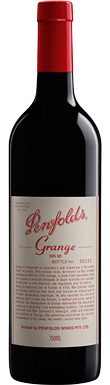
The deep spectrum of dark flavours – wild blackberry, mulberry, liquorice – speaks in an imposing baritone. The palate is rich, full and even, riding...
2010
Penfolds
