
Ningxia: China’s rapidly emerging fine wine region
Since its unanticipated wine awards success in 2011, Ningxia has emerged as China’s fine wine-producing hotbed. After 13 years of rapid development, what’s next for this desert-fringed region?


Landing in Yinchuan in central-north China back in May, five years after my last visit in 2019, I arrived at an opportune moment, just after the drama series The Homeland of Stars had premiered on national television.
The wildly popular show, named for Ningxia’s renowned clear night skies, is based on a historical reality – one that’s familiar to many of us in the wine world, but which was life-changing for the pioneers who first planted vines on the eastern foothills of Helan Mountain.
The first time Ningxia truly left an impression in the world of wine was in 2011 – in the Decanter World Wine Awards Bordeaux blend category, an obscure producer named Helan Qingxue won the International Trophy (equivalent to today’s Best in Show) with its Jia Bei Lan Grand Reserve 2009.
Scroll down to see notes and scores for six striking wines from Ningxia
Vineyard on the Silk Road
‘At that time, Ningxia wasn’t even listed as a wine region on the Awards’ entry form,’ recalled Professor Li Demei, wine consultant behind the award-winning wine (people’s names are written in the Chinese format with surnames first throughout).
There is documented evidence of vines being grown in this area 2,000 years ago, during the time of Zhang Qian’s diplomatic expedition to the West – a mission that first opened up the Silk Road. Yet in the modern context, Ningxia is a young wine region.
In the 1990s, nationwide viticultural research led to efforts to improve the desert-encircled region’s saline-alkaline soils. As a result, in 1998, 3,000ha (45,000 mu) of wine grapes were planted along a strip of barren wasteland between Helan Mountain and the alluvial plain of the Yellow River.
But it was Jia Bei Lan’s win in 2011 that really put the wind beneath the wings of the new region – the unprecedented award at the world’s largest wine competition brought instant attention, domestic and international, to Ningxia’s potential for producing world-class wines.
The following year, Ningxia established its own provincial wine bureau, then in 2013 created its own wine classification system, following the Bordeaux model.
Favourable agricultural and land-use policies combined with immense investments led to large-scale vine planting and ambitious construction projects, making the region what it is today at a jaw-dropping speed.
Ningxia Helan Mountain East – at a glance
Total plantings: 41,000ha *
Main sub-regions: N-S: Shizuishan, Helan, Yinchuan, Yongning, Qingtongxia, Hongsipu
Soils: Gravels closer to the hillside, sandy clay in regions closer to the Yellow River
Altitude: Vineyards are above 1,000m up to about 1,200m
Climate: Continental
Total production: 105m litres *
Key grapes: Red Cabernet Sauvignon, Merlot, Marselan, Cabernet Gernischt, Pinot Noir, Malbec, Syrah. White Chardonnay, Viognier, Welschriesling, Riesling, Petit Manseng
[*Source: Ningxia Wine Bureau]
Between mountain ridge and river
Shielded from Gobi desert sandstorms by the Helan Mountain range, which stretches more than 200km from north to south, Ningxia enjoys 3,100 hours of sunshine per year, while receiving less than 200mm of rain, according to official data.
Diurnal temperature variations of up to 15°C help to preserve grape acidity, although many producers still find it necessary to add a touch of acid for freshness. Drip irrigation is encouraged to conserve water, though flood irrigation is welcomed where possible, as it enriches the infertile soils and washes away salt.
Southern sub-regions, such as Hongsipu and Qingtongxia (see map), are cooler than the northerly areas because of their proximity to the Helan Mountain foothills, where cooling air from the desert whistles through. Cooler sandy clay soils (as opposed to the gravelly soils found in the north) also have an impact.

‘By looking at the effective accumulated temperature during the growing season and the annual sunshine hours, you might assume Ningxia to be a warm wine region,’ observes Professor Li, who is involved in winemaking projects in several Chinese wine regions.
‘However, it’s also very continental – temperatures rise and fall quickly in spring and autumn. Therefore, you may find early-ripening varieties such as Pinot Noir and Chardonnay, even Riesling, showing warm-climate characters, while late-ripening Cabernet Sauvignon exhibits cool-climate flavours.’
Many producers loosely practise organic farming in this arid region, although late spring frost is a constant threat, especially for vineyards with cooler soils, at lower elevations and further from the mountain, where cold air remains static.
To help their vines survive harsh winters during which temperatures can drop below -20°C, growers go through an arduous process of burying their vines and then digging them out each spring, which ups production costs by 30%.
Five Ningxia producers to know
Changyu Longyu Estate
Owned by the winemaking giant Changyu, the Longyu estate (marketed as Changyu Moser XV in Western markets) planted its first vines in Ningxia 17 years ago and now sources grapes from 373ha of vineyards across several sub-regions.
In collaboration with renowned Austrian consultant Lenz Moser, the estate is widely known for its grand Byzantine-style estate and Cabernet Sauvignon-driven portfolio.

Helan Qingxue
Founded by Rong Jian, Wang Fengyu and winemaker Zhang Jing, this pioneering boutique winery in Yinchuan sub-region will celebrate its 20th anniversary next year.
Besides its Bordeaux-variety range, including the famous Jia Bei Lan, its portfolio now includes a Chardonnay, a Malbec and an exceptional Pinot Noir.
The flagship reds are only released after ageing for five years in bottle.

Lansai Winery
This boutique winery is constructed in the traditional and memorable Jin style of Chinese architecture, and is located just a 30-minute drive from Yinchuan. Owner Yu Xiaojia launched the project with her brother in 2009, the first vintage being produced in 2015.
Burgundy-trained wine consultant Deng Zhongxiang adopts a ‘reserved and balanced’ philosophy, which is especially evident in his elegant and classy Pinot Noir and Chardonnay.

Silver Heights
Demeter-certified winery established by Gao Lin in 2007, now managed by his daughter Emma Gao. Trained as a winemaker in Bordeaux, Emma is committed to biodynamic farming on Silver Heights’ 70ha of vineyards, which are planted across two single plots in the Helan sub-region.
Her Cabernet Sauvignon-driven reds and Chardonnay show ripe concentration while maintaining good natural acidity; also try the orange wine made in Chinese amphorae.

Xige Estate
Trained in Bordeaux and already a successful wine merchant, Zhang Yanzhi founded this estate in the Qingtongxia sub-region in 2017 after purchasing 1,000ha of vines planted in the 1990s.
Now operating with more than 2,000ha, plus a 28,000m² estate (with 20 guest rooms), this is one of the most commercially successful wineries in Ningxia. It produces wines of diverse varieties and price points, with Cabernet Gernischt its speciality.

Learning curve
Thanks to improved vineyard management and sorting of fruit in the winery, and the use of the latest winemaking equipment, the ‘jammy-and-green’ characteristics in Ningxia reds are much less common than I experienced five years ago.
The young region’s reputation for high alcohol, heavy extraction and excessive use of oak is likely to change next, as there is a general move towards more gentle winemaking and less use of new oak.
Situated at 1,200m altitude in the south, the cooler Hongsipu sub-region may hold the answer in the region’s quest for finesse and natural elegance.
Winemaker Li Cai of Huida Sunshine shared with me his inaugural 2013 vintage of Qianhongyu Cabernet Sauvignon, whose combination of captivating natural acidity, vibrant wild berries and refined tannins was stunning.
Ningxia recent vintage ratings, by Professor Li Demei
2023: 5/5
Hazard-free with ample sunshine, an arid vintage. Good quality, large crop.
2022: 4/5
Plenty of heat throughout the growing season, especially during summer. Early-ripening varieties suffered with exceptions in cooler subregions
2021: 4/5
Sufficient heat with limited rainfall. Overall a good vintage though quality varies between subregions
2020: 3/5
Severe spring frost and cool temperatures. Late-harvest varieties performed better. Low yields with polarised quality
2019: 5/5
Splendid across the whole region. No widespread natural disasters, low rainfall with plenty of sunshine
Want more? Click here to see another four Ningxia recommendations alongside Sylvia Wu’s six highlights featured below
For the potential red ‘poster grape’ Marselan, producer Huahao prides itself on its robust, oak-infused style, while Chateau Chanson and Silver Heights adopt a less extractive approach for greater purity and more delicate aromas.
Domaine Pushang sits in between, producing expressions with notes of coconut and spiced dark fruits dipped in chocolate.
Pinot Noir shines in the hands of producers with patience and a gentle touch, such as Helan Qingxue and Lansai. Heat-tolerant Rhône varieties, namely Viognier and Syrah, have started to show potential, too, with charming examples crafted by Copower Jade and Mihope.
Interestingly, Germany’s red Dornfelder is attracting attention for its fresh acidity and floral aromas; Pushang and Dongfang Yuxing both offer pretty entry-level examples.
Chateau Lion has even succeeded in nurturing red and white hybrid varieties – called Prince and Princess, respectively – that do not need to be buried to survive winter.
The challenges and the future
To the disappointment of many, the domestic market didn’t rebound immediately after China abolished travel restrictions at the end of 2022. ‘Diversity’ therefore became the keyword, as producers paid much more attention to consumer demands.
One example is sparkling producer Chandon (lvmh.com) – it developed a highly popular, tangerine peel-flavoured Spritz while working on its first Blanc de Blancs NV for the premium market.
For Dongfang Yuxing, winemaker Wu Xiuyong created an impressive fortified wine based on Cabernet Gernischt (a red grape of European origin with a strong genetic link to Carmenère), to appeal to China’s huge spirits-drinking audience.
Meanwhile, post-Covid, foreign consultants are less active on-site – partially due to international travel bans during lockdowns – while local winemaking talents, many of whom have studied abroad, are gaining confidence both in the vineyard and in the cellar.
Next-generation owners and young winemakers in their 20s and 30s are getting more involved, bringing fresh ideas to digital marketing and espousing winemaking philosophies that are more in line with the international market.

Pricing, however, remains a hurdle to competing in export markets. Matthew Horsley, buyer at The Wine Society in the UK, believes that there is demand for Chinese wines priced under £20.
Yet many entry-level wines from Ningxia already exceed this threshold in their domestic market due to the costs associated with vine burying and high-end equipment.
Silver Heights CEO Marco Milani asserts that it’s through on-trade channels that wines from Ningxia have the best opportunity to be ‘judged without bias’ in the premium sector.
Changyu has a long-established presence in the Western market, and coming up are Copower Jade, Devo, Kanaan, Silver Heights and Xige, to name a few, which have already secured some initial success.
Just 13 years since it first hit the headlines, the fine wine region deep in the heart of north China has come a long way. Now, after an initial surge of investment and planting of classic varieties such as Cabernet Sauvignon and Merlot, savvy local producers are rapidly shifting their focus towards more diverse styles and varieties.
Will the ‘Homeland of Stars’ nurture a new constellation? Don’t look away.
How to get there: Fly in to Beijing and transit to Yinchuan. You can hire a local guide (see wineningxia.com), or you can hop on bus tours to take you around the wineries.
A taste of Helan Mountain East: six of the best from Ningxia
Related articles
- DWWA celebrates 20 years and record results in China
- China removes punitive tariffs on Australian wine
- China, EU trade tension may lead to wine tariffs
Devo, MV03 Brut, Helan Mountain East, Ningxia, China
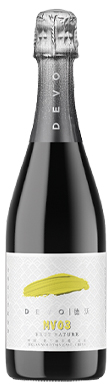

In 2018, Zhai Liang launched his traditional-method sparkling project in collaboration with the Ningxia University Wine College. From a rocky, sun-drenched spot at almost 1,200m...
DevoHelan Mountain East

Changyu Moser XV, Blanc de Noir Cabernet Sauvignon, Helan Mountain East, Ningxia, China, 2022
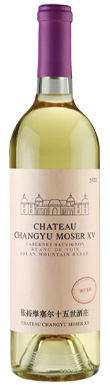
Changyu's Longyu estate (Changyu Moser XV in the western market), created its unusual still Cabernet Sauvignon blanc de noir in 2016. Produced without malolactic fermentation...
2022
Changyu Moser XVHelan Mountain East
Pernod Ricard Ningxia, Helan Mountain Xiaofeng Chardonnay, Helan Mountain East, Ningxia, China, 2021
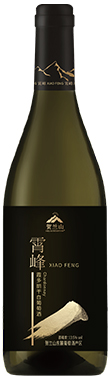
As the name Xiaofeng ('peak of the mountain') suggests, this is part of the premium range of Pernod Ricard's winery in Helan Mountain East. Winemaker...
2021
Pernod Ricard NingxiaHelan Mountain East
Kanaan Winery, Riesling, Helan Mountain East, Ningxia, China, 2022
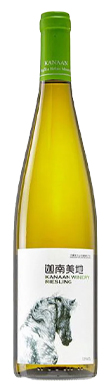
Having lived in Germany for more than a decade, winery owner Fang Wang (nicknamed 'Crazy Fang') pioneered the planting of Riesling in this sunny continental...
2022
Kanaan WineryHelan Mountain East
Château Mihopé, Viognier, Helan Mountain East, Ningxia, China, 2022
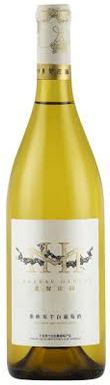
Vines for this varietal Viognier were planted in 2014 in Mihope's warm, rocky Jinshan vineyard. Indigenous yeast and just a dash of the 2023 vintage...
2022
Château MihopéHelan Mountain East
Huida Sunshine Ecological Winery, Qian Hong Yu Cabernet Sauvignon, Helan Mountain East, Ningxia, China, 2020
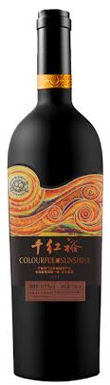
<p>The cooler, remote Hong Si Pu region southeast of Helan Mountain is increasingly home to some of the most elegant Ningxia reds. The 2020 vintage...
2020
Huida Sunshine Ecological WineryHelan Mountain East
Helan Qingxue, Jia Bei Lan Reserve, Helan Mountain East, Ningxia, China, 2018
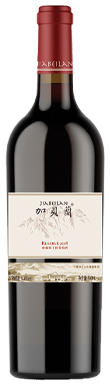
The 2018 vintage of winemaker Zhang Jing's signature Reserve was aged in 70% new oak for 16 months. Now in its most refined and poised...
2018
Helan QingxueHelan Mountain East
Lansai, Ying Chuan Hong Pinot Noir, Helan Mountain East, Ningxia, China, 2021
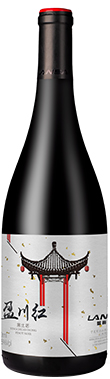
Crafted by Burgundy-trained consultant Deng Zhongxiang using the estate's oldest plantings (from 2006), growing on sandy soil. Aged in old oak for 10-12 months with...
2021
LansaiHelan Mountain East
Silver Heights, Marselan, Helan Mountain East, Ningxia, China, 2021
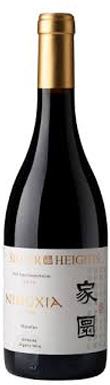
A gentle take on the Marselan grape from this biodynamic producer, achieved by early harvesting, gentle extraction and 12-14 months of ageing in used oak...
2021
Silver HeightsHelan Mountain East
Xige Estate, Cabernet Gernischt Cuvée X, Helan Mountain East, Ningxia, China, 2019
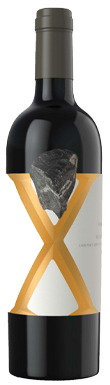
Selected from some of Ningxia's oldest Cabernet Gernischt (genetically linked to Carménère) vines dating back to the 1990s, this is the estate's top expression of...
2019
Xige EstateHelan Mountain East
