
North American trendsetters: five modern-day pioneers
North America has long been a land of brave pioneers and that can certainly be said of its wine community. Jordan Mackay introduces five movers and shakers, setting the standard for modern North American wine.


See profiles on five top North American trendsetters:
- Cathy Corison – California
- Mimi Casteel – Oregon
- Tegan Passalacqua – California
- Ken Wright – Oregon
- Dave Phinney – California
Scroll down to see tasting notes and scores for a wine from each of the five North American trendsetters
Cathy Corison – California
Before the modern phenomenon of sensational Instagram fame, the quickest path to American wine success was a sky-high score. Cathy Corison never sought – nor achieved – either, yet has achieved viral fame and influence by being decidedly anti-viral.
Her secrets to success – beyond winemaking skill – are focus and integrity. Since her first inclinations toward wine as an undergraduate in college, she’s taken her own road, and now countless others are following the trail she blazed.
One of the first female winemakers to come out of the University of California’s Davis campus, Corison became a trendsetter by powering her way into the cellar (not, as the few other women in the industry did, into the lab), which was then seen strictly as a man’s place. Today, wonderfully, women can be found tugging hoses and topping barrels in wineries all across the country.
Corison began her own brand in 1987, based on her own taste for unaltered, transparent Cabernet Sauvignon made with classical balance in terms of alcohol, tannin and ripeness. As Napa winemaking exploded in the 1990s and 2000s, a trend towards high ripeness and alcohol made fast fortunes and created instant oeno-celebrities.
But Corison never played that game, content to make a balanced, un-flashy wine designed to gracefully show its inner beauty after years in the bottle. In front of her vineyard on Napa’s main thoroughfare she built a rustic, utilitarian wooden barn for a winery, rather than a garish, gleaming monument.
Corison has always stayed true to her own vision of wine and through that steadfastness has garnered a loyal new following among a younger contingent of sommeliers, winemakers, writers and retailers. While many of them come from a generation to whom instant gratification is a birthright, Corison has taught them the valuable lesson that integrity, persistence, self-reliance and honesty will also reward you – in life and in wine.
Mimi Casteel – Oregon
Despite producing only 300 cases of wine in a good year, Mimi Casteel’s reach has spread from Oregon’s Willamette Valley across the US and beyond. She’s garnered a passionate following that’s less for her wines (hard to find) and more for her strong advocacy of regenerative farming.
Regenerative agriculture differs notably from biodynamics in that it eschews tilling and irrigation, seeing the cultivation of soil organic matter as the primary driver of vineyard health. To plough the soil and expose the underlying fungal, bacterial and insect populations to sun and air is to injure the land’s most valuable resource. In that spirit, other plant and animal species in and around the vineyard also play an essential role in its overall health.
Damage done by blight and pests is indicative not of natural threats but of weakness within the ecosystem, an interwoven matrix of forces that already possesses all the tools needed to sustain itself. The job of the farmer is to observe and guide this process around various crops (grapes and otherwise) while countering the harm wrought by decades of industrial farming.
Unlike many of the gurus of holistic farming systems like biodynamics or Fukuoka, Casteel doesn’t try to inspire with mystical oratory. Rather, with a background in forestry and botany, her rhetoric is relentlessly backed by hard science and empiricism, fuelled by passionate immediacy and a fierce intelligence.
To listen to Mimi Casteel speak is thrilling and energising, as evidenced by the growing appetite for her consultancy, as well as her speechmaking, published articles, and widening sphere of influence. Wine is but a minuscule part of global agriculture, she knows, but it speaks with a disproportionately loud voice and can be a leader for other industries. Just like Mimi Casteel herself.
Tegan Passalacqua – California
Often these days, the way forward comes from looking into the past. In California wine, the person pressing this approach is Tegan Passalacqua, whose mission as a winemaker and viticulturist is to conserve California’s ever- endangered old vineyards while introducing new California regions, grapes and flavours to what has often been a stolid industry.
As head winemaker and vineyard manager for cult favourite Turley Wine Cellars, as well as proprietor of his own label Sandlands, Passalacqua has made a name for himself as an archaeologist of old vineyards. Turley is famous for working with some of California’s oldest plots – twisted, head-trained, mixed grape fields of fusty, unfashionable varieties like Zinfandel, Carignan, Cinsault and Charbono (aka Bonarda) – many of which were spread out across a swathe of northern California, encompassing hundreds of miles between the Sierras and the sea.
Tasked with managing these vineyards for Turley, Passalacqua, through his far-reaching wanderings, honed his eye for that random plot of ancient vines clinging to existence between vegetable fields or in suburban developments. To preserve these vanishing parcels, he’d locate their owners and find buyers for their fruit, either for himself or for one of his many friends in the wine industry. Along the way, he co-founded the Historic Vineyard Society to register and promote vineyards that are more than 50 years old.
In this capacity, Passalacqua has quietly and humbly exerted a powerful influence in the modern North American wine scene. Many of California’s most interesting new wines have tendrils that trace back to Passalacqua, who connects winemakers and vineyards, sniffs out remarkable sites and soils, and sells fruit from the 1915-planted vineyard he bought a decade ago.
Along the way, he’s broadened the scope of the wine world, bringing awareness to unfashionable grapes and far-flung regions beyond the norm.
Ken Wright – Oregon
Wright’s story is prototypically American: in spite of a lack of pedigree and finances, he achieved his success in wine through talent, hard work, common sense, courage and access to lands with unrealised potential. What makes him a vital trendsetter in Oregon and in American Pinot Noir is that his triumphs have not only benefited his own cause, but have had a powerful impact on a nation of burgeoning winemakers and wine lovers.
Arriving in Oregon’s restless climate in 1986, he found an economy where growers sold grapes by the tonne, making it near-impossible to get them to drop fruit. So he used his significant powers of persuasion to convince growers to both charge by the acre and follow his farming protocols.
Such shifts may seem trivial today, but Wright’s actions helped spark the major leaps in quality and consistency that catapulted Oregon to its status as a top Pinot region. Likewise, he was among the first to bring sorting tables and dry ice into the winery in Oregon. Just as crucially, Wright has also been a leader in promoting and mapping Oregon’s terroir.
Decades before every vintner seemingly began hiring geologists to map their properties, Wright was professorially lecturing and scrawling on chalkboards to explain how subduction, volcanism and ancient flooding created the distinct flavours of Oregon Pinot Noir. Connecting these flavours to the underlying geology became his passion (while popularising the mantra ‘mother rock’), leading him to pave the way for American single-vineyard Pinot Noir – of which he released as many as a dozen separate wines in a vintage.
His unrelenting belief in terroir resulted in what will likely be his most durable legacy: the creation in 2005 of six sub-appellations in the northern Willamette Valley. Wright’s energy and enthusiasm overcame the scepticism of fellow wine-growers (who thought the demarcation premature). But today no one questions the wisdom of the act because, as Wright has repeatedly shown, shaping the way one thinks about vineyards and earth shapes the wines themselves in a way that benefits everyone.
Dave Phinney – California
The reasons winemaker Dave Phinney has given for creating his eye-catching Locations series – largely comprising non-varietal, non-vintage wines with simple labels modelled on the white country stickers affixed to cars – include playfully thumbing his nose at the idea of appellations, exploring winemaking limits and behaving as if there are no rules.
Such concepts also summarise his approach to wine, which has led him to become one of America’s most successful wine entrepreneurs and earned him legions of admiring followers.
Bring up Phinney’s name in wine circles and the word ‘genius’ inevitably follows. But does selling brands of mass appeal like The Prisoner and Orin Swift to giant wine conglomerates for hundreds of millions of dollars constitute genius?
Not in and of itself. Rather, the brilliance is in the way these brands are conceived, executed and marketed. Phinney intuitively understands what challenges so many brands: that the mass appeal of wine is rooted in quality, but quality must be sustained throughout the consumer’s wine experience, from spying the bottle on a store shelf to the first sip of a bold, complex, unique wine. Design plays a huge role. Phinney himself is in charge of the panoply of artfully intriguing labels that combine arresting photography, collage and painting with evocative, edgy names such as Machete, Trigger Finger and 8 Years in the Desert.
But it’s not all risk-taking packaging. Phinney is a fearless winemaker, devoted to high-quality farming and oenology, while breaking all known rules of blending (yes, his wines might unapologetically meld Piedmont with Puglia, or Barbera with Tempranillo). Phinney’s genius has been to free himself creatively – and, in doing so, freeing consumers and winemakers alike from the age-old rules of what wine must be.
Wines from Jordan Mackay’s North American trendsetters
Related content
South American trendsetters: five names to know
Favia: producer profile and five wines tasted
Last chance to buy Vérité virtual masterclass tickets for Decanter at Home event
Corison, Cabernet Sauvignon, Napa Valley, St Helena, California, USA, 2017
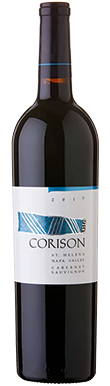

Rich and dark-fruited with violet high tones and earthy, stony base notes. It has a rich, mouthfilling texture with fine, polished tannins providing a bit...
2017
CorisonNapa Valley

Hope Well, Chardonnay, Willamette Valley, Eola-Amity Hills, Oregon, USA, 2018
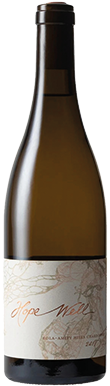
Wonderfully complex, this racy Chardonnay marries vibrant Meyer lemon high notes with richer, deeper flavours of white peach and apricot. Along the way, there are...
2018
Hope WellWillamette Valley
Sandlands, Red Table Wine, San Francisco Bay, Contra Costa County, California, USA, 2018
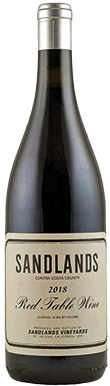
Bright, zippy and energetic, this joyful blend of Carignan and Mataro delivers plummy red fruit with hints of smoke, game and wild fennel. The complexity...
2018
SandlandsSan Francisco Bay
Ken Wright, Pinot Noir, Willamette Valley, Oregon, USA, 2019
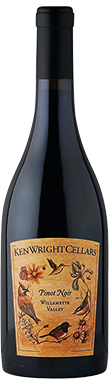
Raspberry and cherry lead the way, joined by hints of vanilla and subtle aromatic spice notes. There's lovely weight in the mouth, accompanied by finely...
2019
Ken WrightWillamette Valley
Orin Swift, Abstract, California, USA, 2019
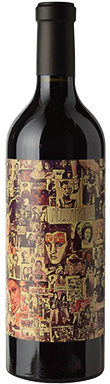
Full-bodied and sumptuously textured, this powerful Rhône-inspired blend of Grenache, Petite Sirah and Syrah boasts flavours of baked plums, preserved cherries and black tea, rounded...
2019
Orin Swift
