
Ocean drive: the cool climate wines of Mornington Peninsula
Australia's Mornington Peninsula produces world-class Pinot Noir and Chardonnay, with distinctive cool-climate character. Julie Sheppard takes you on a tour of the region and recommends a selection of memorable wines to try.


Surrounded by water on three sides, Mornington Peninsula is undeniably a maritime wine region. The cool coastal climate plays a significant role in the styles of wine produced here. But there’s more to Mornington than sandy beaches and sea breezes.
Located 70km south of Melbourne – about an hour’s drive away – Mornington is one of 21 wine regions in the state of Victoria, nestled in the southeastern corner of Australia. At 976ha, it’s not the largest, but it certainly overdelivers when it comes to wine quality, producing world-class Pinot Noir and Chardonnay.
Scroll down to see notes and scores for 14 superb wines from Mornington Peninsula

‘Mornington is a very special part of Australia,’ says winemaker Martin Spedding, owner of Ten Minutes by Tractor. ‘It’s obviously right at the very bottom of mainland Australia. It’s got the Southern Ocean on one side: Bass Strait. It’s surrounded by water with Port Phillip Bay and the western port, so it has a very maritime climate,’ he adds.
‘For a very small region, it’s got an incredibly diverse landscape, and that difference in altitude, in aspect, the influence of the water bodies that sit around the peninsula, they really create an incredibly rich tapestry of terroir – which from a Pinot and Chardonnay perspective is fantastic.’
Cool customer

Three bodies of water border the Peninsula. Port Phillip Bay lies on the west side, Western Port Bay is on the east and Bass Strait lies at the bottom. With no vineyard in the area more than 7km away from the ocean and crisp coastal breezes blowing all year round, it’s no wonder that the climate is cool. Indeed, the mean temperature in January – the warmest month of the year – is just 19.3℃.
This comparative coolness means that disease pressure is low in the region. It also helps to create a long and balanced growing season for vines. The maritime influence means the risk of spring frost is also very low, so early-ripening varieties flourish in the mild summer and autumn, producing grapes packed with fruit flavour and with high natural acidity.
In addition, Mornington Peninsula lies at a relatively low latitude for viticulture (38° 35’S) meaning that light during the growing season is abundant and intense. As a result vineyards require careful canopy management and grapes tend to develop thicker skins, which affects the tannins and colour of the final wines.
Down to earth

The maritime climate is just one contributing factor to Mornington Peninsula’s unique terroir. Its geology and topography are also distinctive. The ridges and rolling hills of the peninsula were shaped by volcanic activity 60 million years ago and subsequent seismic shifts over the last 15 million years.
Growers in the region refer to sites being ‘up the hill’ or ‘down the hill’. Tim Perrin, chief winemaker at Kooyong and Port Philip Estate explains. ‘Elevation is not huge, but Red Hill is the hill we speak of, and Main Ridge. They’re the two grape-growing areas that we refer to as up the hill. Then everything else down back towards Melbourne is lower elevation, down the hill.’
Soil profiles change with elevation. ‘Soils up in Red Hill and Main Ridge are more red volcanic from extinct volcanos; they become more sort of sedimentary limes as we come back down the hill towards more northern parts of the peninsula,’ says Perrin.
Geologically, Mornington Peninsula’s ancient soils are very diverse. They range from yellow and brown soils over friable rock to well-drained clay soils; from volcanic red clay to deep, fertile sandy soils. This geological patchwork has been explored and mapped by the region’s growers, helping them to identify unique microsites – often within one single vineyard.
Early days

Although winemaking history in Mornington stretches as far back as the late 1800s, the story of wine production in the modern era took off in the 1970s. Most of the region’s oldest vines date to this time. ‘Some plantings even go back before that,’ says Spedding. ‘But in terms of the last century, you’re talking of the 1970s.’
‘If you look at current plantings that still exist, you’d look at the Myer family with Elgee Park,’ says Rollo Crittenden of Crittenden Estate. Mornington Peninsula’s oldest winery, Elgee Park was founded in 1972.
‘In the late 70s at Main Ridge Estate, Nat White was probably one of the first small commercial producers who had Pinot Noir,’ he adds.
Small is beautiful

Today Pinot Noir accounts for 49% of the region’s plantings, followed by Chardonnay at 27%. After those, Pinot Gris is the most widely planted grape (13%), with small amounts of other varieties including Shiraz and Sauvignon Blanc (see At a glance box below).
In fact ‘small’ is the watchword for Mornington Peninsula. Thanks to that geological and topographical patchwork, the region has developed as a network of around 200 small-scale vineyards, most of which are family-run. These boutique producers are by their nature focused on attention to detail.
The result is a community of winemakers who have become increasingly committed to sustainable and regenerative viticulture, single-vineyard expression and low-intervention winemaking. Backed by solid technical know-how, they are pushing for pristine fruit quality to produce terroir-driven wines that require minimal handling in the winery.
In the glass

For wine lovers this pursuit translates into a range of Pinot Noirs and Chardonnays that can easily rival classic benchmark styles from Burgundy – but for a fraction of the price. Expressive and elegant, they show considered balance between minerality and fruit, all underpinned by that distinctive cool climate freshness.
Some can already claim to cult status; the best regularly appear on the winner’s podium at global wine competitions. Most recently Moorooduc Estate’s Robinson Chardonnay 2022 scooped a gold at Decanter World Wine Awards 2025.
As vines get older and understanding of individual sites deepens, these wines will only get better. Vertical tastings are already proving the long-term cellaring potential of top ageworthy expressions. Personally I can’t wait to see what lies over the horizon for this distinctive maritime region as it sails into the future.
Mornington Peninsula at a glance
Vineyard area: 976ha
Plantings: 59% red, 41% white
Grapes: Pinot Noir (49%), Chardonnay (27%), Pinot Gris (13%), Shiraz (4%), Sauvignon Blanc (2%), others, including Tempranillo and Gamay (5%)
Production: 1,863 tonnes annual crush in 2024
Climate: Maritime
Number of vineyards: 200
Number of wineries: 60
Source: Wine Australia Region Snapshot 2023-2024
Mornington Peninsula: 14 wines to try
Related articles
- Wine region 101: Victoria
- Ned Goodwin MW: In pursuit of regional identity in Australian Chardonnay
- By Farr: revered Australian Pinot Noir and Chardonnay
Ten Minutes By Tractor, Wallis Chardonnay, Mornington Peninsula, Victoria, Australia, 2022
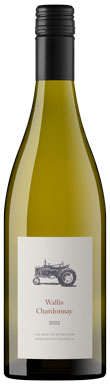

This impressive single-vineyard Chardonnay is fermented with wild yeast and spends 10 months in oak puncheons (25% new). Elegantly layered, harmonious aromatics, with citrus, floral...
2022
Ten Minutes By TractorMornington Peninsula

Paringa Estate, The Paringa Chardonnay, Mornington Peninsula, Victoria, Australia, 2023
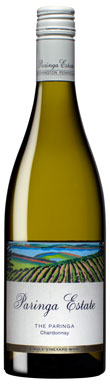
This limited-production bottling is made from Paringa Estate's oldest vines – just nine rows, aged almost 40 years. White peach and citrus aromas with just...
2023
Paringa EstateMornington Peninsula
Polperro, Talland Hill Single Vineyard Chardonnay, Mornington Peninsula, Victoria, Australia, 2023
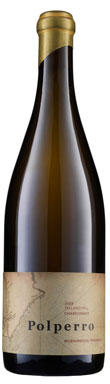
Certified organic and biodynamic, the north-facing Talland Hill vineyard is a warm and sheltered site in Red Hill that produces intense and mineral Chardonnays. This...
2023
PolperroMornington Peninsula
Handpicked Wines, Collection Chardonnay, Mornington Peninsula, Victoria, Australia, 2022
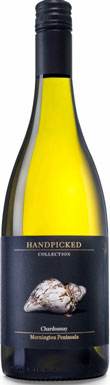
Ripe stone fruit, fresh lemon, light buttery oak on the nose. Fermented and aged in new and used French oak for 11 months, the style...
2022
Handpicked WinesMornington Peninsula
Kooyong, Estate Chardonnay, Mornington Peninsula, Victoria, Australia, 2023
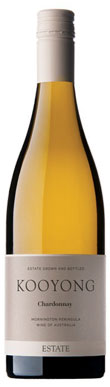
A blend of two Chardonnay blocks – Faultline and Farragho – fermented and aged in mostly used French oak barrels and barriques. Appealing nose of...
2023
KooyongMornington Peninsula
Ocean Eight, Verve Chardonnay, Mornington Peninsula, Victoria, Australia, 2021
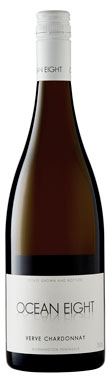
Ocean Eight Vineyards are among the most northern in Mornington Peninsula. Fermented and aged in old French oak, this has aromas of lemon cream biscuits...
2021
Ocean EightMornington Peninsula
Crittenden, Peninsula Chardonnay, Mornington Peninsula, Victoria, Australia, 2023
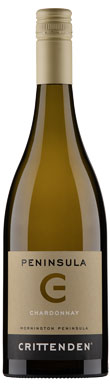
A blend of fruit from vineyards across Mornington Peninsula, fermented and matured in new and used French oak barriques and puncheons for nine months. Lightly...
2023
CrittendenMornington Peninsula
Kooyong Estate, Pinot Noir, Mornington Peninsula, Victoria, Australia, 2023
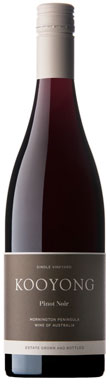
The first vines at Kooyong were planted in 1996; this is sourced from four distinct vineyard blocks: Meres, Haven, Ferrous and Nord. Fermented with a...
2023
Kooyong EstateMornington Peninsula
Crittenden, Cri de Coeur Pinot Noir, Mornington Peninsula, Victoria, Australia, 2022
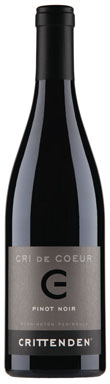
From 40-year-old-plus vines, farmed sustainably, this spends 11 months in used French barriques. Elegant raspberry aromas with a sappy iris florality and savoury whispers. Velvety...
2022
CrittendenMornington Peninsula
Port Phillip Estate, Balnarring Pinot Noir, Mornington Peninsula, Victoria, Australia, 2022
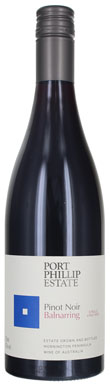
Port Phillip's Balnarring Vineyard was planted in 1997; 2022 saw lower yields but great quality. A poised, silky palate – effortless style – layered with plump...
2022
Port Phillip EstateMornington Peninsula
Ten Minutes By Tractor, Up The Hill Pinot Noir, Mornington Peninsula, Victoria, Australia, 2021
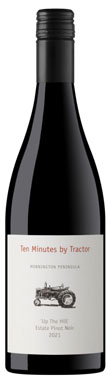
From a La Niña year, quite wet and cool; aged in new and used oak for 11 months. A brownish tinge in the glass prefaces...
2021
Ten Minutes By TractorMornington Peninsula
Handpicked Wines, Capella Single Vineyard Pinot Noir, Mornington Peninsula, Victoria, Australia, 2022
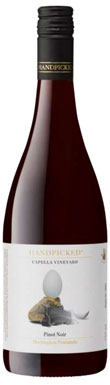
A smaller than usual vintage produced a wine with 'wonderful purity and vibrancy' according to winemaker Peter Dillon. Bright aromas of red fruit, cherry and...
2022
Handpicked WinesMornington Peninsula
Ocean Eight, Pinot Noir, Mornington Peninsula, Victoria, Australia, 2023
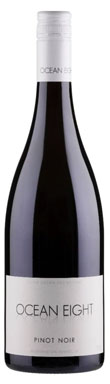
From Tuerong, one of the most northerly vineyards on the Mornington Peninsula. Delicate, perfumed red berry aromas lead to a persistent palate with earthy base...
2023
Ocean EightMornington Peninsula
Paringa Estate, Estate Pinot Noir, Mornington Peninsula, Victoria, Australia, 2022
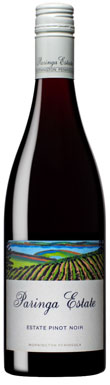
A blend from Paringa's top vineyard blocks, with about 15% whole bunch; aged in French oak barriques (30% new) for 11 months. Mulberries, raspberry and...
2022
Paringa EstateMornington Peninsula
