
Older vines, better wines?


It’s one of the oldest wine aphorisms that’s generally assumed to be true – but is it necessarily so? Natasha Hughes MW investigates whether age really does come before beauty in the vineyard, and recommends eight old-vine wines that you can test the theory with...
In our youth-obsessed Western culture, old age has long been perceived as a time of preordained senescence, one in which physical charms fade and the intellect weakens with a dire inevitability. To be old is to be insulted. Shakespeare has Prospero (no spring chicken himself) describe the rebellious Caliban in terms that would still be a low blow to those of a certain age: ‘And as with age his body uglier grows, so his mind cankers’.
Scroll down for Natasha Hughes MW’s top 8 wines from old vines
Luckily for vines, though, old age is given the respect once accorded to grey-haired statesmen. Labels emblazoned with terms like Vielles Vignes, Alte Reben and Viñas Viejas proudly proclaim viticultural longevity – and usually fetch a steep sales premium that may not always be warranted. As South Africa’s Bruwer Raats puts it: ‘People sometimes use the term “old vines” to give themselves a marketing edge. It is not regulated, and some people exploit it to inflate prices without justification.’The truth is that old vines should be given a more critical appraisal than they usually receive. At what age does a vine qualify as old? Do old vines necessarily result in the creation of better wines, and if so why? Do some grape varieties need a boost derived from vine age more than others?
How old is old?
While some vines are still in commercial production well past their hundredth birthday, there is no universally accepted minimum age at which vines should be considered mature. In some instances, the old vines trumpeted on labels are, on investigation, barely out of their teens. Some New World countries and regions (most notably South Africa and Austr alia’s Barossa) have created systematic charters which celebrate and regulate their venerable vines, and the broad consensus emerging from these is that 35 years should be considered a valid threshold for old age. But this one-size-fits-all approach doesn’t sit well with many winemakers.
Spain’s Fernando Mora MW believes that a far larger timescale is required in order for old vines to really hit their straps. ‘You start to see some old-vine character in wines from the time the vines reach 35-40 years old,’ he says. ‘But you don’t see the real depth of it until the vines are at least 70 years old.’
Other winemakers are convinced that quality will out far earlier in a vine’s lifetime. ‘My view is that a vine in the right place and with the right genetic “stuff” starts to produce very good wine after 10 years and, hopefully, great wine in 25 years,’ says Steve Webber of Australian producer De Bortoli Wines.
In fact, there is a broad agreement that vines in their first flush of youth can, under the right circumstances, produce remarkable wines. ‘The first wine Nyetimber ever made was a blanc de blancs in 1992 from four-year-old vines,’ says Nyetimber winemaker Brad Greatrix. ‘The wine was tremendously successful, both on release and later on – it won a trophy as a 17-year-old and it’s still very much alive and well.’
Raats agrees, pointing to the critical success achieved by the winery’s highly rated second vintage wines from the Eden vineyard, planted in 2009. ‘It’s not about the age of the vine,’ says Raats, ‘it’s about the intention behind creating the vineyard; finding the best soil, and matching the best clone and the best rootstock to the site. Quality by design is much more important than the age of the vine.’
Vine age in stages
The apparent mystery of why young vines can deliver high quality is, according to Chile’s Marco De Martino, down to the way the plant grows. ‘Up to about 10 years of age, the plant is still exploring,’ he explains. ‘It has more roots than canopy, so the plant can ripen its fruit properly. Later on, the plant becomes more vigorous, with more vegetative growth, and at this stage you have to control the vigour. Vineyards don’t reach full maturity until around 20 years, then there’s a plateau stage that lasts around 15-20 years,’ he continues. ‘It isn’t until the plant is around 40-50 years old that the vines start to deliver more concentration – but at that point there’s a reduction in yields, which can certainly help to improve quality too.’
According to California’s Morgan Twain- Peterson MW, the connection between vine age and yield is a complex one. ‘Yields do tend to go down in older vineyards,’ he comments, ‘but this has as much to do with cultural practice, soil health and vine health as it does with sheer age.’
Apart from anything else, as Twain- Peterson points out, old vineyards tend to have fewer vines per hectare than young ones, the result of disease picking off more vulnerable plants over time. This has inevitable consequences for yield per hectare. Paradoxically, though, even though ancient vines may be more susceptible to disease, old age can help to create healthier conditions for the individual bunches they bear.
‘The bunches on old vines tend to be smaller and the grapes are smaller,’ explains Mora. ‘This means that there’s more space around the grapes. This in turn allows for better circulation of air, so there’s less disease and better exposure to the sun, so the grapes ripen better.’
Deeper meaning
So if the relationship between vine age and wine quality cannot be reduced to a simple statement of yield, what else might be at play here? The answer may lie in the fact that ancient vines are a bit like icebergs: the important stuff is what lies beneath the surface.
‘In dry vintages, older dry-farmed vineyards, with their deep roots, allow for better uptake of water, so they handle hydric stress well,’ Mora points out. ‘Younger dry-farmed vineyards really struggle in a drought. We’ve not seen much rain this year and we’ve had to irrigate our young vines by hand as they dry out very easily, but the old vines just next door are thriving.’
Not only do deep root systems help provide stability and balance in tricky vintages, they may also be the key to creating a better expression of terroir in the final wines. ‘Old vines certainly seem to show more site expression than young ones do,’ says Twain- Peterson. ‘It’s hard to talk about terroir expression with any certainty, but the effect of the microbiome on vineyards is an interesting area of continuing research,’ he adds.
Not all vines benefit equally from age, however. ‘Some of the more rustic, vigorous varieties we work with, such as Carignan and País, benefit from age, which helps to control that vigour,’ says De Martino. ‘Carménère, too, is super-vigorous and struggles to reach balance. You’re also dealing with high levels of pyrazines, so the vines need to reach a certain age; otherwise the [green characters of the] pyrazines express themselves too strongly. On the other hand, Syrah, which is also a vigorous variety, copes well with that vigour and shows well far earlier in its life.’
Production values
Ultimately, though, the link between old vines and the high quality of the wines they produce may come down to a simple, pragmatic equation. ‘There’s an almost Darwinian survival mechanism at work here,’ says Twain- Peterson. ‘When you’re looking at a vineyard that’s 100 years old, if the vines are still in the ground and are productive, the chances are that the wine it makes is good – otherwise it would have been torn up and replanted.’
Natasha Hughes MW is a freelance wine and food writer, consultant, educator and wine judge
See Natasha Hughes MW’s top 8 wines from old vines
You may also like
Western Australian Chardonnay panel tasting resultsCalifornian Cabernet Sauvignon 2010 panel tasting resultsPanel tasting: Best Prosecco Conegliano ValdobbiadenesHaut-Médoc 2010 & 2014 panel tasting resultsTop Barolo 2008 wines: Panel tasting results
Alheit Vineyards, Fire by Night, Paardeberg, Paarl, South Africa, 2017
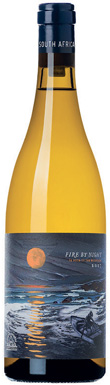

Crystalline purity from a wine laced with spiced pears, dried camomile flowers and lime. Zingy acidity and smoky minerality provides a framework for the long...
2017
Alheit VineyardsPaardeberg

Szepsy, Szent Tamás, Parcel 46 Furmint, Tokaji, Tokaj, Hungary, 2016
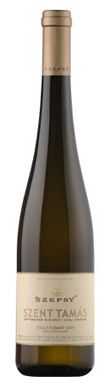
Terrific stony minerality and focused acidity create a framework for subtle fruit flavours with notes of mint, lemongrass and stone fruit. Long and laser-like finish....
2016
SzepsyTokaji
Sottimano, Basarin, Barbaresco, Piedmont, Italy, 2015
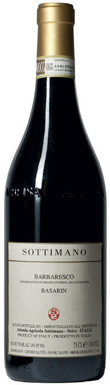
Shows more plushness and opulence than many Barbarescos. Incredibly floral, with lavish red fruits and fine tannins. Great length. From 70-year-old vines.
2015
SottimanoBarbaresco
Bedrock Wine Co, Evangelho Vineyard Heritage, San Francisco Bay, Contra Costa County, California, USA, 2016
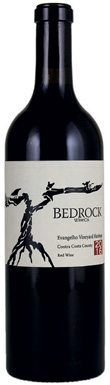
A generous wine with great weight of fruit, yet light on its feet due to vibrant acidity. Resonant finish layered with juicy plums, spice, liquorice...
2016
Bedrock Wine CoSan Francisco Bay
Yarra Yering, Dry Red Wine No2, Yarra Valley, Victoria, Australia, 2014
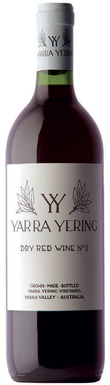
A Shiraz-based blend with heady, smoky notes of sandalwood, violets and berry fruit tinged with spice. Grippy, fine-grained tannins and precise balance suggest great ageing...
2014
Yarra YeringYarra Valley
De Martino, Single Vineyard Series Limávida Old Vine Field Blend, Maule Valley, Chile, 2015
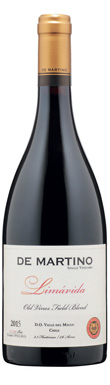
Cherry and tea leaf notes tinged with violets. Balance, vibrant acidity, great density on the palate. Vineyard planted in 1945.
2015
De Martino
Bodegas Frontonio, Supersónico Garnacha, Valdejalón, Aragón, Spain, 2016
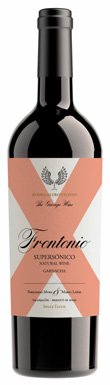
Quite full, red plum skin fruit with a hint of blossom. It's not exciting, but is balanced by a nice tangy acidity.
2016
Bodegas FrontonioValdejalón
Domaine Jean-Claude Lapalu, Vieilles Vignes, Beaujolais, Brouilly, Rhône, France, 2017
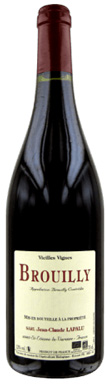
More depth than most Beaujolais, plus delightful violets, raspberry and dark cherry tinged with an earthy minerality that lingers. Average vine age 70 years.
2017
Domaine Jean-Claude LapaluBeaujolais
